
Ground Chicken with Blistered Cauliflower, Chickpeas, and Chile
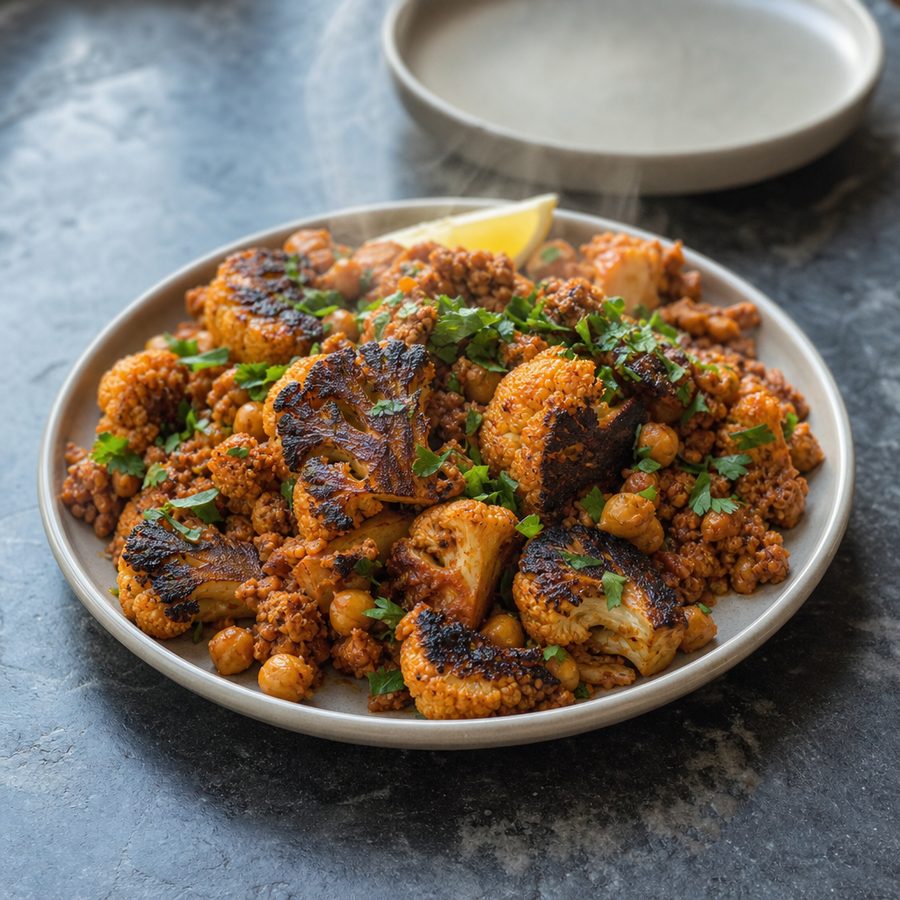
Cauliflower blistered dark in a dry-hot skillet with browned ground chicken, chickpeas, and a spoonful of tomato paste cooked until it turns brick red, sharpened with crushed red pepper, oregano, and lemon.
Why You'll Love This Recipe
This is the southern Italian trick of cooking a vegetable much harder than you think you should, and it is the whole reason the dish tastes the way it does. Cauliflower left alone in a hot pan until the cut faces are properly dark stops tasting like cauliflower and starts tasting toasted and almost sweet. I cut the head so that most florets have one flat face, because a flat face makes contact and a round one rolls around browning nothing. It takes about seven minutes of leaving the pan alone, which is far and away the hardest instruction in the recipe to follow.
Eating it, the first thing you get is the char, then the chile arriving a beat later at the back of the throat, then the lemon cutting across both. The chickpeas are the soft element, gone creamy from a few minutes in the pan liquid, and the ground chicken is in small savory crumbles rather than lumps, so it distributes through every forkful. Tomato paste cooked until it darkens gives the whole skillet a depth that a can of tomatoes never manages in seventeen minutes, and the little bit of broth pulls all of that off the bottom of the pan and back onto the food. It eats like something that simmered much longer than it did, which is the only real trick in the recipe.
I make this on nights when I want dinner to have some fire in it. It is a good recipe for the end of the week, when the produce drawer is down to a cauliflower and a lemon and there is a can of chickpeas in the cupboard. It also holds up beautifully to being made in a bigger batch and eaten across two days, and the leftovers, warmed in a pan and topped with a fried egg, are one of my favorite lunches to steal from the refrigerator. If you cook for someone who says they do not care for cauliflower, this is the version worth trying on them, because almost nobody has met it cooked this hard.
Ingredients
- 1 lb ground chicken
- 1 large head cauliflower (about 1 1/2 lb trimmed), cut into small florets with one flat side
- 1 cup canned chickpeas, drained and rinsed
- 1 3/4 tbsp olive oil
- 1 small onion, finely chopped
- 4 garlic cloves, thinly sliced
- 2 tbsp tomato paste
- 1/2 tsp crushed red pepper flakes, plus more at the table
- 2 tsp dried oregano, crumbled between your palms
- 1/2 cup chicken broth
- 2 tbsp lemon juice, from 1 lemon, plus wedges for the table
- 1/3 cup chopped flat-leaf parsley
- 1/2 tsp fine sea salt
- 1/2 tsp coarsely ground black pepper
Instructions
- Cut the cauliflower for contact: Quarter the head through the core and cut the florets away, then slice each one so it has at least one flat face. Aim for pieces about the size of a walnut. Uneven pieces are fine, but round ones will not brown, so trim a face onto anything that looks like a mushroom cap.
- Blister the cauliflower: Heat a 12-inch skillet over medium-high with 1 tbsp of the oil until it shimmers. Add the cauliflower cut side down in as close to a single layer as you can manage, sprinkle with half the salt, and leave it completely alone for four minutes. Turn the pieces, cook three minutes more until deeply browned in patches and just tender at the edge of a knife tip, then scrape it onto a plate.
- Brown the chicken: Add the rest of the oil and the ground chicken to the empty pan in a few large lumps with the remaining salt. Leave it for two to three minutes to take on color, then break it into small crumbles with a wooden spoon and cook another two minutes, until no pink remains and the bottom of the pan has gone brown and sticky.
- Build the base: Push the meat to one side, add the onion to the clear space, and cook two minutes until it softens. Stir in the garlic, crushed red pepper, oregano, black pepper, and tomato paste, and keep everything moving for ninety seconds. The paste should darken from bright red to brick and start to catch on the pan, which is exactly when to move on.
- Bring it together: Pour in the broth and scrape the pan clean, then add the chickpeas and the cauliflower back with any juices. Cook uncovered for three minutes, tossing once or twice, until the liquid has reduced to a glaze that coats everything. Off the heat, add the lemon juice and parsley, toss, and serve with wedges and more chile for anyone who wants it.
Variations
- With olives: A small handful of pitted kalamata olives, torn and added with the chickpeas, gives the pan a briny edge that plays against the char.
- Broccoli in place of the cauliflower: Cut into long spears and blistered the same way, broccoli browns faster and needs about two minutes less in the pan.
- Cannellini: White beans in place of the chickpeas make the whole skillet softer and creamier and take on the tomato paste more readily.
- Spoon of ricotta: A tablespoon of ricotta dropped onto each bowl melts slowly into the chile and cools it down as you eat.
- Anchovy depth: Melt two chopped anchovy fillets into the oil with the garlic if you want the savory undertow that Calabrian cooking usually has.
Storage & Leftovers
Sealed in the refrigerator this holds four days. The char softens after the first night, which is a real loss, but the chile and oregano go deeper into the chickpeas and the whole thing becomes rounder and more stew-like. I think of day one and day three as two different meals rather than one meal getting worse.
Reheat it in a dry skillet over medium-high, spread flat and left undisturbed for two minutes, which brings back some of the browning on the cauliflower. Add a tablespoon of water only if it looks dry. Microwaving works but everything goes uniformly soft, so finish with fresh lemon and parsley if you go that route.
It freezes for up to three months in flat sealed portions, though cauliflower gives up water as it thaws and comes back softer than it went in. Thaw overnight in the refrigerator, then reheat in a hot pan and let the liquid cook off completely before you serve it. A fresh squeeze of lemon does most of the repair work.
Notes & Tips
- Give the cauliflower a flat face: Round florets roll and never make contact. Two extra minutes with a knife at the start is what buys you the char.
- Leave the pan alone: Four full minutes without touching anything feels wrong and is right. Every time you stir, you drop the surface temperature and trade browning for steam.
- Cook the paste until it darkens: Tomato paste that has gone from bright to brick is the difference between this tasting like a quick pan dish and tasting like something that sat on the stove.
- Rinse the chickpeas properly: The liquid in the can is starchy and salty and will cloud the glaze. Rinse until the water runs clear and shake them dry before they go in.
- Crush the chile between your fingers: Breaking the flakes down as they go in spreads the heat evenly rather than leaving hot pockets in a few bites.
- Lemon last, always: Added to a simmering pan the juice goes dull. Off the heat it stays sharp and lifts the char, the chile, and the oregano all at once.
Nutrition & Mindful Eating
- The cauliflower, the chickpeas, and the ground chicken share the work in this pan. The meat carries the protein and the savory backbone, the chickpeas add their own protein along with a soft fiber that gives the bowl body, and the sheer volume of cauliflower is what makes a skillet dinner this substantial.
- Cauliflower belongs to the cabbage family, and browning it hard turns its faint sulfur edge into something toasted and sweet. It stays firm and fibrous through all that heat and brings vitamin C along with it.
- Chickpeas cooked briefly in pan liquid go creamy inside while their skins hold, and that skin is where much of their fiber sits. They also carry folate and a slow, steady kind of carbohydrate that suits a plate built on vegetables.
- Ground chicken is a mild, fine-textured meat that takes on chile and oregano readily, and it delivers protein in quantity along with the B vitamins and selenium poultry is known for.
- Crushed red pepper, oregano, and tomato paste cooked until it darkens are what make this taste long-simmered. The lemon juice added off the heat is the last thing in, and it is why the char reads as sweet rather than bitter.
- As you eat, find the darkest pieces of cauliflower first and notice how the heat from the chile arrives a moment after the char does, then give yourself a minute halfway through the bowl to check in on how full you actually are.
Frequently Asked Questions
Can I use frozen cauliflower?
It will not blister, and blistering is the point of the recipe. Frozen florets carry too much water and steam themselves in the pan. If frozen is what you have, roast it on a sheet pan at 450°F while you cook everything else, then fold it in at the end.
How hot is this?
A half teaspoon of crushed red pepper across four servings is a warm background rather than a burn, and it builds as you eat. Start with a quarter teaspoon if you are cooking for people who are cautious, and pass the jar at the table so everyone sorts themselves out.
Why cook the tomato paste rather than just stirring it in?
Straight from the can it tastes tinny and sharp. Ninety seconds in a hot pan caramelizes the sugars in it and turns it dark and savory, which is where the long-simmered flavor in a seventeen-minute dish comes from. Watch it closely, since it goes from brick to burnt quickly.
Can I make it with ground turkey?
Yes, and it browns a little darker and tastes slightly deeper, which suits the chile well. Handle it the same way, in lumps first for color and then broken up, and cook it to 165°F.