
Ground Chicken with Wilted Escarole, White Beans, and Olives
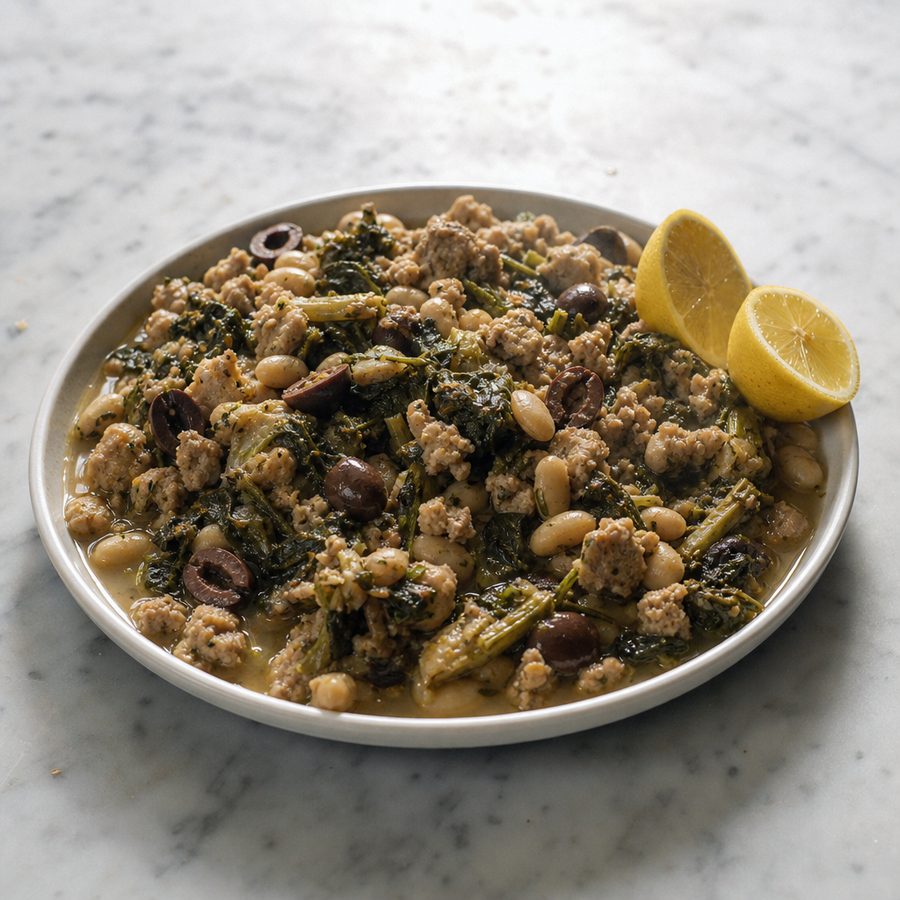
A whole head of escarole wilted down into browned ground chicken with celery, garlic, and white beans, brought together in a shallow pool of broth with torn olives and a squeeze of lemon.
Why You'll Love This Recipe
Escarole and beans is a Neapolitan supper older than anybody's grandmother, and it is usually meatless. I put ground chicken through it because I wanted the pot to be dinner rather than a first course, and because the browned crumbles give the broth a savory weight that the beans alone do not manage in fifteen minutes. The bitterness of the escarole is the thing to understand here. It is gentle, it fades the longer the leaves cook, and it exists to be balanced by fat, salt, and lemon, which are the other three things in the pan. Get those three right and nobody at the table will call the dish bitter at all.
It eats somewhere between a stew and a skillet dinner. There is a shallow pool of cloudy broth at the bottom of every bowl and you want a spoon for it. The escarole goes soft and slippery, the beans stay whole on the outside and turn to paste the moment you press one against the roof of your mouth, and the olives arrive in bursts of salt every few bites. I finish it with more black pepper than the recipe says, always, and a hard squeeze of lemon over the top of each bowl once it is already sitting in front of me.
This is my cold-evening dinner, the one I make in November when I want something brothy that is still a real meal. It is also a genuinely cheap dinner, which matters, and it uses a head of greens that most people walk past at the store. If you have never bought escarole, look for a head with pale yellow leaves at the center and green ones outside, and know that the pale inner leaves are the sweetest part of the whole thing. It is the sort of dinner that costs very little and tastes like it took a long afternoon. Make it once and you will stop walking past the greens.
Ingredients
- 1 lb ground chicken
- 1 large head escarole (about 1 lb), leaves separated, washed well, and torn into wide pieces
- 1 1/4 cups canned cannellini beans, drained and rinsed
- 1 3/4 tbsp olive oil
- 1 small onion, finely chopped
- 3 celery stalks, finely diced, plus any pale leaves from the heart
- 5 garlic cloves, thinly sliced
- 1/4 cup pitted kalamata olives, torn in half
- 3/4 cup chicken broth
- 2 tsp dried oregano, crumbled between your palms
- 1/4 tsp crushed red pepper flakes
- 2 tbsp lemon juice, from 1 lemon, plus wedges for the table
- 1/3 cup chopped flat-leaf parsley
- 1/4 tsp fine sea salt
- 1/2 tsp coarsely ground black pepper
Instructions
- Wash and tear the escarole: Separate the leaves and swish them in a sinkful of cold water, since grit collects deep in the base of the head. Lift them out rather than pouring them off, so the sand stays behind. Tear into pieces about the width of your hand and leave them damp, because that water helps them wilt.
- Brown the chicken: Heat a large deep skillet or a wide pot over medium-high with 1 tbsp of the oil. Add the ground chicken in a few large lumps with the salt and leave it undisturbed for three minutes so the undersides brown. Break it into crumbles, cook two minutes more until no pink remains, and scrape it onto a plate.
- Soften the soffritto: Add the rest of the oil, the onion, and the celery to the same pan. Cook over medium for four minutes, scraping the browned bits off the bottom as the vegetables release their water, until the celery is soft and the onion is translucent. Stir in the garlic, oregano, crushed red pepper, and black pepper and cook one minute more, until the garlic smells sweet.
- Wilt the escarole: Add the escarole in two or three handfuls, tossing with tongs and letting each addition collapse before the next goes in. It will look like far too much and will be down to a quarter of its volume in about ninety seconds. Pour in the broth, cover, and simmer for four minutes, until the leaves are fully tender and no longer squeak against the tongs.
- Finish with the beans, olives, and lemon: Stir in the white beans, the olives, and the chicken with any juices, and simmer uncovered for two to three minutes to heat through and let the broth thicken slightly. Take the pan off the heat, add the lemon juice and parsley, and taste. Serve in shallow bowls with plenty of the broth and lemon wedges alongside.
Variations
- With ground turkey: Ground turkey browns darker and tastes a little deeper, which stands up well to the bitterness of the greens.
- Brothier: Add another cup of broth and serve it as a soup, with the beans lightly crushed against the side of the pot to thicken it.
- Ricotta on top: A spoonful of ricotta on each bowl melts into the broth and softens both the bitterness and the salt from the olives.
- Chickpeas: Chickpeas in place of the cannellini stay firmer and give the bowl more chew, and they take the chile heat well.
- Fennel and lemon zest: A diced fennel bulb cooked with the celery, and a strip of lemon zest added with the broth, push the whole pot sweeter and more aromatic.
Storage & Leftovers
Four days in a sealed container in the refrigerator, and it is better on the second day than the first. The escarole keeps softening, the beans give up starch into the broth and thicken it into something closer to a soup, and the olives distribute their salt through everything overnight.
Reheat it covered in a saucepan over medium-low with a splash of water or broth, five minutes, stirring once. It reheats better than most things because there is nothing crisp in it to lose. Freshen it at the end with lemon and a handful of parsley, since both fade in the refrigerator.
It freezes for up to three months in flat sealed portions. Thaw overnight in the refrigerator and warm it gently on the stove. The beans soften considerably through a freeze and some of them will collapse entirely, which makes the broth creamier and is not a bad outcome here.
Notes & Tips
- Lift the greens out of the water: Escarole holds sand in the base of every leaf. Pouring the bowl off tips the grit back over the leaves, so lift them out with your hands and let the sand stay at the bottom.
- Leave the leaves damp: The water clinging to washed escarole is what steams it down in the first minute. Spinning it bone dry makes the wilting step slower and more awkward.
- Add the greens in handfuls: All at once, they mound above the rim of the pan and steam unevenly. In three additions, each one collapses in about thirty seconds and everything cooks at the same rate.
- Tear the olives rather than slicing: Torn halves have rough surfaces that hold onto the broth, and they release their salt more gradually than neat slices do.
- Use a wide pan with a lid: A head of escarole needs surface area to start with and a cover to finish. A 12-inch skillet with a lid or a shallow Dutch oven is the right tool.
- Season at the very end: Between the olives, the beans, and the broth there is already salt in the pan. Taste after the lemon goes in, and only then decide whether it needs more.
Nutrition & Mindful Eating
- The escarole, the white beans, and the ground chicken make this a full dinner rather than a side. The greens give volume and a gentle bitterness, the beans bring fiber and body to the broth, and the meat supplies the protein that keeps a brothy bowl from feeling like a starter.
- Escarole is a chicory, and that faint bitterness is the flavor of the compounds that come with it. Cooked down it turns silky and mild, and the leaves hold onto their folate and vitamin K through the pan.
- White beans thicken the broth as they warm because their starch dissolves into it, and they carry a soft fiber along with potassium and iron. They are the ingredient that makes a bowl of this hold you for the evening.
- Ground chicken browned in lumps before it is crumbled gives up its fond to the pan, and that fond is where the savory depth of the broth comes from. The meat itself brings protein in quantity and the B vitamins that go with poultry.
- Olives, garlic, oregano, and lemon are the seasoning, and each one arrives at a different moment. The olives land in salty bursts, the oregano sits underneath, and the lemon goes in last so it stays sharp against the bitterness of the greens.
- As you eat, chase the broth at the bottom with a spoon and notice how the bitterness of the greens has turned soft and round, and let the last few spoonfuls be slow enough that you notice when you have had enough.
Frequently Asked Questions
What can I use if there is no escarole?
Curly endive, chicory, or a head of romaine all work, though romaine wilts in seconds and needs half the time. Kale and collards are also fine but are firmer, so give them five or six minutes covered rather than four.
Mine tasted too bitter. What can I do?
Cook it longer, add more fat, or add more acid, in that order. Escarole loses most of its bitterness with heat, so an extra two minutes covered usually settles it, and a bigger squeeze of lemon at the end handles the rest.
Do I have to rinse the beans?
Yes, for this one. The starchy liquid in the can is salty and would fight with the olives, which are already bringing plenty. Rinse until the water runs clear, and the beans will still thicken the broth on their own as they warm.
Can I make it in advance for a weeknight?
Wash and tear the escarole and dice the celery and onion up to two days ahead. Wet greens keep well in a bag with a paper towel. With the prep done this is about fifteen minutes at the stove from a cold pan.