
Ground Lamb and Charred Radicchio Skillet with Mint and Pomegranate
Ground lamb crisped in a hot skillet with wedges of radicchio wilted in the fat, finished with lemon, torn mint, and a scatter of cold pomegranate seeds.
Why You'll Love This Recipe
A weeknight dish that tastes like an afternoon went into it, and one did not. Ground lamb browns faster than any other red meat I cook, and it renders enough fat in the first four minutes to do all the work that follows. Radicchio is the vegetable I reach for when I want bulk on a plate without waiting for anything to roast. It cooks down to about a third of its volume in a hot pan, and heat turns its bitterness into something rounder and almost sweet. Twenty eight minutes from the cutting board to the table, and one skillet to wash.
The eating is a study in contrasts, which is why I keep coming back to it. Lamb is rich and a little gamy, cumin sits underneath and gives it warmth, and then the lemon goes in off the heat and cuts a clean line through the fat. Radicchio holds a faint bitter edge even after it wilts, and that edge is doing real work against the meat. Pomegranate seeds are the surprise. They stay cold and crisp because they never see the burner, and biting into one in the middle of a warm forkful is the reason people ask what is in this.
After a run of chicken, this has a stronger voice. It is generous enough to be the whole dinner on its own, and it holds up well next to a plate of cold sliced fennel or a handful of arugula if you want something crisp beside it. I also make it in early winter when pomegranates are piled up at the market and radicchio heads are dense and heavy for their size. Both of them are at their best in the same weeks, which is not an accident of the calendar so much as a gift.
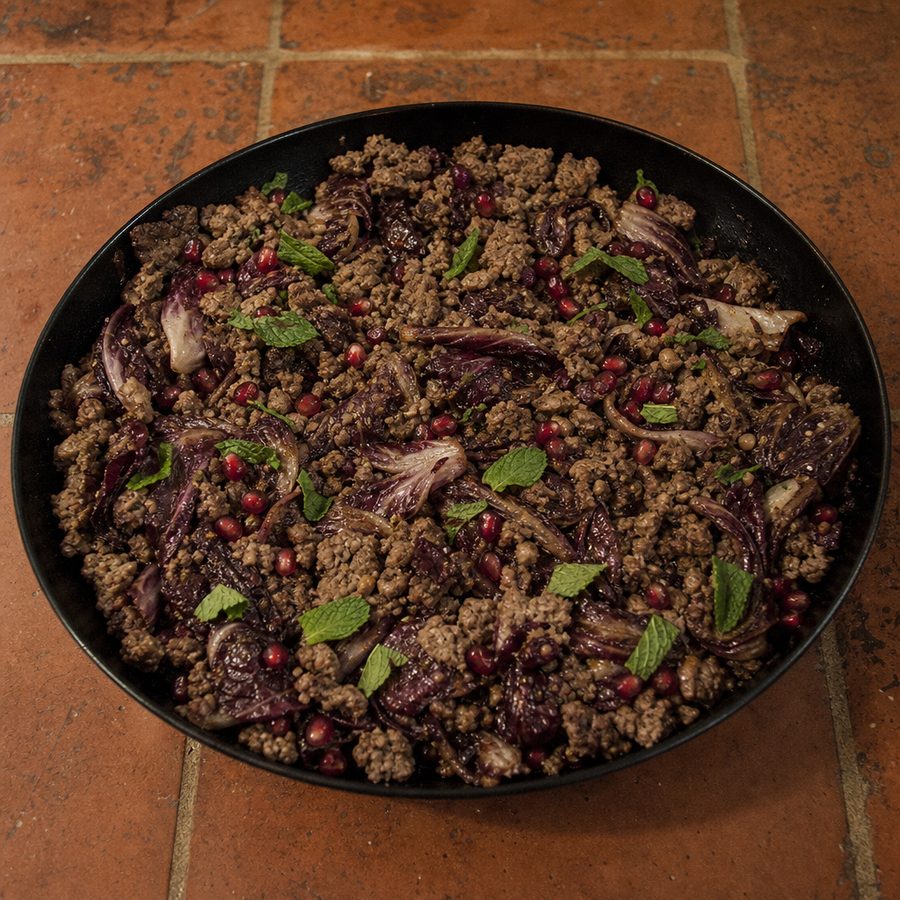
Ingredients
- 1 1/4 lbs ground lamb
- 2 small heads radicchio, quartered through the core, then each quarter halved
- 2 shallots, thinly sliced
- 4 cloves garlic, thinly sliced
- 1/2 cup pomegranate seeds
- 1/2 cup fresh mint leaves, torn at the last minute
- 2 tbsp lemon juice, from about half a lemon
- 2 tbsp olive oil
- 2 tsp ground cumin
- 1/2 tsp coarsely ground black pepper
- 1/2 tsp fine sea salt
Instructions
- Cut the radicchio: Quarter each head straight through the core so the leaves stay attached, then halve each quarter. You want eight wedges per head, each one still hinged at the base. Set them cut side up on the board and leave them dry, since water on the cut faces will steam them instead of searing them.
- Brown the lamb through: Set a twelve-inch skillet over medium-high heat and add the lamb in one layer with the salt and black pepper. Leave it undisturbed for three minutes so the underside forms a crust, then break it up into large pieces and cook three or four minutes more. You are after dark patches, not uniform gray, and the large pieces are the ones to check: nothing should still be pink at the center, which is 160°F for ground lamb. Tip the lamb onto a plate and leave the rendered fat behind.
- Sear the radicchio: Add the olive oil to the fat in the pan and lay the radicchio wedges in cut side down. Leave them alone for two to three minutes until the cut faces are deeply browned and the leaves have slumped, then turn them onto the other cut side for another two minutes. They will hiss and shrink noticeably.
- Add the aromatics: Push the radicchio to one side, add the shallots and garlic to the clear space, and cook for ninety seconds, stirring, until the shallots are limp and the garlic smells sweet rather than sharp. Sprinkle the cumin over everything and stir for thirty seconds, just until it smells toasted.
- Bring it together: Return the lamb and any juices to the pan and toss for one minute to heat through. Take the skillet off the burner, add the lemon juice, and stir once so it hits the hot fat and steams. Scatter the pomegranate seeds and torn mint over the top and serve straight from the pan.
Variations
- Orange rather than lemon: Finish with the juice of half an orange and a little of its zest, which makes the whole skillet rounder and plays to the sweetness the seared radicchio picks up.
- Warmer spice: Add a quarter teaspoon of ground cinnamon and a pinch of ground cloves with the cumin for a version that leans toward the eastern Mediterranean.
- Ground turkey: Ground turkey works with two extra tablespoons of olive oil in the pan, since it renders almost nothing on its own.
- Add toasted walnuts: Scatter a half cup of toasted walnut pieces over the top with the mint for a crunch that holds up better than the seeds do in leftovers.
- Herb swap: Flat leaf parsley and a little dill in place of the mint pushes it greener and more savory.
Storage & Leftovers
This keeps three to four days in a sealed container in the refrigerator. Store the pomegranate seeds and mint separately if you have any left over, because both of them are there for contrast and both go dull once they sit in warm fat overnight.
Reheat in a dry skillet over medium-high for three minutes, spread flat and left alone for the first two so the lamb crisps again. The radicchio will be softer than it was on the first night, which is fine. Add a fresh squeeze of lemon and a few new pomegranate seeds and it comes right back.
I do not freeze this one. Radicchio turns limp and watery after a thaw and the texture is most of what makes the dish. If you want to get ahead, brown the lamb up to two days early and do the rest in ten minutes when you want to eat.
Notes & Tips
- Keep the core attached: The core is the hinge that holds each wedge together. Cut through it rather than around it and the leaves stay in one piece long enough to brown properly.
- Do not stir the lamb early: Ground meat that gets pushed around from the moment it lands releases water and simmers in it. Three still minutes at the start buys you the dark crust that flavors everything else in the pan.
- Use the widest skillet you own: Sixteen radicchio wedges want floor space. In a ten-inch pan they touch, they steam, and the bitterness never turns.
- Toast the cumin in the fat: Thirty seconds in hot fat is what wakes ground cumin up. Added at the same time as the lemon it just tastes dusty.
- Lemon goes in off the heat: On a live burner the juice reduces and turns flat within seconds. Off the burner it stays sharp and lifts everything.
- Tear the mint, do not chop it: A knife bruises mint and turns the cut edges black within a minute. Torn leaves stay green and smell far stronger.
Nutrition & Mindful Eating
- The lamb, the radicchio, and the pomegranate are pulling in three different directions and that is the whole idea. The meat brings the richness and the protein, the seared leaves bring bulk and a bitter edge that keeps it from feeling heavy, and the fruit lands cold and sharp on top of both.
- Ground lamb renders generously and browns in patches rather than evenly, which is where the roasted flavor comes from, and red meat this dark carries iron in the form your body takes up most readily along with the B12 that comes with it.
- Radicchio is a chicory, and the same compounds that make the leaves bitter are what turn sweet and mellow under high heat. It cooks down to almost nothing yet still brings real fiber to the plate, along with the anthocyanins that give the leaves their color.
- Pomegranate seeds stay crisp because they never touch the pan, and each one is a small burst of juice, fiber, and vitamin C that arrives at exactly the moment a rich forkful needs interrupting.
- Cumin toasted in the rendered fat, garlic softened until it smells sweet, and lemon juice added off the burner are the three things that make this taste finished. None of them takes more than a minute and the dish is noticeably flatter without any one of them.
- As you eat, notice how the cold pomegranate seeds interrupt each rich forkful, and let that small pause set the pace for the rest of the plate rather than eating straight through it.
Frequently Asked Questions
My radicchio is still very bitter. What did I do wrong?
Most likely it did not get enough color. Bitterness softens with browning, so the cut faces need to sit still on the metal until they are genuinely dark, not just warm. A crowded pan is the usual culprit, since the wedges steam one another. Sear them in two loads if your skillet is smaller than twelve inches.
Can I use a different green here?
Endive works beautifully and behaves almost identically, halved lengthwise and seared the same way. Escarole or a head of napa cabbage cut into wedges will also do, though both cook faster and want only about half the time on each cut face.
Is ground lamb worth buying over ground beef?
For this dish, yes. Lamb renders more fat and renders it faster, and that fat is what the radicchio cooks in. Ground beef will work if it is what you have, but add an extra tablespoon of olive oil to the pan before the wedges go in.
How do I get pomegranate seeds out without wearing them?
Score the fruit around its equator, pull the halves apart, and hold each half cut side down over a bowl of water while you whack the skin with a wooden spoon. The seeds drop and sink, the white membrane floats, and nothing stains your shirt.