
Ground Lamb and Spaghetti Squash Breakfast Skillet
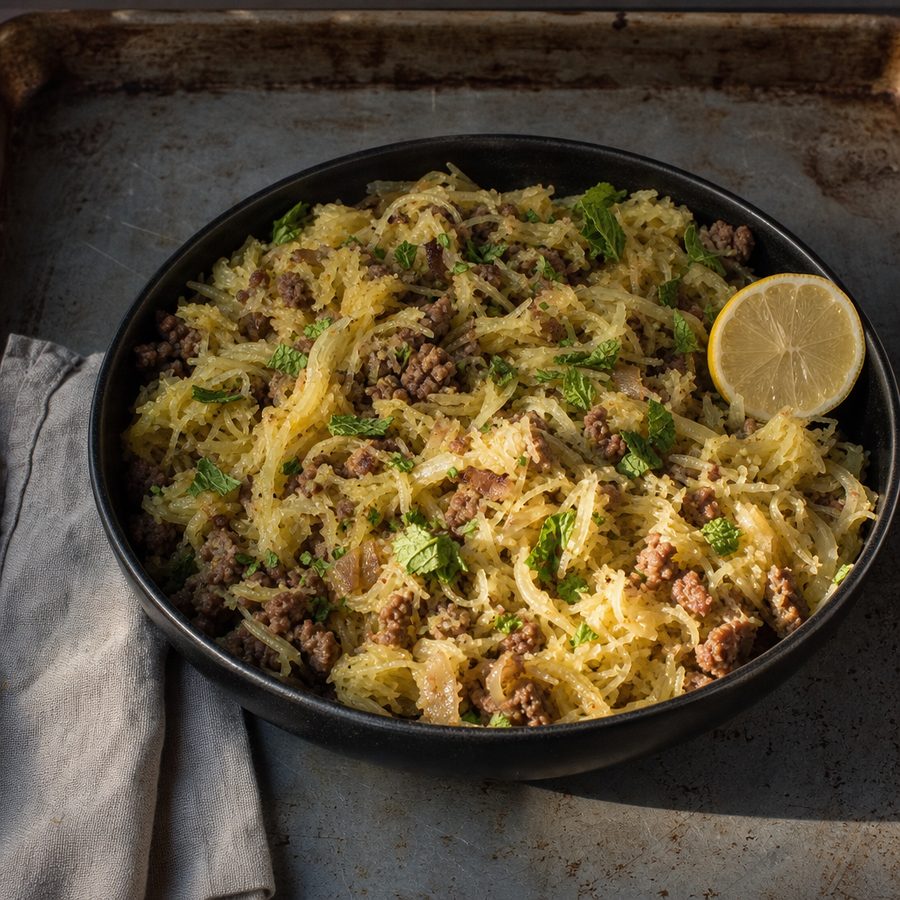
Browned ground lamb tossed with roasted spaghetti squash strands, onion, and oregano, finished off the heat with lemon and a lot of fresh mint.
Why You'll Love This Recipe
Anyone who misses a plate of eggs and hash, and has been circling the same fruit bowl for a fortnight, should start here. Ground lamb browns in the time it takes to make a cup of tea, and it tastes properly of something, which matters more than usual when the seasoning shelf is mostly off limits. The squash is the only slow part, so I roast it the night before and keep the strands in a container, and then the whole skillet is on the table in fifteen minutes on a weekday morning. It reheats better than almost anything else in this rotation.
Spaghetti squash is worth understanding before you cook it. Roast it cut side down and the flesh steams in its own moisture, then a fork dragged across the inside pulls it into long pale strands that stay separate and keep a slight bite. The trick people miss is what happens next: those strands hold water, so they need a hot dry pan and a few minutes left alone to drive it off, otherwise the skillet goes soupy. Lamb fat is the right medium for that. It coats the strands, carries the oregano and garlic through them, and browns a few edges so the texture is not uniform.
Mint and lemon go in off the heat, and they are the reason this eats bright rather than heavy at seven in the morning. Lamb is rich enough that it needs something sharp against it, and both of those fade to nothing if you cook them, so they wait until the pan is off the burner. What you get is a plate with real chew to it, savory and herby and faintly sweet from the onion, that holds you well past the middle of the morning without sitting heavily while it does.
Ingredients
- 1 1/4 lb ground lamb
- 1 medium spaghetti squash (about 2 1/2 lb), halved lengthwise and seeded
- 1 medium onion, diced small
- 3 cloves garlic, minced
- 1 1/2 tbsp olive oil
- 1 tsp dried oregano
- 1/3 cup torn fresh mint leaves
- Juice of 1/2 lemon (about 1 1/2 tbsp)
- 1 tsp fine sea salt, divided
Instructions
- Roast the squash: Heat the oven to 400°F. Rub the cut faces of the squash with a little of the olive oil, lay them cut side down on a sheet pan, and roast for 35 to 40 minutes, until a knife goes through the skin with no push. Let the halves sit until you can handle them, then drag a fork lengthwise through the flesh to pull it into strands.
- Brown the lamb: Heat a large skillet over medium-high. Add the lamb in rough chunks with half the salt and leave it undisturbed for three to four minutes so a brown crust forms underneath, then break it up and cook another four to five minutes until no pink remains. Spoon off the fat if there is more than a couple of tablespoons in the pan.
- Soften the onion and garlic: Add the onion to the rendered fat and cook for four to five minutes, stirring now and then, until it turns translucent with gold edges. Stir in the garlic and the oregano and cook for about 30 seconds, until the pan smells sweet rather than sharp.
- Dry out the squash strands: Turn the heat up, add the squash strands and the remaining salt, and spread everything into one layer. Leave it alone for three to four minutes so the water cooks off and some strands catch gold at the bottom, then toss and repeat once. You want the pan looking dry, not glossy.
- Finish off the heat: Take the skillet off the burner. Add the lemon juice and the torn mint, toss twice so the mint wilts but stays green, and taste for salt. Serve straight from the pan while the edges are still crisp.
Variations
- Greek leaning: Add a handful of chopped kalamata olives with the squash and double the lemon for a saltier, sharper skillet that eats well at any hour.
- Greens in the pan: Wilt a few large handfuls of spinach or swiss chard into the strands in the last minute so the plate goes green and the lamb has something soft to sit against.
- Warm spice: Trade the oregano for a half teaspoon of cinnamon and a pinch of ground cloves, which pushes the lamb toward a warmer, more North African character.
- Squash-free: Use shredded zucchini or a small head of shredded cabbage in place of the strands, cooked the same way, when you do not have 40 minutes for the oven.
- Brunch plate: Pile the skillet onto a bed of sliced avocado and finish with extra mint when you want it richer and are feeding people who slept in.
Storage & Leftovers
Keep leftovers in a sealed container in the fridge for up to four days. This is one of the few skillets that improves overnight, because the squash keeps absorbing the lamb fat and the oregano settles into it, so day two tastes more like one dish and less like two.
Reheat in a dry skillet over medium-high for three or four minutes rather than in the microwave. The pan drives off the water the fridge pulls out of the squash and brings the browned edges back, where the microwave leaves you with a wet plate. Add fresh mint after reheating.
It freezes acceptably, which is rare for squash, because the strands are already loose and the fat protects them. Freeze in flat portions for up to two months, thaw overnight in the fridge, and expect a softer texture that is better suited to a bowl than a plate.
Notes & Tips
- Roast the squash cut side down: Face up, the flesh dries out and browns unevenly. Face down, it steams in its own moisture and the strands separate cleanly under a fork.
- Leave the lamb alone at first: Poking ground meat as soon as it hits the pan gives you gray crumbles. Three undisturbed minutes builds the browned crust that carries the flavor of the whole skillet.
- Keep some of the fat: Pour off the excess, but not all of it. Lamb fat is what the squash cooks in, and a bone dry pan gives you strands that taste like nothing.
- Cook the squash in batches if needed: A big squash overwhelms a twelve-inch skillet. Two batches take four extra minutes and are the difference between browned strands and steamed ones.
- Tear the mint, do not chop: A knife bruises mint and turns the cut edges black within minutes. Torn leaves stay green and taste cleaner on the plate.
- Salt in two places: Half goes in with the lamb so it seasons the meat as it browns, half goes in with the squash. Adding it all at the end gives you a sharp, surface-level saltiness.
Nutrition & Mindful Eating
- Lamb and squash strands are a good pairing on the plate and a sensible one nutritionally. The meat brings the protein and the fat that carries flavor, while the squash brings bulk and fiber, so a generous plate of it still eats lightly.
- Lamb is one of the richer sources of heme iron and vitamin B12, the forms your body absorbs most readily, and it browns to a deeper, more savory flavor than most ground meats. That richness is why a modest amount of it seasons a whole skillet.
- Spaghetti squash pulls into strands that stay separate and keep a light bite, and most of what is in them is water and fiber. That combination is what lets you eat a big plate of this and still get up from the table comfortably.
- Onion and garlic soften into the lamb fat and carry prebiotic fiber, the kind that feeds the bacteria in your gut rather than you. Cooking them slowly makes them gentler on a stomach that finds raw alliums difficult.
- Torn mint and lemon land at the very end, and they are what your palate notices first. Herbs this fresh let you season with less salt and still get a plate that tastes finished and clean.
- As you eat, notice how the mint keeps arriving after the richness of the lamb, and let that back and forth slow you down enough to know when you have had enough.
Frequently Asked Questions
Can I use a different ground meat?
Yes. Ground beef, bison, or turkey all go in at the same weight and the same method. Lamb has more fat and more flavor than the other three, so with turkey especially you will want an extra tablespoon of olive oil in the pan and a heavier hand with the oregano.
My skillet came out watery. What happened?
The squash strands were not dried out enough. Squash holds a surprising amount of water, and it all comes out in the pan. Spread the strands in one layer over higher heat and leave them alone for a few minutes at a time, and if the squash was very large, cook it in two batches.
Can I make the whole thing ahead?
Roast the squash and pull the strands up to three days in advance, which is what turns this into a weekday breakfast. You can brown the lamb ahead too, though I would keep the two separate and combine them in a hot pan in the morning so the strands still get their few minutes of browning.
Does this fit an AIP elimination phase?
It does. Ground lamb, squash, onion, garlic, oregano, lemon, and mint contain no grains, legumes, dairy, eggs, nuts, seeds, or nightshades. Buy plain ground lamb rather than a seasoned blend, since sausage mixes almost always carry pepper or paprika.