
Halibut a la Plancha with Green Beans, Chickpeas, and Almond Picada
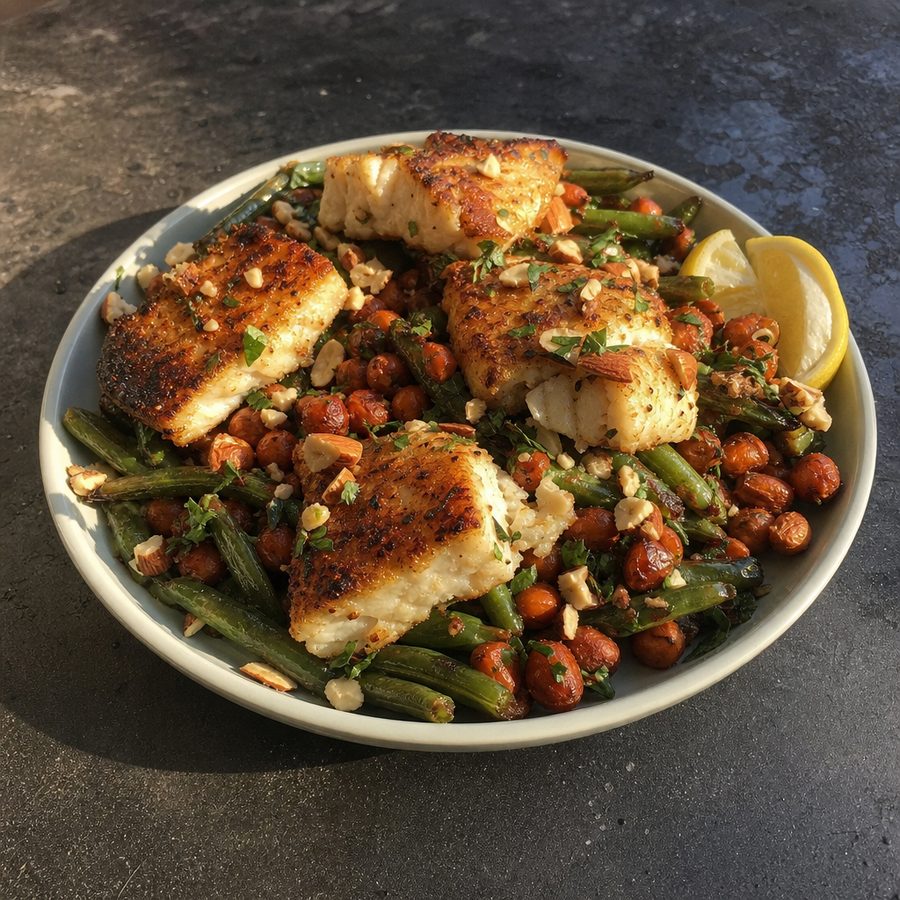
Halibut seared hard in a dry, hot pan over blistered green beans and smoky chickpeas, with a coarse picada of toasted almonds, garlic, and parsley stirred through at the end.
Why You'll Love This Recipe
A picada is the trick I wish more people knew about. Cooks in Catalonia pound toasted nuts, garlic, and herbs together and stir the paste into a dish at the very end, and it does two jobs at once: it thickens whatever it lands in, and it puts a crunchy, toasty layer on top of food that would otherwise be soft. Here it turns a plain seared fillet and a pan of beans into something with real texture. You can pound it in a mortar if you own one, but a cutting board and a heavy knife take about ninety seconds. Make it once and you will find yourself spooning it over roasted vegetables and grilled chicken for the rest of the month.
The fish is cooked the way they do it on a plancha, which is to say in a properly hot pan with almost nothing on it. Halibut is thick and firm and holds together better than most white fish, so it can take that kind of heat and come out with a golden crust and a moist center. The one thing that ruins it is moisture, so the fillets get dried thoroughly and go into the pan without crowding. Four to five minutes a side is usually all a piece this thick needs. Give the fillets a minute to sit on the board while you finish the pan, and they will carry on cooking gently to the center.
Something that tastes like a restaurant plate, on a Tuesday, is the whole ambition here. Everything can be prepped while the almonds toast, and the whole thing lands on the table in under half an hour. The smoked paprika gives the chickpeas a warm, campfire flavor that carries the beans along with it, the vinegar cuts through at the end, and between the fish, the chickpeas, and a pound of green beans, nobody leaves the table looking for something else. It is the kind of plate people slow down for, which is not something I can say about every weeknight dinner.
Ingredients
- 1 1/3 lb skinless halibut fillet, cut into 4 pieces and patted very dry
- 1/3 tsp fine sea salt
- 1/2 tsp freshly ground black pepper
- 1/3 cup whole almonds
- 2 tbsp olive oil, divided
- 4 garlic cloves, 2 thinly sliced and 2 finely chopped
- 3/4 cup flat-leaf parsley leaves, chopped
- 14 oz green beans, stem ends trimmed
- 1 (15 oz) can chickpeas, drained and rinsed
- 1 1/2 tsp smoked paprika
- 1 1/2 tbsp cider vinegar, or sherry vinegar if you keep it
- 1 tbsp lemon juice, plus wedges to serve
Instructions
- Toast the almonds and make the picada: Warm 1 tbsp of the olive oil in a large heavy skillet over medium heat and add the almonds. Toast for three to four minutes, shaking the pan, until they are golden inside when you break one open and the kitchen smells nutty. Tip them onto a board with the 2 chopped garlic cloves and the parsley and chop the lot together into a coarse, sandy rubble. Set it aside.
- Blister the green beans: Return the pan to medium-high, add the sliced garlic and the green beans, and cook for five to six minutes, tossing only every minute or so. You want dark blistered spots on the beans and some real color on the garlic. Season with half the salt and half the pepper, then move the beans to a plate.
- Warm the chickpeas in smoked paprika: Add the remaining 1 tbsp oil to the pan, then the chickpeas and the smoked paprika, and cook for two minutes, pressing some of the chickpeas lightly with the back of a spoon so they take on color and split. Stir in the vinegar, let it hiss and mostly cook away, then return the beans to the pan and slide everything onto a serving platter.
- Sear the halibut a la plancha: Wipe the skillet, set it over medium-high heat until a drop of water skitters, and season the halibut with the remaining salt and pepper. Lay the pieces in the dry pan and leave them alone for four minutes, until the underside is deep gold and releases on its own. Turn once and cook two to four minutes more, until the fish is opaque and reads 145°F at the thickest point.
- Finish with the picada: Set the halibut over the beans and chickpeas, spoon the picada across the fish and the vegetables, and add the lemon juice. Let it sit for a minute so the almonds soften just slightly against the hot food, then serve with lemon wedges.
Variations
- Romesco leanings: Add a chopped roasted red pepper to the chickpeas with the paprika for a rounder, sweeter pan underneath the fish.
- Sherry and raisin: Stir a tablespoon of golden raisins into the chickpeas with the vinegar so they plump and give a sweet-sour note against the smoke.
- Hazelnut picada: Swap toasted hazelnuts for the almonds, which is the older Catalan version and tastes deeper and slightly sweeter.
- Asparagus in spring: Use asparagus cut into lengths in place of the green beans and cut the blistering time to three minutes.
- More heat: Add a pinch of cayenne to the smoked paprika for a warm, low burn that sits under the whole plate.
Storage & Leftovers
The beans and chickpeas keep four days in a sealed container and honestly improve overnight, because the smoked paprika and the vinegar work their way into the chickpeas. Keep the picada in a separate small jar in the refrigerator so the almonds stay crisp rather than going soft in the pan juices.
Halibut is best the day it is cooked, but it will hold two days refrigerated. Reheat it gently, covered, in a low skillet with a spoonful of water for three or four minutes, or slice it cold over the beans and eat it that way, which is what I usually end up doing at lunch.
Freeze the chickpea and green bean mixture for up to two months if you like, though the beans lose their blistered snap. Cooked halibut does not freeze well and comes back dry and fibrous. The picada, on the other hand, freezes beautifully and is worth making double for exactly that reason.
Notes & Tips
- Dry the fish, then dry it again: Surface water steams and stops a crust from ever forming. Press both sides of each fillet with paper towel right before it goes into the pan, not ten minutes earlier.
- Let the pan get properly hot: A drop of water should skitter and vanish. A pan that is merely warm gives you pale, sticky fish and a fillet that falls apart on the turn.
- Season the fish last: Salt draws moisture to the surface within a few minutes, so season the halibut just as it goes into the pan and it will brown instead of weeping.
- Chop the picada coarse: Ground to a powder, the almonds disappear into the sauce. Left in rough pieces you can see, they stay crunchy on top of the fish, which is the whole point of them.
- Add the paprika off high heat: Smoked paprika scorches fast and turns bitter. Stir it into the chickpeas with the pan on medium, and add the vinegar within a minute to stop it cooking further.
- Do not crowd the fish: Four fillets need a 12-inch pan. Any tighter and they steam in their own moisture. Sear in two batches if your skillet is smaller, and keep the first two warm under foil.
Nutrition & Mindful Eating
- The halibut, the chickpeas, and the almonds are what make this a real dinner. The fish carries the protein, the chickpeas bring fiber and a soft, starchy bite underneath it, and the almonds add fat and crunch that make the plate satisfying long after the crust on the fish has cooled.
- Halibut is a thick, firm, close-grained fish that holds its shape under high heat, and a fillet of it brings a lot of protein along with the selenium and the potassium that make it a genuinely filling piece of fish.
- Chickpeas warmed until they split take on the paprika and the vinegar better than whole ones do, and their fiber is the slow, steady sort that keeps a plate of fish from disappearing in five minutes.
- Almonds toasted in olive oil turn deeply nutty, and the vitamin E and magnesium they carry ride along inside a handful that is really there for the crunch.
- Smoked paprika, garlic, and cider vinegar are the reason this tastes Spanish rather than plain. The paprika brings the campfire smell, the garlic sweetens as it blisters with the beans, and the vinegar hits the chickpeas while they are hot so it soaks in.
- As you eat, listen for the almonds against the soft chickpeas and notice how the smoked paprika comes through after the lemon does, and give the plate the few extra minutes it deserves.
Frequently Asked Questions
Can I use cod or tilapia instead of halibut?
Yes, with a lighter hand. Halibut is dense enough to take a hard sear, while cod is more delicate and wants a slightly lower flame and one careful turn with a wide spatula. Tilapia fillets are thin, so give them about two minutes a side and watch them closely.
Why did my fish stick to the pan?
It was turned too early. A seared fillet releases itself when the crust has formed, so if it grips the metal it needs another thirty seconds. Wet fish also sticks, so dry both sides thoroughly with paper towel and let the pan get properly hot before anything goes in.
Do I need a mortar and pestle for the picada?
No. A mortar gives you a smoother paste and a slightly thicker sauce, but chopping the toasted almonds, garlic, and parsley together on a board with a heavy knife gets you a coarser picada that I actually prefer here, because you can feel the almonds.
Can I make any of it ahead?
Yes. Make the picada up to three days ahead and keep it covered in the refrigerator, and trim the beans the night before. The chickpeas can be warmed with the paprika earlier in the day and reheated while the fish sears, which leaves you about ten minutes of actual cooking at dinnertime.