
Halibut and Green Bean Pot in Garlic Broth
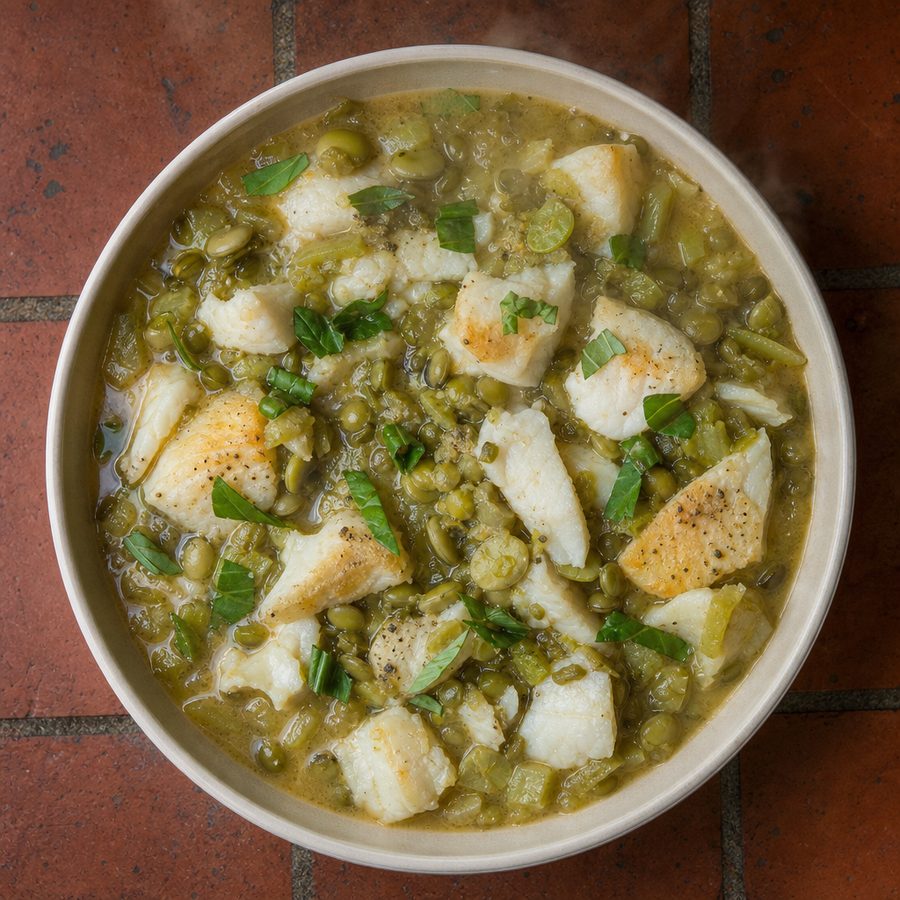
Green beans braised soft in a garlicky broth with onion and celery, then chunks of halibut lowered in on top to poach until they break into thick white pieces.
Why You'll Love This Recipe
When someone is coming over, I would rather not be standing at the stove when they arrive. The beans and the broth can be done an hour ahead and left on the back of the stove, and the fish only goes in for the last ten minutes, which means dinner lands whenever you want it to. It comes to the table in shallow bowls with a spoon, so it feels like a fish stew, but you can see exactly what is in it. Big white chunks of halibut, soft green beans, celery gone almost sweet, and a broth the color of weak tea with a slick of olive oil on top.
Two things make the difference here. The first is cooking the beans properly soft, which will feel wrong if you have spent years pulling them out bright and squeaky. Twenty minutes in the broth turns them olive green and silky, and that is when they finally taste of the garlic they have been sitting in. The second is how gently the fish goes in. Set the chunks on top of the beans, put the lid on, cut the heat to the barest simmer, and leave them alone. Halibut is close-grained and unforgiving, and a bubbling pot will shred it into strings before it ever reaches the middle.
What comes out is a bowl that eats light and still holds you, mostly because halibut carries so much protein for its softness. The broth is the part people remember. Bone broth simmered with onion, celery, and eight cloves of garlic goes savory in a way that has nothing to do with a spice rack, and the lemon zest stirred in at the end lifts it right up. Leftovers keep well if you store the fish and the beans in the same container with all the broth, and the beans are honestly better on the second day than they were on the first.
Ingredients
- 1 1/2 lb halibut fillet, skin removed, cut into 2-inch chunks
- 1 lb green beans, trimmed and cut in half
- 3 celery stalks, cut into 1/2-inch pieces
- 1 large onion, chopped
- 8 cloves garlic, thinly sliced
- 4 tbsp olive oil, divided
- 4 cups chicken bone broth
- 1 tsp dried oregano
- 2 bay leaves
- 2 tbsp fresh lemon juice, plus the zest of 1 lemon
- 1/3 cup torn fresh basil leaves
- 1 1/4 tsp fine sea salt, divided
Instructions
- Soften the onion and celery: Heat 2 tablespoons of the olive oil in a wide pot or deep skillet over medium. Add the onion, the celery, and 1/4 teaspoon of the salt and cook for 8 minutes, stirring now and then, until the onion is translucent and the celery has lost its raw edge. Do not let them brown.
- Add the garlic and oregano: Stir in the sliced garlic and the dried oregano and cook for 2 minutes, until the garlic smells sweet and just begins to color at the edges. Garlic this thinly sliced burns in seconds, so keep it moving and drop the heat if it starts to darken fast.
- Braise the green beans: Add the green beans, the broth, the bay leaves, and 1/2 teaspoon of the salt. Bring to a simmer, lower the heat, and cook uncovered for 20 to 22 minutes, until the beans are completely tender and have turned from bright green to olive. They should give with no squeak when you bite one.
- Poach the halibut: Pat the halibut chunks dry and season them with the remaining 1/2 teaspoon of salt. Lower them onto the beans in a single layer, cover the pot, and hold the liquid at a bare simmer for 8 to 10 minutes. The fish is done when it is opaque through and separates into thick sheets at a gentle press.
- Finish off the heat: Take the pot off the burner and lift out the bay leaves. Add the lemon juice, the lemon zest, and the remaining 2 tablespoons of olive oil, tilting the pot rather than stirring so the halibut stays in pieces. Taste the broth and add salt if it needs it.
- Serve in bowls: Spoon the beans and broth into four shallow bowls, set the halibut chunks on top, and scatter the torn basil over everything. Serve right away, while the fish is hot and the basil is still bright.
Variations
- Shrimp version: Skip the halibut and stir a pound of raw peeled shrimp into the hot broth off the heat, covered, for 4 minutes until they curl and turn opaque.
- Summer squash: Add two sliced zucchini for the last 10 minutes of the braise so they collapse slightly into the broth alongside the beans.
- Greens at the end: Wilt a few handfuls of arugula or spinach into the pot in the last minute for a peppery bite against the soft beans.
- Deeper pot: Swap half the chicken bone broth for beef bone broth when you want a darker, heavier bowl in cold weather.
- Dill and lemon: Finish with chopped dill rather than basil, which pushes the pot north and suits the fish just as well.
Storage & Leftovers
Refrigerate leftovers in a sealed container for up to 3 days, keeping the fish, the beans, and the broth together. The halibut soaks up more of the garlic overnight, and the broth around it keeps the edges of the fish from drying out the way they would on a plate.
Reheat gently in a covered pot over medium-low for 6 to 8 minutes, just until the broth steams. A hard reheat is what breaks the halibut into shreds, and once that happens there is no getting the pieces back. Add a squeeze of lemon and fresh basil after warming.
The bean and broth base freezes well on its own for up to 3 months, though the fish does not. Freeze the base in a sealed container, thaw it overnight in the refrigerator, bring it back to a simmer, and poach fresh halibut in it for a dinner that takes 15 minutes.
Notes & Tips
- Buy the halibut in one thick piece: A single center-cut fillet cut into chunks at home gives you even pieces. Pre-cut pieces run thin at one end and overcook before the thick ones are ready.
- Slice the garlic, do not mince it: Sliced garlic softens into the broth over 20 minutes and stays sweet. Minced garlic scorches in the first two minutes and turns the whole pot bitter.
- Wide pot, single layer: The fish needs to sit on the beans in one layer so it poaches evenly. Stacked chunks cook at two different speeds and the top ones stay raw.
- Watch for the bubble: A bare simmer looks like the odd bubble breaking at the edge. If the pot is rolling, the halibut will shred, so pull it off the heat for a minute.
- Zest before you juice: Zest the lemon while it is still whole, then cut and squeeze it. Both go in at the end, and the zest is what carries the perfume into the broth.
- Save the last of the oil for the end: Two tablespoons of raw olive oil stirred in off the heat is what makes the broth taste round rather than thin. It is not the same as adding it at the start.
Nutrition & Mindful Eating
- The halibut, the beans, and the broth are doing three separate jobs in one bowl. The fish gives the meal its substance, the green beans and celery bring the fiber and the body, and the bone broth carries both of them with the gelatin it gives up as it simmers.
- Halibut is firm and close-grained, which is why it holds in thick white pieces rather than falling apart in the pot. It is dense with protein for how soft it eats, and it carries selenium and vitamin D, two things that are hard to find in many other foods.
- Green beans braised until they are silky still hold on to their fiber, and the long cook in broth softens their cell walls enough that people who find raw vegetables hard on the stomach usually manage them comfortably here.
- Eight cloves of garlic sounds like a lot until you slice them and let them go sweet in the broth. Garlic cooked slowly this way brings the sulfur compounds that have been studied for their effect on immune function, and it is why the pot tastes savory with so little salt.
- Olive oil stirred in at the end stays raw, which keeps its polyphenols and its peppery finish intact, and the fat it adds is what makes a broth this light hold you for the rest of the evening.
- As you eat, take the broth with a spoon before you go for the fish, and notice how much sweetness twenty minutes of slow cooking pulled out of the garlic and the celery.
Frequently Asked Questions
Can I use a cheaper fish?
Yes, with one adjustment. Cod, haddock, and pollock all poach in the same time but are softer and will break into flakes rather than holding as chunks. Cut them slightly larger, into 3-inch pieces, and lower them in during the last 7 minutes rather than the last 10.
Are the green beans supposed to be this soft?
They are. This is the long-braised style, where the beans go olive green and silky and take on everything around them. If you prefer them with more bite, cut the braise to 12 minutes, but they will taste more of themselves and less of the garlic and broth.
Can I make it ahead for company?
This is what it is built for. Cook the beans and broth up to a day ahead and refrigerate them. Bring the base back to a simmer, then poach the fish in it just before you eat. Do not cook the halibut ahead and reheat it, since it tightens the second time.
Does this work during an AIP elimination phase?
It does. There are no grains, dairy, eggs, nuts, seeds, or nightshades in it, and the flavor comes from onion, garlic, oregano, bay, lemon, and basil. Check the label on your bone broth, since plenty of cartons carry black pepper or a spice blend that would not belong.