
Harissa Chicken with Swiss Chard and White Beans
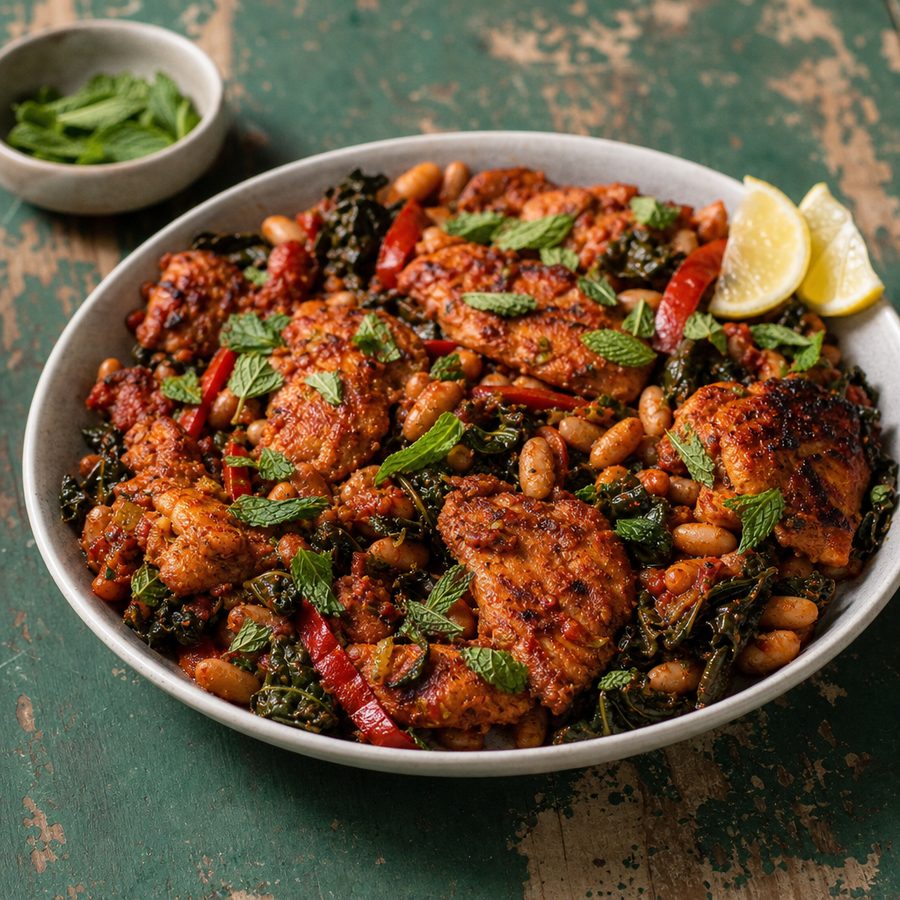
Chicken cutlets seared under a harissa paste stirred together from smoked paprika, cayenne, garlic, and tomato paste, finished with wilted swiss chard, white beans, sweet red pepper, lemon, and torn mint.
Why You'll Love This Recipe
Harissa out of a tube is a fine thing to keep, but the version you stir together in a bowl while the pan heats tastes like a different condiment. Mine is smoked paprika for depth, cayenne for the heat, cumin and coriander for the earth, a lot of grated garlic, and tomato paste to hold it all together and give it body enough to cling to a cutlet. It takes three minutes and a fork. Half goes on the chicken and half goes into the pan later, where it fries in the oil and loses its sharp edge.
Chicken breast in a hot skillet is easy to ruin and easy to get right, and the difference is thickness. Slicing each breast horizontally into a cutlet means two minutes a side rather than eight, which is not enough time for the meat to tighten and go dry. The harissa helps as well, since a coating of paste and oil sits between the meat and the metal and browns first. Pull the cutlets when the thickest part reads 165°F and let them wait on a plate while the vegetables cook.
Chard going limp in the drawer is what sends me to this one. Chard has two vegetables in it, stems that want a few minutes and leaves that want thirty seconds, and treating them separately is most of the technique here. The beans turn the pan from a side dish into a meal, the pepper strips go soft and sweet against the chile, and every serving has a whole cutlet on it. Bread is optional and I usually skip it.
Ingredients
- 1 lb boneless, skinless chicken breast, sliced horizontally into 4 thin cutlets
- 1 large bunch swiss chard (about 14 oz), stems sliced thin and leaves torn
- 1 1/4 cups canned cannellini beans, drained and rinsed
- 1 red bell pepper, seeded and cut into thin strips
- 3 tbsp tomato paste
- 1 small onion, thinly sliced
- 5 garlic cloves, 3 grated and 2 sliced
- 1 1/2 tbsp olive oil
- 2 tsp smoked paprika
- 1 1/2 tsp ground cumin
- 1 tsp ground coriander
- 3/4 tsp cayenne, or 1/2 tsp for a gentler pan
- 2 tbsp lemon juice, plus wedges for the table
- 1/2 cup flat-leaf parsley, chopped
- 1/4 cup fresh mint leaves, torn
- a scant 1/4 tsp fine sea salt
Instructions
- Stir together the harissa: In a small bowl, mix the tomato paste, smoked paprika, cayenne, cumin, coriander, the grated garlic, the salt, and 1 tbsp of the olive oil, stirring until it comes together into a thick, spreadable paste. Rub half of it over both sides of the chicken cutlets and leave the rest in the bowl, since the second half goes into the pan later and needs hot oil to lose its raw edge.
- Prepare the chard in two piles: Strip the leaves from the chard stems. Slice the stems crosswise about 1/4 inch thick and keep them in one pile, then tear the leaves into rough pieces and keep them in another. The stems need four or five minutes of cooking and the leaves need well under one, which is why they go into the pan at different times.
- Sear the cutlets: Heat the remaining oil in a 12-inch skillet over medium-high until it shimmers. Lay the cutlets in and cook for two minutes without moving them, because the paste needs uninterrupted contact with the pan to set into a crust instead of smearing, until the paste has darkened and set into a crust, then turn and cook two minutes more, to 165°F at the thickest point. Move them to a plate.
- Soften the stems, pepper, and beans: Turn the heat to medium. Add the chard stems, the pepper strips, the onion, and the sliced garlic to the pan and cook for four minutes, stirring, until the stems bend and the onion goes translucent. Add the beans and the reserved harissa and stir for one minute, letting the paste fry in the oil until it smells sweet rather than sharp. Add 2 tbsp water if the pan looks dry.
- Wilt the leaves and finish: Pile the chard leaves on top and cover the pan, so that the trapped steam collapses them without stewing, and give it forty five seconds. Uncover and fold them through, and they will have collapsed to a fraction of their volume. Take the pan off the heat, add the lemon juice, and lay the cutlets and any resting juices back on top. Scatter the parsley and mint over everything and serve with lemon wedges.
Variations
- Chicken thighs: Use boneless thighs, opened out flat, and give them four minutes a side to 175°F for a richer plate.
- Chickpeas: Swap the cannellini for chickpeas, which stay firmer and give the pan a nuttier, rounder body.
- Preserved lemon: Rinse a quarter of a preserved lemon, slice the peel into fine threads, and stir it in with the beans in place of half the lemon juice.
- Olives and capers: Add a small handful of pitted green olives and a spoonful of capers with the beans for a sharper, brinier finish.
Storage & Leftovers
This keeps three days in the refrigerator, and I store the cutlets on top of the vegetables rather than buried in them so the crust stays put. The harissa gets rounder and less sharp overnight, which is a good thing, and the beans absorb some of the pan juices and taste better on day two than they did on day one.
Reheat gently, which is the opposite of how it was cooked. Medium heat, a splash of water, a lid, and four minutes is enough to warm the beans and greens through without cooking the chicken a second time. If you have a minute, slice the cutlet cold, warm only the vegetables, and lay the chicken on at the end so it barely heats.
The vegetable and bean base freezes for two months on its own and is worth making a double batch of for that reason. The chicken does not freeze as gracefully, so I sear fresh cutlets and lay them over the thawed base, which takes about six minutes on a night when nothing else is going to happen.
Notes & Tips
- Slice the breast into cutlets: A whole chicken breast is too thick for a fast pan. Halved horizontally it cooks in four minutes total, which is the whole reason this dish takes under half an hour.
- Fry the harissa, do not just stir it in: A minute in hot oil is what turns tomato paste and paprika from sharp and metallic into deep and sweet. Give it that minute before anything wet goes into the pan.
- Keep the chard stems: The stems are the sweetest part of the plant and the part most often thrown out. Sliced thin and given a head start, they eat like a firm, mild celery.
- Salt at the start, taste at the end: The paste carries the salt into the chicken. Wait until the lemon is in before you decide whether the pan wants any more.
Nutrition & Mindful Eating
- The cutlets, the beans, and the greens work as three parts of one plate. Chicken breast carries the protein, cannellini beans bring fiber and a creamy body that thickens the pan juices, and the chard adds volume so a serving fills a bowl rather than a corner of one.
- Swiss chard is two vegetables from one bunch, sweet crunchy stems and dark leaves that collapse to almost nothing, and those leaves are where its vitamin K, magnesium, and deep mineral flavor sit.
- Cannellini beans hold their shape when they are folded into a hot pan and give up just enough starch to make the juices cling. They carry soluble fiber and plant protein, and they are the ingredient that turns this from a chicken dish with a side into a meal in one skillet.
- Smoked paprika, cayenne, cumin, and coriander are what make the harissa, and frying the paste in oil is what changes it. Capsaicin gives the heat, the smoke gives the depth, and a minute in the pan takes the raspy edge off all of it.
- Lemon squeezed in off the heat and mint torn over the top are the two cold things in a hot pan, and they are why the last bite tastes as bright as the first. Both go in last so nothing has a chance to dull them.
- As you eat, take a bite that has chard stem, bean, and a corner of the harissa crust on the fork together, and notice how the heat builds slowly enough that it is worth eating this one at a pace.
Frequently Asked Questions
How hot is this?
With three quarters of a teaspoon of cayenne it has a real, warm heat that builds but does not hurt. Half a teaspoon makes it gentle enough for most children, and a full teaspoon plus a pinch of chile flakes puts it where I like it. The beans and the chard both mute chile, so it tastes hotter in the bowl than on the plate.
Can I use spinach or kale in place of the chard?
Yes, with a timing change. Kale needs three or four minutes covered rather than forty five seconds and has no stems worth cooking separately. Spinach needs even less time than chard leaves, so add it off the heat and let the pan wilt it. Chard is the one that gives you two textures from one bunch.
Do I have to make the harissa, or can I buy it?
Buy it if you have it. Use about three tablespoons of jarred harissa plus the cumin and coriander, and taste before you add any salt, since most jars carry plenty. Brands vary enormously in heat, so start with two tablespoons and work up.
My cutlets came out dry. What happened?
Almost always thickness or time. A cutlet thicker than half an inch needs longer than two minutes a side and will pass 165°F in the middle before the outside is brown. Pound them gently to an even thickness under a sheet of parchment, and take the pan off the heat the moment the thermometer reads right.