
Hot Crab and Charred Cabbage with Mustard Butter
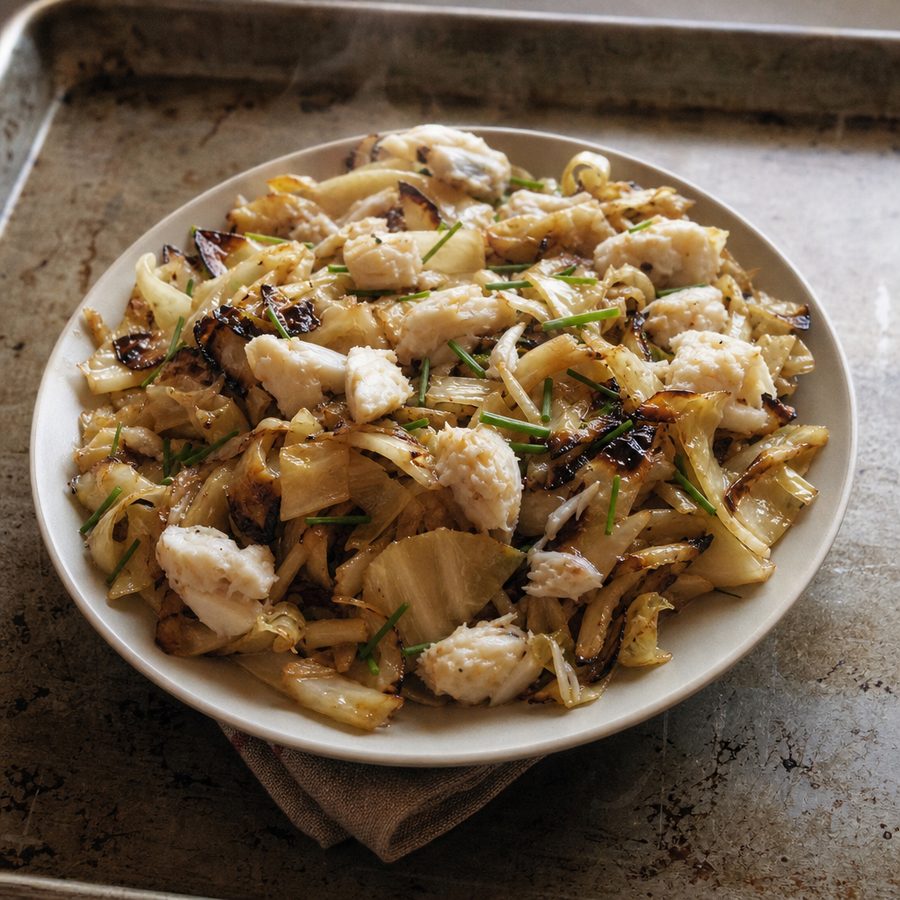
Cabbage ribbons charred hard in a very hot skillet, then folded off the heat with lump crab, mustard butter, cider vinegar, and a handful of chives.
Why You'll Love This Recipe
A tub of lump crab is one of the few genuinely quick things I keep in the refrigerator, and this is what I do with it on a day that has gotten away from me. The whole recipe is eight minutes of charring cabbage and two minutes of folding, and the crab never really cooks, because it does not need to. It goes in at the end and warms through in the mustard butter. I make it midweek, when there is half a cabbage sitting in the drawer that will not get any better by waiting.
Cabbage is the part that needs your attention, not the crab. It holds a lot of water, so it will steam and stay pale if the skillet is not truly hot or if you keep stirring at it, and pale steamed cabbage tastes of almost nothing. Get the pan hot, spread the ribbons out in a shallow layer, and then leave them alone for four full minutes until the undersides are brown in patches. That browning is what turns cabbage sweet and gives this dish its whole backbone. After that it wants long pauses rather than constant motion, and a wider pan than you think you need, because anything stacked two deep will sit there softening while the rest of it browns.
The mustard butter takes about thirty seconds and is what pulls the two halves together. Butter, dijon, and cider vinegar go into the hot pan off the heat and turn into a loose glossy sauce that coats the cabbage, and the crab goes in last and gets folded twice, no more. Handle it any harder and the big sweet pieces you paid for shred into strands. Chives go over the top at the table, where their green onion note stays sharp. Leftovers eat surprisingly well cold, and I have taken a container of this out of the refrigerator and finished it standing up more than once.
Ingredients
- 1 lb cooked lump crab meat, picked over for shell
- 1 small head green cabbage (about 1 1/4 lb), cut into 1/2-inch ribbons
- 3 tbsp butter, divided
- 1 tbsp olive oil
- 1 tbsp dijon mustard
- 1 1/2 tbsp apple cider vinegar
- 1/4 cup thinly sliced chives
- 1/4 tsp cayenne
- 1/2 tsp fine sea salt
- 1/2 tsp black pepper
Instructions
- Cut the cabbage and pick the crab: Quarter the cabbage through the core, cut the core away, and slice each quarter into ribbons about half an inch wide. Keep them loose rather than finely shredded. Tip the crab into a bowl and run your fingers through it for shell, keeping the pieces as large as possible.
- Char the cabbage: Heat the olive oil in a large skillet over high heat until it shimmers. Add the cabbage with the salt, press it into a shallow even layer, and leave it undisturbed for 4 minutes, until the undersides are dark brown in patches and the kitchen smells sweet rather than sulfurous.
- Finish the char: Toss once, spread the cabbage out again, and cook 3 to 4 minutes more, turning only twice, until the thick ends are tender and the edges are well browned. Take the pan off the heat and let it cool for about 30 seconds.
- Make the mustard butter: Off the heat, add the butter, the dijon, the cider vinegar, and the cayenne. Stir until the butter melts into a loose glossy sauce and coats the cabbage. Doing this off the burner is what keeps the butter from splitting into oil.
- Fold in the crab and serve: Add the crab in large pieces and fold it through twice, no more, letting the residual heat of the pan warm it for about a minute. Finish with the chives and the black pepper, taste for salt, and serve straight from the skillet.
Variations
- Shrimp in place of crab: Cooked shrimp, roughly chopped, fold in the same way and cost less. They want the same gentle handling at the end.
- Red cabbage: Red cabbage takes about 2 minutes longer and turns the butter pink, which some people love and some do not.
- Dill and lemon: Swap the chives for chopped dill and use lemon juice in place of the cider vinegar for a brighter, more herbal finish.
- Add heat: Slice a jalapeño into the pan with the cabbage for the last 2 minutes if a quarter teaspoon of cayenne is not enough for you.
- Make it heartier: Fold a cup of diced cooked yukon gold potato in with the crab for a version that eats like a proper cold-weather lunch.
Storage & Leftovers
Leftovers keep in a sealed container in the refrigerator for up to 2 days. Crab is at its best the day it is opened and goes stringy after that, so if you know you will not finish it, char the whole cabbage and fold the crab into only the portion you plan to eat now.
Reheat gently in a skillet over low heat for about 2 minutes, or eat it cold. High heat is what turns crab from sweet and soft to rubbery, and a microwave does it faster than anything else. Cold, with an extra splash of cider vinegar, it eats almost like a warm slaw.
This does not freeze. Cabbage collapses into water on thawing and crab loses its texture completely. If you want a head start, char the cabbage a day ahead and keep it refrigerated, then reheat it hard for 2 minutes and make the mustard butter fresh, which takes about 4 minutes in total.
Notes & Tips
- Cut ribbons, not shreds: Half-inch ribbons brown on the outside and stay tender inside. Fine shreds go from raw to burnt with nothing in between.
- Pick the crab over first: Even good lump crab hides a piece of shell, and finding it in the middle of lunch is the fastest way to stop enjoying a nice ingredient.
- Two folds, maximum: Every extra stir breaks the crab down further, and the large sweet pieces are the whole reason to buy it.
- Let the pan cool before the butter: Thirty seconds off the heat is the difference between a glossy sauce and a greasy one.
- Salt at the end: Crab arrives already salted and dijon brings more, so taste the finished pan before you reach for anything else.
- Slice the chives thin: Thin rings scatter through the whole pan. Long pieces clump and end up in one unlucky forkful.
Nutrition & Mindful Eating
- The cabbage, the crab, and the mustard butter each carry a part of this. The charred cabbage brings the sweetness and the bulk, the crab brings the protein and the delicacy, and the mustard and vinegar keep the butter from sitting heavy.
- Crab is sweet and fine-textured, one of the gentlest shellfish to eat, and it carries protein along with the zinc, selenium, and B12 that shellfish are known for.
- Cabbage is more interesting than its reputation. Charring caramelizes the sugars in it and turns it sweet rather than sulfurous, and it brings fiber and vitamin C to a pan otherwise built on butter and shellfish.
- Dijon and cider vinegar are doing the seasoning work here. Mustard seed brings a slow sharpness that cuts straight through butter, and the vinegar lifts the whole skillet the way a squeeze of citrus would.
- Chives sliced over the finished pan bring a mild green onion note and a fresh, grassy smell, and they are what makes a plate of butter and cabbage taste light on the tongue.
- As you eat, pay attention to how soft the crab is against the browned edges of the cabbage, and let the vinegar and the chives register before you go back in for the next forkful.
Frequently Asked Questions
Can I use canned or claw crab?
Yes. Claw meat is darker, sweeter, and much cheaper, and it stands up better to the heat than lump does. Drain canned crab well and press it dry, since the packing liquid will thin the mustard butter and stop the cabbage from staying crisp.
My cabbage steamed and stayed pale. What went wrong?
Too much cabbage in too small a pan, heat that was too low, or too much stirring. All three trap the water the cabbage gives off. Use the widest skillet you own, let it get properly hot before anything goes in, and cook in two batches if the ribbons do not fit in a shallow layer.
Why does the butter go in off the heat?
Butter, mustard, and vinegar hold together as a glossy sauce below a simmer and split into greasy pools above it. Pulling the pan off the burner for thirty seconds first is the whole trick, and it costs you nothing in temperature.
Does this fit a low-FODMAP lunch?
It does at about a cup and a half per serving. Crab, butter, mustard, and vinegar are all comfortable, and cabbage sits well at this portion. There is no onion or garlic here, and if you want a garlic note, char the cabbage in garlic-infused olive oil.