
Hot-Pan Roasted Quail
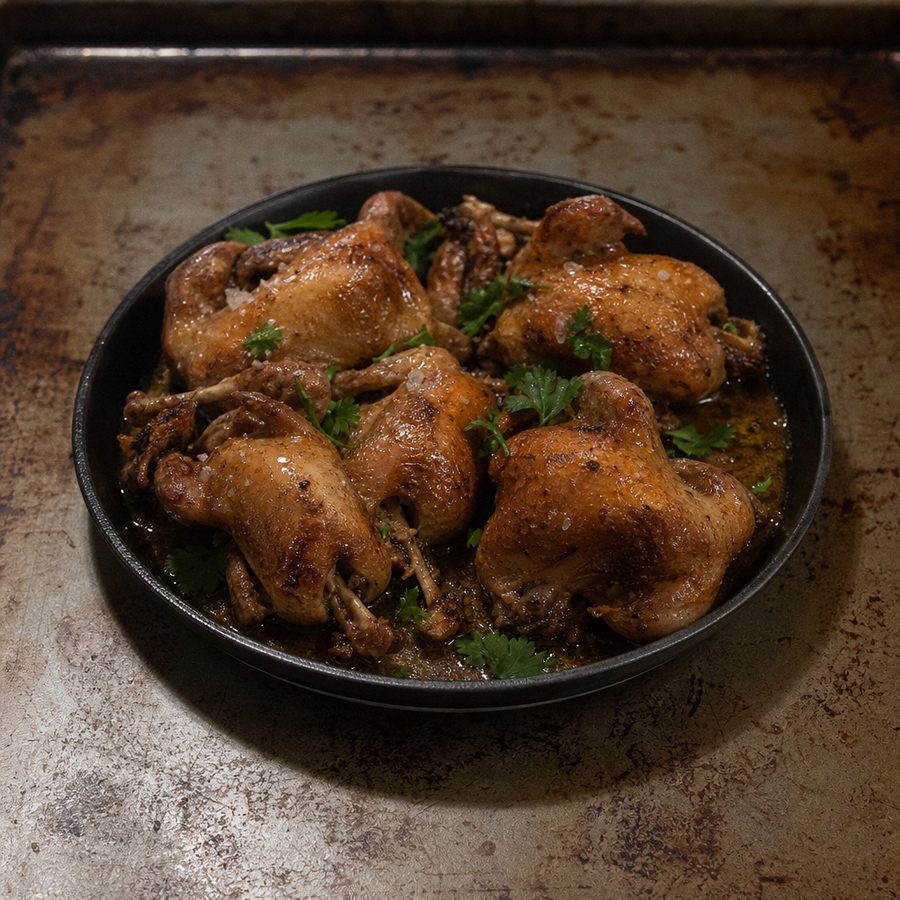
Whole quail salted, brushed with melted butter, and roasted breast up in a cast iron skillet that has been preheating in a very hot oven, so the undersides sear the moment the birds land.
Why You'll Love This Recipe
Quail are the fastest whole bird I know, and that is most of why they live in my freezer. Each one weighs about as much as a large orange, so the oven does in fifteen minutes what a chicken needs an hour and a half for, and there is no carving and no waiting. I buy them semi-boneless, eight to a package, and thaw them overnight. Two per person is a proper dinner. The one thing I insist on is heating the skillet before the birds go in, because the underside of a small bird can sit in its own juices and go pale, and a preheated pan sears it the instant it touches down.
They eat like the best part of a roast chicken all the way through, dark and fine-grained and faintly sweet, with a little more character than a bird this size suggests. The skin is the reward. Butter brushed over the breasts browns as fast as the skin does, so the two toast together and come out lacquered, and the shoulders and wing tips go properly crisp. This is food you eat with your hands, working the small pieces off the bone, and it makes the table slow down and get quiet in a way that a plated dinner rarely manages.
I cook these when I want a weeknight to feel like something without spending an evening on it. They also handle guests well, because eight birds fit in one skillet and everything happens in the last twenty minutes, so nothing is sitting around getting cold while people arrive. The bones are worth keeping. I toss them back into the skillet with the buttery juices and let them sit on a low burner while we eat, and what comes off them is the start of something good the next day.
Ingredients
- 8 whole quail (about 1 3/4 lb total), thawed and patted dry
- 3 tbsp butter, melted
- 3/4 tsp fine sea salt
Instructions
- Heat the oven and the skillet together: Set a twelve-inch cast iron skillet on the middle rack, heat the oven to 475°F, and give it a full fifteen minutes after it says it has come up to temperature. The pan needs to be as hot as the air around it, and cast iron takes longer to get there than the oven does. Prepare the birds while this happens.
- Dry the birds and salt them: Pat each quail dry all over with paper towel, inside the cavity as well as out, and pay attention to the crease where the thigh meets the body, since that is where water hides. Sprinkle the salt evenly over all eight birds, a little inside each cavity and the rest across the breasts and legs. Tuck the wing tips behind the shoulders so they do not scorch, and cross the drumsticks.
- Brush on the butter: Brush the melted butter over the breasts, thighs, and shoulders of every bird, using all of it. It will set on the cold skin almost immediately and look uneven, which is fine, because it melts and evens out in the first thirty seconds in the oven.
- Roast breast up: Pull the hot skillet out and set it on the stovetop, then place the quail in it breast up with a little room between them. You should hear each one hiss the second it lands, and if you do not, the pan was not hot enough. Return the skillet to the oven and roast for fourteen to sixteen minutes, until the skin is deep amber and tight, the wing tips are crisp, and a thermometer pushed into the thickest part of the thigh reads 165°F.
- Rest, then eat them with your hands: Move the birds to a warm platter and let them sit for five minutes, which is long enough for the juices to settle and short enough that the skin stays crisp. Tip the buttery juices from the skillet over the top and serve two quail per person, with a bowl on the table for the bones.
Variations
- Salted the day before: Salt the birds and leave them uncovered on a rack in the refrigerator overnight, which dries the skin and gives you the crispest version of this.
- Butter under the skin: Work softened butter between the skin and the breast meat with a fingertip before roasting, so the meat bastes from the inside while the outside browns.
- Duck fat or ghee: Brush the birds with melted duck fat or ghee in place of the butter for a darker, more savory skin that takes the high heat without any risk of scorching.
- Split and pressed: Cut down either side of the backbone, open the birds flat, and roast them the same way for eleven to twelve minutes, which gives you more crisp surface per bird.
Storage & Leftovers
Roasted quail keep three days in a sealed container in the refrigerator. The skin softens overnight, as skin always does, so I stop treating it as the point and pull the meat off the bones instead. Cold quail meat is dense and sweet and makes a very good lunch, especially with the congealed pan butter scraped in and warmed through with it.
To bring a whole bird back, put it in a 400°F oven for six or seven minutes rather than the microwave. That is enough to heat the meat and re-crisp the shoulders. The microwave heats them evenly but takes the skin from crisp to leathery, and with a bird this small there is not much meat to hide behind.
The bones freeze well and are the best reason to buy quail by the eight. Collect them in a bag in the freezer along with any skillet juices, and once you have two batches you have enough for a small, dark, surprisingly rich pot of stock that comes together in about two hours rather than the day a beef version takes.
Notes & Tips
- Give the skillet the full fifteen minutes: Cast iron heats slowly and unevenly, and an oven that beeps at 475°F is only telling you about the air. A pan that has not caught up will not sear the undersides, which is the entire point of the method.
- Dry skin browns, wet skin steams: Blot the birds harder than feels necessary, especially in the fold behind the thigh. Any water left on the surface has to boil off before the skin can color, and on a fifteen minute roast there is no time to spare.
- Leave space between the birds: Eight quail fit a twelve-inch skillet if you set them shoulder to shoulder without touching. Packed tight, they trap steam between them and the sides stay pale.
- Thermometer in the thigh, not the breast: The thigh is the last part to come up, and on a bird this small the difference between the two readings is a matter of a minute. Push the probe in from the side, close to the joint but not against the bone.
- Rest five minutes, not ten: Small birds shed heat quickly, so a long rest leaves you with a cool dinner and no gain. Five minutes settles the juices while the skin is still crisp enough to crack.
- Keep the pan juices: What collects in the skillet is browned butter and quail drippings, and pouring it back over the birds at the table is the difference between a good plate and a memorable one.
Nutrition & Mindful Eating
- The quail, the butter, and the salt are the entire plate, and each is doing something distinct. The birds carry the protein and nearly all the flavor, the butter browns the skin and enriches the juices that collect underneath, and the salt draws moisture off the surface so that skin can crisp at all.
- Quail is a dark-fleshed bird all the way through, fine-grained and a little sweet, and two of them make a serving with a great deal of protein behind it. Quail also carries iron in the form that is easiest for the body to take up, along with the B12 that meat of any kind supplies.
- Butter brushed on the skin does more than add richness. Its butterfat conducts heat into the surface and browns alongside the skin, and it brings vitamin A with it, which is one of the things that comes along with the fat in dairy.
- The skin is where the pleasure sits. High heat and a preheated pan pull it tight and toast the butter into it, so it cracks under a tooth and tastes faintly nutty, and the shoulders and wing tips go the crispest of all.
- Eating small birds with your fingers changes the pace of a meal. The work of taking the meat off the bone slows everything down, so you notice fullness while you are still at the table rather than twenty minutes after it.
- As you eat, take the birds apart with your hands and notice how the crisped shoulder tastes against the softer meat along the breastbone, and let the slowness of working around small bones be the pace of the whole meal.
Frequently Asked Questions
Where do I find quail?
The freezer case at a well-stocked grocer, a butcher who handles game, or online, where they usually ship eight to a box. Semi-boneless is what most places sell, meaning the rib cage has been removed and the leg and wing bones are still in, and it is what I would buy. Thaw them overnight in the refrigerator rather than on the counter.
How done should quail be?
Cook them through. Small birds go from underdone to dry over a short stretch, so a thermometer in the thigh is worth the trouble, and 165°F is where I pull them. The breast will read a few degrees higher and that is fine, since quail carries enough fat under the skin that it does not turn chalky the way a large bird can.
Why preheat the skillet if it is going straight into the oven?
Because the underside of a bird resting on cold metal spends the first several minutes steaming in the juices it releases, and it never catches up. A pan at 475°F sears that side on contact, so the bottom finishes as brown as the top and the birds sit in butter rather than water.
Can I use this method for a larger bird?
Yes, with more time and a slightly lower oven. Cornish hens run about a pound each, so use four and drop the oven to 450°F for thirty five to forty minutes. The preheated skillet does the same job for them. Anything bigger than that wants a proper roasting pan and a different set of timings.