
Kerala Shrimp Moilee with Cauliflower, Spinach, and Lime
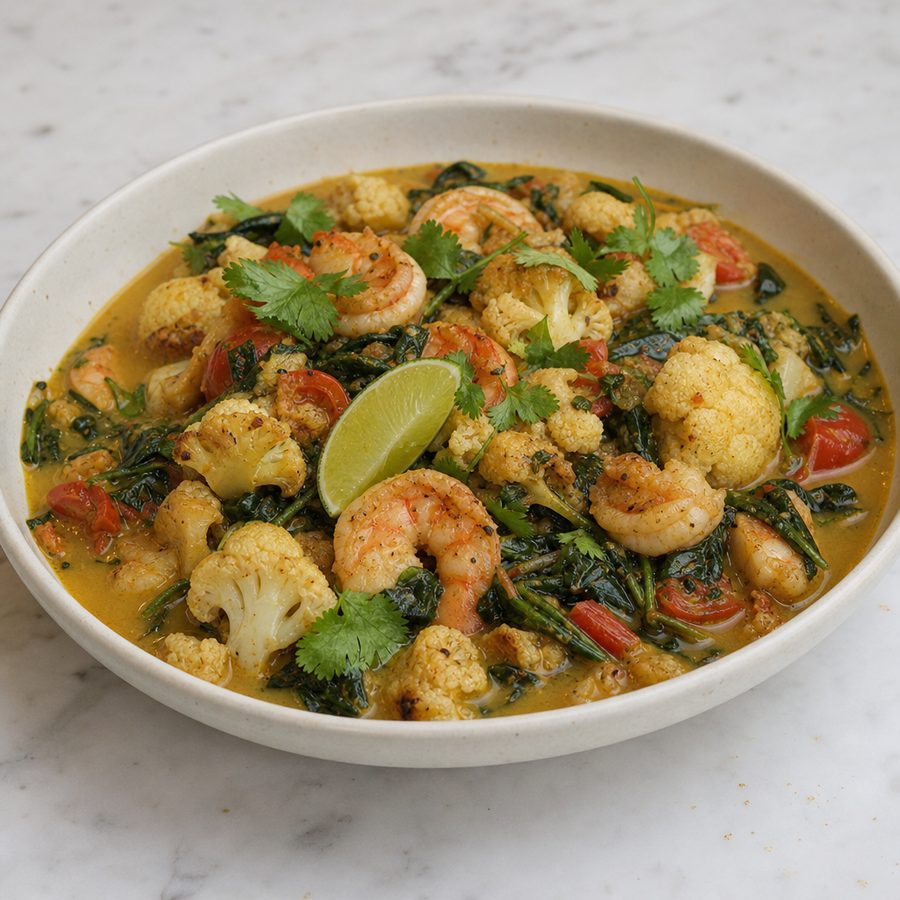
Shrimp simmered in a mild, pale gold coconut broth with ginger, turmeric, green chile, and black pepper, with tender cauliflower, wilted spinach, and lime stirred in at the end.
Why You'll Love This Recipe
Moilee is the gentle side of Kerala cooking, the coconut stew that fishing families on the southwest coast of India make when they want something soothing rather than red with chile. The broth is built on ginger, green chile, turmeric, and black pepper, which is the spice that coast traded for centuries, and it stays mild enough that you taste the shrimp first. I started making it at lunch because it is done in under half an hour, and because a bowl of it on a gray afternoon feels like being looked after.
The method is mostly about restraint with heat. The onion, ginger, and chiles soften in coconut oil without browning, so the broth stays pale and sweet instead of toasty. The cauliflower simmers in the coconut milk itself, covered, which means it cooks and seasons at the same time and drinks up the turmeric right into the stems. The shrimp go in last and only for three minutes, and the broth is never allowed past a gentle bubble, because boiled coconut milk splits and shrimp left too long go from snappy to rubbery.
What makes it satisfying is how much is going on in one bowl. The shrimp are sweet and firm, the cauliflower is tender enough to break with a spoon, the spinach turns to soft dark ribbons, and the halved tomatoes add little bursts of acid against all that coconut. The lime at the end is not optional. It is what turns a rich broth into a bright one, and it is the reason you will find yourself going back to tip the bowl for the last spoonful.
Ingredients
- 1 1/4 lb large raw shrimp, peeled and deveined, patted dry
- 1 small head cauliflower (about 1 lb), cut into bite-size florets
- 1 cup full-fat canned coconut milk, shaken well
- 1/2 cup vegetable broth
- 5 oz baby spinach
- 1 cup cherry tomatoes, halved
- 1 medium yellow onion, halved and sliced thin
- 1 1/2 tbsp peeled fresh ginger, cut into fine matchsticks
- 4 garlic cloves, sliced thin
- 2 jalapenos, slit lengthwise, seeds left in for heat or scraped out for less
- 1 tbsp coconut oil
- 1 tsp ground turmeric
- 1 tsp ground coriander
- 1/2 tsp freshly ground black pepper
- 1/2 tsp fine sea salt, divided
- 2 tbsp lime juice, from 1 to 2 limes, plus wedges for serving
- 1/2 cup cilantro leaves
Instructions
- Soften the aromatics without color: Melt the coconut oil in a wide 12-inch skillet or braiser over medium heat. Add the onion, ginger, garlic, jalapenos, and a pinch of the salt and cook for four to five minutes, stirring often, until the onion is limp and translucent. Turn the heat down if anything starts to brown, because browning makes the broth taste toasted and muddy, and moilee should taste clean and sweet. You are done when the kitchen smells strongly of ginger and the onion bends without snapping.
- Bloom the spices: Stir in the turmeric, coriander, and black pepper and cook for thirty seconds, just until the oil turns golden and the spices smell warm rather than dusty. Ground spices need a moment in fat to open up, but they scorch fast in a dry spot, so keep them moving and have the coconut milk ready.
- Simmer the cauliflower in the broth: Pour in the coconut milk and broth, scraping up anything on the bottom, then add the cauliflower and the remaining salt and stir to coat. Bring to a gentle bubble, cover, and cook seven to eight minutes, until a knife slides into the thickest stem with just a little resistance. Keep the heat at medium-low: a few lazy bubbles at the edges is right, while a rolling boil will split the coconut milk into an oily layer and a thin one.
- Poach the shrimp: Uncover, stir in the cherry tomatoes, and lay the shrimp in a single layer in the broth, pressing them under. Cook two and a half to three minutes, turning them once, until every shrimp is opaque all the way through and curled into a loose C. A tight O means they have gone too far, so pull the pan the moment the last gray spot disappears.
- Wilt the spinach and finish with lime: Take the pan off the heat and fold in the spinach by handfuls; the heat of the broth wilts it in under a minute without dulling its color. Stir in the lime juice, taste, and add a pinch more salt only if the broth tastes flat. The lime should make it taste brighter, not sour.
- Serve: Ladle into shallow bowls so each one gets shrimp, cauliflower, and plenty of broth. Scatter the cilantro over the top and set out lime wedges, and fish out the jalapeno halves for anyone who wants it milder.
Variations
- Mustard seed finish: Fry a teaspoon of mustard seeds in a little coconut oil until they pop and spoon it over the bowls for a nutty, crackling top.
- Green beans: Add a big handful of trimmed green beans with the cauliflower for more crunch in every spoonful.
- Fish moilee: Swap the shrimp for chunks of cod or halibut and poach them five to six minutes until they flake.
- Hotter broth: Slice the jalapenos into thin rings rather than slitting them and add a pinch of cayenne with the turmeric.
- Zucchini and peas of the garden: Trade half the cauliflower for thick half-moons of zucchini, which need only four minutes in the broth.
Storage & Leftovers
Moilee keeps two days covered in the refrigerator, and the broth tastes even more of ginger on the second day. The shrimp are the part that suffers: they firm up as they sit and toughen further every time they are heated, so if you are packing this for lunches, cook only the portion of shrimp you will eat today.
For make-ahead lunches, cook the broth through the cauliflower step and refrigerate it. When you are ready, bring a portion back to a gentle bubble, poach a handful of shrimp in it for three minutes, wilt in the spinach, and add the lime fresh. That way the shrimp are as snappy as the day you made it.
The coconut broth with cauliflower freezes for up to two months, though the florets soften further after thawing. Cooked shrimp do not freeze well in it and come back rubbery. Thaw the base overnight in the refrigerator and warm it slowly, whisking if the coconut has separated, before adding fresh shrimp and spinach.
Notes & Tips
- Slit the chiles, do not chop them: A slit jalapeno flavors the broth gently and can be lifted out, while chopped chile spreads its heat through every bite.
- Dry the shrimp well: Wet shrimp leak water into the coconut milk and thin it out, so a minute with a towel keeps the broth silky.
- Keep it pale: If the onion is taking on color, add a tablespoon of broth and lower the flame, because moilee should be gold, not brown.
- Cover the cauliflower: The lid traps steam so the top florets cook as evenly as the ones sitting in the broth.
- Watch the shape: Shrimp go from a loose C to a tight O in under a minute, and the C is when they are perfect.
- Lime goes in last: Lime juice cooked for long turns flat and bitter, so add it off the heat right before serving.
Nutrition & Mindful Eating
- Shrimp, cauliflower, spinach, and coconut milk each take a different job in this pot. The shrimp bring sweetness and the protein that makes it a real lunch, the cauliflower soaks up the broth, the spinach adds a soft green note, and the coconut milk carries every spice to your spoon.
- Shrimp cook in about the time it takes to set the table, and they stay sweet and snappy as long as they come off the heat the moment they turn opaque. They bring generous protein along with the selenium and iodine that seafood is known for.
- Cauliflower florets simmered right in the coconut broth turn tender at the stems and creamy at the edges, drinking up turmeric and ginger as they cook, and they carry fiber and vitamin C into every bowl.
- Turmeric gives the broth its gold color and earthy warmth, fresh ginger brings a clean heat at the back of the throat, and black pepper sits beside them, a pairing that is old in Kerala cooking and is linked to better uptake of the curcumin in turmeric.
- Spinach goes in at the very end and wilts in seconds into dark, soft ribbons that carry folate and vitamin K, while the lime squeezed in off the heat cuts through the coconut so the broth tastes bright from first spoonful to last.
- As you eat, notice how the lime lifts the coconut and how the ginger warms slowly rather than all at once, and let the bowl cool a little between spoonfuls so you can feel when you have had enough.
Frequently Asked Questions
Can I use fish instead of shrimp?
Yes, and a firm white fish is traditional in Kerala. Cut cod or halibut into large chunks and nestle them into the broth for five to six minutes, until they flake at the center. Stir gently afterward so the pieces stay whole.
Why did my coconut broth separate?
It boiled. Coconut milk holds together at a gentle simmer, but a hard boil breaks it into an oily layer and a watery one. Lower the heat, add a splash of broth, and whisk; it usually comes back together, and the flavor is unaffected either way.
Can I use frozen shrimp?
Yes. Thaw them overnight in the refrigerator or under cold running water for about ten minutes, then pat them very dry so they do not water down the broth. Raw frozen shrimp work far better here than precooked ones, which turn tough when they are heated again.
Does this fit an anti-inflammatory way of eating?
It does. It is built on seafood, vegetables, coconut, and fresh spices, with nothing fried and no added sugar. If you are following a specific plan from your own dietitian or care team, they can tell you how it fits your day.