
Garlic Butter Salmon with Asparagus
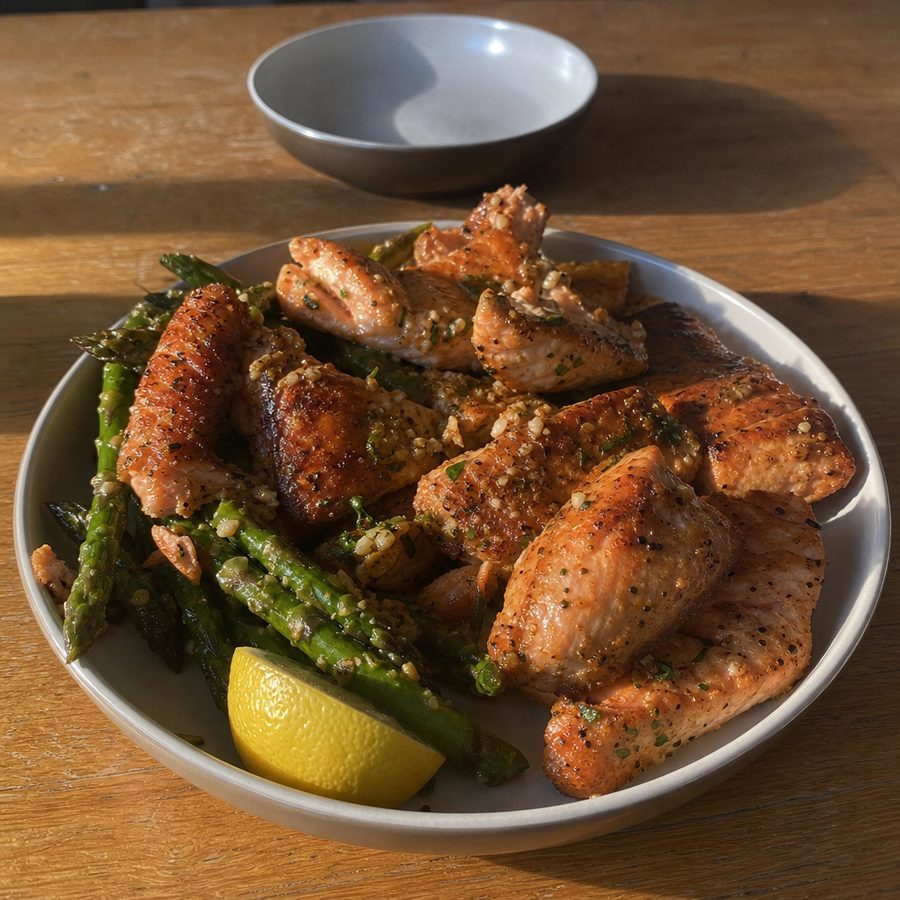
Pan-seared salmon in a garlic-lemon butter with roasted asparagus, a fast, high-fat, very-low-carb keto dinner in one skillet.
Why You'll Love This Recipe
This is a dinner to cook and eat right then, which is worth knowing before you start. Salmon seared in a pan, then asparagus in the same pan, then garlic butter spooned over both: one skillet, about twenty minutes, and the order is most of the recipe. The fish goes first and leaves a browned film on the bottom of the pan; the asparagus cooks in that; the butter and the garlic go in last, where thirty seconds is all they need and a minute would burn them. Nothing gets washed between stages, and every step picks up what the one before it left behind. Reheated salmon is a different food entirely, so this one belongs to a night you are willing to stand at the stove for twenty minutes.
Sear the salmon skin side down and then leave it alone. Moving fish around a hot pan is what tears it, and there is a simple reason not to: the fillet is stuck because the proteins on its surface have gripped the metal, and they let go by themselves once a crust has formed between them. Wait, and the fish lifts cleanly with no help. Push at it after two minutes and you get half the skin on the spatula and the rest still in the pan.
The asparagus keeps this from being only fish and butter, and salmon is one of the few proteins that brings omega-3 fats with it. What makes the plate hold you is that the fat and the protein arrive together in the same bite, so a fillet the size of your palm goes further than the plate looks like it should. The spears pick up the browned butter from the pan, which is the reason people who say they do not care for asparagus eat it here. Our Almond-Crusted Salmon with Lemon Asparagus gives the same fish a nut crust instead.
Ingredients
- 4 salmon fillets (6 oz each)
- 3 tbsp butter
- 1 tbsp olive oil
- 1 lb asparagus, trimmed
- 3 cloves garlic, minced
- 2 tbsp fresh lemon juice
- 1/2 tsp fine sea salt
- black pepper
Instructions
- Dry the fillets, then sear them skin side down: Pat the salmon completely dry and season it all over with the sea salt and a few grinds of pepper. Heat the olive oil in a skillet over medium-high until it shimmers, lay the fillets in skin side down away from you, and press each one flat with a spatula for about five seconds so the skin stays against the pan. Cook four to five minutes a side. The fillets release on their own once a crust has formed, so if one sticks when you go to turn it, it is not ready yet.
- Check the thickest part, not the clock: Salmon is done at 145°F by the USDA figure, and plenty of cooks pull it nearer 125 to 130°F, where the center is still translucent. Either is a choice worth making on purpose; guessing is not. A fillet an inch thick takes about nine minutes in total and a thin tail piece takes six, so if the fillets in your pan are different sizes, lift the small ones out early rather than cooking all of them to the thickest one.
- Asparagus into the same pan, undisturbed at first: Add a tablespoon of the butter and the trimmed asparagus to the pan the salmon just left and spread the spears out in a single layer. Leave them a full minute to take some color where they touch the metal before you start moving them, then cook four to five minutes more until they are bright green and still have snap at the stem end. The browned film the salmon left behind is what seasons them, so whatever you do, do not wipe the pan out first.
- Butter and garlic last, and watch them: Push the asparagus to one side, add the rest of the butter and the garlic, and cook thirty seconds, until the garlic smells sweet and is barely starting to color. Garlic burns in well under a minute in hot butter and turns the entire pan bitter, so if the skillet is running hot, lift it off the burner while you do this. Stir in the lemon juice, which stops the cooking and lifts everything stuck to the bottom into the sauce.
- Salmon back in, spooned rather than stirred: Return the fillets and any juice left on the plate, skin side up, and spoon the garlic butter over them for a few seconds with the pan tilted toward you. Do not turn the fish over into the sauce: the crust you spent ten minutes building is on the underside and it softens the moment it sits in liquid. Serve straight from the skillet with the asparagus and every spoonful of butter from the bottom of the pan.
Variations
- Dairy-free: the butter is the only dairy here, so use ghee if you tolerate it or a good olive oil if you do not, adding a little extra lemon at the end to make up for the richness.
- Add more vegetables: green beans or broccolini can stand in for the asparagus or join it. Both take a minute or two longer, so give them a head start.
- Make it spicy: add a pinch of red pepper flakes to the pan with the garlic so the heat blooms in the butter and coats everything you spoon it over.
- Change the fish: arctic char, steelhead trout and thick cod fillets all take the same sear and the same garlic butter, though cod needs a gentler hand when you turn it.
- Finish with herbs: a handful of chopped dill, tarragon or parsley stirred into the butter off the heat turns the pan sauce green and fresh.
Storage & Leftovers
Refrigerate leftovers in an airtight container for three days. Salmon is safe for four, but its oils sharpen in the cold faster than that, and asparagus loses its snap by the second day whatever you do about it. Keep the fish and the vegetables together if you plan to eat them cold, and separate if you plan to reheat, because the two want completely different treatment on the way back up.
Reheat salmon low and slow, or not at all. A covered skillet over low heat for two or three minutes, or eight minutes in a 275°F (135°C) oven, warms it through without squeezing the fat out of it. A microwave on full power does exactly that, which is why reheated salmon smells so much stronger than it did the night before. The asparagus wants the opposite: one minute in a hot dry pan.
Cooked salmon freezes for about a month, wrapped tightly, and comes back drier than it went in, so plan it as something to flake through a salad or a grain bowl rather than as a fillet on a plate. Asparagus does not freeze in any state worth eating. If you are deliberately cooking ahead, cook the fish and leave the vegetables until the day.
Notes & Tips
- Pat the salmon dry: a dry surface is the difference between a crust and a steamed fillet, so blot both sides before the salt goes on.
- Do not overcook the salmon: pull it the moment it flakes and still looks just opaque in the center. A minute too long dries it out.
- Skin side down first: if your fillets have skin, start them skin down and leave them alone, because the skin protects the flesh and crisps while the fish cooks through.
- Keep the asparagus crisp: cook just until it turns bright green and still has some snap, since it will soften a little more while you build the garlic butter.
- Watch the garlic: thirty seconds in the butter is all it needs, and past that it turns bitter and no amount of lemon will cover it.
- Add the lemon off the heat: stirring the juice in after you pull the pan keeps the flavor bright instead of cooking it down into something flat.
Nutrition & Mindful Eating
- Rich fish and a green vegetable in one skillet is a good pairing, because the salmon gives off fat as it cooks and the asparagus soaks it up, so both sides of the plate end up tasting related.
- Salmon has enough fat running through the fillet that it stays moist even once the outside has browned, and that same fat is where its omega-3s and its vitamin D live.
- Garlic goes into the butter off the hardest heat so it turns golden and sweet rather than bitter, and the lemon juice hitting the hot pan lifts the whole skillet and keeps the richness moving.
- Asparagus cooked in the pan rather than boiled keeps its snap at the stem and goes tender at the tip, and it brings folate and vitamin K, both of which are glad to arrive alongside fat.
- A fillet like this holds you well into the evening, and the protein and fat working together are what do that, which is part of why a dinner this fast still eats like a full one.
- As you eat, take note of the crisped edge, the garlic sitting in the butter and the way the lemon keeps cutting through, and let each bite settle before you go after the next one.
Frequently Asked Questions
Is salmon good for keto?
Yes, it's high in protein and healthy fats with zero carbohydrate, which fits a ketogenic diet perfectly.
Can I make it dairy-free?
Yes, use olive oil or a plant-based butter in place of the butter.
How do I know the salmon is done?
It's ready when it flakes easily with a fork and looks just opaque in the middle. It's better to pull it a touch early than to overcook it.
How long does it keep?
Three days rather than four. Salmon is safe that long, but its oils sharpen quickly in the refrigerator and you can smell the difference. Reheat it low, in a covered skillet for two or three minutes, or eat it cold flaked over greens, which beats most reheated fish.