
Kohlrabi Sticks with Avocado Mash
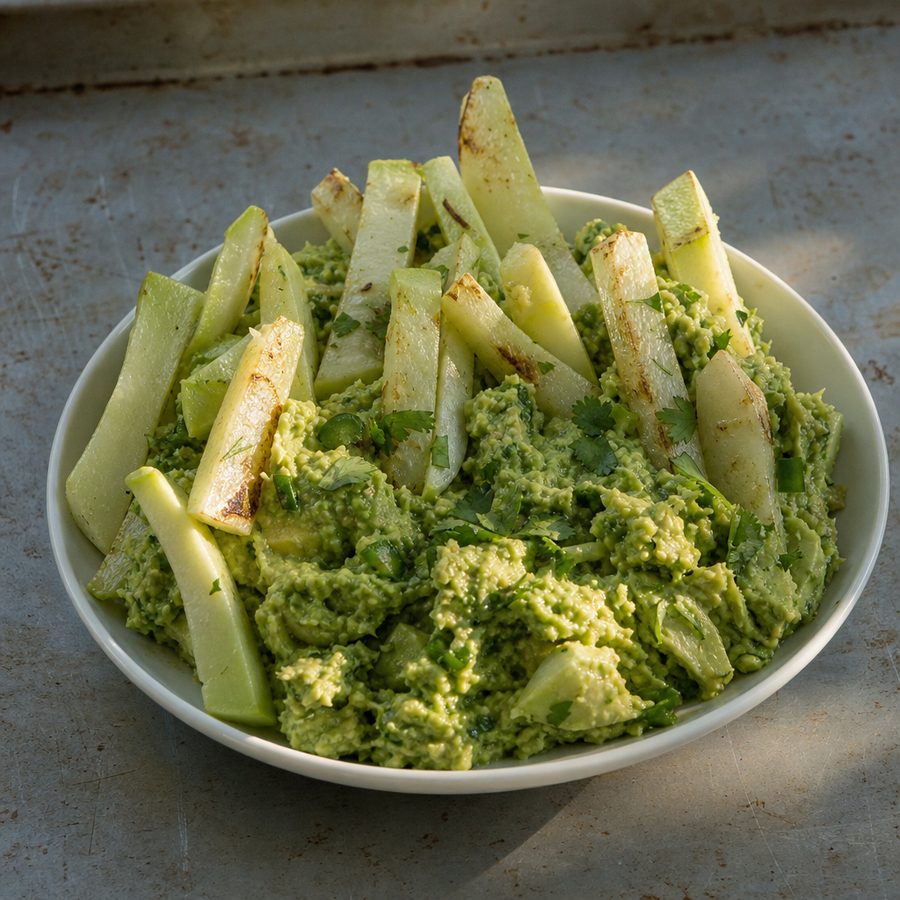
Cold kohlrabi batons for scooping into a coarse avocado mash spiked with lime, jalapeno and toasted cumin, mashed by hand so it keeps its pockets and pieces.
Why You'll Love This Recipe
Kohlrabi is the vegetable nobody knows quite what to do with, and this is the easiest possible answer. Peeled and cut into sticks it is crisp, juicy and faintly sweet, and it is sturdy enough to push through a thick mash without snapping off in the bowl. I make this when I want an afternoon snack and I have about six minutes to give it.
The mash is made with a fork rather than a machine, on purpose. Blended avocado goes slick and uniform and loses the thing that makes it worth eating, which is the pockets of soft flesh you find between the seasoning. Lime juice goes in first, ahead of the salt, so the acid coats every cut surface the moment it is exposed and slows the browning from the start.
Cumin toasted for thirty seconds in a dry pan is the small step that makes people ask what you did. It gives the avocado a warm, earthy floor that raw ground cumin never manages, and it sits comfortably under the heat of the jalapeno and the cold snap of the kohlrabi. Ground spice sitting in a jar loses its volatile oils slowly for months, and half a minute of heat is what wakes up whatever is left of them.
Ingredients
- 2 medium kohlrabi (about 1 1/4 lb), peeled and cut into sticks
- 2 medium avocados, halved and pitted
- 2 tbsp lime juice
- 3 tbsp chopped cilantro
- 1/2 jalapeno, seeded and minced
- 1 scallion, thinly sliced
- 1/4 tsp salt
- 1/2 tsp ground cumin
Instructions
- Toast the cumin for thirty seconds: Put the ground cumin in a small dry skillet over medium heat and stir constantly for about 30 seconds, until it darkens a shade and smells nutty rather than dusty. Tip it onto a saucer immediately, because it goes from toasted to acrid in a matter of seconds and a hot empty pan keeps working on it.
- Peel the kohlrabi deeply, with a knife: Cut off the knobby stems and slice the top and bottom flat, then peel with a knife rather than a peeler, taking off the fibrous layer just beneath the skin along with the skin itself. A vegetable peeler leaves that layer behind, and it is woody enough to ruin the whole stick. What you want underneath is pale, glossy, and slightly wet to the touch.
- Cut the sticks and hold them in cold water: Cut the peeled bulbs into slabs a bit under half an inch thick and then into sticks, dropping them into cold water while you make the mash, at least 5 minutes. The water keeps the cut edges from drying out and firms the sticks up, which is what gives them the snap this snack depends on.
- Start the mash with the acid, in a wide bowl: Halve the avocados, scoop the flesh into a wide bowl, and pour the lime juice over it immediately, then mash with a fork against the side of the bowl, leaving plenty of pieces the size of a pea. The lime slows the browning from the moment the flesh meets air, and a wide bowl matters, since a narrow one forces you to stir and stirring turns the mash smooth.
- Season it, then taste it on the vegetable: Fold in the toasted cumin, the minced jalapeno, the scallion, most of the cilantro, and the salt. Taste it on a piece of kohlrabi rather than off the spoon, because the vegetable is sweet and juicy and it changes how much salt and lime the mash actually needs.
- Serve it cold, straight away: Drain the kohlrabi sticks and shake them dry, pile them around the bowl of mash, and scatter the last of the cilantro over the top. Serve within about 10 minutes, while the sticks are still cold and the surface of the mash is still green.
Variations
- Charred sticks: Halve the sticks lengthwise, blister them in a dry hot pan for two minutes and serve them warm against the cold mash.
- Smoky heat: A pinch of chipotle powder where the jalapeno goes gives the avocado a low smoky warmth rather than a sharp bite.
- Parsley version: Flat leaf parsley in place of the cilantro makes the mash greener and grassier for anyone who does not get on with cilantro.
- Mango and chile: Diced mango folded through at the end plays against the jalapeno and turns this into something for a hot evening.
- Seed crunch: A spoonful of toasted sunflower seeds over the top gives the soft mash something to bite against.
Storage & Leftovers
The mash is best the hour you make it but it will hold overnight if you treat it well. Press plastic wrap flat against the entire surface so no air touches it, and add an extra squeeze of lime before it goes cold. The brown layer that forms is oxidation and can simply be scraped away.
Kohlrabi sticks keep four days in a sealed container of cold water in the refrigerator and genuinely get crisper. Change the water once if it turns cloudy. Drain and pat them dry before serving so they do not water down the mash where they touch it.
Neither part freezes well. Avocado thaws stringy and gray and kohlrabi thaws limp, so make what you plan to eat. If you have mash left over and no sticks, it is very good stirred through a bowl of warm beans the following day.
Notes & Tips
- Peel past the skin: The fibrous layer under kohlrabi skin stays woody no matter what you do, so take it off with a knife.
- Lime first, always: Acid on the avocado before you mash is what keeps the surface green.
- Fork, not machine: A processor gives you a smooth paste; a fork gives you a mash with pieces still in it.
- Toast the cumin dry: Thirty seconds and a constant stir, then out of the pan before it turns bitter.
- Season against the vegetable: Taste the mash on a kohlrabi stick, because the sweetness of the vegetable changes what the mash needs.
- Cold water for the sticks: Twenty minutes submerged and kohlrabi comes out crisper than it went in.
Nutrition & Mindful Eating
- The kohlrabi and the avocado are a study in opposites and that is the whole appeal. The vegetable is crisp, watery and faintly sweet, the mash is soft and rich, and the fat in the avocado is what carries the cumin and the lime across both.
- Kohlrabi is crisp, juicy and mildly sweet, and it holds a surprising amount of vitamin C for something you eat raw and cold. Cut thick it stays loud under the tooth, which is exactly what a soft mash needs beside it.
- Avocado mashed rough with a fork keeps pockets of whole flesh, and those pockets are where the texture lives. Its fat is the monounsaturated kind that has been studied for heart health, and it is also what makes a snack this small hold you.
- Cumin toasted dry for half a minute smells nutty rather than dusty, and it lays a warm earthy floor beneath the cold lime and the heat of the jalapeno. Left untoasted it simply sits there.
- Lime juice goes onto the avocado before anything else, so the acid is threaded through every part of the mash rather than sitting on the surface. Cilantro and scallion come in last and keep the whole bowl tasting freshly made.
- As you eat, notice the crack of the kohlrabi against the soft mash and the warm cumin that arrives a second behind the lime, and set the stick down between bites so the bowl lasts a while.
Frequently Asked Questions
What can I use in place of kohlrabi?
Jicama, daikon and thick celery ribs all have the right snap and stand up to a heavy mash. Cucumber works too but it is wetter and will thin the avocado where it touches, so cut it thick and serve it very cold.
My mash went brown in twenty minutes.
Air is the culprit and lime is the fix, but the timing is everything. The juice has to go onto the avocado the moment it leaves the skin, not after mashing. Once you have folded air through it, no amount of lime catches up.
Can I prep this for lunches during the week?
Cut the kohlrabi on Sunday and keep it under cold water, since that part is genuinely better on day three. Make the mash the morning you want it. Half an hour is all it takes and avocado does not wait well.
Does this have anything from an animal in it?
No. It is kohlrabi, avocado, lime, jalapeno, scallion, cilantro, cumin, and salt. The richness people notice is entirely the fat in the avocado, so it works for a table where everyone eats differently.