
Lamb and Olive Stew with Carrot and Orange
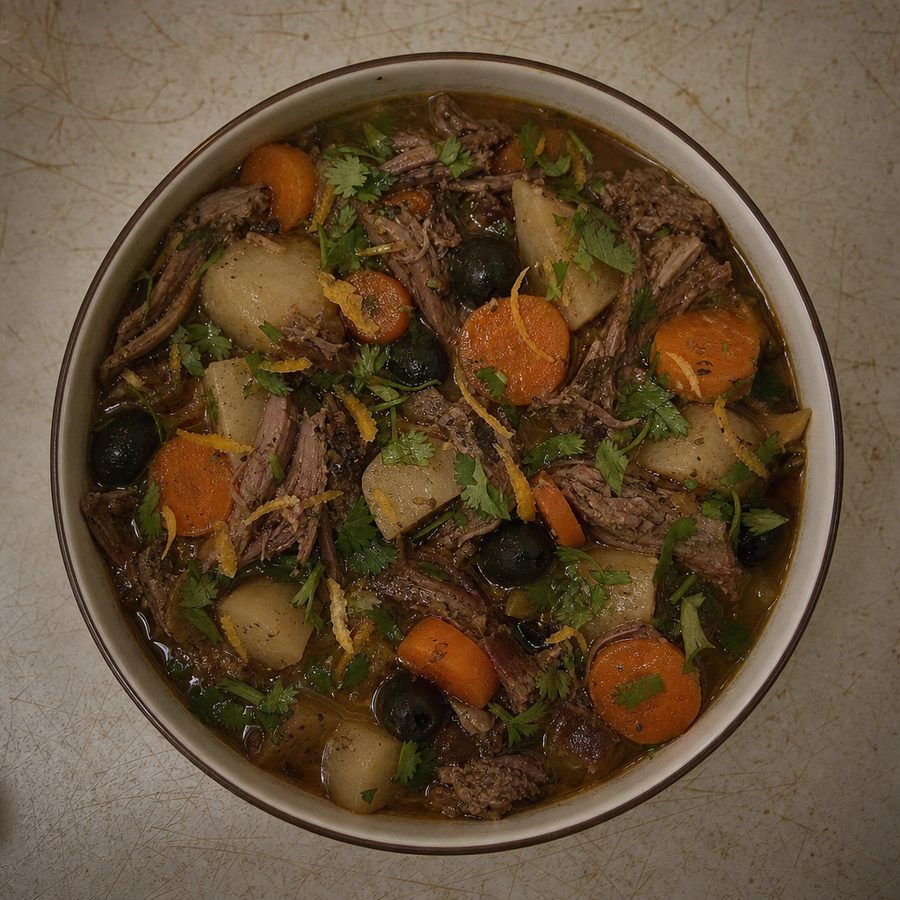
Lamb shoulder browned hard and simmered until it gives way, with carrot, turnip, toasted cumin, and coriander, finished with kalamata olives, orange, and lemon.
Why You'll Love This Recipe
A long afternoon goes better when lunch has already happened. It cooks for most of two hours, nearly all of it unattended, and it feeds four with enough left over for a second day. I usually start it late morning on a weekend, and by the time the kitchen smells of cumin and orange peel it is close to done. Lamb shoulder is not an expensive cut and it is the one that repays this kind of cooking, going from tight and chewy to something that pulls apart against the side of a spoon. Serve it in shallow bowls so the broth is part of every bite rather than a puddle underneath.
The browning is not optional, and it is where most people rush. Get the cubes dry, work in two batches so the pot stays hot, and leave the meat alone until it releases on its own, because that crust and the stuck brown layer under it are most of the flavor in the finished broth. After the lamb comes out, the spices and the tomato paste go into the hot fat together for a full minute, until the paste turns brick colored and the cumin smells toasted rather than dusty. That step takes sixty seconds and does more for the pot than another hour of simmering would. The broth then lifts all of it off the bottom.
What keeps a stew this rich from being too much is everything that goes in at the end. The olives bring salt and brine, the orange zest and juice bring perfume and a little sweetness, and a spoonful of lemon juice stirred in off the heat sharpens all the edges at once. Taste it before and after you add them and you will hear the difference. The leftovers are better than the first day, and I eat them straight from a warmed bowl with a spoon. There is enough carrot and turnip in the pot that it eats like a full lunch rather than a plate of meat in liquid.
Ingredients
- 2 lb boneless lamb shoulder, trimmed and cut into 1 1/2-inch cubes
- 2 tbsp garlic-infused olive oil
- 2 tbsp tomato paste
- 1 tbsp ground cumin
- 2 tsp ground coriander
- 3/4 tsp ground cinnamon
- 1 1/2 tsp paprika
- 2 tbsp finely grated fresh ginger
- 3 cups beef broth
- 2 bay leaves
- 5 medium carrots, cut into 1-inch chunks
- 2 medium turnips (about 10 oz), peeled and cut into 1-inch chunks
- 1/2 cup pitted kalamata olives
- 1 orange, zest in wide strips and juice reserved
- 1 tbsp fresh lemon juice
- 1/3 cup chopped fresh cilantro
- 1 1/2 tsp fine sea salt, divided
- 1 tsp freshly ground black pepper
Instructions
- Season and brown the lamb: Pat the lamb cubes dry and toss them with 1 teaspoon of the salt and the black pepper. Warm the garlic-infused olive oil in a Dutch oven over medium-high, then brown the lamb in two batches, about 8 minutes each, turning only once the pieces release from the pot. Transfer the browned meat to a bowl.
- Toast the spices: Lower the heat to medium. Add the ginger, cumin, coriander, cinnamon, paprika, and tomato paste to the fat left behind and stir constantly for 60 to 90 seconds, until the paste darkens to brick red and the spices smell toasted. Watch it closely, since this is the one step that will scorch.
- Deglaze and simmer: Pour in the broth and scrape the bottom of the pot clean with a wooden spoon. Return the lamb and any juices, add the bay leaves, and bring it to a bare simmer. Cover and cook for 60 minutes, adjusting the heat so the surface barely moves.
- Add the roots: Stir in the carrot and turnip, cover again, and simmer for 40 to 45 minutes more, until the lamb pulls apart under a spoon and the turnip is tender all the way through. Skim any fat that has pooled on top if you like.
- Finish with olives and citrus: Take the pot off the heat. Stir in the olives, the strips of orange zest, the orange juice, and the lemon juice, and let it sit for 5 minutes so the citrus works through. Taste for salt, pull the bay leaves, and scatter the cilantro over the top before serving.
Variations
- Squash for the turnip: Use 10 oz of peeled delicata or acorn squash in the last 25 minutes, since it softens faster than a root.
- Goat or venison: Both take to the same spices and the same long simmer. Goat wants an extra 20 minutes, venison about 15 less.
- Warmer and sweeter: Add a pinch of ground cloves with the cinnamon and let the orange juice go in earlier for a rounder, more perfumed pot.
- Green finish: Wilt a few big handfuls of swiss chard or spinach into the stew in the last 3 minutes for color and a little bitterness.
- More heat: Add 1/4 teaspoon of cayenne with the other spices so the warmth builds under the citrus rather than sitting on top.
Storage & Leftovers
Refrigerated in a sealed container, this keeps for 4 days and is better on day two than it is on day one. The fat rises and firms as it chills, so lift some off if you want a cleaner broth, and stir the rest back in as it warms. The olives get saltier the longer they sit.
Reheat on the stove over medium-low with a splash of broth or water, stirring now and then, for about 10 minutes. Lamb that is boiled hard on reheating goes stringy, so keep it gentle. Add a fresh squeeze of lemon and a little cilantro at the end to bring back what the refrigerator dulled.
It freezes for up to 3 months, and it is one of the better candidates for it. Cool completely, freeze in portions with plenty of broth around the meat, and thaw overnight before reheating. Freeze it before the citrus and cilantro go in if you can, then finish it fresh in the pan.
Notes & Tips
- Dry meat browns, wet meat steams: Pat the cubes with paper towels and do not crowd them. Two patient batches give you the crust that becomes the broth. One crowded batch gives you gray lamb and pale liquid.
- Bloom the infused oil: Let the garlic-infused olive oil warm through before the lamb goes in, and add the spices to that same fat later, so everything in the pot picks up its flavor.
- Sixty seconds on the spices: Toasting is what turns ground cumin from dusty to nutty, and it happens fast. Stand there, stir, and have the broth within reach.
- Roots go in late: Carrot and turnip added at the start dissolve into the broth. Added an hour in, they are tender and still themselves when the lamb is ready.
- Keep the zest in strips: Wide strips of orange peel perfume the pot and are easy to fish out. Grated zest disappears into the broth and can go bitter over a long cook.
- Acid at the end, always: Lemon juice stirred in off the heat is the loudest thing you can do for a stew that tastes almost right but heavy. It goes flat if it simmers.
Nutrition & Mindful Eating
- The lamb, the roots, and the long simmer do this together. The meat gives the pot its richness, the carrot and turnip take on the spiced broth as they soften, and the citrus stirred in at the end keeps a heavy thing feeling lively.
- Lamb shoulder is the cut worth buying for a stew like this. It is marbled and full of connective tissue that melts into gelatin over an hour and a half, which is where the body of the broth comes from, and the meat carries iron in the form your body takes up most readily.
- Carrots cut into big chunks stay sweet and keep their shape through a long cook, and the deep orange color they give the broth comes from the beta-carotene your body converts into vitamin A.
- Cumin, coriander, and a small amount of cinnamon go into the hot fat before any liquid, which is what makes them smell toasted rather than dusty. The cinnamon is the one nobody can name and everybody notices.
- Kalamata olives go in whole at the end so you get a salty, briny bite every few spoonfuls, and between the protein in the lamb and the fat in the olives, a bowl of this holds you well into the afternoon.
- As you eat, pay attention to how completely the lamb has given way against the spoon, and let the orange and the brine of the olives register before the next bite so lunch becomes a pause rather than a task.
Frequently Asked Questions
Can I use a different cut or a different meat?
Lamb leg works and cooks 20 minutes faster, though it comes out firmer because there is less connective tissue to melt. Beef chuck is the closest substitute at the same weight and the same timing. Ground lamb is not a fair swap here, since the whole texture depends on cubes that break down slowly.
My stew tastes harsh and a little bitter. What happened?
The spices most likely caught. Ground cumin and coriander burn in well under two minutes in hot fat, and once they scorch there is no fixing it. Keep the heat at medium, stir without stopping, and get the broth in the second the tomato paste turns brick colored.
Can I make it in a slow cooker?
Yes, but brown the lamb and toast the spices in a skillet first, then move everything over with the broth. Cook on low for 6 to 7 hours, adding the carrot and turnip for the last 2 so they do not turn to mush. Finish with the citrus and olives after it comes off.
Does this fit a low-FODMAP lunch?
It does. The depth here comes from hard browning, spices toasted in the hot fat, tomato paste, and garlic-infused olive oil, so the pot tastes complete on its own terms. Carrot and turnip in these amounts are well tolerated, and the olives bring salt and brine to the finish rather than sweetness.