
Lamb Shanks Braised with Rutabaga, Leeks, and Olives
Lamb shanks browned hard, then braised for hours with leeks, oregano, and olives until the meat slides off the bone, with rutabaga wedges added late and gremolata over the top.
Why You'll Love This Recipe
This is a Sunday dish, or the sort of thing I start at three in the afternoon when the weather has turned and nobody in the house wants to go anywhere. Lamb shanks sit among the cheaper things at a butcher counter precisely because they take time, and time is the only skill they ask of you. You brown them, you build a little broth underneath, and then the oven does the rest for three hours while the kitchen fills with garlic and browned meat. I make it for company, because four shanks standing up in a pot look like an occasion, and I make it on a Tuesday, because what is left over is better than the first night.
Two things go wrong with a braise like this, and both are easy to avoid. The first is a timid sear. Brown all four sides of every shank in a hot pan until they are genuinely dark rather than gray, because that crust is most of the flavor in the finished broth. The second is a loose lid. In a low oven the liquid should barely tremble, and if steam is escaping the pot the meat at the top dries while the bottom goes perfect. The rutabaga waits until the last hour so it comes out sweet and whole, and the leeks underneath melt down into something that thickens the broth on its own.
Shank meat is threaded with collagen, and long slow heat turns that collagen into gelatin, which is where the body of the broth and the silky texture of the meat both come from. It is also why this holds you the way it does. There is a serious amount of protein on a shank and it eats slowly, so a bowl of meat with rutabaga and a few spoonfuls of pot liquid is a whole dinner. The olives go in for the last twenty minutes, salty and slightly bitter against all that richness, and the gremolata over the top at the last second finishes the job.
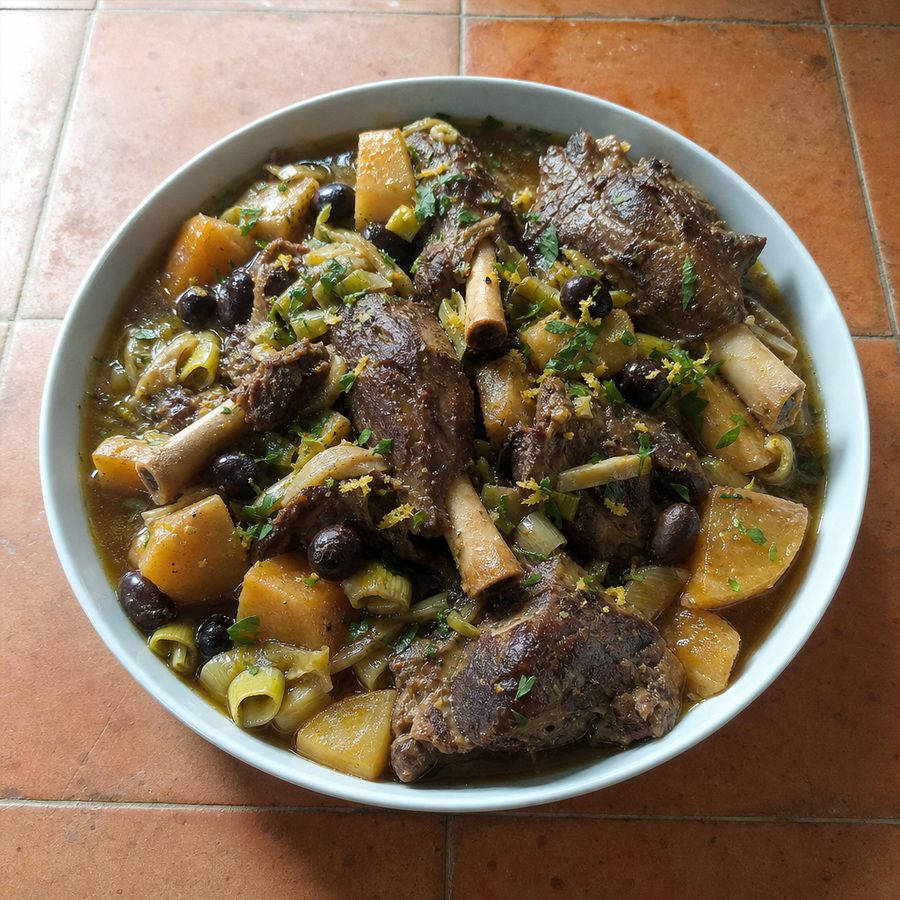
Ingredients
- 4 lamb shanks, about 12 oz each (3 lb total)
- 1 1/4 lb rutabaga (1 medium), peeled and cut into large wedges
- 2 large leeks, white and pale green parts only, halved and sliced
- 1 large yellow onion, diced
- 8 cloves garlic, 6 thinly sliced and 2 minced for the gremolata
- 1/2 cup pitted kalamata olives, halved
- 2 tbsp olive oil
- 2 cups beef bone broth
- 1 tbsp apple cider vinegar
- 2 tsp dried oregano
- 2 bay leaves
- 1 tbsp fresh lemon juice, plus the zest of 1 lemon
- 1/2 cup chopped fresh parsley
- 1 tsp fine sea salt, divided
Instructions
- Heat the oven and season the lamb: Heat the oven to 325°F (163°C). Pat the shanks completely dry with paper towels and season them all over with 3/4 teaspoon of the salt. Let them sit at room temperature while the oven comes up, about 20 minutes, which helps them brown rather than steam.
- Brown the shanks: Heat the olive oil in a large dutch oven over medium-high until it shimmers. Add the shanks without crowding them and brown for 3 to 4 minutes a side, turning until every surface is deep brown, about 14 minutes total. Work in two batches if the pot is tight. Move the shanks to a plate.
- Build the base: Lower the heat to medium and add the onion and leeks to the fat left in the pot. Cook for 6 to 7 minutes, scraping the browned bits off the bottom, until they slump and smell sweet. Add the sliced garlic and the oregano and cook for 1 minute more, then pour in the cider vinegar and let it bubble down for 30 seconds.
- Braise, covered: Pour in the bone broth, add the bay leaves, and return the shanks and any juices to the pot. The liquid should come about halfway up the meat. Bring it to a bare simmer, cover tightly, and slide the pot into the oven for 2 hours, turning the shanks once at the halfway mark.
- Add the rutabaga, then the olives: Tuck the rutabaga wedges down into the liquid around the shanks, cover, and return the pot to the oven for 45 minutes. Scatter in the olives and cook for a final 15 to 20 minutes. It is done when a fork twists the meat away from the bone with no resistance and a knife slides easily through a rutabaga wedge.
- Make the gremolata and serve: Chop the parsley with the lemon zest and the 2 minced garlic cloves until fine and well mixed. Skim the fat off the surface of the broth, pull out the bay leaves, and stir in the lemon juice and the remaining 1/4 teaspoon salt, tasting first because the olives bring their own. Serve each shank in a shallow bowl with vegetables, broth, and a heavy spoonful of gremolata.
Variations
- Root swap: Use celeriac or parsnip in place of the rutabaga, adding either one only in the last 40 minutes so it does not fall apart.
- Orange and bay: Add wide strips of orange zest with the broth and finish with orange zest in the gremolata for a warmer, rounder braise.
- Greens at the end: Stir a few large handfuls of chopped kale into the hot broth for the final 10 minutes so there is something dark green in the bowl.
- Goat shanks: Goat shanks work beautifully here and want about 30 minutes longer, since the meat is firmer and takes more time to give way.
- Stovetop version: Keep the covered pot at the lowest possible simmer on the stove for the same total time, checking every 40 minutes that the liquid is only just moving.
Storage & Leftovers
Leftovers keep in a sealed container in the refrigerator for up to 4 days, and this is one of the rare dinners that is better on day two. Pull the meat off the bones before you put it away, store it under the broth so it stays moist, and keep the gremolata separate in a small jar.
Reheat gently in a covered saucepan over low heat for 8 to 10 minutes, adding a splash of broth or water if the gelatin has set the sauce solid in the refrigerator. It will loosen back into a sauce as it warms. Chop fresh parsley and lemon zest for the top, since the first batch fades overnight.
This freezes better than almost anything else in the meat case. Freeze the shredded meat with its broth in flat containers for up to 3 months and thaw overnight in the refrigerator. Freeze the rutabaga separately or expect it soft, since it holds water and goes grainy once thawed.
Notes & Tips
- Dry meat browns, wet meat steams: Pat the shanks bone dry before they go anywhere near the pot. A wet surface has to boil off before any color forms, and by then the pan has cooled.
- Give the shanks room: Four shanks in a crowded pot will gray rather than brown. Two batches costs 6 minutes and doubles the flavor of the finished broth.
- Halfway up, no higher: Liquid that covers the meat boils it and the surface never develops. Halfway up gives you a braise, with the top of each shank basting in steam.
- Wash the leeks properly: Grit hides between the layers and cannot be fixed once it is in the broth. Halve them lengthwise, then fan the layers under cold running water.
- Salt at the end, not the start: Olives release salt into the broth over the last twenty minutes and the liquid reduces the whole time. Taste before you add the last of the salt.
- Chill it to defat it: If you have the time, refrigerate the pot and lift the solid fat cap off the next day. It is far cleaner than chasing fat around the surface with a spoon.
Nutrition & Mindful Eating
- The shanks, the alliums, and the long wet heat work together here. The lamb gives the pot its body, the leeks and onion give it sweetness and depth, and the rutabaga soaks up broth and keeps a rich dinner from eating heavy.
- Lamb shank is one of the most collagen-rich cuts you can buy, and hours of low heat turn that collagen into gelatin, which is what makes the meat silky and the broth cling to a spoon. The meat itself carries iron in the form the body absorbs most readily, along with zinc and B12.
- Rutabaga is faintly sweet and stays firm through a long braise rather than dissolving into the sauce. It brings fiber and vitamin C to a pot that is otherwise all meat, and it is the reason a bowl of this eats like a full plate.
- Leeks and onion cooked this slowly go silky and lose their bite entirely, and they carry the kind of fiber the bacteria in your gut feed on. Cooking them this thoroughly is also what makes them gentle on people who find raw onion difficult.
- Olives and gremolata are what make this taste finished. The olives go in late and stay briny and slightly bitter, while raw garlic, lemon zest, and parsley chopped together never see heat at all, and that sharpness against three hours of braising is why the pot needs so little salt.
- As you eat, notice how little work the meat asks of you and how the olives and lemon land on top of all that richness, and let the bowl take as long as it takes rather than finishing it standing at the stove.
Frequently Asked Questions
Can I use a different cut of lamb?
Yes. Bone-in lamb neck or shoulder chops braise the same way in about the same time, and a boneless shoulder cut into large chunks works at around 2 1/2 hours. Keep the weight close to 3 pounds. Boneless cuts give you less gelatin, so the broth will be thinner and worth reducing at the end.
My braise came out dry on top. What happened?
Either the lid was not sealing or the oven ran hot. The liquid should come halfway up the shanks and never boil, just tremble. If your lid is loose, lay a sheet of parchment over the pot before the lid goes on, and drop the oven to 300°F (150°C) if you can hear it bubbling hard.
Can I make this ahead for a dinner party?
This is exactly what it is for. Braise it a full day ahead, cool it, and refrigerate the whole pot. The fat lifts off in a solid sheet the next day, the flavor deepens overnight, and you reheat it covered at 325°F (163°C) for 30 minutes while you make the gremolata fresh.
Does this fit an AIP elimination phase?
It does. There are no grains, legumes, dairy, eggs, nuts, seeds, or nightshades in it, and the seasoning is garlic, oregano, bay, olives, lemon, and parsley rather than a spice blend. Read your broth label, since boxed broths often carry pepper, and buy olives cured in salt and brine rather than a seasoned mix.