
Lemon and Dill Turkey with Peas and Green Beans
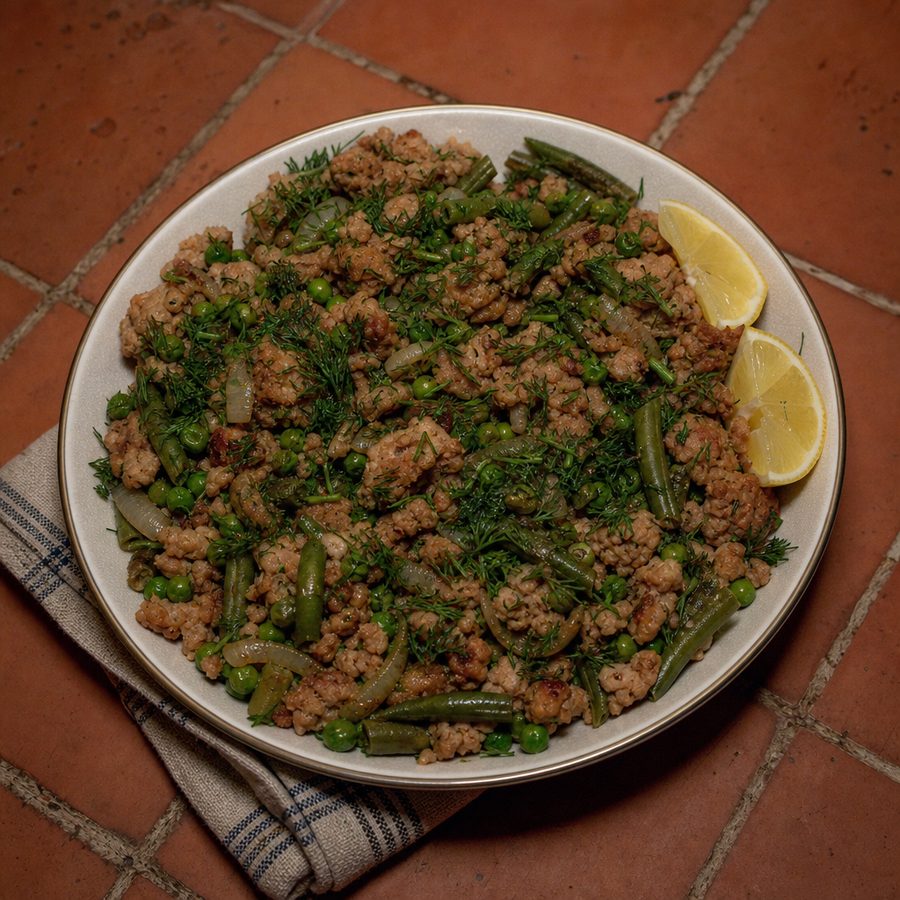
Ground turkey browned hard in a wide skillet with sliced onion and garlic, then green beans and peas cooked down in lemon and pan juices with a great deal of fresh dill stirred through at the end.
Why You'll Love This Recipe
I cook this on the weeknights when I want something green on the table and have about half an hour to get there. It is built on a Greek habit I love, which is cooking beans and peas past the point most American cooks stop, until they lose their squeak and turn olive-soft and glossy. That takes longer than a blanch but not much longer, and the payoff is a vegetable that has taken on the flavor of everything around it. The turkey browns first and gives the pan the fat and the fond that the vegetables then cook into, so nothing tastes like it was added at the end.
What it is like to eat is soft, savory, and very lemony. There is no crunch anywhere in the bowl, which is the point, and the texture is closer to a stew than a stir-fry even though it comes together in a skillet. The peas stay sweet and pop slightly against the yielding beans. Dill goes in by the handful once the heat is off, so it stays bright and grassy rather than cooking down into something dusty, and the lemon lands on top of all of it. My family eats this out of shallow bowls with a spoon, with more lemon wedges on the side than seems reasonable.
A run of roasted things calls for a change of temperature and texture. It is also the recipe I make when the vegetable drawer has green beans going slightly bendy, since a bean past its snapping prime is exactly right here and a firm one only slows you down. It reheats better than most skillet dinners because there is nothing crisp to lose, so I often cook the full pound of turkey knowing two portions are going into containers for the middle of the week. If you are feeding people who claim not to like dill, put half of it in, pass the rest at the table in a small bowl, and watch what happens by the second helping.
Ingredients
- 1 lb ground turkey
- 2 tbsp olive oil
- 1 medium onion, halved through the root and thinly sliced
- 4 garlic cloves, thinly sliced
- 14 oz green beans, trimmed and cut into 2-inch lengths
- 1 3/4 cups frozen green peas, straight from the freezer
- 1/2 cup chicken broth
- 3 tbsp lemon juice, from 1 large lemon, plus wedges for the table
- 2 tsp dried oregano, crumbled between your palms
- 1/2 cup chopped fresh dill, fronds and thin stems
- 1/3 cup chopped flat-leaf parsley
- 1/2 tsp fine sea salt
- 1/2 tsp coarsely ground black pepper
Instructions
- Get the pan hot and brown the turkey through: Set a 12-inch skillet over medium-high heat with 1 tbsp of the olive oil. When the oil shimmers, add the turkey in three or four large lumps and leave them alone for three minutes so the undersides brown properly. Break them up with a wooden spoon and cook two minutes more, until the meat is opaque right through with no pink left in the thicker lumps, which is where ground turkey comes up to its 165°F last, and there are dark bits stuck to the pan. Scrape it onto a plate.
- Soften the onion and garlic: Add the remaining tablespoon of oil and the sliced onion to the same pan with the salt. Cook over medium heat for three minutes, scraping up the browned bits as the onion releases its water, until it is translucent and floppy. Add the garlic and the oregano and stir for thirty seconds, just until the garlic smells sweet rather than sharp. Do not let it take on color.
- Cook the green beans down: Add the green beans, the black pepper, and the broth. Bring it to a simmer, cover, and cook for six to seven minutes, shaking the pan once or twice. The beans are ready when they have gone from bright green to a duller olive and a bean bends without snapping when you lift it out. That softness is what you want here, so give them the full time.
- Add the peas and bring the turkey back: Uncover, stir in the frozen peas and the turkey along with any juices on the plate, and cook uncovered for two to three minutes over medium-high. The peas need only to heat through and turn a vivid green, and the liquid in the pan should reduce to a few glossy tablespoons that cling to everything.
- Finish off the heat: Take the pan off the burner. Pour in the lemon juice, add the dill and parsley, and fold everything together for a few seconds so the herbs wilt in the residual heat without going drab. Taste, add another squeeze of lemon if it needs lifting, and serve in shallow bowls with wedges alongside.
Variations
- Avgolemono finish: Whisk an egg with the lemon juice, then temper in a ladle of hot pan liquid and stir it through off the heat for a thicker, silkier sauce.
- With olives: Add a small handful of pitted kalamata olives, torn in half, with the green beans for a saltier, more resinous version.
- Mint rather than dill: Swap the dill for the same volume of torn mint, which pushes the whole pan sweeter and works particularly well with fresh spring peas.
- Spoon of yogurt: Serve each bowl with a spoonful of cold plain skyr or Greek yogurt on top, stirred in at the table so it streaks through the lemony juices.
- More heat: A pinch of cayenne added with the garlic gives the pan a low warmth that the lemon then cuts straight through.
Storage & Leftovers
This keeps four days in a sealed container in the refrigerator and is one of the few skillet dinners that genuinely improves on day two. The beans go on absorbing lemon and pan juices overnight, and the oregano, which can taste a little dry on the first evening, settles into everything.
Reheat it gently in a covered skillet over medium-low with a splash of water, three or four minutes, stirring once. The microwave is fine as well, at half power so the peas do not turn to paste. Either way, chop a little more dill over the top before it goes to the table, since the first batch of herbs will have given up its brightness by then.
It freezes for up to three months in flat sealed portions. Thaw overnight in the refrigerator and reheat in a covered pan rather than from frozen. The peas soften noticeably through the freezer, so if you know a portion is headed that way, pull it before you add the peas and stir a fresh handful in when you reheat.
Notes & Tips
- Brown the turkey in lumps: Ground poultry broken up immediately steams and turns gray. Leave it in large pieces for the first three minutes, and you get the browned edges and the fond that flavor everything that follows.
- Cook the beans past bright green: The instinct to pull them while they still snap is the wrong one in this dish. A bean that bends is a bean that has taken on the lemon and the pan juices.
- Crumble the oregano in your palms: Dried oregano wakes up when you crush it between your hands on the way into the pan. It is the difference between a woody note and a proper one.
- Peas go in frozen: There is no thawing step. Straight from the bag into a hot pan is what keeps them sweet and separate rather than mushy.
- Lemon goes in off the heat: Simmered lemon juice turns flat and slightly bitter. Added once the burner is off, it stays sharp and does the job you wanted it for.
- Use more dill than feels sensible: Half a cup looks like a great deal on the cutting board and disappears into the pan. Dill is the flavor people remember from this dish, so be generous.
Nutrition & Mindful Eating
- The turkey, the peas, and the green beans each pull their weight here. The meat gives the pan its savory backbone and most of its protein, the peas bring their own protein along with the fiber that makes a bowl of this eat like a full dinner, and the beans soak up everything the pan gives them.
- Ground turkey is a fine-textured meat that browns fast and takes on whatever it is cooked with, and it carries protein in real quantity along with selenium and the B vitamins that poultry supplies.
- Green peas are a legume rather than a vegetable, which is why they bring both protein and a soft fiber that a plate of greens on its own would not. They also carry vitamin K and a natural sweetness that lands against all the lemon.
- Green beans cooked past their snap turn glossy and absorbent, and they keep their fiber whatever you do to them. Cooking them this way also softens the cell walls, so they eat more gently than a crisp bean does.
- Dill, parsley, oregano, and a good deal of lemon are doing the work that salt would otherwise have to do, and the acid stirred in at the last second is what makes the first bite and the last bite taste equally bright.
- As you eat, notice how much of the lemon and dill has worked its way into the beans themselves, and let the spoon slow you down enough to feel the meal settle rather than finishing it standing at the stove.
Frequently Asked Questions
Can I use fresh peas rather than frozen?
Yes, and in early summer they are lovely, though they need a minute or two longer in the pan than frozen ones do. Frozen peas are picked and chilled within hours, which is why they are sweet all year, and they are what I use from October to May without a second thought.
My green beans stayed squeaky. What went wrong?
The lid probably came off too early, or the pan was too hot and the broth boiled away before the beans were done. They should steam in a covered pan at a steady simmer for the full six to seven minutes. If the liquid disappears first, add a few more tablespoons and put the lid back on.
Is there a way to make this ahead for weeknights?
Slice the onion and garlic, trim the beans, and chop the herbs up to two days ahead and keep them in separate containers. With the knife work done the whole thing is about fifteen minutes at the stove. Hold the dill and the lemon until the moment of serving either way.
Can I use ground chicken here?
You can, and it works the same way, though it browns a little paler and tastes milder, so I add an extra half teaspoon of oregano to compensate. Whichever you use, cook it to 165°F and let it get a real crust in the pan before you break it up.