
Levantine Bamia with Lamb, Okra, and Cilantro Taqliya
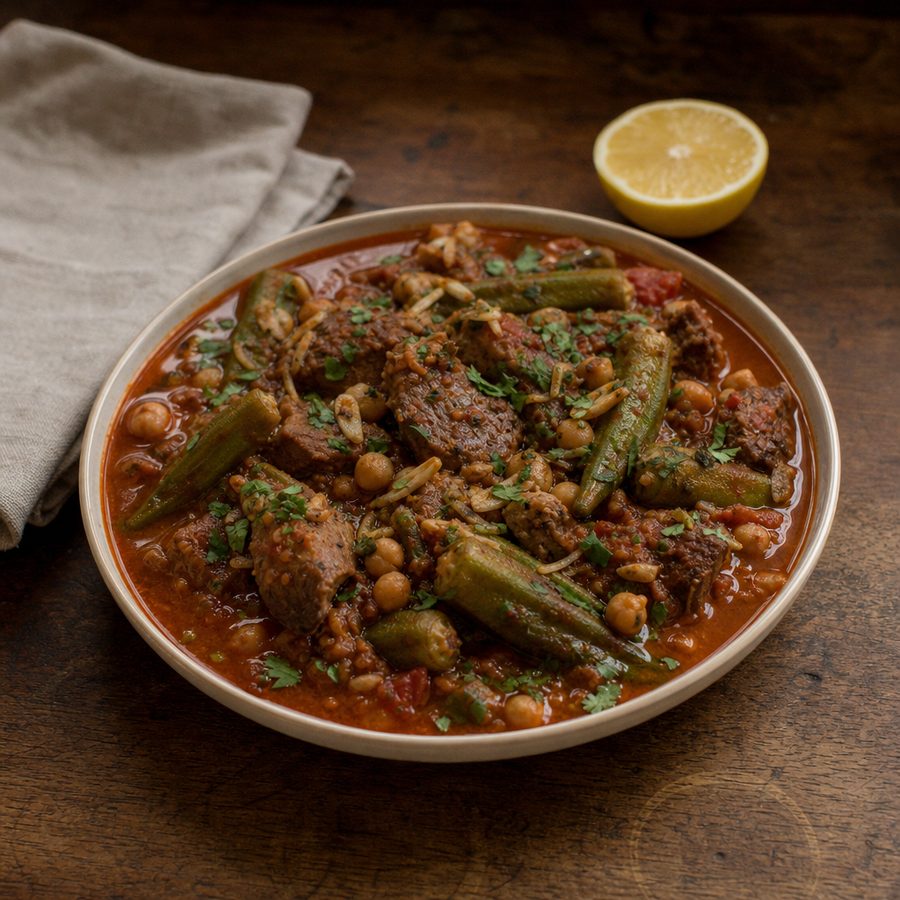
Cubes of lamb shoulder simmered until tender in a cinnamon-scented tomato broth with whole okra and chickpeas, finished with garlic and cilantro fried in olive oil and a hard squeeze of lemon.
Why You'll Love This Recipe
Bamia is cooked from Aleppo to Amman to Cairo, and every family swears by a slightly different pot. What they agree on is the shape of it: a small amount of meat cooked patiently until it gives way, a lot of okra, tomato holding it all together, and a bright, garlicky finish stirred in at the end. I use lamb shoulder because it is the cut that rewards a long, low simmer, and three quarters of a pound is plenty for four people once the okra and chickpeas are in the pot. The meat is there to flavor the broth rather than to fill the bowl.
The thing people worry about is the okra, and specifically the slipperiness. Two habits solve it. Trim the stems into a little cone rather than cutting into the pod, which keeps the seed chamber closed, and buy the smallest pods you can find, since large ones are both tougher and more likely to go slick. Add them in the last twenty minutes, keep the simmer gentle, and stir as little as you can bear to. What you get is okra that is tender through with the faintest resistance in the middle, and a broth with real body. Large pods cut into rounds make a different dish entirely, and a good one, but this is not that dish.
Taqliya is the part I would not skip. Garlic pounded to a paste and cilantro chopped fine go into hot olive oil for less than a minute, and the moment they smell sweet the whole panful gets stirred into the pot off the heat. It makes the difference between a decent stew and one that tastes like somebody's grandmother made it. Serve it with lemon at the table and a little rice or bread for anyone who wants it, and expect the pot to be better the second day. I make it on a Sunday when the afternoon is already given over to something slow, and it carries us well into the middle of the week.
Ingredients
- 1 lb small okra pods, stems trimmed to a cone without cutting into the pod
- 3/4 lb boneless lamb shoulder, trimmed and cut into 1-inch cubes
- 1 cup canned crushed tomatoes
- 1 cup chicken broth, plus a splash more if the pot goes dry
- 3/4 cup canned chickpeas, drained and rinsed
- 1 medium yellow onion, finely chopped
- 2 tbsp tomato paste
- 5 tsp extra virgin olive oil, divided
- 1 cup cilantro leaves and tender stems, finely chopped
- 2 tbsp lemon juice, plus wedges to serve
- 4 garlic cloves, crushed to a paste with a little salt
- 1 1/2 tsp ground cumin
- 1 tsp ground coriander
- 1/3 tsp ground cinnamon
- 1/2 tsp freshly ground black pepper
- 1/2 tsp fine sea salt
Instructions
- Trim the okra: Cut the stem end of each pod into a shallow cone, taking off the cap and the hard rim without opening the pod itself. Leave the pods whole and do not wash them after trimming, since water on a cut pod is what starts the sliminess. Small pods, three inches or under, are the ones to look for.
- Brown the lamb: Pat the lamb cubes dry and season with half the salt and the pepper. Heat 2 tsp of the olive oil in a heavy pot over medium-high, add the lamb in a single layer, since a crowded pot steams the meat instead of browning it, and leave it alone for four minutes until the underside is deep brown. Turn the cubes and give them three minutes more, then lift them onto a plate.
- Build the base: Turn the heat to medium, add the onion with a pinch of salt, and cook for six minutes until soft and translucent, scraping up what the lamb left behind, because those browned bits dissolve into the broth and are where most of its depth comes from. Stir in the tomato paste and cook for ninety seconds until it darkens, then add the cumin, coriander, and cinnamon and stir for thirty seconds, until the spices smell toasted.
- Simmer the lamb until tender: Return the lamb and its juices, add the crushed tomatoes and the broth, and bring to a simmer. Cover, turn the heat low, and cook for fifty five to sixty five minutes, until a cube crushes easily against the side of the pot. Check once or twice and add a splash of broth if the level drops below the meat, since any cube sitting above the liquid dries out rather than softening.
- Add the okra and chickpeas: Scatter the okra over the top in an even layer, add the chickpeas, and push them gently under the surface without stirring hard, because okra pods break easily once they soften and a broken pod is what turns the broth ropey. Cover and simmer for eighteen to twenty minutes, until the pods are tender when pierced but still whole. The broth will have thickened noticeably by now.
- Make the taqliya and finish: In a small skillet, warm the remaining 3 tsp olive oil over medium heat, add the garlic paste, and stir for twenty seconds until it turns pale gold and smells sweet. Add the cilantro, stir for another twenty seconds, and scrape the whole panful into the pot. Take it off the heat, add the lemon juice and the rest of the salt, and let it sit for five minutes before serving, so that the garlic and cilantro settle down into the broth instead of floating on top of it.
Variations
- Bamia bil zeit: Leave the lamb out entirely, double the chickpeas, and use vegetable broth for the meatless version eaten across the Levant during fasting weeks.
- With pomegranate molasses: Add a tablespoon at the end for the sour, faintly sweet finish common in Syrian kitchens.
- Chile heat: Add half a teaspoon of Aleppo pepper with the cumin for gentle warmth through the whole pot.
- Extra greens: Wilt a few handfuls of chopped chard through the pot in the last five minutes for another layer of green.
Storage & Leftovers
Bamia keeps four days in the refrigerator in a sealed container and is one of those stews that genuinely improves overnight, since the spices and the garlic keep working their way into the lamb. Keep the okra submerged in the broth so the pods do not dry at the top.
Reheat it covered over low heat for eight to ten minutes with a splash of water, stirring gently once or twice. Okra that has already been cooked through does not appreciate a hard boil, and vigorous stirring is what breaks the pods open. A fresh squeeze of lemon on reheating brings the whole pot back into focus.
It freezes for up to three months. Cool it completely, freeze in flat portions with plenty of broth, and thaw overnight in the refrigerator before reheating on the stove. The okra softens further through freezing, so if that matters to you, freeze the lamb and broth on their own and cook fresh okra into it when you reheat.
Notes & Tips
- Buy the smallest okra you can find: Pods under three inches are tender all the way through. Big ones develop woody ribs and a tough tip that no amount of simmering will fix.
- Cone the stem, do not decapitate it: Cutting straight across opens the seed chamber and lets everything inside out into the broth. A shallow cone keeps the pod sealed.
- Brown the lamb in one layer: Two batches beat a crowded pot. The dark crust you build on the cubes is where most of the depth in the finished broth comes from.
- Keep the simmer barely moving: A rolling boil toughens lamb and shreds okra. You want the occasional lazy bubble breaking the surface and nothing more.
- Save the taqliya for the very end: Garlic and cilantro cooked into the stew from the start disappear into it. Fried separately and stirred in at the finish, they sit right on top of everything.
- Let it rest before serving: Five minutes off the heat lets the broth settle and thicken around the pods, and the garlic oil spreads across the surface rather than sitting in one place.
Nutrition & Mindful Eating
- Okra, chickpeas, and a modest amount of lamb divide the work in this pot. The okra gives the broth its body and most of its fiber, the chickpeas add substance, and the lamb spends an hour giving up its flavor to everything around it.
- Okra is the unusual one here. Its soft interior is full of soluble fiber, which is exactly what thickens the broth as the pods cook, and the pods bring vitamin K, folate, and a good amount of magnesium along with it.
- Lamb shoulder is a well-marbled, connective cut that turns tender only with time, and the hour it spends in the pot is what makes it break apart under a spoon. It carries protein, iron in the form your body takes up most readily, and B12.
- Chickpeas hold their shape in the broth and bring plant protein and more fiber, and their mild, nutty flavor sits comfortably underneath the cumin and cinnamon.
- Garlic and cilantro fried in olive oil for less than a minute are the finish that defines this dish, and hitting them with brief heat keeps the garlic sweet and the cilantro green rather than cooking either into the background.
- As you eat, catch the garlic and lemon that sit right at the surface before they settle in, and let a stew that took this long to build be eaten slowly enough to notice when you have had enough.
Frequently Asked Questions
Can I use frozen okra?
Yes, and in most of the year it is the better buy. Use it straight from the freezer without thawing, add it at the same point in the recipe, and give it about five minutes less. Thawed okra sits in its own water and goes soft in the pot.
What can I use in place of lamb?
Bone-in chicken thighs are the common alternative across the Levant and need only thirty five minutes of simmering rather than an hour. Beef chuck works too and takes about the same time as the lamb. For a meatless pot, double the chickpeas and use vegetable broth.
How do I keep the okra from going slippery?
Trim the caps without cutting into the pod, keep the pods whole and dry, add them late, and resist stirring. Some cooks also toss the trimmed pods with a spoonful of lemon juice first or roast them for ten minutes at 425°F before they go in, both of which help.
What do you serve with it?
A plain rice pilaf is traditional and so is flatbread torn straight into the bowl. I often skip both and serve it in deep bowls with a spoon, since the chickpeas and okra give it enough body to stand on its own.