
Lime and Ginger Chicken with Blistered Cabbage and Thai Basil
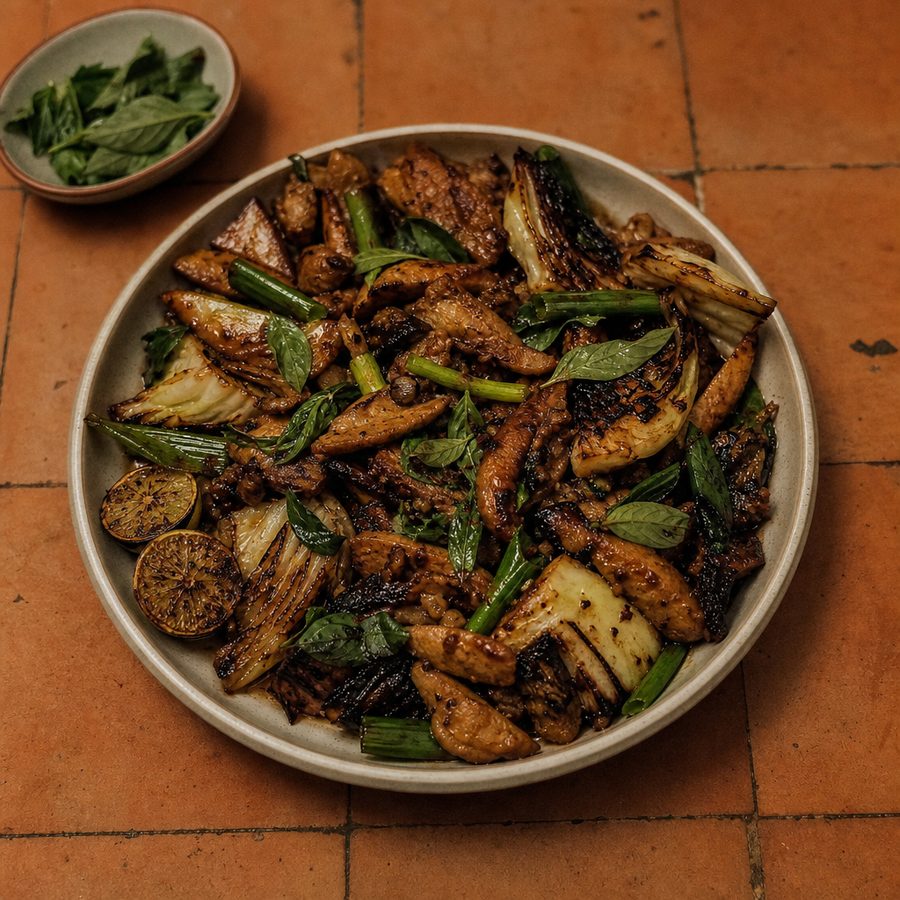
Strips of chicken thigh seared hard with wedges of cabbage until both are charred at the edges, glazed with coconut aminos, ginger, and garlic, then finished off the heat with lime juice and a great handful of torn Thai basil.
Why You'll Love This Recipe
Cabbage is the vegetable I trust most on a weeknight, because it is cheap, it keeps for a month, and it does something remarkable when you treat it roughly. Cut into wedges and pressed against a hot dry pan, the cut faces go dark and sweet and just short of burnt, while the layers inside stay crisp. That contrast is the whole dish. Chicken thigh sliced into strips cooks in the same few minutes, so the two things share one skillet and one set of browned bits at the bottom of it.
The glaze is three tablespoons of coconut aminos and nothing much else. Poured into a hot pan they reduce almost immediately, going glossy and dark and clinging to everything, savory with a low sweetness behind it. Ginger and sliced garlic go in just before, so they toast for thirty seconds without burning. Then the pan comes off the heat, the lime goes over, and the basil goes on. Thai basil is worth hunting down here, since it has a licorice note that ordinary basil does not, but sweet basil torn in at the last second is still very good.
This is a fifteen-minute dinner that eats like more than that, and it is one of the few quick meals I make that tastes even better as a cold lunch the next day. If I am cooking for people who are hungry, I put a bowl of plantain fried in coconut oil next to it. If it is just us on a Wednesday, we eat it straight from the pan with lime wedges and more basil, and there is nothing left by the end.
Ingredients
- 1 1/2 lb boneless, skinless chicken thighs, sliced into 1/2-inch strips and patted dry
- 1/2 large head green cabbage (about 1 1/2 lb), cored and cut into 1-inch wedges through the stem
- 2 carrots, shaved into ribbons with a peeler
- 5 tsp finely grated fresh ginger
- 5 garlic cloves, thinly sliced
- 3 tbsp coconut aminos
- 1 tbsp coconut oil
- 2 tbsp lime juice, plus 1 lime halved and seared alongside
- 6 scallions, cut into 2-inch lengths
- 1 1/2 packed cups Thai basil leaves, torn
- 1/2 cup cilantro leaves and tender stems, chopped
- 3/8 tsp fine sea salt
Instructions
- Cut everything before you start: This cooks fast enough that there is no time to chop once the pan is hot. Slice the chicken into strips and pat it dry, cut the cabbage into wedges through the core so the leaves hold together, shave the carrots, slice the garlic, and grate the ginger. Have the coconut aminos measured and beside the stove.
- Char the cabbage: Set a large skillet over high heat and let it get properly hot with no oil in it. Lay the cabbage wedges cut side down in a single layer and leave them for three minutes, until the faces are deeply browned in patches and smell sweet. Turn them onto the other cut face for two minutes, then move them to a plate.
- Sear the chicken: Add the coconut oil to the same pan, then the chicken strips and the salt in one layer. Leave them undisturbed for three minutes so they take on color, then stir and cook two to three minutes more, until they are browned all over and cooked through. Add the seared lime halves cut side down for the last minute if you are using them.
- Toast the aromatics and glaze: Push the chicken to one side, add the sliced garlic and grated ginger to the clear space, and cook for thirty seconds until fragrant. Pour in the coconut aminos and let them bubble hard for about a minute, until they thicken into a syrup and coat the chicken.
- Bring it together: Return the cabbage with the carrot ribbons and scallions, tossing everything for one minute so the cabbage warms through and picks up the glaze while it still has some crunch. Take the pan off the heat, squeeze the lime juice over, and fold in the torn Thai basil and cilantro until they just wilt.
Variations
- Lemongrass: Mince the tender lower third of a lemongrass stalk and add it with the garlic and ginger. Thirty seconds in the hot pan is enough to release its perfume.
- Napa cabbage: Use napa cut into thick ribbons for a quicker, more delicate version. It chars in half the time and wilts more, so add it at the very end.
- Mushrooms: Brown eight ounces of sliced mushrooms with the chicken. They soak up the glaze and make the pan taste deeper and more savory.
- Ground chicken: Swap the strips for a pound of ground chicken browned hard and broken up. It catches more of the glaze and turns the dish into something you eat with a spoon.
- Ginger and lime, doubled: Grate extra ginger over the finished pan and add a second squeeze of lime. It makes the whole skillet sharper and more bracing.
Storage & Leftovers
Refrigerate leftovers in a sealed container for up to four days. The cabbage softens overnight but keeps enough bite to be worth eating cold, and the glaze goes further into the chicken while it sits. This is one of the dishes I deliberately make extra of, because a cold container of it makes a better lunch than most things I could pack.
Reheat in a dry skillet over medium-high for three or four minutes, spread flat and left alone for the first two so the cabbage picks up a little char again. Skip the microwave if you can, because it turns the cabbage limp and steams away the browning that gives the dish its character. Add fresh lime and a few basil leaves after reheating.
I would not freeze this one. Cabbage that has been frozen and thawed goes watery and slack, and the texture is most of what this dish has to offer. If you want to get ahead, cut the cabbage, chicken, and aromatics a day early and keep them in separate containers, and the cooking is then a genuine fifteen minutes.
Notes & Tips
- Start the cabbage in a dry pan: Oil at that heat smokes before the cabbage colors. A dry skillet gives you a clean, dark char, and the coconut oil goes in afterward for the chicken.
- Cut the wedges through the core: The core is what holds the leaves together while they char. Cut the wedges without it and you get a pan of loose leaves that burn instead of blistering.
- Pat the chicken dry: Wet meat steams and turns gray. Thirty seconds with paper towel is the difference between browned strips and pale ones, and the browning is where the glaze gets its grip.
- Watch the aminos closely: Three tablespoons reduce to a syrup in about a minute and to a burnt film shortly after. Pour them in, toss constantly, and get the pan off the heat as soon as it looks glossy.
- Tear the basil, do not chop it: A knife bruises the leaves and turns the cut edges black. Torn leaves stay green and give up their smell when the pan heat hits them.
- Sear the lime halves: A minute face down in the hot pan takes the edge off the acid and makes the juice taste rounder and slightly caramelized.
Nutrition & Mindful Eating
- Chicken thigh, charred cabbage, and a coconut aminos glaze carry this pan between them. The thighs bring the protein and the browning, the cabbage brings crunch and fiber, and the glaze ties the two together with a savory sweetness that makes the whole skillet taste like more work than it was.
- Chicken thigh is a darker, more forgiving cut than breast, with more fat running through the muscle, which is exactly why it stays juicy in a pan this hot. It carries protein along with zinc, selenium, and B vitamins.
- Cabbage belongs to the same family as broccoli and kale, and hard charring is what turns its faint sulfur edge sweet and nutty. It brings fiber and vitamin C, and the crisp layers inside the wedge are what give every forkful something to push against.
- Carrot ribbons go in at the very end so they barely soften, staying sweet and snapping, and their deep orange is beta-carotene, which your body converts into vitamin A.
- Ginger, garlic, lime, and Thai basil are the finish and the point. The ginger warms the back of the throat, the garlic toasts for half a minute in the hot pan, and the lime and basil go in off the heat so the anise smell comes up in the steam as you carry the pan to the table.
- As you eat, listen for the crunch still left in the middle of a cabbage wedge and notice how the char, the lime, and the basil each arrive at a different moment, then check in with yourself before you reach for a second plate.
Frequently Asked Questions
Can I use chicken breast?
Yes, sliced thin and cooked for less time. Give the strips two minutes on the first side and about ninety seconds after that, and pull them at 165°F. Thighs are more forgiving in a pan this hot, which is why they are what I call for, but breast works if you keep a close eye on it.
My cabbage burned before it softened.
That is usually the right amount of char and the wrong expectation. These wedges are meant to stay crisp inside with a dark, almost blackened face. If you want them softer, add two tablespoons of water to the pan after turning them and cover for a minute so they steam through.
What can I use in place of Thai basil?
Sweet basil is the closest, torn in off the heat. Cilantro alone works and gives a fresher, greener finish, and a handful of mint with it gets you somewhere very close to the licorice note that Thai basil brings.
Why coconut aminos rather than another sauce?
They are made from coconut sap, and they reduce into a glaze faster than most bottled sauces because of the sugar in them. The flavor is savory with a gentle sweetness behind it, and it suits the char on the cabbage. If you tolerate soy, gluten-free tamari behaves similarly, though you will want less salt.