
Long-Braised Collard Greens with Pork Shoulder
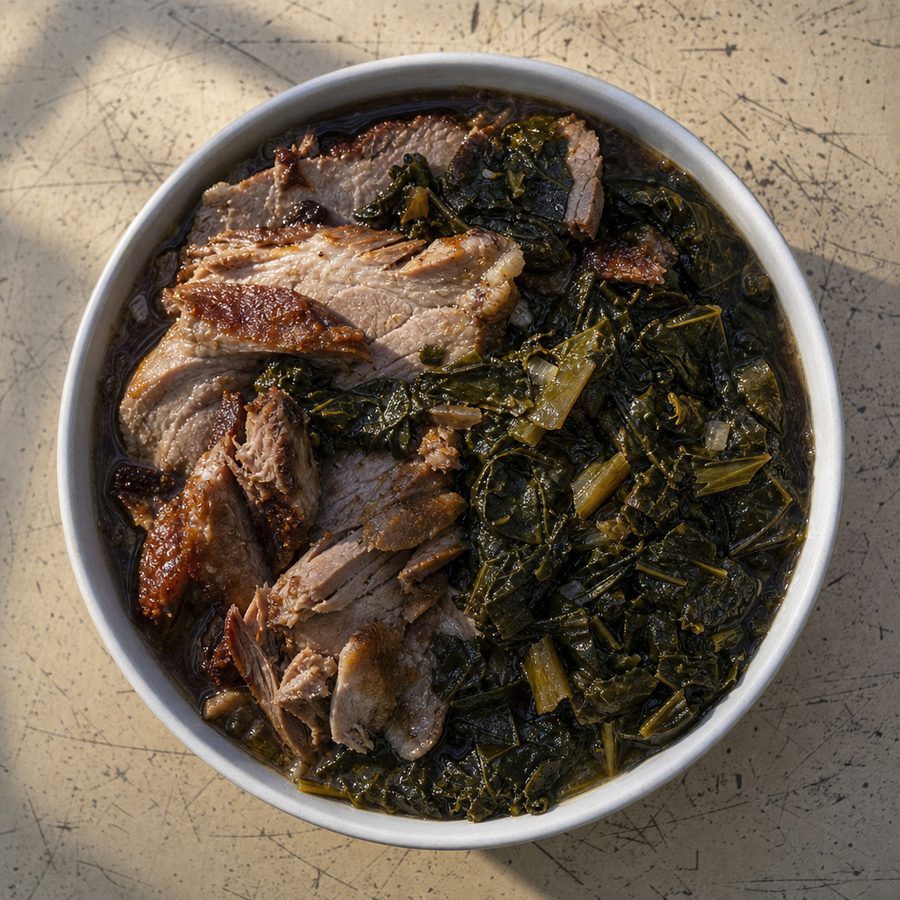
Collard greens cooked down for two hours in bone broth with bacon and garlic until they turn silky, served with browned pork shoulder steaks and a splash of cider vinegar.
Why You'll Love This Recipe
A pot of greens cooked properly is one of the few vegetable dishes I would put in the middle of a table and call dinner, and it is the one I turn to when the week has been long and I want the oven to run itself for two hours. Two big bunches of collards look like far too much when you are cutting them, and they cook down to about a quarter of that, dark and glossy and swimming in their own liquid. The pork is browned first and comes back at the end, so what you sit down to is a bowl of greens with meat resting alongside rather than a piece of meat with a garnish.
The long cook is the whole point and there is no shortcut worth taking. Collard leaves are tough and slightly bitter at twenty minutes, which is where most recipes stop, and by an hour and a half that bitterness has turned into a deep mineral sweetness while the leaves go silky. Brown the pork hard first and leave the fond in the pot, because that browning and the rendered bacon are the only two sources of savoriness here. The liquid left underneath is worth as much as the greens themselves, so I never drain it. Ladle it into the bowl and eat it with a spoon.
Pork shoulder is the right cut because it stays juicy at the edges of doneness and slices cleanly rather than shredding. A pound and a half across four people is a modest amount of meat, and it eats like more because the greens around it are so substantial. Cider vinegar is the finish, and I mean two things by that: two tablespoons stirred into the pot at the end, and the bottle left on the table so people can add their own. That last sharp splash against something cooked this long is what makes people go back for a second bowl.
Ingredients
- 2 large bunches collard greens (about 2 lb), stems removed and leaves cut into wide ribbons
- 1 1/2 lb boneless pork shoulder steaks, about 3/4 inch thick
- 3 slices bacon, chopped
- 1 large yellow onion, thinly sliced
- 6 cloves garlic, sliced
- 3 cups chicken bone broth
- 2 tbsp apple cider vinegar, plus more for the table
- 1 tbsp olive oil
- 1 tbsp fresh thyme leaves
- 2 bay leaves
- 1 1/2 tsp fine sea salt, divided
Instructions
- Prep the greens: Heat the oven to 325°F (163°C). Strip the collard leaves off their thick center stems and discard the stems. Stack the leaves, roll them, and cut them into ribbons about an inch wide. Wash them in a sink of cold water and lift them out rather than pouring them into a colander, since the grit sinks and pouring tips it straight back over the leaves.
- Render and brown: Cook the chopped bacon in a large Dutch oven over medium heat for 6 to 8 minutes, until the fat has rendered and the pieces are crisp. Scoop the bacon out and set it aside, because it goes back in later and anything left in the pot for two hours will have given up its crisp long before the greens are done. Pat the pork steaks dry, season with 1/2 teaspoon of the salt, and brown them in the bacon fat and olive oil over medium-high, 4 minutes per side. Move them to a plate.
- Build the pot: Lower the heat to medium, add the onion, and cook for 5 minutes in the fat until it softens and picks up the brown bits from the bottom. Add the garlic and thyme and cook 1 minute more, scraping the pot as you go, since everything stuck to the bottom is flavor that belongs in the broth.
- Braise the greens: Add the collards in handfuls, letting each one wilt before the next goes in, because the whole pile at once will not fit in the pot and the bottom layer would scorch waiting for the top to collapse. It takes about 5 minutes. Pour in the bone broth, add the bay leaves, the crisp bacon, and 1/2 teaspoon of the salt, and bring it to a simmer. Cover and move the pot to the oven for 1 hour and 45 minutes.
- Return the pork: Take the pot out and tuck the pork steaks and any juices from the plate down into the greens, so that the meat finishes in the broth rather than drying in the oven air, cover, and return it to the oven for 20 minutes, until the pork is heated through and gives easily under a fork. The greens should be very dark and completely tender.
- Finish and serve: Lift the pork out onto a board, discard the bay leaves, and stir the cider vinegar and the remaining salt into the pot, since two hours of braising flattens everything and the vinegar at the end is what brings the greens back. Taste the liquid and adjust it. Slice the pork against the grain, ladle greens and plenty of their broth into bowls, and lay the slices alongside.
Variations
- No bacon: Leave the bacon out and brown the pork in 2 tablespoons of olive oil, then add an extra clove of garlic to make up the depth.
- Smoky turkey: Swap the pork for turkey thighs and braise them in the greens for the full time rather than adding them at the end.
- Sweeter pot: Add a peeled, diced turnip or a handful of sliced carrot with the broth so there is something soft and sweet among the leaves.
- Lemon finish: Use lemon juice and a little zest in place of the cider vinegar for a brighter, less rounded kind of sharpness.
- Bigger pot: Double the greens and the broth in the same Dutch oven and cook for another 20 minutes, since the pot takes longer to come up to heat.
Storage & Leftovers
This keeps in the refrigerator for up to 5 days and is genuinely better on the second and third. Store the greens in their liquid and the sliced pork on top rather than stirred through, so the meat does not go stringy while it sits in the broth overnight.
Reheat it in a covered saucepan over low heat for about 8 minutes, adding a splash of broth or water if the pot has gone dry. Add a fresh splash of cider vinegar after it is hot, since the first one fades in storage and the greens taste flat without it.
Braised greens freeze better than almost any other vegetable dish. Freeze them in their liquid in portion-sized containers for up to 3 months, and thaw overnight in the refrigerator. The pork can go in with them, though it will be softer when it comes back out.
Notes & Tips
- Wash after cutting: Grit sits in the folds and it cannot be fixed once the pot is built. Cut the ribbons first, then wash them in a full sink and lift them out with your hands.
- Take the stems out: Collard stems never soften enough to be pleasant and they stay woody after two hours. Strip them and throw them away.
- Wilt in stages: Adding all the greens at once puts the pot temperature on the floor. Add them by the handful and let each wilt down first.
- Keep the pot liquid: Draining the greens throws away the best part of the dish. If there is more liquid than you want, boil it down uncovered for 5 minutes.
- Do not braise the pork the whole time: Shoulder steaks in the pot from the start turn stringy and pale. Twenty minutes at the end warms them and keeps the browned crust intact.
- Vinegar twice: Some of it goes into the pot and some goes on the table. The one added at the end of cooking softens, and the raw splash is what wakes the bowl up.
Nutrition & Mindful Eating
- The greens, the broth, and the pork build this together. Two bunches of collards cook down into the body of the meal, the bone broth turns into a savory liquid worth spooning up, and the pork alongside brings the protein that makes a bowl of vegetables sit like dinner.
- Collard greens are sturdy, deep green leaves that turn silky rather than mushy over a long cook, and they carry calcium and vitamin K along with a good amount of fiber. Slow braising is also what turns their raw bitterness into something closer to sweet.
- Pork shoulder is a well-marbled cut with enough connective tissue to stay juicy, which is why it slices cleanly rather than drying out. It brings thiamin and B12 along with protein, and a modest amount of it goes a long way against greens this rich.
- Bacon rendered at the start seasons the entire pot with very little of it in play, and that fat is what carries the flavor of the garlic and thyme through every leaf. It also leaves crisp pieces that give the finished bowl something to bite against.
- Cider vinegar is the reason this tastes finished. Two tablespoons go in at the end and another splash goes on at the table, and that raw acid against greens cooked for two hours is what keeps a rich pot tasting bright.
- As you eat, take a spoonful of the broth on its own before the greens, notice how far two hours has taken them from the raw leaves you cut, and let the pace of the cooking set the pace of the meal.
Frequently Asked Questions
Can I use a different green?
Kale and mustard greens both work, though they cook faster. Give kale about an hour and mustard greens about 45 minutes, and expect mustard greens to stay peppery where collards go sweet. Swiss chard is too tender for this and turns to threads.
Mine still tasted bitter. What went wrong?
Almost always undercooking. Collards need well over an hour before the bitterness turns, so if you tasted at 40 minutes and gave up, put the lid back on. The other fix is acid and fat: the vinegar at the end and the rendered bacon both round the edges off.
Can I make it in a slow cooker?
Yes. Brown the bacon and the pork in a skillet first, since that step carries the flavor, then move everything to the slow cooker with the broth and cook on low for 6 hours. Add the pork back for the last 30 minutes and finish with the vinegar.
Does this fit an AIP elimination phase?
It does, as long as the bacon you buy is cured without paprika or other nightshade spices, which is worth reading the package for. Everything else in the pot is greens, alliums, herbs, broth, and vinegar, with no grains, dairy, eggs, nuts, or seeds anywhere in it.