
Mackerel Escabeche with Watercress and Orange
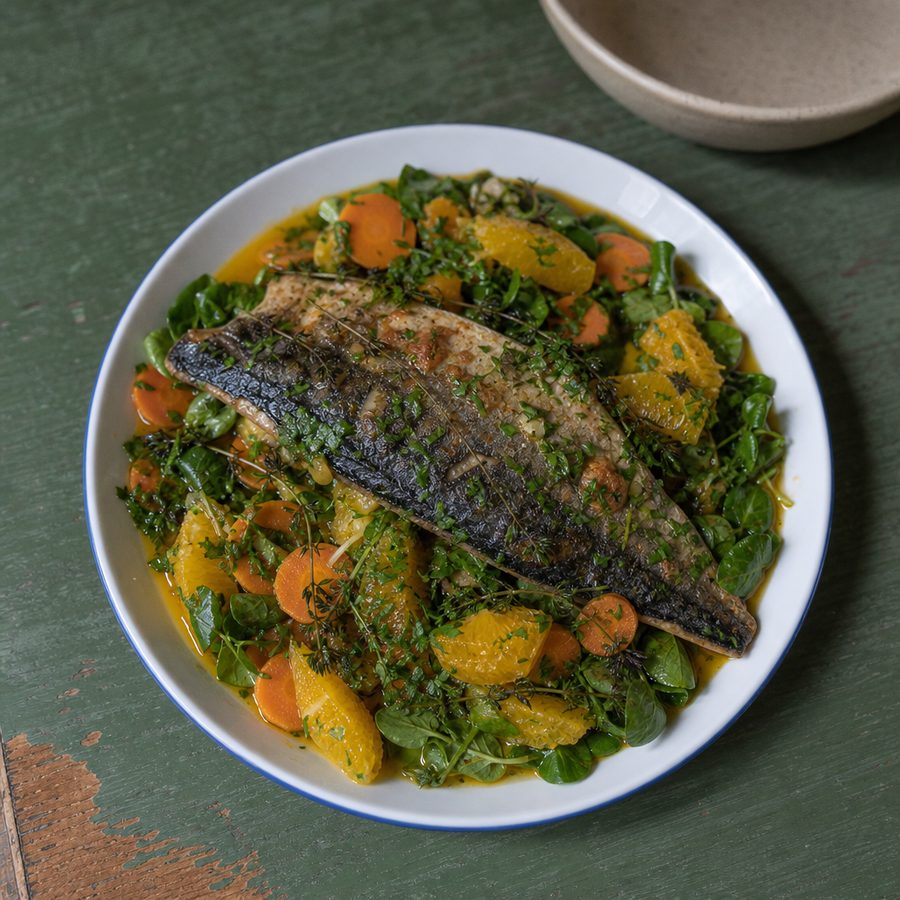
Mackerel fillets seared once, then covered in warm cider vinegar, smoked paprika, and garlic-infused oil overnight, served cold over watercress with orange segments and parsley.
Why You'll Love This Recipe
Escabeche answers the question of what somebody who likes fish in the morning is supposed to do on a weekday. You cook it once, usually on a Sunday, and then it sits in the refrigerator getting better while you sleep. By Tuesday the mackerel has firmed up, the oil has gone orange from the smoked paprika, and breakfast is a fork, a plate, and a handful of watercress. There is nothing to heat and nothing to time. If cold fish first thing is new to you, this is a gentler way in than it sounds, because a night in vinegar makes mackerel taste clean and bright rather than strong.
The method is old and it is simple. The fish gets seared, the marinade of oil, vinegar, and spices gets warmed separately, and the two meet while both are still warm so the fillets drink it in as they cool. The detail that matters is that the vinegar goes in off the heat, and so does the smoked paprika, because paprika scorches and turns bitter in a hot pan in about ten seconds. Carrot coins soften in the oil, bay and thyme steep in it, and crushed coriander seeds give the whole dish a faint citrus note you notice on the second bite rather than the first.
Mackerel is a strong fish and this is the treatment that suits it best. Its oil is exactly what the acid needs to push against, so a fillet that can taste heavy straight from a hot pan tastes firm and clean after a night in vinegar. I serve it over watercress with orange rounds because peppery and sweet are both good against something that rich, and I spoon the marinade oil over the greens as the dressing, since it is already carrying the paprika, the thyme, and the bay. Take the dish out of the refrigerator about fifteen minutes before you want it.
Ingredients
- 1 1/2 lb mackerel fillets (about 4), pin bones removed
- 1/2 cup garlic-infused olive oil, divided
- 1/3 cup apple cider vinegar
- 2 medium carrots, sliced into thin coins
- 2 tsp smoked paprika
- 1 tsp coriander seeds, lightly crushed
- 2 dried bay leaves
- 4 sprigs fresh thyme
- 4 cups watercress, thick stems trimmed
- 2 oranges, peeled and cut across into rounds
- 1/4 cup chopped flat-leaf parsley
- 1 1/4 tsp fine sea salt, divided
- 1 tsp freshly ground black pepper
Instructions
- Salt the fillets and let them sit: Season the mackerel on both sides with 3/4 teaspoon of the salt and leave the fillets on a rack for 10 minutes. Then pat them properly dry with paper towels. The salt draws out surface water, and drying it off is what lets the skin crisp instead of sticking.
- Sear the mackerel: Heat 2 tablespoons of the garlic-infused olive oil in a wide skillet over medium-high. Lay the fillets in skin side down and press each one flat with a spatula for the first 10 seconds. Cook 3 minutes until the skin is crisp and the flesh has turned pale most of the way up, then flip for 1 minute. Lift them into a shallow dish, skin side up, in one layer.
- Warm the marinade: Wipe the pan, add the remaining oil, the carrot coins, the bay leaves, the thyme sprigs, and the crushed coriander, and set it over low heat. Cook for 5 minutes, until the carrots have lost their raw snap and the oil smells of thyme. Do not let it fry or bubble hard.
- Add the paprika and vinegar off the heat: Take the pan off the burner, wait 30 seconds, then stir in the smoked paprika, the cider vinegar, the remaining salt, and half the black pepper. Stand back as you pour, because vinegar hitting warm oil steams sharply. Paprika added to a hot pan turns bitter within seconds, which is why it goes in here.
- Pour it over and chill: Spoon the warm marinade, carrots and all, over the fillets so they are more or less covered. Let the dish cool on the counter for 20 minutes, then cover it and refrigerate at least 4 hours and preferably overnight. The vinegar firms the flesh and the paprika colors the oil while it sits.
- Build the plates: Take the dish out 15 minutes before you eat, so the oil goes liquid again. Divide the watercress and orange rounds among four plates, lay a fillet over each, and spoon the carrots and plenty of the marinade oil over the top. Finish with parsley and the remaining black pepper.
Variations
- Sardine escabeche: Use 1 1/2 lb of fresh sardine fillets and cut the sear to 90 seconds a side, since they are much thinner than mackerel.
- Warmer spicing: Add 1/2 teaspoon of cumin seeds and a pinch of ground cloves to the oil with the coriander for something closer to a North African escabeche.
- Some heat: Drop a sliced jalapeno into the marinade while it is still warm, and it will mellow into background heat overnight.
- Over potatoes: Skip the greens and serve the fillets over warm boiled red potatoes crushed with a fork, spooning the marinade oil over them.
- Herb swap: Use fresh dill in place of the parsley and add a few extra sprigs to the marinade for a version that leans Northern rather than Spanish.
Storage & Leftovers
This keeps in the refrigerator, covered, for 4 days and it is better on day two than on day one. The oil sets into a cloudy solid when it is cold, which looks alarming and means nothing, since fifteen minutes on the counter turns it clear and liquid again. Keep the fillets sitting in the marinade the whole time.
There is no reheating to do, which is the point of the dish. If you want it warm, let a fillet come fully to room temperature and give it 60 seconds skin side down in a dry pan, though the vinegar sharpens with heat and I prefer it cold. Dress the greens only at the moment you serve.
Freezing does not suit it. Mackerel that has been frozen after marinating goes soft and the flesh separates from the skin in wet layers. If you want a longer runway, buy the fillets frozen, thaw them overnight in the refrigerator, and start the escabeche from there.
Notes & Tips
- Paprika goes in off the heat: Smoked paprika is finely ground and full of sugar, so it scorches in a hot pan almost instantly and takes the whole dish bitter with it. Wait half a minute after the burner is off, then stir it in.
- So does the vinegar: A third of a cup of vinegar poured into hot oil will spit at you and boil off half its brightness. Off the heat, it stays sharp and stays in the pan.
- Why garlic-infused olive oil works: Garlic gives its flavor to oil but not its fructans, which are the part a sensitive gut objects to and which will not dissolve in fat. Here the oil is also the dressing for the greens, so it does the work twice.
- Give it a night: Four hours is the floor and overnight is where it wants to be. The vinegar needs time to work into the flesh, and mackerel eaten too early tastes like two separate things, seared fish and sharp oil.
- Take it out early: Cold olive oil sets into a cloudy paste. Fifteen minutes on the counter and it runs clear again, and the fish tastes of far more than it does straight out of the refrigerator.
- Check for pin bones: Run a fingertip down the center line of each fillet before it goes in the pan and pull anything you feel with tweezers. It takes a minute and saves the whole breakfast.
Nutrition & Mindful Eating
- Mackerel, cider vinegar, and smoked paprika are the three that decide this dish. The fish is rich and full flavored, the vinegar cuts straight through it, and the paprika tints the oil and lays a low smoky note under everything else.
- Mackerel has dark, firm flesh and plenty of its own oil, and that oil is where the long chain omega-3 fats and the vitamin D live. Marinating firms the flesh so a fillet slices cleanly with the edge of a fork.
- Carrot coins steeped in warm oil come out sweet and still slightly firm. Their orange color is beta-carotene, which is fat soluble, so some of it moves into the oil the fish is sitting in and none of it goes to waste.
- Watercress and orange go underneath cold. The cress is peppery and brings vitamin K, the orange brings sweetness and vitamin C, and between them they are what keeps a fish this rich from feeling like too much before nine in the morning.
- A night in the refrigerator is what makes this. The vinegar works its way into the fish, the bay and thyme steep into the oil, and by morning the whole thing tastes rounder and cleaner than it did when you spooned it over.
- As you eat, pay attention to how firm and cool the fish has become overnight and how the orange meets the vinegar, and let a breakfast that was already waiting for you hold you at the table a few extra minutes.
Frequently Asked Questions
Is it safe to eat this cold, and is the fish really cooked?
It is cooked. Escabeche sears the fish through before it ever meets the vinegar, so this is a cooked dish that is served cold, not a cured or raw one. Keep it refrigerated, eat it within 4 days, and make sure the fillets sit under the marinade rather than above it.
Can I use a different fish?
Trout fillets are the easiest swap and need only 2 minutes on the skin. Sardines are traditional and work beautifully if you can get them fresh. Firm white fish like cod is too delicate here, since it breaks apart in the acid rather than firming up.
It tastes too sharp for me. What should I change?
Cut the vinegar to 1/4 cup and add an extra tablespoon of oil, which softens the acid without losing the effect. A day longer in the refrigerator also rounds it out. Serving it with the orange rounds rather than on its own makes a real difference to how sharp it reads.
Does this fit a low-FODMAP breakfast?
It does. Escabeche is normally built on sliced onion and garlic cloves, and here the flavor comes from smoked paprika, bay, thyme, coriander seed, cider vinegar, and garlic-infused olive oil, so nothing gets stripped out of the recipe. Half an orange and a cup of watercress per plate both sit in the comfortable range.