
Mackerel Rillettes in Endive Leaves with Radish and Parsley
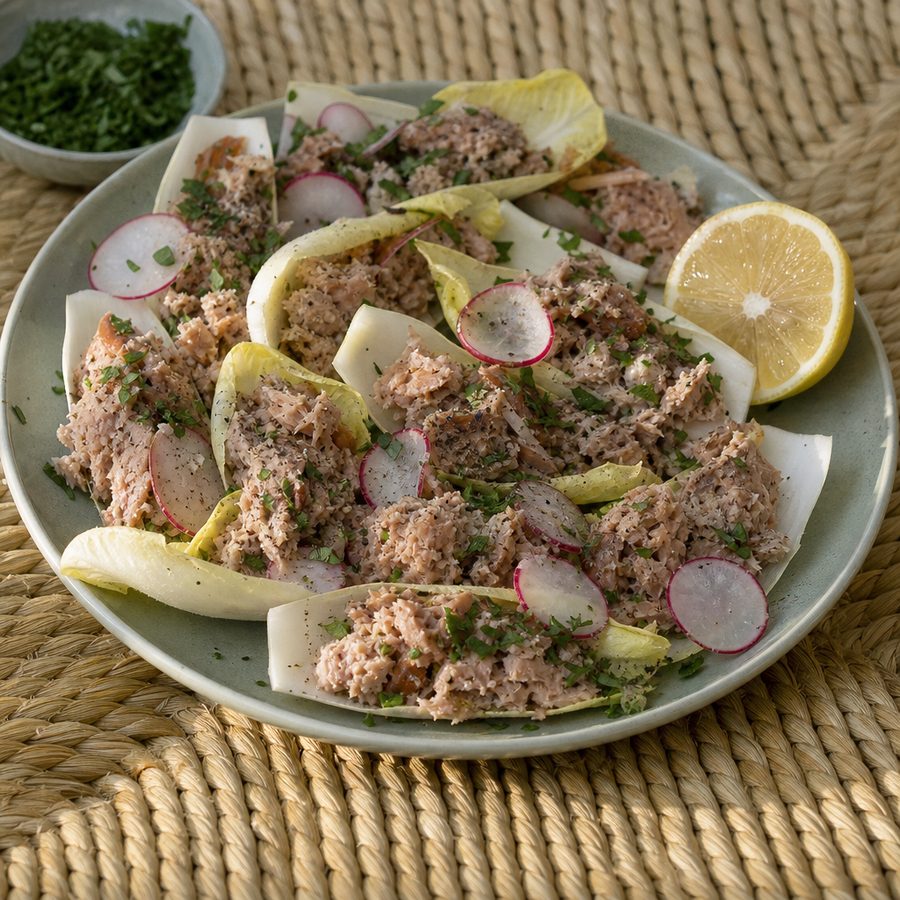
Gently poached mackerel flaked with tangy yogurt, shallot, lemon, and mustard, spooned into crisp endive leaves and topped with paper-thin radish for a cool bistro-style snack.
Why You'll Love This Recipe
Rillettes are one of those French bistro things that arrive in a little crock with a pile of toast, and the first time I made them with mackerel I realized the fish was the whole point. Mackerel has a rich, almost buttery flesh that most people only know smoked or canned. Poached fresh, it is milder and sweeter than you expect, and it flakes into soft, rosy shreds that hold dressing beautifully. I make a bowl of this on a Sunday and pull it out all week when the gap between lunch and dinner feels long.
The method is short, and the gentleness is what matters. The fillets go into barely trembling water with bay leaves and lemon slices, and they cook through in a few minutes without tightening. Boil them hard and the flesh turns dry and stringy, which no amount of yogurt can fix. Once they cool, the skin peels away in one piece and you crush the fish with a fork, leaving some flakes whole so the spread has texture. Lemon juice, mustard, and raw shallot cut through the richness so it tastes bright rather than heavy.
Endive is what turns a spread into a snack you can eat standing up. The leaves are crisp, cold, and faintly bitter, shaped like little boats, and that bitterness is exactly what a rich fish wants beside it. Radish slices on top add a peppery snap and a flash of pink. Four filled leaves feel like a proper small plate, the kind of thing you would happily order with a glass of something at a wine bar, and it holds you comfortably until the next meal.
Ingredients
- 12 oz skin-on mackerel fillets, pin bones removed
- 2 bay leaves
- 1 lemon, half sliced into rounds for poaching, half juiced (about 2 tbsp)
- 1/2 cup whole-milk Greek yogurt
- 1 tbsp extra-virgin olive oil
- 1 small shallot, minced very fine
- 2 tsp dijon mustard
- 3 tbsp chopped flat-leaf parsley
- 1/2 tsp freshly cracked black pepper
- 1/4 tsp salt, plus more to taste
- 3 heads Belgian endive, leaves separated
- 6 radishes, sliced paper thin
Instructions
- Set up a gentle poach: Put the bay leaves and the lemon rounds in a wide skillet, add about 1 inch of water, and bring it to a bare simmer over medium heat. Lower the heat until you see only small bubbles at the edges. A lazy simmer keeps the mackerel flesh tender, while a rolling boil seizes it and squeezes out the moisture.
- Poach the mackerel: Slide the fillets in skin side down and cook for 5 to 7 minutes, depending on thickness. Do not flip them. They are done when the flesh has turned from glossy and translucent to opaque all the way through and flakes when you press the thickest part with a fork.
- Cool and peel: Lift the fillets onto a plate with a slotted spatula and slide them into the refrigerator for 5 minutes. Peel off the skin, which should come away in a sheet, and scrape away any dark bloodline if you prefer a milder spread. Run your fingers over the flesh to catch any stray pin bones, since you will be eating this with your hands.
- Build the base: In a medium bowl, stir together the yogurt, olive oil, lemon juice, dijon mustard, minced shallot, salt, and pepper until smooth. Mixing the dressing first means the shallot starts to soften in the acid and the mustard is evenly spread before the fish goes in, so you do not have to overwork the flakes later.
- Fold in the fish: Add the mackerel and break it up with a fork, folding rather than mashing. Aim for a mix of fine shreds and small whole flakes; the shreds make it spreadable and the flakes keep it from turning into paste. Fold in most of the parsley, taste, and add more lemon or salt until it tastes bright and rounded.
- Fill and serve: Spoon a heaping teaspoon of the rillettes into the wide end of each endive leaf, top with two or three radish slices, and finish with the remaining parsley and a crack of pepper. Fill the leaves just before eating so they stay crisp; the endive should snap when you bite it.
Variations
- Salmon: Poach a skin-on salmon fillet the same way for a milder, pinker spread that is good for anyone new to oily fish.
- Dill and lemon zest: Swap the parsley for fresh dill and add the grated zest of the lemon for a sharper, more Scandinavian flavor.
- Cucumber rounds: Spoon the rillettes onto thick cucumber slices when you want a cooler, juicier base than endive.
- Smoky paprika: Stir a pinch of smoked paprika into the dressing and dust a little over the top for warmth and color.
- Radicchio cups: Use small radicchio leaves for a deeper bitterness and a striking red against the pale fish.
Storage & Leftovers
The rillettes keep well in a covered container in the refrigerator for up to 3 days, and many people think they taste better on the second day once the shallot and lemon have settled into the fish. Press a piece of plastic wrap onto the surface to keep it from drying at the edges, and give it a quick stir before using.
This is not one to freeze. The yogurt separates and turns grainy as it thaws, and the poached mackerel weeps water and goes soft, so you end up with a wet, broken spread. It is quick enough to make fresh that freezing gains you nothing; poach a second batch of fillets instead.
Serve it cold, straight from the refrigerator, and do not reheat it. Keep the endive leaves and sliced radishes separate, wrapped in a damp paper towel in a bag, and fill only the leaves you plan to eat. A filled leaf left sitting goes limp within an hour, while a spoonful of spread on a freshly separated leaf tastes just made.
Notes & Tips
- Buy it fresh: Mackerel spoils quickly, so buy it the day you plan to cook and look for bright skin and firm flesh that smells like the sea rather than fishy.
- Watch the bubbles: Keep the poaching water just below a simmer; you should see small bubbles at the edges and none breaking in the middle.
- Mince the shallot fine: Raw shallot pieces larger than a grain of rice dominate a bite, so take the extra minute to mince it very small.
- Leave some flakes: Fold with a fork instead of a food processor so the spread keeps soft whole flakes against the fine shreds.
- Trim the endive base: Cut a thin slice off the root end of each head and the leaves will release cleanly without tearing.
- Season cold: Taste and adjust salt and lemon after the spread is chilled, because cold food tastes less seasoned than warm.
Nutrition & Mindful Eating
- Rich mackerel, tangy yogurt, and crisp endive work together here. The fish brings the body and depth, the yogurt and lemon keep it bright, and the cold, bitter leaves give every bite a clean crunch that makes the spread taste even richer.
- Mackerel is the heart of this dish, with soft, sweet flesh that turns rosy and tender when it is poached gently. It is one of the oily fish that carries omega-3 fats, the same richness you taste in every buttery flake.
- Whole-milk Greek yogurt folds into the fish and gives the spread its creamy, slightly tangy finish, adding protein along the way so four little filled leaves feel like a real snack.
- Belgian endive and radish bring the cold snap and the peppery bite. The faint bitterness of the leaves is what keeps an oily fish from tasting heavy, and both add a little fiber and plenty of crunch.
- Minced shallot, dijon mustard, lemon juice, and parsley are the sharp, green notes you taste first. The shallot softens slightly in the lemon, the mustard rounds everything out, and the parsley finishes it fresh.
- As you eat, notice how the cold snap of the endive gives way to the soft, rich fish and the bright edge of lemon, and let each leaf be its own small pause before you reach for the next.
Frequently Asked Questions
Can I use canned or smoked mackerel instead of fresh?
Fresh poached mackerel gives the softest, mildest result, but canned mackerel in olive oil works in a pinch: drain it well and skip the poaching. Smoked mackerel makes a much saltier, smokier spread, so leave out the added salt and taste before seasoning.
Why did my mackerel turn out dry and stringy?
The water was almost certainly too hot. Mackerel needs a bare simmer, with small bubbles only at the edges, and it should come out the moment it turns opaque. A splash more yogurt and lemon can loosen an overcooked batch, though the texture will be firmer.
Can I make this ahead for a party?
Yes. Make the rillettes up to a day ahead and keep it covered in the refrigerator, then fill the endive leaves within an hour of serving. Slice the radishes ahead and keep them in cold water so they stay crisp, then pat them dry before topping.
Does this fit a weight-loss plan with a thyroid condition?
It fits a weight-loss pattern that favors protein and vegetables at snack time, and it suits an anti-inflammatory approach built around oily fish, olive oil, and fresh produce. For anything specific to your thyroid treatment, check with your own dietitian or care team.