
Maltese Stuffat tal-Fenek, Rabbit Stew with Peas and Bay
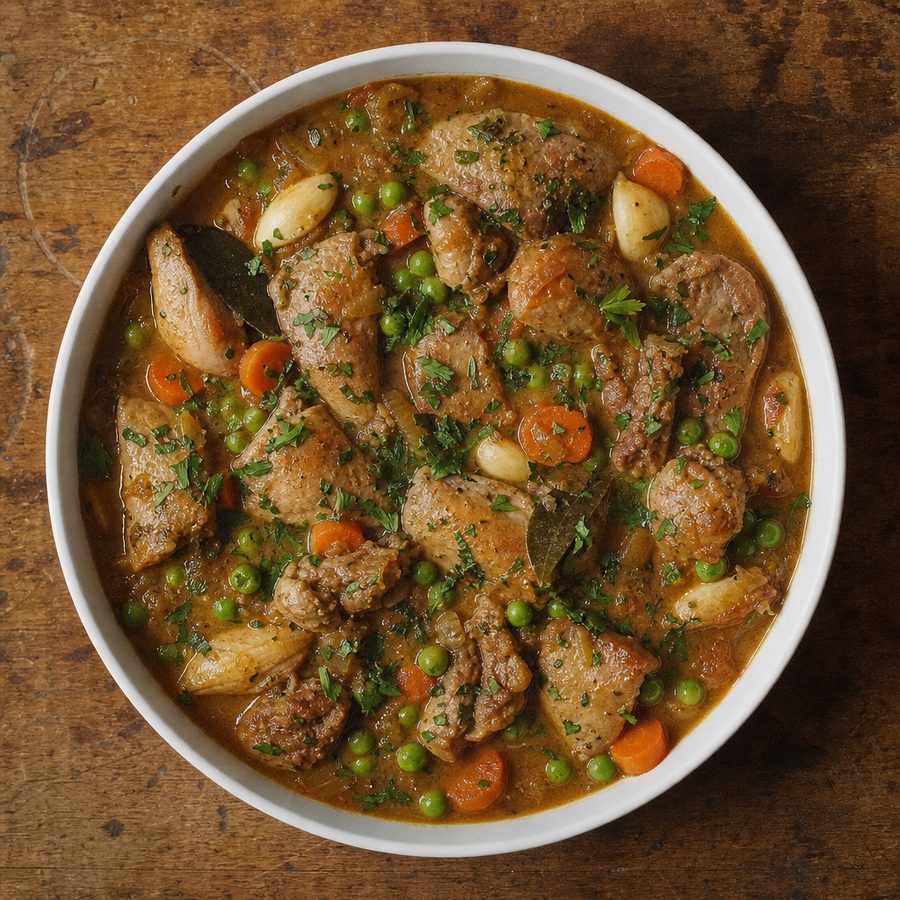
Rabbit browned in olive oil and simmered slowly with a whole head of garlic, bay, and a whisper of clove, with carrots, green beans, and peas going in near the end.
Why You'll Love This Recipe
Stuffat tal-Fenek is the national dish of Malta, and on the islands a fenkata is a whole evening rather than a plate of food: a long table, a pot of this in the middle, and nobody in a hurry. The rabbit is browned hard, then left to simmer with garlic and bay until it slides off the bone. Maltese cooks use red wine and a great deal of it. I build the same depth with broth, tomato, and a few teaspoons of cider vinegar added at the start, which gives the sauce the sharpness it needs to carry an hour and a half of low heat.
Rabbit is a close-grained, mild meat that sits somewhere near chicken thigh in flavor but firmer, and it wants patience. Rushed, it stays tight and dry; given the time, it turns silky. The front legs and the saddle cook at slightly different rates, so I check the saddle at the hour mark and pull it out if it is ready, returning it at the end. Eight whole garlic cloves sounds like a great many until you taste them after ninety minutes, when they have gone soft and sweet and are mashing into the sauce on their own.
The vegetables go in late on purpose. Carrots need twenty five minutes, green beans about twelve, and peas only four or five, so they arrive in that order and each one keeps its own character. That last handful of peas is what makes the pot look alive after all that slow brown cooking. Serve it in wide bowls with plenty of sauce, and if there is bread on the table, everybody will use it. This is weekend cooking and it is meant to be. Start it in the middle of the afternoon, let the kitchen smell like garlic and bay for two hours, and come to the table when the pot is ready rather than when the clock says so.
Ingredients
- 1 rabbit (about 2 1/2 lb), cut into 8 pieces, or 1 lb boneless rabbit legs
- 1 1/2 cups frozen green peas
- 5 oz green beans, trimmed and cut in half
- 2 medium carrots, cut into thick coins
- 3/4 cup canned crushed tomatoes
- 1 1/4 cups chicken broth
- 1 medium onion, chopped
- 2 tbsp tomato paste
- 8 garlic cloves from a whole head, peeled and left whole
- 5 tsp extra virgin olive oil
- 4 tsp cider vinegar
- 1/3 cup flat-leaf parsley, chopped
- 1 tsp dried marjoram or oregano
- 3 bay leaves
- 1 pinch ground cloves
- 1/2 tsp fine sea salt
- 1/2 tsp freshly ground black pepper
Instructions
- Season and brown the rabbit: Pat the rabbit pieces dry and season them with half the salt and the pepper. Heat the olive oil in a heavy pot over medium-high, and brown the pieces in two batches so nothing crowds, about four minutes on the first side and three on the second, until they are properly gold rather than pale. Move them to a plate as they finish.
- Sweat the aromatics: Turn the heat to medium and add the onion with a pinch of salt, scraping the bottom of the pot as it releases its water. Cook for six minutes until soft, then add the whole garlic cloves and cook two minutes more, rolling them around so they color lightly on all sides without browning hard.
- Build the braise: Stir in the tomato paste and let it fry for ninety seconds until it darkens. Add the vinegar and let it bubble away for thirty seconds, then add the crushed tomatoes, the broth, the bay leaves, the marjoram, and the pinch of cloves. Bring it to a simmer and taste the liquid, which should be lively and a little sharp at this stage.
- Simmer until tender: Return the rabbit and any juices, tucking the pieces down so they are mostly submerged. Cover, turn the heat to low, and cook at a bare simmer for one hour, turning the pieces once at the halfway mark. The meat is ready when it pulls away from the bone with light pressure from a fork and reads at least 165°F at the thickest part of the leg.
- Add the vegetables in order: Add the carrots, cover, and cook fifteen minutes. Add the green beans and cook twelve minutes more, then uncover, add the peas, and simmer for four or five minutes, until the peas are hot and bright and the sauce has reduced enough to coat a spoon. Fish out the bay leaves.
- Rest and finish: Take the pot off the heat, add the remaining salt to taste, and let it stand for ten minutes with the lid ajar so the sauce settles and thickens further. Scatter the parsley over the top and bring the pot to the table.
Variations
- With potatoes: Add a pound of small waxy potatoes, halved, along with the carrots for the fuller Sunday version.
- Fennel seed and orange: Add a teaspoon of fennel seed with the marjoram and a strip of orange peel to the braise, which gives it a Sicilian accent.
- Mushroom stuffat: Brown 12 oz of quartered mushrooms after the rabbit and return them for the last twenty minutes.
- Broad beans in spring: Swap the peas for shelled fava beans, adding them with the green beans since they need a few minutes longer.
Storage & Leftovers
This keeps four days in the refrigerator and is better on day two than it is on day one, which is true of nearly every slow braise. Keep the meat under the sauce in a sealed container so it does not dry at the edges, and expect the sauce to set almost to a jelly when cold.
Reheat it covered over low heat for ten minutes with a splash of broth or water, stirring gently. The peas lose a little of their color the second time around, so if you are cooking ahead deliberately, hold half the peas back and drop them in fresh as you reheat.
It freezes for up to three months. Cool completely, pack into flat containers with the sauce covering the meat, and thaw overnight in the refrigerator. Pull the meat off the bones before freezing if you want an easier meal on the other end, since the sauce clings to the pieces just as well.
Notes & Tips
- Dry the rabbit thoroughly: Rabbit holds a surprising amount of surface moisture, and wet meat will not brown. Paper towel and a couple of minutes on the counter make a visible difference to the color.
- Brown in two batches: Eight pieces in one pot means steam rather than color. The gold crust is where the sauce gets its depth, so it is worth the extra six minutes.
- Leave the garlic cloves whole: Minced garlic disappears into a braise this long and can turn bitter. Whole cloves go sweet and creamy and can be crushed into the sauce at the end if you want them spread through.
- Keep the lid on and the heat low: A visible rolling boil tightens rabbit and reduces the sauce before the meat is ready. You want one lazy bubble at a time.
- Stagger the vegetables: Carrots, then beans, then peas. Everything added at once means either undercooked carrot or gray peas, and the fifteen minutes of attention is the whole difference.
- Let the pot rest: Ten minutes off the heat lets the sauce thicken and the meat reabsorb some of the liquid it gave up. It also brings the temperature down to where you can actually taste the seasoning.
Nutrition & Mindful Eating
- Rabbit, a pot of garlic and tomato, and three green vegetables added in stages give this stew its shape. The meat carries the protein, the peas and beans bring the fiber and the color, and the long simmer is what pulls the two together.
- Rabbit is a close-grained, mild meat with a great deal of protein for its size, and it brings B12, selenium, and phosphorus along with it. Because it holds so little fat of its own, the olive oil at the start of the pot is doing real work on the texture.
- Green peas are a legume rather than a vegetable, which is why a cup and a half of them adds noticeable fiber and plant protein along with their sweetness, and why they hold up in a hot sauce rather than dissolving.
- Eight cloves of garlic simmered whole for ninety minutes go soft and sweet, and the sulfur compounds that make garlic sharp when it is first cut mellow into something entirely different over that kind of heat.
- Bay, marjoram, and a single pinch of clove are the backbone of Maltese braising, and the cider vinegar added early is what keeps a sauce cooked this long from tasting flat at the table.
- As you eat, find one of the whole garlic cloves and crush it into the sauce on your spoon, and let a dish that took two hours set the pace for how quickly you get through it.
Frequently Asked Questions
Where do I buy rabbit?
A butcher will usually order it with a few days of notice, and many Italian and Middle Eastern markets carry it frozen and already jointed. Frozen is perfectly good here. Thaw it overnight in the refrigerator and dry the pieces thoroughly before they go into the pot.
Can I make this with chicken?
Yes. Use bone-in, skinless chicken thighs and cut the covered simmer to thirty five minutes, then carry on with the vegetables as written. The dish loses a little of its character, since rabbit is firmer and milder, but the garlic and bay do most of the talking anyway.
Is there anything that stands in for the wine?
That is exactly what the broth and cider vinegar are doing. If you want more depth, add a tablespoon of tomato paste beyond what the recipe calls for and an extra teaspoon of vinegar at the end, which together give you the acidity and body wine would have brought.
My rabbit is still tough after an hour. What now?
Give it longer. Rabbit varies a great deal with age, and an older animal can need ninety minutes or more. Keep the heat low, keep the lid on, and check every fifteen minutes. It will get there, and no harm comes from a slightly longer braise.