
Maltese Widow's Soup with Poached Eggs and Ricotta
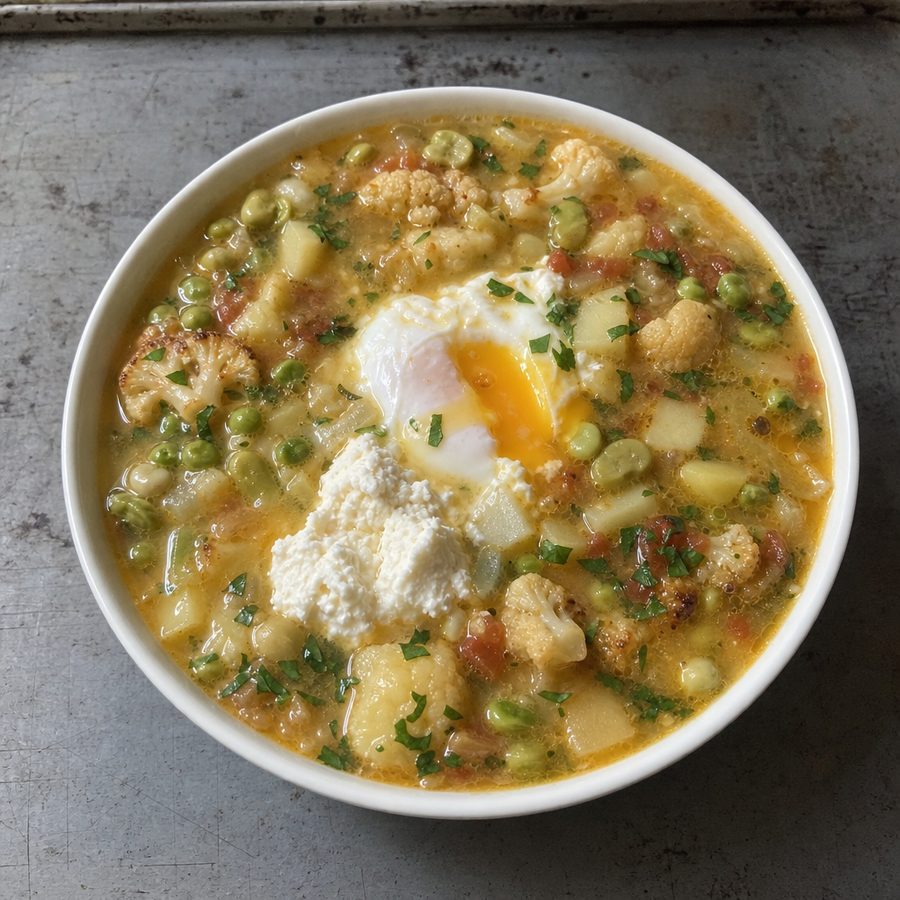
A Maltese pot of potatoes, cauliflower, carrots, broad beans, and peas in a tomato-tinted broth, with eggs poached right in it and ricotta spooned over each bowl.
Why You'll Love This Recipe
This is soppa tal-armla, which the Maltese have made for centuries out of whatever the garden had and whatever cost nothing. The name comes from the idea of a widow with an empty purse, and every version I have eaten in Malta has been built the same way: a pot of soft vegetables, an egg poached on top, and a round of fresh sheep cheese melting into the broth. I make it with ricotta because that is what my grocery store carries, and it works beautifully. What you should not skip is the egg, which is the whole reason a bowl of vegetables eats like a dinner.
Everything hinges on when each thing goes into the pot. Potatoes and carrots go in first with the broth and get eight minutes to themselves, then the cauliflower, then the peas and broad beans right at the end so they stay green. Tomato paste fried in the oil with the onion at the start is what gives the broth its color and its savory depth, and it takes under a minute to do. When everything is tender you turn the heat down until the surface barely moves, crack the eggs into wells, put the lid on, and leave them for four minutes. Any harder a simmer and the whites shred.
It is a gentle dinner, and that is the point of it. Nothing in the bowl is sharp or heavy, so it is the pot I make when somebody has had a hard week or is coming back from being unwell. Break the yolk, stir the ricotta through, add a good grind of pepper and a thread of olive oil, and the broth turns from thin to almost silky in front of you. Bread on the table is not optional at my house, and neither is the second bowl.
Ingredients
- 1 lb Yukon Gold potatoes, peeled and cut into 1/2-inch cubes
- 1/2 small head cauliflower (about 12 oz), broken into small florets
- 1 1/2 cups cooked broad beans, from a can or the freezer, drained
- 1 1/2 cups frozen peas
- 2 carrots, cut into 1/4-inch coins
- 1 medium onion, finely chopped
- 2 celery stalks, sliced thin, with any pale leaves
- 4 garlic cloves, thinly sliced
- 2 tbsp tomato paste
- 4 cups vegetable broth, plus 2 cups water
- 4 large eggs
- 2/3 cup ricotta
- 2 1/2 tbsp olive oil, plus more for the bowls
- 1/2 cup chopped flat-leaf parsley
- 1/2 tsp coarsely ground black pepper
- 1/4 tsp fine sea salt
Instructions
- Start the base: Warm the olive oil in a large pot over medium heat. Add the onion, celery, and salt and cook for 4 minutes, stirring, until they soften and turn translucent. Add the garlic and the tomato paste and cook for 1 minute more, stirring constantly, until the paste darkens from red to brick and stops smelling sharp.
- Potatoes and carrots first: Add the potatoes, the carrots, the broth, and 2 cups water. Bring to a boil, then lower to a steady simmer and cook for 8 minutes. The potatoes should be starting to give at the edges but still hold their cubes.
- In with the cauliflower: Add the cauliflower florets and simmer for 5 minutes, until a knife goes into a stem with only slight resistance. Press two or three potato cubes against the side of the pot and stir them in, which thickens the broth a little and keeps it from tasting like water.
- Peas, beans, and the eggs: Stir in the peas and broad beans and cook for 2 minutes. Turn the heat down until the surface of the soup barely trembles, make four shallow wells with a spoon, and crack an egg into each one. Cover the pot and cook for 4 minutes for set whites and runny yolks, 5 to 6 if you want them firm.
- Finish in the bowl: Lift each egg into a deep bowl with a slotted spoon and ladle the vegetables and broth around it. Add a spoonful of ricotta to each bowl, scatter the parsley, grind the black pepper over, and finish with a thread of olive oil. Tell people to break the yolk and stir the cheese in before the first spoonful.
Variations
- Spring greens: Fold two handfuls of spinach or chopped chard in with the peas so they wilt into the broth just before the eggs go in.
- Pumpkin and marrow: Add a cup of diced pumpkin or summer squash with the cauliflower for a sweeter, softer pot.
- Lemon and mint: Finish each bowl with a squeeze of lemon and torn mint for a brighter version that suits a warm evening.
- With small pasta: Add a handful of small pasta with the cauliflower and a little extra water for a thicker, more filling bowl.
- Chile and garlic oil: Warm olive oil with sliced garlic and a pinch of cayenne and spoon it over each bowl for heat and a sharper finish.
Storage & Leftovers
The soup keeps four days in a sealed container in the refrigerator and gets better on the second day, when the potatoes have given more of their starch to the broth. Store it without the eggs and the ricotta, since a poached egg left overnight in liquid turns rubbery and there is no fixing it.
Reheat what you need in a saucepan over medium until it steams, about 6 minutes, and add a splash of water because it thickens considerably in the cold. Once it is simmering gently you can poach fresh eggs straight into the reheated portion, which takes the same four minutes it did the first time.
It freezes for up to three months without the eggs and cheese. The potatoes soften on thawing and go slightly grainy, which bothers some people and not others. Thaw overnight in the refrigerator, reheat gently, and the poached egg and the ricotta on top will carry the bowl regardless.
Notes & Tips
- Cut the potatoes small: Half-inch cubes are tender in ten minutes and give up enough starch to thicken the broth. Big chunks are still hard when everything else has overcooked.
- Fry the tomato paste: Sixty seconds on hot metal turns it deep and savory. Stirred straight into liquid it stays raspy and tastes of the tin.
- Crush a few potatoes: Two or three cubes pressed against the side of the pot is the difference between a broth that clings to the vegetables and one that runs off the spoon.
- Barely a simmer for the eggs: You want the surface trembling and no more. Bubbles break the whites apart, and the lid traps enough heat to set the tops.
- Peas and beans last: Two minutes is all they need. Any longer and they go from bright green and sweet to gray and mealy.
- Add the cheese in the bowl: Stirred into the pot it disappears and turns the broth cloudy. A cold spoonful in a hot bowl melts slowly and you taste it.
Nutrition & Mindful Eating
- Potatoes, broad beans, peas, and an egg are what turn a pot of vegetables into a dinner. The potatoes give it body, the beans and peas bring most of the fiber and a good share of the protein, and the egg on top makes each bowl a complete plate rather than a starter.
- An egg poached in the broth sets soft and its yolk thickens whatever it runs into, and it brings choline and vitamin D, two things that are hard to find outside of a handful of foods.
- Broad beans have a firm skin and a sweet, mealy middle, and they carry folate and plant protein, which is why a spring soup built on them eats so much heavier than it looks.
- Cauliflower simmered until it just gives up its bite goes mild and slightly sweet, and it brings vitamin C to a pot where most of the other vegetables have been cooked longer.
- Ricotta stirred into the hot bowl rather than the pot melts slowly and turns the broth faintly creamy, bringing calcium and a milky softness that rounds off the tomato and the pepper.
- As you eat, break the yolk first and watch it thread through the broth, and notice how the bowl changes from thin to creamy once the ricotta goes in, which is a good reason to eat this one slowly.
Frequently Asked Questions
What can I use in place of the ricotta?
In Malta this is made with gbejniet, small rounds of fresh sheep cheese, so anything soft, mild, and milky is right. Fresh goat cheese, cottage cheese, or a spoonful of thick yogurt all work. A hard grating cheese changes the character, since it makes the broth salty rather than creamy.
My eggs fell apart in the pot. What happened?
The soup was boiling. Moving liquid tears the whites off the yolks before they have a chance to set, so bring the heat right down until the surface only trembles, then crack the eggs into wells you have made with a spoon. Fresh eggs hold together better than older ones, and the lid does most of the work.
Can I make it without eggs?
Yes. Double the ricotta, add a can of drained white beans with the peas, and the bowl still eats like a full dinner. A slice of toasted bread rubbed with garlic set in the bottom of the bowl is the other good answer, since it soaks up the broth the way the yolk would have thickened it.
Which vegetables can I swap?
Almost any of them. This soup was built around whatever was in the garden, so turnips, kohlrabi, spinach, or a handful of chopped chard all belong here. Keep something starchy for body and add the quick-cooking things at the end, and you are still making the same pot.