
Mediterranean Baked Cod with Tomatoes & Olives
Flaky baked cod in a garlicky tomato-olive sauce, a light, high-protein, low-carb Mediterranean dinner that comes together in one dish.
Why You'll Love This Recipe
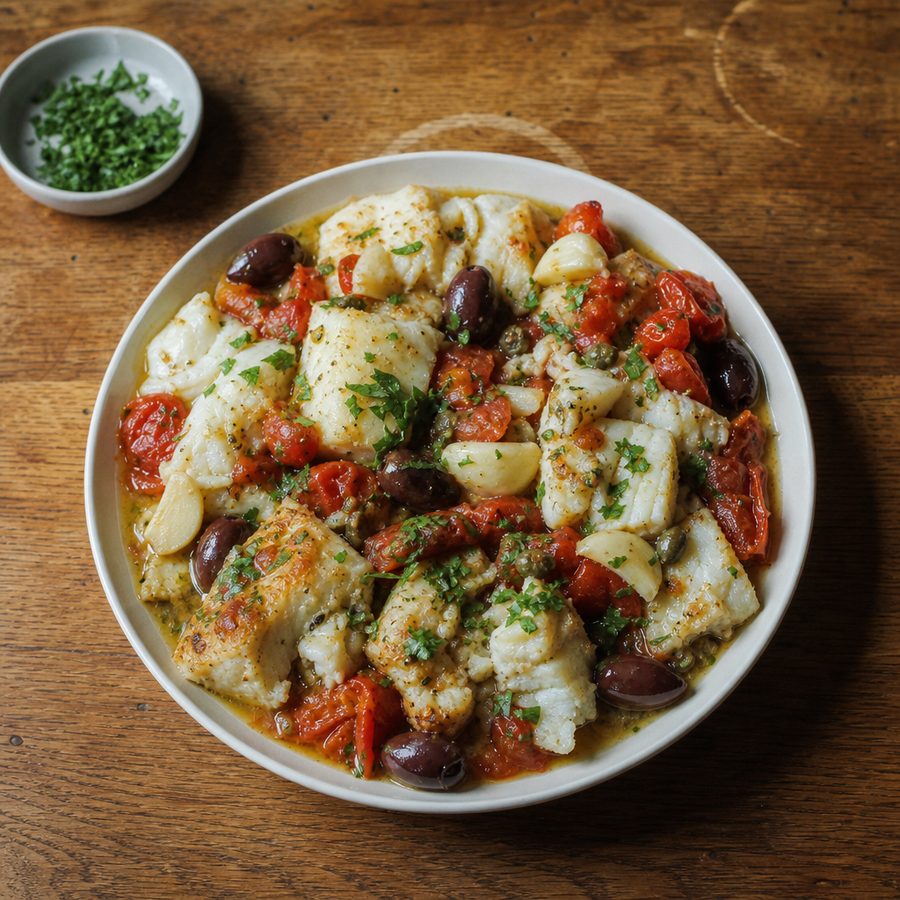
Cod baked down into a dish of blistered cherry tomatoes, olives, and garlic, so the fish spends its last twelve minutes sitting in the juices the tomatoes have given up. This is a weeknight fish: the oven does all of it, there is no sauce to make in a second pan, and the fillets themselves are in there for twelve minutes. If you have decided you do not much care for cod, try it once like this before you settle on that, because most people who say it have only met it baked dry. Cod is mild and carries very little fat of its own, so a shallow pool of tomato, olive oil, and lemon to finish in solves both problems at once: the fillets stay moist, and they take on everything around them.
The tomatoes and olives get eight minutes in the oven on their own before the fish goes in. That is what concentrates them into something like a sauce instead of a pile of raw tomato sitting around a fillet. Cherry tomatoes are the ones to use, since they hold enough sugar to caramelize at the split and enough juice to make the liquid the cod then poaches in. A larger tomato cut into pieces gives you water in the dish and not much else.
Olive oil and olives give mild cod the flavor it needs, which is the reason this way of cooking fish has lasted as long as it has. Cod itself is close to pure protein, so the fat has to come from somewhere, and it may as well come from the pan it is cooking in. Spoon the juices over the fillet at the table rather than leaving them in the dish. For cod in a herb sauce instead, there is our Baked Cod In Tomato-Herb Sauce.
Ingredients
- 4 cod fillets (6 oz each)
- 2 cups cherry tomatoes, halved
- 1/2 cup pitted kalamata olives
- 1/2 small onion, thinly sliced
- 4 cloves garlic, minced
- 3 tbsp olive oil
- 2 tbsp lemon juice
- 1 tsp dried oregano
- 1/2 tsp fine sea salt
- black pepper
- fresh parsley
Instructions
- Roast the base first so it turns into sauce: Heat the oven to 400°F (200°C). Toss the halved tomatoes, olives, sliced onion, garlic, two tablespoons of the olive oil, the oregano, and a pinch of salt in a baking dish, and roast it for eight minutes with no fish in it. Those eight minutes are the whole trick: they blister the tomatoes until the skins split and let their juice out, and they take the raw edge off the onion and the garlic. Fish put in alongside raw tomatoes is finished long before they are.
- Pat the fillets dry while the base roasts: Take the cod out of the refrigerator as the base goes in, blot both sides with a paper towel, and season with the salt and pepper. A wet surface steams instead of setting, and cod holds a lot of surface water, particularly if it was previously frozen. Those eight minutes on the counter also take the deep chill off, which matters because a fillet straight from the refrigerator dries at the thin end while the thick end is still catching up.
- Nestle the fillets down into the base: Pull the dish out and settle the fillets into it, pushing the tomatoes and olives up and around them rather than leaving the fish sitting on top. Half buried, the cod is surrounded by hot liquid and cooks from every side at once; perched on the surface it bakes dry along the top. Brush the fillets with the last tablespoon of oil and the lemon juice, season them, and fold any thin tail end back under itself so each fillet is close to one thickness.
- Bake until it just flakes, then stop: Bake for twelve to fourteen minutes depending on thickness, and start checking at twelve. Cod is ready the moment it turns opaque all the way through and the flakes separate under gentle pressure from a fork, which is 145°F at the thickest part. Every minute past that squeezes water out of the muscle and takes it toward chalky, and unlike a piece of chicken there is no fat in reserve to hide it.
- Rest it briefly, then spoon the juices over: Give the dish three or four minutes on a trivet before it goes to the table. Cod keeps cooking in the heat the dish is holding, so pulling it at just opaque and letting it stand is what lands it right, and the sauce thickens a little as it comes down off the boil. Spoon the tomatoes, olives, and juices over each fillet and scatter the parsley last, since it goes limp and gray if it sits in a hot dish.
Variations
- Add more vegetables: thin zucchini rounds or artichoke hearts sit well in the tomato and olive base. Tuck them around the fish rather than under it.
- Make it spicy: scatter red pepper flakes over the tomatoes and olives before the first eight minutes in the oven so the heat softens into the base.
- Change the fish: halibut, haddock and thick sea bass fillets all bake the same way, though a thicker fillet needs a few extra minutes.
- Add capers and feta: a spoonful of capers in with the olives and a handful of crumbled feta over the top at the end makes it saltier and sharper.
- Serve it over something: the pan juices are worth catching, so spoon the whole dish over orzo, farro or a piece of toasted bread rubbed with garlic. All three are grains, so this version is no longer low-carb.
Storage & Leftovers
Refrigerate leftovers in an airtight container and eat them within three days. Cooked fish is safe in the refrigerator for four, but cod is delicate and the smell sharpens well before the safety window closes, so three is where the eating is still worth doing. Keep the fillets sitting in their sauce rather than draining it off, because the liquid stops the fish drying and it is where most of the flavor ended up.
Reheat it gently or not at all. A covered dish in a 300°F (150°C) oven for eight to ten minutes warms the fillets through without tightening them, and a splash of water or lemon juice in the dish keeps the sauce from reducing any further. Cold is a real option here as well: flaked over greens with the tomatoes and olives spooned on top, it makes a better lunch than most reheated fish does.
Cooked cod does not freeze well. The flesh is loose and holds a lot of water, so freezing and thawing breaks it down into something soft and cottony that no amount of careful reheating repairs. The tomato and olive base is a different matter and freezes cleanly for up to two months, so if you have made extra of that, it gives you a head start on the next batch with fresh fillets.
Notes & Tips
- Do not overcook the fish: cod fillets taper, so check the thin end first. It is done as soon as it turns opaque and flakes, and a minute past that it is dry.
- Roast the base first: those eight minutes before the fish goes in are what soften the onion and start the tomatoes breaking down into a sauce.
- Pat the fillets dry: cod holds surface water, and blotting it means the lemon and oil stay on the fish instead of sliding off.
- Settle it in, do not bury it: the cod should sit on top of the tomatoes and olives so the heat reaches it directly and it bakes rather than steams.
- Taste before you salt: kalamata olives bring a good deal of salt with them, so season the fish lightly and check the sauce at the end.
- Flexible swap: no onion? You can leave it out, or swap in a little chopped celery or chives.
Nutrition & Mindful Eating
- The fish, the tomatoes and the olives cook in one dish and taste like it. The cod stays mild and moist, the tomatoes collapse into a light sauce, and the olives put salt and savory depth into everything around them.
- Cod turns from translucent to opaque in a matter of minutes, so it goes in alongside the tomatoes rather than ahead of them, and it comes out in large soft flakes. The fish is dense in protein and carries B12.
- Cherry tomatoes halved and roasted lose their water and concentrate, turning jammy and sweet at the cut edges. Heat also makes their lycopene easier to take up, so the roasted ones give you more than they would raw.
- Kalamata olives are cured until they are soft, winey and deeply savory, and they season the sauce from the inside as they warm. The fat they carry is the same monounsaturated kind the olive oil brings.
- Sliced onion and garlic soften in olive oil under the fish and turn sweet, and lemon juice over the pan at the end lifts the brine and the tomato so the whole dish tastes bright rather than heavy.
- As you eat, spoon the tomatoes and their juices over each forkful and notice how the brine and the lemon pull against one another, then slow down enough to feel the meal come to its end.
Frequently Asked Questions
Is cod a good source of protein?
Yes, cod is mild and high in protein, with essentially no carbohydrate of its own. That is what makes it such an easy fish to build a light dinner around.
What makes it Mediterranean?
Olive oil, tomatoes, olives, garlic, and fish are all cornerstones of the Mediterranean pattern: light, plant-forward, and heart-healthy.
Can I use a different fish?
Absolutely, any firm white fish works, and salmon is lovely here too (it'll need a couple extra minutes).
How long does it keep?
Three days is where I would stop, although cooked fish is safe for four. Reheat it covered in a low oven with a splash of water so the sauce does not reduce, or skip reheating altogether and eat it cold, flaked over greens with the tomatoes and olives spooned over the top.