
Mediterranean Chickpea & Farro Bowl
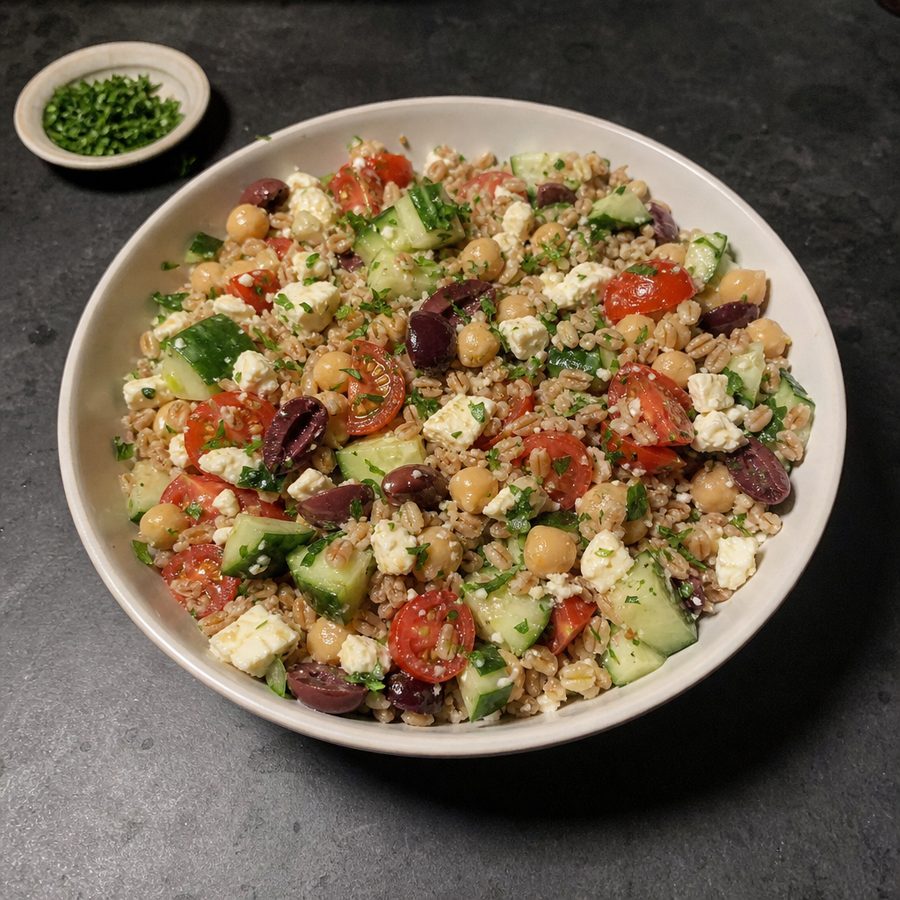
A bright, plant-forward Mediterranean bowl of chewy farro, chickpeas, cucumber, tomato, olives, and feta in a lemon-olive oil dressing.
Why You'll Love This Recipe
A farro bowl with chickpeas, cucumber, tomato, and feta, dressed with lemon and olive oil. It is built to be eaten at room temperature rather than hot, which is the reason to keep one bowl like this in rotation: nothing about it needs reheating to be worth eating. It is also the rare made-ahead bowl that is better for the wait, because the farro goes on drinking the dressing while it sits, so what was packed the night before tastes more of lemon and oregano than it did when the lid went on.
Dress the farro while it is still slightly warm. Warm grains open up and take the lemon and oil into themselves, while cold ones only wear it and leave a puddle in the bottom of the bowl. Then let the whole thing come down to room temperature before the feta goes on, so the cheese stays in crumbles rather than melting into the grain. The order is the only technical thing in the recipe, and it is the difference between a bowl that tastes of lemon and oregano throughout and one that tastes of plain grain with a dressing sitting on top of it.
Chickpeas and farro between them cover protein and fiber, and the feta and olive oil make it taste like a meal rather than a measure of anything. Farro is here instead of rice for a practical reason as much as a flavor one: it is a whole grain with enough chew to hold up for days, while rice goes hard in the refrigerator and couscous slumps into paste, and farro on the third day is still recognizably farro. If you have never cooked it, it is as forgiving as pasta and asks nothing of you beyond a big pot of salted water. Our Baked Eggplant Parmesan is another Mediterranean dish that reheats well.
Ingredients
- 1 cup uncooked farro (about 3 cups cooked)
- 2 cans (15 oz) chickpeas, drained and rinsed
- 1 English cucumber, diced
- 2 cups cherry tomatoes, halved
- 1/2 red onion, diced
- 1/2 cup pitted kalamata olives
- 3/4 cup crumbled feta
- 1/3 cup extra-virgin olive oil
- 2 tbsp lemon juice
- 1 clove garlic, minced
- 1 tsp dried oregano
- salt & pepper
Instructions
- Cook the farro like pasta: Bring a large pot of well-salted water to a boil and tip in the farro. Cook it uncovered with plenty of room to move, 25 to 30 minutes, until the grains are tender but still push back slightly in the middle, then drain it. Farro simmered in a measured amount of water turns gluey, because the starch it sheds has nowhere to go; drained from a big pot the grains stay separate, which is what a bowl that has to sit needs.
- Dress the warm farro with a third of it: Whisk the olive oil, lemon juice, minced garlic, oregano, salt, and pepper together, then pour about a third of it over the farro while the grains are still hot and toss until every grain is glossy and nothing pools in the bottom of the bowl. Warm grains open up and take dressing into themselves while cold ones only wear it, so dressing the farro on its own first is what makes the finished bowl taste seasoned all the way through rather than dressed on top. Hold the rest back and leave the grains for 10 minutes.
- Take the burn out of the red onion: Put the diced red onion in a small bowl, cover it with cold water, and leave it for 10 minutes while the farro cools. That is long enough to draw out the harsh sulfur compounds that otherwise turn up in every third forkful and are still there two days later. Drain it well and pat it dry before it goes anywhere near the bowl.
- Cut everything to the size of the grain: Halve the cherry tomatoes, dice the cucumber into pieces about the size of a thumbnail, and halve the olives, which is about 5 minutes of knife work. Keeping the pieces close to one another in size is what lets a spoonful carry a bit of everything; cut them large and you end up eating the tomatoes first and the plain farro last.
- Combine once the farro is at room temperature: When the grains are no longer warm to the touch, fold in the chickpeas, tomatoes, cucumber, olives, and drained onion, then pour over the rest of the dressing and toss. The waiting is not fussiness: warm farro softens the cucumber and makes the tomatoes weep, and a bowl built too early goes watery within the hour.
- Add the feta last, and gently: Crumble the feta over the top and fold it through with two or three turns, until the white is just showing through the grain and no further. Stirred hard, or added while anything is still warm, it breaks down into the dressing and the whole bowl goes evenly salty instead of giving you a distinct salty bite against the grain. Taste for salt at the very end, remembering that the olives and the feta have both already brought their own.
Variations
- Make it vegan: the feta is the only animal food in the bowl, so leave it out or use a marinated cashew or almond feta, and add a spoonful of capers to keep the salty bite.
- Add more protein: grilled chicken, a handful of shredded rotisserie, or a second scoop of chickpeas all sit well here, though the chicken adds meat. Feta adds a little along with the salt.
- Add more vegetables: roasted eggplant or bell pepper adds body without making the bowl watery, which is what raw tomato does if you add too much.
- Make it spicy: whisk a spoonful of harissa or a pinch of red pepper flakes into the dressing so the heat coats everything rather than sitting in one corner.
- Change the grain: pearl barley, wheat berries or a short brown rice all give the same chew, and quinoa works if you need the bowl gluten free.
Storage & Leftovers
Three to four days, and unusually for a salad it gets better rather than worse. The farro absorbs the lemon and oil overnight, the raw onion loses its edge, and the olives season everything sitting next to them. Cucumber is the one part that softens, so if that bothers you, add it fresh on the morning.
There is nothing here to reheat, and warming it does it no favors: the feta turns greasy, the cucumber goes limp, and the olive oil loses the fresh green edge the lemon is there to carry. Take it out of the refrigerator twenty minutes before you want it, which is enough to wake everything up.
It portions beautifully for a week of lunches. The only thing worth keeping separate is the feta if you are packing more than two days ahead, since it takes on the lemon and starts breaking down into the dressing. Everything else can go into the box together on Sunday and be exactly right on Wednesday.
Notes & Tips
- Cool the farro first: warm grain wilts the cucumber and melts the feta into a smear, so let it come down to room temperature before anything else goes in.
- Have everything measured: once the farro is cooked this is all chopping and tossing, and it comes together fast if the prep is done.
- Rinse the chickpeas well: the liquid in the can is where a lot of the sodium sits, so drain and rinse them until the water runs clear.
- Fold the feta in last: tossing it with everything else breaks it into paste, while folding it in at the end leaves you distinct salty crumbles.
- Make it ahead: this recipe is friendly to batch-cooking; double it and portion into containers for the days ahead.
- Flexible swap: no onion? You can leave it out, or swap in a little chopped celery or chives.
Nutrition & Mindful Eating
- Farro and chickpeas together give this bowl its foundation, chewy against creamy, and between them they carry enough protein and fiber that it eats like a full meal rather than a side.
- Farro keeps a real chew even after it has been cooked and cooled, and because the whole grain stays intact it brings magnesium and B vitamins in along with that toasty, nutty flavor.
- Chickpeas go soft and slightly floury in the middle while holding their shape in the bowl, and their plant protein and fiber are a large part of why this lunch stays with you through the afternoon.
- Cherry tomatoes cut in half release their juice into the dressing, cucumber stays cold and crisp against it, and red onion sharpens everything around it, with the tomatoes carrying vitamin C and lycopene in with their sweetness.
- Kalamata olives and crumbled feta are the salty, briny notes here, and the olive oil going in raw as a dressing keeps its peppery bite and the polyphenols that come with it.
- As you eat, follow the chew of the farro against the cold cucumber and the pop of salt from an olive, and let the bowl be a real stop in the middle of your day.
Frequently Asked Questions
Is this good for meal prep?
Yes, the farro and chickpeas hold up beautifully and the flavors deepen overnight.
How do I make it vegan?
Leave out the feta or use a plant-based version.
How long does it keep?
Three to four days, and it improves over the first two. Do not reheat it: this is a room temperature dish, and warming it turns the feta greasy and the cucumber limp. Twenty minutes out of the refrigerator is all it wants.
Can I make it ahead?
This is close to the ideal recipe for it. Make it Sunday, and if you are packing beyond Wednesday keep the feta and the cucumber in their own corner of the box, since those two are the only parts that do not improve with sitting.