
Milk-Braised Leeks and Fennel with Potatoes and Thyme
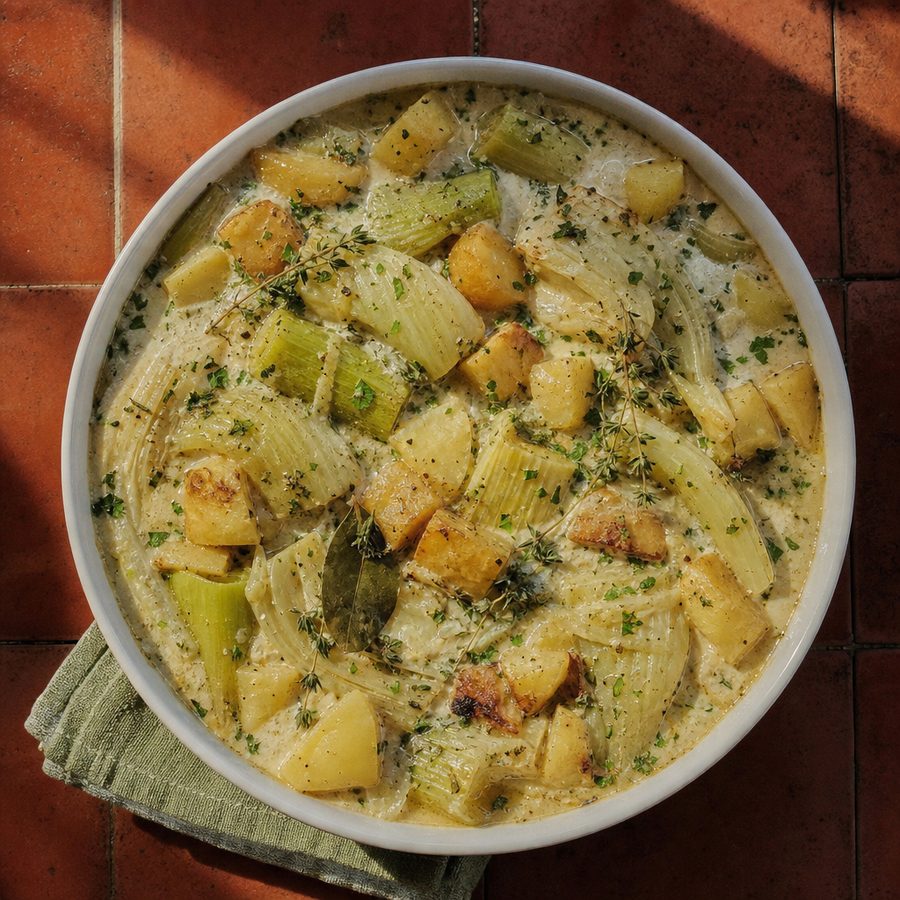
Leeks and fennel wedges braised slowly in milk with thyme, bay, and garlic until the potatoes thicken the pan into a silky sauce, finished off the heat with lemon and parsley.
Why You'll Love This Recipe
Braising vegetables in milk is an old trick, usually done to a pork loin, and it works even better on things that are naturally sweet. The milk goes into the pan looking thin and unpromising, and over three quarters of an hour it reduces, picks up starch from the potatoes, and turns into a pale sauce with real body. Nothing is stirred into it and no thickener goes anywhere near it. I like that the whole dish happens in one wide pan on the stove, so you can see exactly what is going on and pull it when the sauce looks right.
The leeks are the reason to make it. Cut into lengths and browned cut side down in butter first, they come out of the braise sweet, silky, and completely tender, with a little color still on the flat sides. Fennel does something similar but slower, losing most of its anise bite and keeping a bit of structure through the core. Whole garlic cloves go soft and spreadable in the milk, and I mash a couple against the side of the pan at the end to give the sauce depth. The thyme and the bay do the rest, quietly, from under the lid.
This is a Sunday-into-Monday pot for me. It comes together in about an hour, it feeds four, and it is one of those dishes that tastes like it took much longer than it did. Serve it in shallow bowls so nobody loses any sauce, with the lemon stirred in at the very last minute so the whole pan lifts. It is gentle food, the kind you want on a cold evening when something loud and browned is not what you are after.
Ingredients
- 4 large leeks (about 1 lb trimmed), white and pale green parts, halved lengthwise and cut into 3-inch lengths
- 2 medium fennel bulbs, cored and cut through the root into 1-inch wedges, fronds reserved
- 1 1/4 lb Yukon Gold potatoes, peeled and cut into 1-inch chunks
- 2 cups milk
- 2 tbsp butter
- 1 tbsp olive oil
- 6 cloves garlic, peeled and left whole
- 6 sprigs fresh thyme, tied with kitchen string
- 2 dried bay leaves
- 4 tsp lemon juice, from about half a lemon
- 1/3 cup flat-leaf parsley, chopped
- 1 tsp coarsely ground black pepper
- 1/2 tsp fine sea salt
Instructions
- Clean and cut the vegetables: Halve the leeks lengthwise and fan the layers under cold running water, since grit hides three or four layers in. Cut them into 3-inch lengths. Core the fennel and cut each bulb through the root into 1-inch wedges so they stay intact. Peel the potatoes and cut them into 1-inch chunks.
- Brown the leeks and fennel: Melt the butter with the olive oil in a wide, shallow braising pan over medium heat. Lay the leeks and fennel cut side down in a single layer and leave them alone for 5 to 6 minutes, until the flat faces are golden. Turn them once and give the second side 3 minutes. Work in two batches if the pan is crowded, because pieces touching each other will steam rather than color.
- Build the braise: Return everything to the pan, tuck in the potatoes, the whole garlic cloves, the tied thyme, and the bay leaves, and add the salt and black pepper. Pour the milk over the top. It will not cover the vegetables and it is not supposed to, so the tops steam while the bottoms simmer.
- Braise low and slow: Bring the milk to a bare simmer, then turn the heat to low and cover with the lid slightly ajar. Cook 35 to 40 minutes, spooning the milk over the tops two or three times. You want the barest movement at the edges of the pan. A hard boil will split the milk into curds and whey, and once it splits it does not come back.
- Thicken the sauce: When a knife goes through a fennel wedge with no resistance, uncover and raise the heat slightly. Crush two or three potato chunks and a couple of garlic cloves against the side of the pan and stir them in. Let it bubble gently for 5 minutes, until the sauce coats the back of a spoon and has gone from milky white to pale ivory.
- Finish off the heat: Pull out the thyme bundle and the bay leaves. Take the pan off the burner and let it settle for a minute, then stir in the lemon juice, a little at a time. Scatter the parsley and the reserved fennel fronds over the top and serve straight from the pan into shallow bowls.
Variations
- Mustard and dill: Stir a teaspoon of dijon mustard into the sauce as it thickens and finish with dill in place of the parsley for a sharper, more northern version.
- Ricotta on top: Spoon dollops of ricotta over the finished pan and let them warm through for a minute, so they melt into the sauce as you serve.
- Under the broiler: Move the finished braise to a shallow baking dish and run it under the broiler for 3 minutes to blister and brown the tops of the leeks.
- Turnip and rutabaga: Replace half the potato with diced turnip or rutabaga for a braise with more bite and a peppery edge under the sweetness.
Storage & Leftovers
This keeps three days covered in the refrigerator. The sauce sets into something almost sliceable as it chills, which is the potato starch doing its work, and it loosens back into a sauce the moment it warms. The fennel keeps its shape well and the leeks go softer still, which most people consider an improvement.
Reheat gently in a covered pan over low heat with a splash of milk or water to bring the sauce back, stirring now and then. High heat will split it, the same as it would on the first day. A microwave works if you go in short bursts at half power and stir between them.
Freezing is not worth it here. Milk sauces separate on thawing and potato turns grainy, so you would spend the reheat trying to rescue the texture. If you want a head start, brown the leeks and fennel a day ahead and refrigerate them, then braise from there.
Notes & Tips
- Wash the leeks properly: Grit sits deep between the layers and one gritty bite ruins a gentle dish. Halve them first and fan the layers under running water rather than rinsing the outside.
- Cut through the root: Fennel wedges hold together only if a piece of the core stays in each one. Trim the very base and nothing more.
- Keep the pan barely moving: The line between a silky milk sauce and a broken one is a couple of degrees. If you see a rolling boil, pull the pan half off the burner.
- Lemon goes in last, off the heat: Acid added to hot milk is the fastest way to split a sauce. Let the pan cool for a minute, then stir the juice in gradually.
Nutrition & Mindful Eating
- The milk, the vegetables, and the long gentle heat are all working on one another here. The milk turns the pan into a sauce and carries the calcium, the potatoes give the dish its body and its starch, and the leeks and fennel bring the sweetness that keeps something this mild from tasting flat.
- Leeks are alliums, cousins of onion and garlic, and slow cooking turns their sharpness into a deep sweetness. They carry the kind of fiber that feeds the bacteria in your gut, and people who find raw onion hard going usually do fine with leeks braised this long.
- Fennel tastes of anise raw and loses almost all of it under a lid, going soft and faintly sweet. It brings potassium and vitamin C, and the fronds you scatter at the end are worth using rather than discarding, since they are the most fragrant part of the bulb.
- Potatoes cooked in their own braising liquid keep the potassium that would otherwise go down the drain with the boiling water, and their starch is what thickens the sauce at the end without anything else being added.
- Thyme, bay, whole garlic cloves, and a great deal of black pepper are what keep this from being a bland white pot. The garlic goes sweet and spreadable in the milk, and mashing a couple of cloves into the sauce is the step people notice most.
- As you eat, notice how completely the leeks have given way and how the sauce clings to the back of the spoon, and let the softness of it slow you down for a few minutes at the table.
Frequently Asked Questions
My milk curdled. Can I save it?
Once it has broken into curds you cannot bring it back, but you can still eat it happily, because the flavor is unchanged and the vegetables are fine. Next time keep the heat where you can only see one or two bubbles breaking at the edge, and add the lemon off the heat rather than into a simmering pan.
Can I use whole milk or a plant milk?
Whole milk gives a richer sauce and is a little more forgiving of heat. Unsweetened oat milk works and thickens surprisingly well, though it tastes sweeter. Skim milk is the one I would avoid, since there is not enough fat to keep it stable through a long braise.
Do I have to peel the potatoes?
For this one, yes. The skins loosen and float off during the braise and end up as little sheets in the sauce. Peeled potatoes also release starch more freely, which is what turns the milk into a sauce at the end.
What can I serve alongside?
Nothing is required, since the potatoes are already in the pan. If you want another vegetable on the table, something raw and sharp is the right counterpoint to a soft braise: sliced radishes, a bitter green with lemon, or shaved raw fennel if you bought a third bulb.