
Minestra Maritata with Pork and Winter Greens
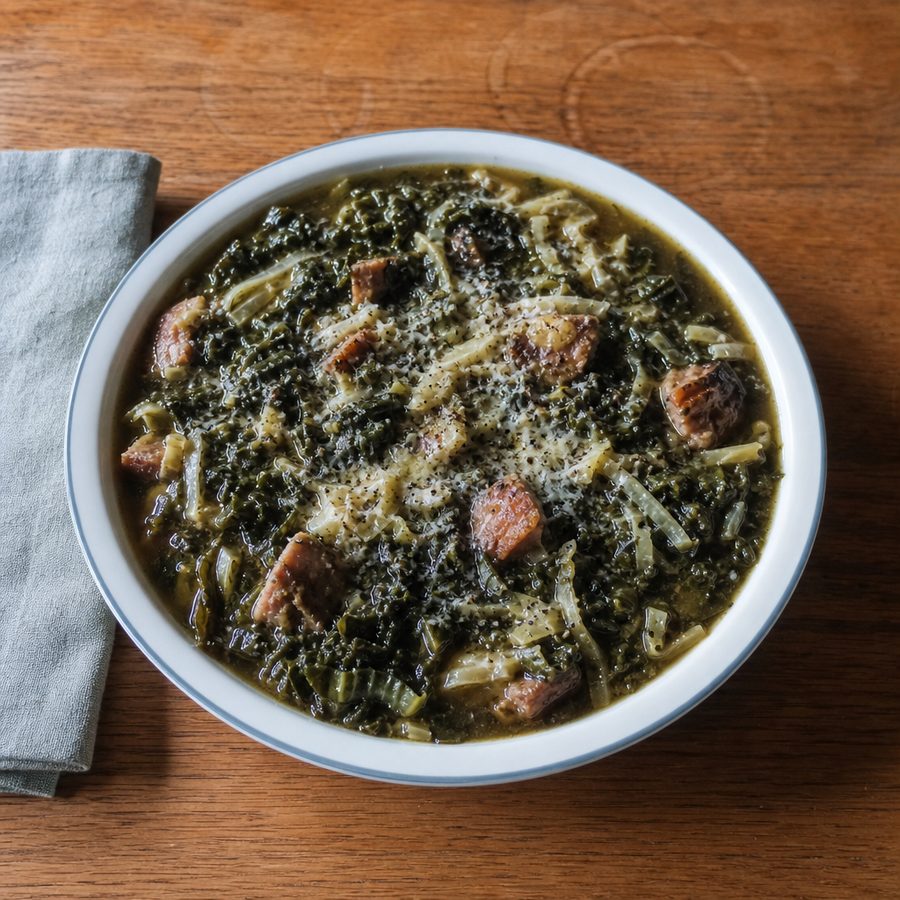
The Neapolitan married soup, made on a weeknight: collards, kale, cabbage, and curly endive simmered down in a garlicky broth with browned cubes of pork tenderloin, finished with grated Parmesan and a great deal of black pepper.
Why You'll Love This Recipe
Minestra maritata is the Neapolitan soup whose name means married, and the marriage is between the greens and the meat. The traditional version simmers for hours with pork ribs, skin, and sausage, and it is worth making that way once. This is the one I actually cook on a Tuesday. Cubes of pork tenderloin get browned hard in the pot first, come out while they are still juicy, and go back in at the very end, which gets you the same savory broth without the afternoon. Everything else is greens, garlic, and time on the stove that you do not have to stand over.
The pleasure of this soup is how different the greens taste together than any of them do alone. Collards stay a little chewy and hold the shape of their ribbons. Kale goes soft and almost sweet. Cabbage shreds turn silky and disappear into the broth. Curly endive is the bitter one, and it is the reason the whole bowl tastes like something rather than like health. Parmesan stirred in off the heat gives the broth a faint stickiness that coats the greens, and the black pepper builds a slow warmth at the back of your throat that is the point of the dish.
I make this when the weather turns and I want dinner that warms the kitchen for an hour. It is one of the few soups in my house that everybody accepts as a whole meal, and it comes to the table in shallow bowls with more Parmesan and a pepper mill in the middle. The leftovers are better than the first night, once the greens have relaxed all the way into the broth. If I am feeding people who are hungrier than usual, I put a bowl of white beans on the table for anyone who wants to spoon them in.
Ingredients
- 1 lb pork tenderloin, trimmed and cut into 3/4-inch cubes
- 5 cups chicken broth
- 1 bunch collard greens (about 10 oz), stems stripped out and leaves rolled and sliced into thin ribbons
- 1 bunch lacinato kale (about 9 oz), stems stripped out and leaves torn into pieces
- 1/4 head savoy cabbage (about 9 oz), cored and shredded
- 1 small head curly endive (about 5 oz), torn into large pieces
- 1 small yellow onion, diced small
- 6 garlic cloves, sliced thin
- 2 1/2 tbsp extra virgin olive oil
- 1/3 cup finely grated Parmesan, plus a little more for the table
- 3/4 tsp coarsely ground black pepper
- 1/4 tsp cayenne
- scant 1/4 tsp fine sea salt
Instructions
- Prep the greens: Strip the collard and kale leaves from their stems, stack them, roll them into cigars, and slice them into thin ribbons. Core and shred the cabbage. Tear the curly endive into large pieces. Keep the collards separate from the rest, since they go in first and take the longest.
- Brown the pork: Pat the pork cubes dry and season them with the salt and half the black pepper. Heat 1 tablespoon of the olive oil in a large heavy pot over medium-high until it shimmers, add the pork in a single layer, and leave it undisturbed for three minutes so it takes color. Turn and cook two minutes more, until browned on two sides and still pink at the center. Move it to a plate.
- Build the base: Lower the heat to medium, add the remaining olive oil, the onion, and the garlic, and cook for four to five minutes, scraping up the browned bits from the bottom. Stop while the garlic is fragrant and pale gold. Add the cayenne and the rest of the black pepper and stir for thirty seconds until you can smell it.
- Simmer the collards: Pour in the broth, bring it to a boil, then add the collard ribbons. Reduce to a steady simmer, cover partly, and cook for 15 minutes. The collards should bend easily around a spoon but still hold their shape.
- Add the rest of the greens: Add the cabbage, the kale, and the curly endive, pressing them down into the broth as they wilt. Simmer uncovered for 10 to 12 minutes, until everything has collapsed and the broth has turned dark green and tastes clearly of greens rather than of stock.
- Marry it: Return the pork and any juices on the plate, simmer for two minutes just to heat through and finish the cooking, then take the pot off the burner. Stir in the Parmesan a handful at a time so it melts smoothly rather than clumping. Taste, add more pepper, and serve in shallow bowls.
Variations
- Escarole and chicory: The most traditional mixture uses escarole, chicory, and cabbage. Use them in place of the collards and kale if your market carries them, and shorten the first simmer to eight minutes.
- With meatballs: Neapolitan cooks often drop tiny pork meatballs into the pot. Roll the pork mixture of your choice into marble-sized balls and poach them in the broth for eight minutes before the greens go in.
- Beans in the bowl: Add a cup of drained cannellini beans with the second round of greens for a heavier, more filling pot.
- Lemon at the table: A squeeze of lemon over each bowl sharpens the bitterness and makes the whole thing taste brighter, which I like in early spring.
- More heat: Double the cayenne and add a sliced fresh chile with the garlic for a Calabrian slant on the same soup.
Storage & Leftovers
This keeps five days in the refrigerator and improves for the first three of them. The greens go softer and the broth goes darker and more savory as it sits. Store it in one container with the pork submerged so the meat does not dry at the edges.
Reheat it gently over medium-low until it steams, about eight minutes, and stop there. A hard boil tightens the pork and turns the greens gray. If it has thickened overnight, loosen it with a splash of water or broth rather than letting it reduce further.
It freezes for up to three months. Freeze it before the Parmesan goes in if you are planning that far ahead, since cheese can go grainy through a freeze and thaw. Thaw overnight in the refrigerator, reheat slowly, and stir the cheese in at the end as though you had just made it.
Notes & Tips
- Brown the pork in one layer: Crowded cubes steam and stay gray, and the browned bits on the bottom of the pot are where the broth gets its depth. Do it in two batches if your pot is not wide.
- Take the pork out early: Tenderloin is close-grained and turns chalky if it simmers. Pull it while it is still pink in the middle and let the last two minutes in the hot broth finish it.
- Stagger the greens: Collards need 15 minutes and endive needs five. Putting them all in together means one of them is either tough or gone.
- Keep the garlic pale: Six sliced cloves brown fast in a hot pot. Gold is what you want, brown makes the whole soup bitter in the wrong way.
- Cheese goes in off the heat: Parmesan added to a boiling pot seizes into strings. Off the burner and added in handfuls, it melts into the broth and thickens it slightly.
- Be generous with the pepper: This is a peppery soup by design. Grind it coarse, use more than feels reasonable, and add another turn at the table.
Nutrition & Mindful Eating
- The greens and the pork are the whole dish, and they need each other. Two pounds of greens cook down to something dark and concentrated that carries fiber, calcium, and vitamin K, and the pork gives the broth the savory weight and the protein that turn a pot of vegetables into dinner.
- Pork tenderloin is a close-grained, quick-cooking cut with a great deal of protein for its size, and it carries thiamin, one of the B vitamins that pork supplies more generously than most foods.
- Collard greens are the sturdiest thing in the pot and the reason it has body. Their leaves hold their shape through a long simmer, and they bring calcium in a form that comes through cooking intact.
- Curly endive is the bitter green here, and bitterness is doing real work: it keeps the broth from tasting flat and it makes the sweetness of the cabbage register. Bitter greens also carry folate and a good amount of vitamin A.
- Sliced garlic, coarse black pepper, and a pinch of cayenne are what make this taste Neapolitan rather than merely green. The garlic softens into the broth and feeds the bacteria in your gut, and the pepper builds a slow warmth that lands at the back of the throat.
- As you eat, notice how the bitterness of the endive and the sweetness of the cabbage sit against each other in the same spoonful, and let the bowl cool enough that you have to take your time with it.
Frequently Asked Questions
Do I have to use four different greens?
No, but the mixture is what makes the dish. If you can only find two, aim for one sturdy and dark and one bitter, since the bitterness is what keeps the pot from tasting flat. Two pounds of greens in total is the number to hit however you get there.
Can I use chicken in place of the pork?
Yes. Cubed boneless chicken thigh browns the same way and cooks through in about the same time, and it gives a rounder, milder broth. Cook it to 175°F when it goes back into the pot at the end.
Why is my broth pale instead of dark green?
Usually the greens have not been in long enough. They need to go past the bright green stage and into the olive green one, which is where they start giving their flavor to the broth. The other reason is too much liquid, so keep the lid off for the last stretch and let it reduce.
Is this filling enough to be dinner on its own?
In my house it is, because two pounds of greens and a pound of pork make a substantial bowl. If you want more on the plate, white beans stirred in at the end or a piece of toasted bread rubbed with garlic are both traditional companions.