
Mung Bean and Tofu Curry with Mustard Greens
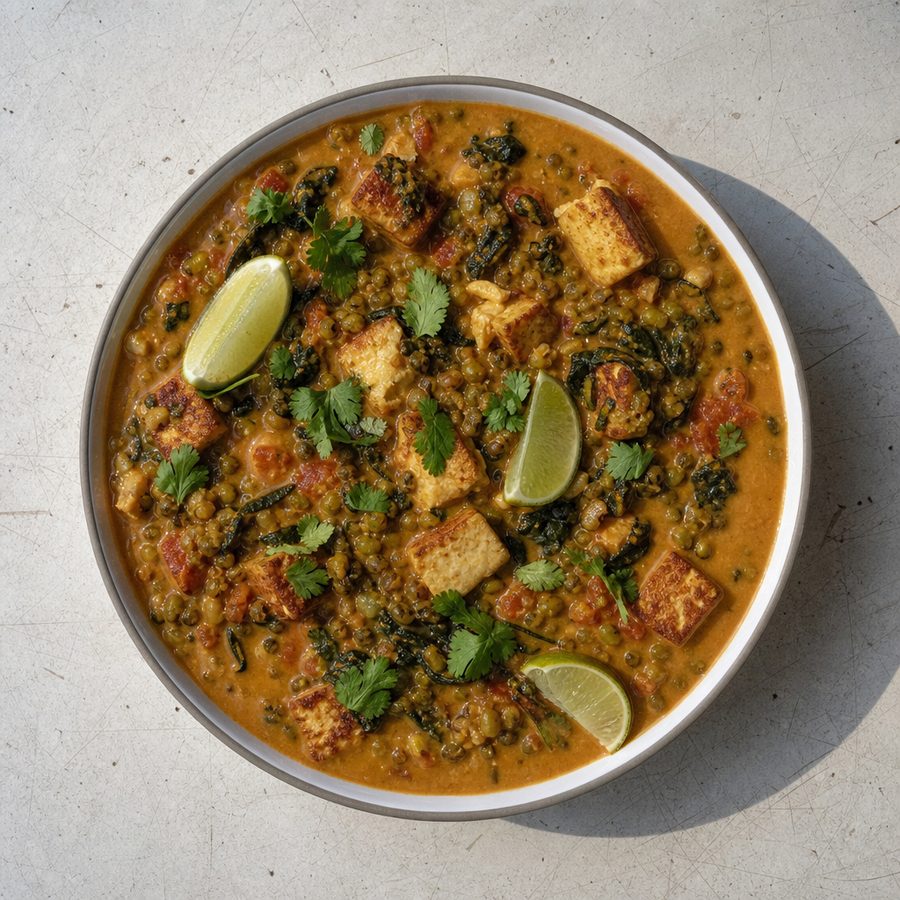
Whole mung beans simmered with tomato, turmeric, and toasted cumin, with peppery mustard greens wilted through and golden tofu folded in at the end.
Why You'll Love This Recipe
Mung beans are the quiet workhorse of Indian home cooking and they deserve more attention than they get here. If you have never cooked them, this is a forgiving place to start: whole ones, skins on, need no soaking, cook faster than most beans, hold their shape better than red lentils, and split just enough at the seam to thicken the pot on their own. I build this on a Tuesday when I want something that tastes like it simmered all afternoon and did not. The tofu is what turns it from a side dish into dinner: pressed, browned, and folded in only at the end, so it keeps a firm bite in among everything soft.
There is no coconut milk in this one, and that is on purpose. The body comes from the beans themselves and from a base of onion cooked properly slow, tomato reduced down, and enough ginger to make itself known. Cumin seeds go into hot oil first and are given the twenty seconds they need to pop and darken, which is a completely different flavor from ground cumin stirred in later. Turmeric and coriander follow, and mustard greens go in at the end where their pepperiness survives rather than cooking away into a general green softness.
It eats warm and earthy with a peppery edge that keeps arriving, and the lime at the end makes the turmeric taste bright rather than dusty. The tofu picks up color from the pot without going soft, the mung beans give it a texture somewhere between a stew and a dal, and the greens keep every bowl interesting to the bottom. It makes good leftovers, it thickens overnight into something almost spoonable, and it reheats without any of the ingredients giving up.
Ingredients
- 1 lb firm tofu, pressed and cut into 3/4-inch cubes
- 2 1/2 cups cooked whole mung beans (from about 1 cup dry)
- 1 large bunch mustard greens (about 10 oz), stemmed and cut into ribbons
- 1 1/4 cups crushed tomatoes
- 1 1/4 cups vegetable broth
- 1 large yellow onion, finely diced
- 2 1/2 tbsp grated fresh ginger
- 4 cloves garlic, minced
- 1 tbsp avocado oil
- 2 tsp cumin seeds
- 2 tsp ground coriander
- 2 tsp ground turmeric
- 1/2 tsp cayenne, or to taste
- 1 1/2 tbsp lime juice, plus wedges to serve
- 1/4 cup chopped cilantro
- 1/4 tsp fine sea salt
Instructions
- Press and brown the tofu: Press the tofu under a weighted plate for fifteen minutes, then cut it into 3/4-inch cubes. Heat half the avocado oil in a wide heavy pan over medium-high, add the cubes in one layer, and leave them undisturbed for four minutes until golden underneath. Turn and give them three minutes more, then move them to a plate.
- Toast the cumin seeds: Lower the heat to medium, add the rest of the oil, and drop in the cumin seeds. Swirl the pan and listen. In about twenty seconds they will start to crackle, darken a shade, and smell toasted and nutty. That is the moment to move on, because ten seconds later they turn bitter.
- Cook the base: Add the onion and the salt and cook for eight to ten minutes, stirring, until soft and beginning to go gold at the edges. Add the ginger and garlic and cook a minute more, then stir in the turmeric, coriander, and cayenne and let them fry in the oil for thirty seconds until the whole pan smells like the spices rather than like raw powder.
- Reduce the tomato: Pour in the crushed tomatoes and cook for five or six minutes over medium, stirring often, until the mixture has darkened and thickened and you can see oil separating at the edges. That separation is the signal that the tomato is cooked through, and it is what stops the finished curry from tasting sharp and raw.
- Simmer the mung beans: Add the cooked mung beans and the broth, bring it to a simmer, and cook uncovered for 12 to 15 minutes. Press a few beans against the side of the pan as you stir. It is ready when the liquid has reduced enough to coat the beans rather than surround them, and the pot looks glossy.
- Wilt the greens and finish: Add the mustard greens in handfuls, folding each one under before the next goes in, and cook five minutes until they are dark and tender but still have a peppery bite. Fold in the browned tofu, warm it through for two minutes, then take the pan off the heat and stir in the lime juice. Scatter the cilantro over and serve with lime wedges.
Variations
- Sweet potato: Add 2 cups of diced sweet potato with the broth and simmer until tender for a rounder, sweeter pot.
- Tempeh: Cubed tempeh browned the same way gives a firmer, nuttier bite than the tofu.
- Tomato-free: Leave the tomato out and use an extra cup of broth with a spoonful of tamarind paste for a sourer, thinner curry.
- Toasted seed finish: Scatter toasted sesame seeds over each bowl for crunch and a nutty top note.
- Over rice: Serve it over brown rice with a spoonful of yogurt on top for a cooler, milder plate.
Storage & Leftovers
This keeps five days in a sealed container in the refrigerator and thickens considerably as it sits, since the mung beans keep absorbing liquid. Loosen it with a few tablespoons of water when you reheat and it comes back to exactly where it was.
Reheat it gently in a saucepan over medium-low, stirring, until it steams. Finish with a fresh squeeze of lime every time, because the acid fades in storage faster than anything else and it is what makes the spices taste awake rather than muddy.
It freezes for three months in flat sealed portions. Beans and greens both come through it well, and the tofu is the only thing that changes, going slightly spongier in texture. Thaw overnight in the refrigerator and reheat on the stove with a splash of water.
Notes & Tips
- Listen to the cumin seeds: They tell you when they are ready. Crackling and a shade darker means go, silence means the oil is not hot enough, and smoke means start over.
- Cook the onion longer than feels necessary: Eight to ten minutes over medium. An underdone onion leaves a raw sweetness that runs through the whole finished pot.
- Wait for the oil to separate: When the tomato has cooked down enough, you will see oil at the edges of the pan. That is the visual cue that the base is done.
- Press the tofu: Fifteen minutes under a weight. Wet tofu will not brown and browning is the whole reason it is a separate step.
- Stem the mustard greens: The center ribs stay tough and stringy long after the leaves are tender. Strip them out and save them for a stock.
- Lime goes in last: Off the heat, after the tofu. Boiled lime juice turns bitter and loses the lift you added it for.
Nutrition & Mindful Eating
- Mung beans, tofu, and mustard greens each bring something different to this pot. The beans give it body and fiber, the tofu carries the protein and most of the calcium, and the greens add a peppery bite and color that keeps a bowl of beans from eating heavy.
- Whole mung beans hold their shape better than split ones and only split at the seam, which is how the pot thickens itself. They carry plant protein, folate, and a lot of fiber, and their mild sweetness is a good base under this much spice.
- Tofu browned first and folded in at the end keeps a firm bite among everything soft. It is soybean curd set with calcium salts, so it brings a large amount of calcium along with a complete set of protein.
- Mustard greens are the sharpest of the cooking greens, and five minutes is enough to tenderize them and leave the pepperiness intact. They carry calcium, vitamin K, and vitamin C, and that bite is what cuts through the richness of the base.
- Cumin seeds popped in hot oil, then turmeric and coriander fried for half a minute, are what give this its depth. Turmeric brings curcumin, which has been studied for its role in inflammation, and the lime at the end is what makes the whole pot taste bright rather than dusty.
- As you eat, notice how the pepper from the greens arrives after the warmth of the spices and how the lime resets everything, and let the bowl warm your hands for a moment before you start.
Frequently Asked Questions
Can I use dried mung beans and cook them in the pot?
Yes. Add 1 cup of rinsed dried mung beans along with 3 1/2 cups of broth after the tomato has reduced, and simmer covered for 30 to 35 minutes until tender. Check the liquid halfway and add more if the pan looks dry.
What can I use in place of mustard greens?
Kale, collards, or chard all work, though you lose the pepperiness that gives this its edge. Kale and collards want the same five minutes, chard wants three, and spinach only needs a minute stirred in at the very end.
Mine tastes dusty rather than fragrant.
The spices did not get their moment in the oil. Ground turmeric and coriander need thirty seconds of frying before any liquid arrives, and cumin seeds need to actually pop. Both steps are quick and both are the difference between a curry that smells like a spice jar and one that smells like dinner.
Do I have to brown the tofu separately?
It is worth the extra pan time. Tofu added raw to a simmering pot stays pale and soft and tends to break up as you stir. Browned cubes hold together, keep a firm bite against the beans, and pick up the sauce on the outside rather than soaking into the middle.