
Mussel Chowder with Leeks, Potatoes, and Dill
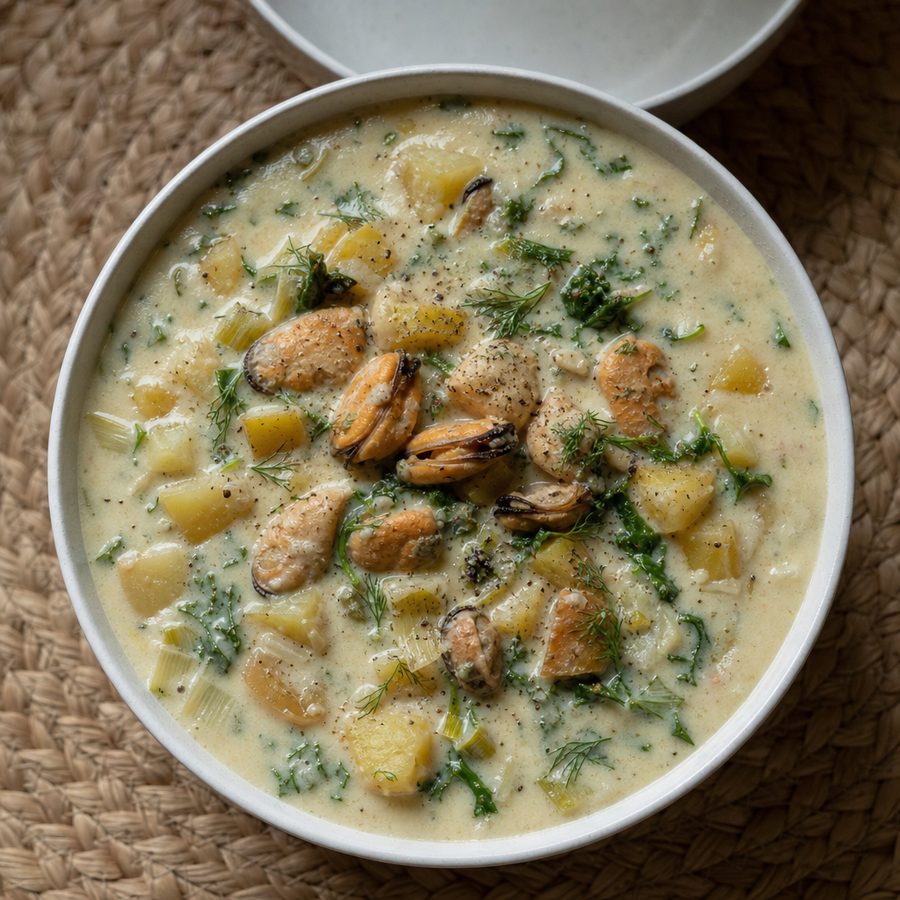
Mussels steamed open in their own liquor, then a pot of soft leeks, gold potatoes, and fennel turned silky with milk and finished with kale, dill, and lemon.
Why You'll Love This Recipe
Mussels are the cheapest shellfish at almost any counter and the fastest thing in the ocean to cook, which is why I keep coming back to them on cold nights. This is my chowder, and the whole reason it works is that you steam the mussels first and then build the soup in the liquid they release. That liquor is the flavor. It costs nothing, it takes four minutes, and it turns a pot of potatoes and leeks into something that tastes like it came off a boat. Start to finish, about fifty-five minutes, and only one of those is fussy.
The body of this chowder comes from the potatoes rather than from flour. Yukon Golds cook down at the edges and lend the broth a soft, rounded texture on their own, and if you crush a few against the side of the pot with a spoon you get as much thickness as anybody needs. The milk goes in over gentle heat and stays there. A hard boil will split it, so once the milk is in, the pot should never do more than shiver. Kale goes in last, shredded fine, and takes only two minutes to go tender.
It eats like a real dinner in a bowl. Sweet leeks and fennel underneath, potato that gives way, mussels that are firm and briny against all that softness, and dill running through the whole thing. The lemon at the end is what keeps it from tasting like a dairy soup, and I would not leave it out. This is a good pot to make when it is dark at five in the afternoon and you want to sit down to something warm without spending the evening at the stove.
Ingredients
- 3 1/2 lb live mussels in the shell, scrubbed and debearded (about 14 oz of meat once steamed)
- 2 3/4 cups milk
- 1 lb Yukon Gold potatoes, cut into 1/2-inch cubes
- 2 large leeks, white and pale green parts only, halved and sliced into thin half-moons
- 1/2 small fennel bulb, cored and finely diced
- 4 packed cups lacinato kale, stems removed and leaves finely shredded
- 1 1/4 cups vegetable broth
- 4 tsp extra-virgin olive oil
- 3 garlic cloves, finely chopped
- 1/3 cup fresh dill fronds, chopped, plus a few whole for the top
- 2 tsp fresh thyme leaves
- 1/2 tsp coarsely ground black pepper
- 1 tbsp fresh lemon juice
Instructions
- Clean and steam the mussels: Scrub the mussels under cold water and pull off any beards. Discard any that are cracked or that stay open when you tap them. Put them in a large pot with a half cup of water, cover, and steam over high heat for four to five minutes, shaking the pot once, until the shells have opened. Tip them into a colander set over a bowl so you catch every drop.
- Pick the meat and save the liquor: Pull the mussel meats out of the shells and set them aside in a covered bowl. Pour the collected liquor through a fine strainer lined with a paper towel to catch the grit, and keep it. You should have about a cup. Discard any mussels that stayed shut.
- Sweat the leeks and fennel: Wipe the pot out and set it over medium heat with the olive oil. Add the sliced leeks, the diced fennel, and a good pinch of the pepper, and cook eight to ten minutes, stirring often, until the leeks are limp and sweet with no color on them. Add the garlic and thyme and cook one minute more.
- Simmer the potatoes: Add the potatoes, the strained mussel liquor, and the broth. Bring it to a simmer, cover, and cook fifteen to eighteen minutes, until a potato cube gives way completely when you press it against the side of the pot. Crush five or six cubes against the wall of the pot with the back of a spoon to thicken the broth.
- Add the milk and the kale: Pour in the milk and bring the pot back to the barest shiver, well under a simmer, and hold it there for five minutes. Stir in the shredded kale and cook two minutes, just until it turns bright and tender. If the pot bubbles hard at this stage the milk will separate, so keep the heat low.
- Return the mussels and finish: Stir the mussel meats and most of the dill into the pot and let them warm through for one minute, no longer. Take it off the heat, stir in the lemon juice, and taste. Ladle into bowls and finish each one with the remaining dill, a few whole fronds, and the rest of the cracked pepper.
Variations
- Smoky: Stir a teaspoon of smoked paprika in with the garlic for a version that tastes faintly of a wood fire.
- Corn and summer: Add a cup of corn kernels with the potatoes and swap the kale for a handful of chopped scallion greens.
- Tomato-forward: Stir a half cup of crushed tomatoes in with the broth for a rosy, Manhattan-leaning pot with more acidity.
- Mixed shellfish: Use half mussels and half shrimp, adding the shrimp raw during the last two minutes so they poach in the milk.
- Extra green: Swap the kale for shredded collard greens and give them five minutes rather than two.
Storage & Leftovers
This keeps three days in a sealed container in the refrigerator. The potatoes carry on softening and the chowder thickens as it sits, which most people consider an improvement. The mussels stay tender as long as you do not put them through a second hard heat.
Reheat it slowly in a saucepan over medium-low, stirring, and stop the moment it steams. A milk-based pot that comes to a boil on the second day will go grainy and there is no fixing it. Loosen it with a splash of milk or water if it has gone very thick, and add a fresh squeeze of lemon before serving.
I would not freeze it. Milk and potato both come out of the freezer with the texture changed, and mussels turn rubbery. If you want to work ahead, steam the mussels and make the pot through the potato stage up to two days in advance, then add the milk, kale, and shellfish on the night you eat it.
Notes & Tips
- Strain the liquor through paper towel: Mussels hold fine sand no matter how well you scrub the shells. A paper towel in the strainer catches what a mesh strainer will not, and it takes ten seconds.
- Wash the leeks after slicing: Grit hides between the layers. Slice first, then swish the half-moons in a bowl of water and lift them out, leaving the sand at the bottom.
- Sweat, do not brown, the leeks: Color turns them sweet in the wrong direction for a pale chowder. Keep the heat moderate and pull them off the moment they go limp.
- Crush a few potatoes: Five or six cubes pressed against the side of the pot give you the body most chowders get from flour, and the broth stays clean-tasting.
- Never boil after the milk: The surface should shiver, not bubble. This is the single step that separates a silky pot from a grainy one.
- Add the mussels last, briefly: They are already cooked. One minute in the hot pot warms them through, and three minutes turns them into erasers.
Nutrition & Mindful Eating
- Mussels, milk, potato, and kale build this bowl between them. The shellfish gives the broth its brine and most of the protein, the milk gives it body, the potato gives it substance, and the kale keeps a soft pot from being all one texture.
- Mussels are one of the more generous shellfish on the counter, with real protein for their size along with iron, selenium, and unusually high vitamin B12. They also carry omega-3 fats, which is not something most people expect from a shell.
- Milk is doing more than making the pot silky. It carries calcium and vitamin D together, which is the pairing that makes dairy useful here, and it softens the brine of the shellfish into something rounder.
- Kale shredded fine and stirred in at the end stays bright green and slightly toothy, and it brings its own calcium and vitamin K into a bowl that is otherwise soft all the way through.
- Dill, thyme, and a spoonful of lemon at the end are what keep this from tasting flat. Acid on a creamy pot sharpens everything under it, and the dill is the smell you get before the first spoonful.
- As you eat, taste how the brine of the mussels sits against the sweetness of the leeks, and let the bowl cool a little between spoonfuls so you notice when you are comfortably full rather than finishing on momentum.
Frequently Asked Questions
Can I use frozen or jarred mussels?
Yes, and it is a reasonable shortcut. Use about fourteen ounces of cooked mussel meat, add it at the very end exactly as written, and use two cups of broth in place of the strained liquor. You lose some of the briny depth, so a splash of bottled clam juice makes up the difference if you have it.
How do I know which mussels to throw out?
Before cooking, tap any that are gaping. If they close, they are alive and fine. If they stay open, discard them. After steaming, throw out any that never opened. Cracked shells go in the bin either way.
My chowder looks curdled. Can I save it?
It usually means the pot boiled after the milk went in. Take it off the heat immediately and whisk hard, which brings a mildly split pot back together. Prevention is the real answer: once the milk is in, the surface should barely move.
Can I make it without the milk?
You can build it on broth and mussel liquor alone for a clearer, brinier soup, and it is good that way. The pot loses the silky body, so crush more of the potato against the side to compensate and add an extra spoonful of olive oil at the end.