
Mussel and Sauerkraut Pot with Apple and Bacon
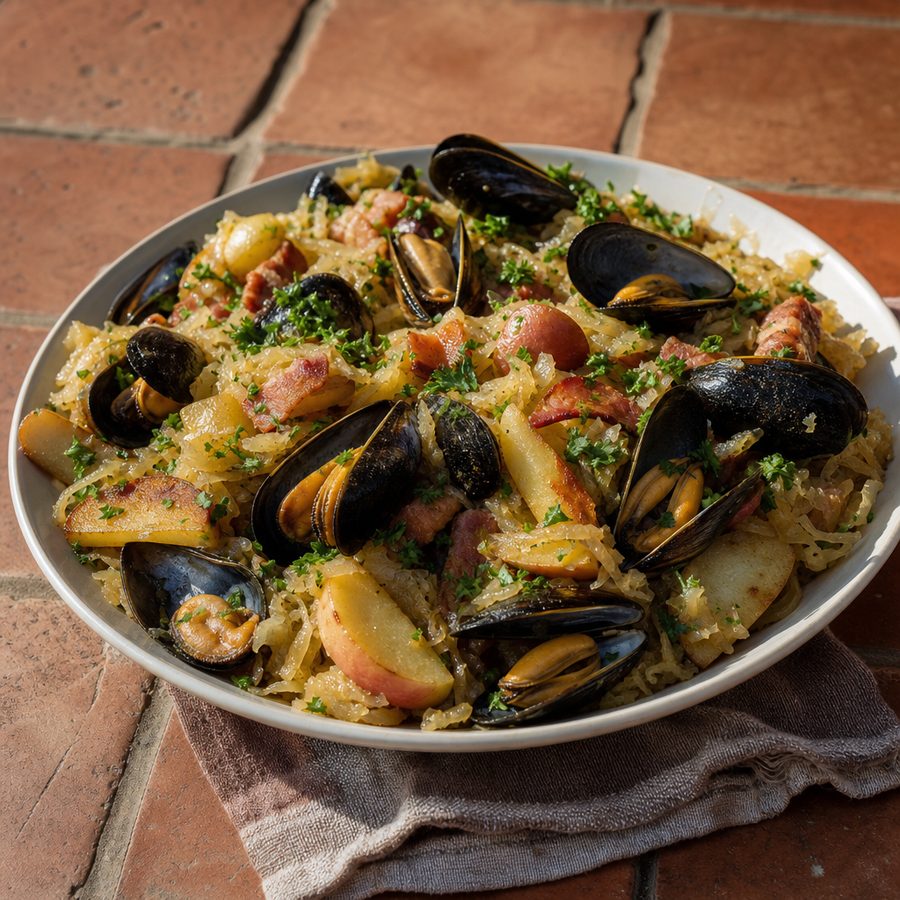
Sauerkraut braised soft with onion, bacon, and apple wedges, then live mussels laid on top and steamed until they open into the pot in their own liquor.
Why You'll Love This Recipe
A pot of mussels is usually a creamy affair, and this is the other kind: sour, savory, and a little sweet, with the shellfish sitting on top of a braise rather than swimming in a sauce. It comes from the Alsatian habit of cooking almost everything over sauerkraut, and it works because sharp fermented cabbage is exactly what a sweet mussel wants beside it. I make it on a cold Friday when I want dinner to feel like an occasion and I have forty five minutes. A bag of mussels is one of the cheapest good things at the fish counter, which does not hurt.
The sauerkraut needs a rinse and then a proper braise. Straight from the jar it is sharp enough to take over the pot, so give it one quick pass under cold water, squeeze it, and let it cook down for half an hour in bacon fat, onion, and broth until it turns mellow and almost creamy in texture. The apple goes in with it and softens into wedges you can still see. Then the mussels go on top, the lid goes down, and six or seven minutes later they have opened and dropped their salty liquor into the kraut, which is the whole point of cooking them this way.
This eats like a much bigger meal than it is. A pound of mussel meat across four bowls is a serious amount of protein, the braised kraut gives it bulk, and the apple keeps the sourness from wearing you out halfway through. Sort the mussels before they go in and throw away any that are cracked or that stay open when you tap them, and after cooking discard the few that never opened. Eat it with a spoon in one hand and an empty bowl for the shells beside you, and get the broth at the bottom while it is still hot.
Ingredients
- 4 lb live mussels in the shell, scrubbed and debearded (about 1 lb of shucked meat)
- 4 cups sauerkraut (about 20 oz), drained and given one quick rinse
- 2 firm apples, peeled, cored, and cut into thick wedges
- 1 large onion, halved and sliced thin
- 4 slices bacon, chopped small
- 4 cloves garlic, sliced
- 1 1/2 cups chicken bone broth
- 1 tbsp olive oil
- 4 sprigs fresh thyme
- 2 bay leaves
- 1/3 cup chopped fresh parsley
- 1 tbsp fresh lemon juice
- 1/2 tsp fine sea salt
Instructions
- Sort and clean the mussels: Tip the mussels into a bowl of cold water and go through them one by one. Pull off any beard with a firm tug toward the hinge, scrub the shells, and discard any that are cracked or that stay open after you tap them on the counter, because a live mussel closes when it is disturbed and one that does not is no longer alive. Keep them cold until the pot is ready.
- Rinse the sauerkraut: Drain the sauerkraut, give it one quick rinse under cold water, and squeeze it dry by the handful. One rinse is the whole trick, since it takes off the sharpest edge of the brine while the sour flavor stays in the cabbage itself. Peel and core the apples and cut them into thick wedges.
- Render the bacon and soften the onion: Cook the bacon with the olive oil in a wide pot over medium heat for 6 to 7 minutes, until the fat runs and the pieces brown but stay chewy. Add the onion and cook 5 minutes more until it is soft and translucent, so that it has given up its sweetness before the sauerkraut goes in and stops anything else from softening, then add the garlic and stir for 1 minute.
- Braise the kraut and apple: Add the sauerkraut, apple wedges, thyme sprigs, bay leaves, and salt, and stir everything together. Pour in the bone broth, bring it to a simmer, then cover and cook over low heat for 30 minutes, stirring once, since raw sauerkraut is sharp and half an hour under a lid is what turns it mellow enough to eat by the spoonful. The kraut should be soft and mellow and the apple should give under a spoon without falling apart.
- Steam the mussels on top: Raise the heat to medium-high and lay the mussels over the surface of the kraut in an even layer. Cover tightly and steam for 5 to 7 minutes, shaking the pot once, until the shells have opened. Take the pot off the heat as soon as most of them are open, since another two minutes turns the meat rubbery.
- Finish and serve: Discard any mussels that stayed shut, since a shell that never opened was not alive when it went into the pot, and pull out the thyme stems and bay leaves. Add the lemon juice, scatter the parsley over the top, and serve straight from the pot into wide bowls, spooning the kraut and broth up from underneath so every bowl gets some of the liquor.
Variations
- Without bacon: Start with two tablespoons of olive oil and add a handful of dried mushrooms to the broth for a pot that is still deeply savory.
- Pear rather than apple: Firm Bosc pears cook the same way and give a softer, more floral sweetness against the sour kraut.
- Ginger and scallion: Grate a tablespoon of fresh ginger in with the garlic and finish with sliced scallions for a sharper pot.
- Turnip in the braise: Add two cubed turnips with the kraut for a heartier version that eats closer to a stew.
- Oven version: Braise the kraut covered at 325°F (163°C) for 40 minutes, then set the mussels on top and return it to the oven for 8 minutes.
Storage & Leftovers
Mussels are best the night they are cooked. If you have leftovers, pick the meat out of the shells while it is still warm, stir it into the kraut, and refrigerate the two together for up to 2 days. Shells left in the container make the whole thing taste tired by morning.
Reheat gently in a covered pot over low heat for about 5 minutes, or just until the kraut is hot and the mussels have warmed through. Anything harder than that will firm the meat up. A splash of broth loosens the pot if it has tightened in the refrigerator.
The kraut base freezes well on its own for up to 3 months and is worth making in a double batch for that reason. Mussels do not freeze once cooked, so freeze the braise, then thaw it, bring it back to a simmer, and steam fresh mussels on top when you want it.
Notes & Tips
- Buy the mussels the day you cook: They are alive until they hit the pot. Keep them in the refrigerator in an open bowl under a damp towel, never sealed in a plastic bag.
- Tap the doubtful ones: An open mussel that closes when tapped is alive and good. One that stays open goes in the trash, and it is not worth the gamble.
- Squeeze the kraut dry: Wet sauerkraut waters down the braise. A firm squeeze by the handful after rinsing keeps the pot concentrated.
- Use a wide pot: The mussels need to sit in something close to a single layer so they open at the same time rather than in shifts.
- Pull them at the first opening: Mussels go from plump to rubbery in about two minutes. Take the pot off the heat when most shells have opened, not all of them.
- Keep the liquor: The salty juice the shells release is the seasoning for the whole pot, which is why there is so little added salt in the list.
Nutrition & Mindful Eating
- The kraut carries this pot and the mussels season it. Braised cabbage and apple give the bowl its bulk and its sweet-sour backbone, while a layer of shellfish on top brings nearly all the protein and drops its salty liquor down through the rest.
- Mussels are small, sweet, and firm, and they are one of the richest sources of iron and B12 you can buy at a fish counter, which is a lot of substance from something that cooks in six minutes.
- Sauerkraut is cabbage that has been fermented rather than cooked, and the sour flavor comes from the bacteria that did that work. It carries vitamin C and fiber, and the unpasteurized kind in the refrigerated case is the one that arrives with live cultures.
- Apples cooked into the braise turn soft without going to mush, and the pectin in them is a soluble fiber that gives the pot a rounder texture. Their sweetness is what keeps a bowl of fermented cabbage from tasting relentlessly sharp.
- Bacon, thyme, bay, and the mussel liquor build the savory side of this. The shells release a naturally salty juice as they open, and that is why the pot needs very little else to taste seasoned.
- As you eat, work through the shells slowly and let the pace they set be the pace of the meal, noticing how the sourness of the kraut and the sweetness of a mussel land in different places.
Frequently Asked Questions
Can I use clams or another shellfish?
Yes. Littleneck clams work the same way and want 8 to 10 minutes, since they are slower to open. A pound of peeled shrimp laid on top needs only 3 to 4 minutes. Both suit the kraut, though mussels give up the most liquor into the pot.
Do I have to rinse the sauerkraut?
One rinse is what I would do here, because unrinsed kraut plus a half hour of reducing broth makes a pot most people find too sharp. If you like it very sour, skip the rinse and add a little more broth. Never rinse it twice, which washes out the flavor entirely.
What if some mussels do not open?
Throw those out. A mussel that stayed shut through steaming was probably dead before it went in the pot. Sorting them beforehand catches most problems, and it is worth doing at the sink rather than over the stove.
Does this work during an AIP elimination phase?
It does, with two labels to check. Sauerkraut should be cabbage, salt, and water alone, since many jars carry caraway or pepper, and bacon should be cured without paprika or sugar. There are no grains, dairy, eggs, nuts, seeds, or nightshades in the dish.