
Mussels in Ginger Broth with Bok Choy
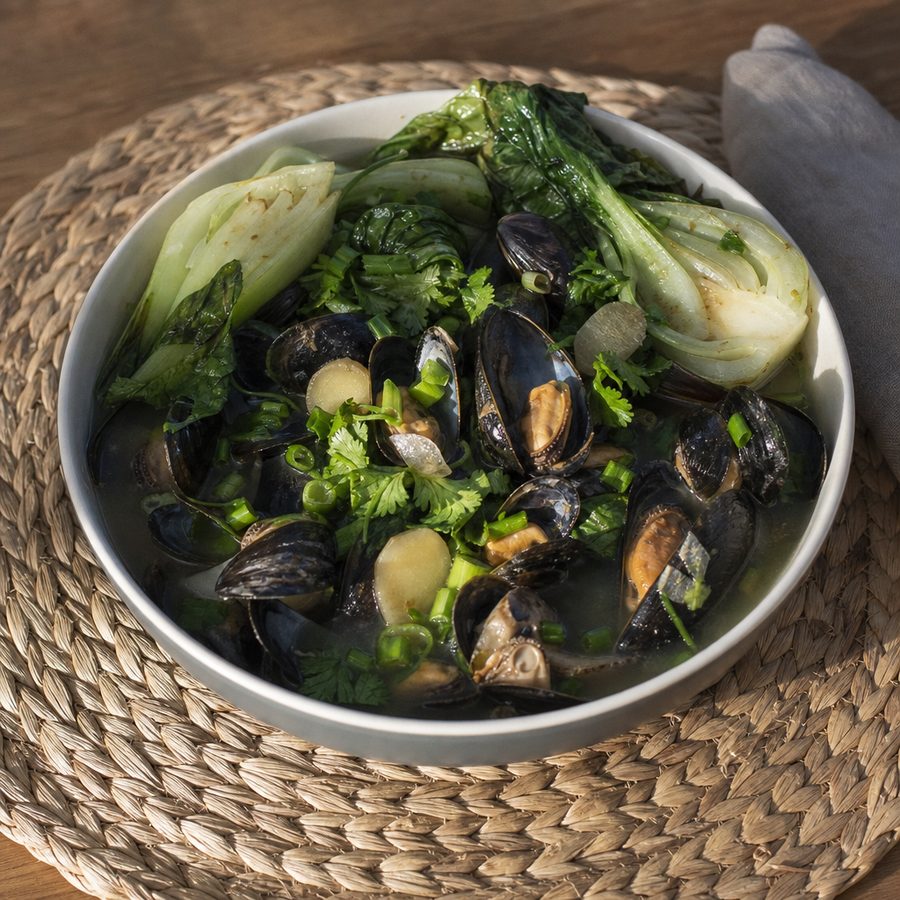
Mussels steamed open in a clear ginger and garlic broth with halved bok choy, finished with lime, scallion, and cilantro for a savory morning bowl.
Why You'll Love This Recipe
Somewhere between Seoul and Lisbon, a bowl of shellfish in hot broth is an ordinary way to start the day, and it is worth borrowing on a morning when nothing sweet appeals. This is the breakfast I make when I have slept badly and want something warm and savory that does not involve browning anything for twenty minutes. Mussels are cheap, they cook in the time it takes to boil a kettle, and a big pot of them feels far more generous than the effort involved. It is also a good dish for a cold morning when you want to hold the bowl in both hands.
The method is nearly all in the broth, and it takes ten quiet minutes. Ginger coins and sliced garlic go into warm oil first, just until they smell sweet and turn barely gold at the edges, which pulls their flavor into the fat where water alone would not reach it. Then the broth goes in and simmers long enough to take on that warmth. When the mussels open, they release their own liquor into the pot, and that is the moment the broth stops tasting like stock and starts tasting of the sea. The bok choy goes in at the very end, in the residual heat, so the stems keep their snap.
Eating this is slower than eating a plate, and that is part of why I like it in the morning. You work through the shells one at a time, drink the broth in between, and the whole thing takes long enough that you notice you are full while you are still eating. Mussels carry a great deal of protein for how delicate they taste, so the bowl holds you far longer than a broth-based breakfast has any right to. Lime at the end keeps it lively rather than briny, and the last few spoonfuls of broth, once every shell has given up its liquor, are the best of the bowl.
Ingredients
- 4 lb live mussels, scrubbed and debearded
- 3 1/2 cups chicken broth
- 1 lb baby bok choy, halved lengthwise
- A 2-inch piece of fresh ginger, peeled and sliced into thin coins
- 4 cloves garlic, thinly sliced
- 4 scallions, cut into 2-inch lengths, white and green parts kept separate
- 2 tbsp avocado oil
- Juice of 1 lime (about 2 tbsp)
- 1/4 cup cilantro leaves
Instructions
- Clean the mussels: Rinse the mussels under cold running water and scrub the shells. Pull any beards out toward the hinge with a firm tug. Discard any with cracked shells, and tap any that are gaping open on the counter, keeping only the ones that close up within a few seconds.
- Start the aromatics: Heat the avocado oil in a wide, deep pot over medium heat. Add the ginger coins, the sliced garlic, and the white parts of the scallions, and cook for one to two minutes, stirring, until they smell sweet and are barely gold at the edges. Do not let the garlic brown or the broth turns bitter.
- Simmer the broth: Pour in the chicken broth, bring it to a gentle simmer, and let it bubble quietly for five minutes so the ginger has time to work its way through the liquid. Taste it now, before the mussels go in, so you know what the shellfish is adding later.
- Steam the mussels open: Raise the heat to high, add the mussels, and cover the pot. Steam for five to seven minutes, shaking the pot once halfway through, until the shells have opened wide. Lift them out into four bowls with a slotted spoon and discard any that stayed shut.
- Wilt the bok choy: Add the halved bok choy to the broth cut side down and cook for two to three minutes, until the leaves collapse and a knife tip meets just a little resistance in the white stems. Take the pot off the heat.
- Finish and serve: Stir the lime juice into the broth off the heat, then ladle it over the mussels along with the bok choy. Scatter the scallion greens and cilantro over the top. Taste before you reach for salt, since the mussel liquor has already seasoned the pot.
Variations
- Coconut and lime: Stir a half cup of full-fat coconut milk into the broth before the mussels go in for a rounder, softer bowl that suits a colder morning.
- Turmeric and lemongrass: Add a teaspoon of ground turmeric and a bruised stalk of lemongrass with the ginger, which turns the broth gold and gives it a lemony backbone.
- Greens swap: Use napa cabbage, mustard greens, or swiss chard in place of the bok choy, added in the same last two minutes so they keep some structure.
- Bone broth base: Use chicken bone broth rather than regular broth for a heavier, more gelatinous bowl that eats more like a meal on its own.
- Herb-forward finish: Trade the cilantro for torn basil and mint together, which pushes the whole bowl toward something brighter and more southeast Asian in character.
Storage & Leftovers
Shellfish is best eaten the day it is cooked, so this is a make-it-and-eat-it breakfast rather than a batch cook. If you do have leftovers, pull the mussel meat out of the shells, cover it with the strained broth, and keep it in the fridge for one day, no longer.
To reheat, bring the broth just to a simmer on its own, then take it off the heat and drop the mussel meat in for 30 seconds. Boiling shellfish a second time is what turns it into pencil erasers, and no amount of lime afterward will bring it back.
The broth itself keeps beautifully and freezes well for up to three months, so I strain what is left, freeze it flat, and use it as the base the next time. Do not freeze the cooked mussels themselves, and do not freeze the bok choy, which turns to string.
Notes & Tips
- Buy them the day you cook: Mussels are alive until they hit the pot. Keep them in the fridge in an open bowl under a damp cloth, never sealed in plastic, and cook them within a day of buying.
- Slice the ginger, do not grate it: Coins give you a clean, warm heat you can fish out. Grated ginger clouds the broth and leaves fibers that catch in your teeth.
- Keep the garlic pale: Sliced garlic burns fast in hot oil, and burnt garlic makes the whole pot taste acrid. Pull the pan off the heat the moment it smells sweet.
- Do not lift the lid too soon: Every look lets the steam out and adds a minute. Shake the covered pot instead, and check at five minutes.
- Taste before salting: Mussel liquor is salty, and how salty depends on the mussels. Season at the very end, after the shells have opened, or not at all.
- Save the last of the broth: Whatever is left in the bowl is the best part of the recipe. Strain it, freeze it flat, and use it as the base next time.
Nutrition & Mindful Eating
- Mussels, ginger, and a good broth make a bowl that eats light and lands heavy. The shellfish carries the protein, the broth carries the warmth and the minerals the mussels release into it, and the bok choy gives the bowl something to bite on.
- Mussels hold more vitamin B12 than almost any other food, along with iron and selenium, and they do it in a small, sweet, tender package. That density is why a bowl of broth and shells eats like a full breakfast rather than a starter.
- Ginger is what makes this taste warm rather than merely hot, and it is one of the better studied kitchen roots, with reasonable evidence behind its use for nausea and for settling an unhappy stomach.
- Bok choy stems stay crisp in the residual heat while the leaves collapse, and both parts bring calcium and vitamin K in a form that eats easily. It is one of the gentlest greens you can put in a hot bowl.
- Lime goes in off the heat and cilantro over the top, and together they lift a broth that has turned briny from the shells. That last squeeze is what keeps the bowl tasting clean down to the final spoonful.
- As you eat, let the pace of working through the shells be the point, and notice how much warmer you feel a few spoonfuls of the broth in.
Frequently Asked Questions
How do I know the mussels are safe to cook?
Live mussels close when you handle them. Discard any with broken shells, and tap the open ones against the counter, keeping only those that pull shut. After cooking, throw away any that never opened. Buy them the same day if you can and keep them in the fridge in a bowl under a damp cloth, never sealed in a bag.
Can I use clams or shrimp instead?
Clams work with no other change, though they take a minute or two longer to open. Shrimp are easier still: leave them out until the broth is off the heat, then let the residual heat cook them through in about three minutes so they stay tender.
Is this really enough for breakfast?
It is. Four pounds of mussels in the shell is a surprising amount of meat once you get through them, and the pot goes further than it looks. If your mornings are hungry ones, add a peeled and cubed yam or taro to the broth with the ginger and simmer until tender.
Does this fit an AIP elimination phase?
It does. Shellfish is welcome, and the broth is built on ginger, garlic, scallion, and lime rather than pepper or chili. Check that your chicken broth carries no yeast extract, pepper, or tomato, or use a homemade one, since packaged broth is where the surprises hide.