
Mustard-Braised Rabbit with Mushrooms and Kale
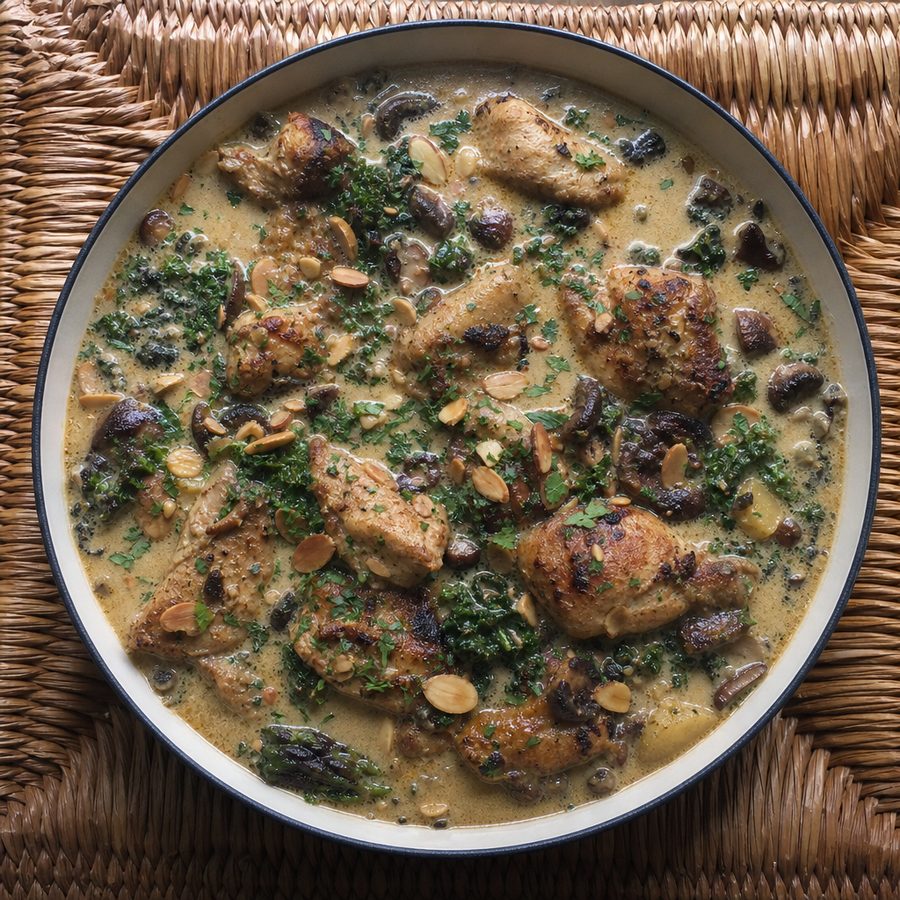
Rabbit browned hard and braised slowly with dijon, shallots, and mushrooms, with kale stirred in at the end and yogurt whisked through the sauce off the heat.
Why You'll Love This Recipe
Rabbit with mustard is an old French country dish and it has stayed in my kitchen because it is genuinely easy. The meat is fine-grained and mild, closer to the taste of a good chicken thigh than to any game, and it takes to mustard and thyme the way pork takes to apples. An hour of slow heat is all it asks. What I changed is the ending: cream is traditional, and cold Greek yogurt whisked in off the burner gives you the same pale, clinging sauce with a little tang behind it that the mustard likes. Everything happens in one pot, start to finish.
The two moves that matter both happen before the braise starts. Brown the rabbit properly, in two batches if your pot is not wide, until the pieces are genuinely golden rather than merely gray, because that color is most of the flavor in the finished sauce. Then brown the mushrooms in the same fat until they squeak and go dark, which takes longer than people expect and cannot be rushed with more heat. After that the pot mostly looks after itself, and the kale goes in near the end so it keeps some structure rather than dissolving. Both of those steps are patience rather than skill.
This is a cold-weather Sunday dish that happens to be quick enough for a Thursday, and it makes a pot that feeds four with sauce to spare. I serve it in wide shallow bowls with the greens spooned around the meat and the almonds thrown on at the last second so they stay crunchy. It reheats beautifully, which is unusual for anything with yogurt in it, as long as you keep the heat low. Leftovers pulled off the bone and folded back into the sauce make a very good lunch. It is also the dish I cook for people who are certain they do not like rabbit, because almost nobody guesses what it is.
Ingredients
- 1 rabbit, about 2 1/2 lb, cut into 6 pieces, or 2 1/2 lb rabbit hind legs and saddle
- 2 large bunches lacinato kale (about 14 oz), stems stripped out, leaves torn into wide pieces
- 10 oz cremini mushrooms, halved, quartered if large
- 2 large shallots, sliced thin
- 4 garlic cloves, sliced
- 3 tbsp dijon mustard, divided
- 1 1/2 cups chicken broth
- 1 1/2 tbsp olive oil
- 1 1/2 tbsp apple cider vinegar
- 1/2 cup plain Greek yogurt, at room temperature
- 1/4 cup sliced almonds, toasted
- 6 sprigs fresh thyme
- 1 tsp coarsely ground black pepper
- 3 tbsp chopped flat-leaf parsley
- 1/4 tsp fine sea salt
Instructions
- Season and brown the rabbit: Pat the rabbit pieces dry and season them with the salt and half the black pepper. Heat the olive oil in a wide braiser over medium-high and lay the pieces in without crowding. Leave them alone for four to five minutes a side, until they are deep golden and release from the pan on their own, since meat lets go of the metal by itself once a crust has formed and tears if you pull at it before then. Move them to a plate.
- Brown the mushrooms hard: Add the mushrooms to the same pot, cut side down, and leave them undisturbed for three minutes. They will release water, then take it back; keep going, stirring occasionally, for eight to ten minutes total, until the pan is dry again and the mushrooms are dark brown at the edges. This is the step people cut short, and it is the one that pays, because everything the mushrooms brown onto the bottom of the pot ends up dissolved in the sauce.
- Build the braise: Lower the heat to medium, add the shallots and garlic, and cook for three minutes until soft and fragrant. Stir in two tablespoons of the dijon and cook for one minute, until it smells nutty rather than raw. Pour in the vinegar and scrape the bottom of the pot clean, since that layer is the whole flavor of the braise and it will not come up once the broth dilutes it, then add the broth and the thyme sprigs.
- Braise: Return the rabbit and any juices to the pot, tuck the pieces down into the liquid, and bring it to a bare simmer. Cover and cook at the lowest bubble you can hold, either on the stove or in a 325°F oven, for forty five to fifty minutes, because a hard simmer pulls rabbit into strings long before the connective tissue has had time to give. It is done when a knife slides into the thickest part of a hind leg with no resistance and the meat begins to pull back from the bone.
- Wilt the kale, then finish off the heat: Push the rabbit to one side, add the kale in handfuls, and stir it under the liquid. Cover and cook eight to ten minutes, until the leaves are tender but still dark green. Take the pot off the burner and let it stop bubbling. Whisk the yogurt with the remaining tablespoon of dijon in a small bowl and stir a ladle of hot sauce into it before it goes anywhere near the pot, since yogurt added cold and straight to hot liquid splits into curds every time. Then pour it back in and swirl it through. Finish with the parsley, the almonds, and the rest of the pepper.
Variations
- Tarragon and lemon: Swap the thyme for a small handful of fresh tarragon added at the very end, and finish with lemon juice rather than the vinegar for a brighter, more spring version.
- Chicken thigh braise: Six bone-in, skinless chicken thighs go in exactly the same way and braise in about forty minutes, which makes this a weeknight dish.
- Cider and apple: Replace half the broth with unsweetened cider and add a firm apple cut into wedges for the last fifteen minutes.
- Mustard seed crunch: Toast a teaspoon of whole mustard seed with the shallots so the sauce carries little pops of heat against the smooth dijon.
Storage & Leftovers
It keeps four days in a sealed container in the refrigerator, and the flavor rounds out overnight in a way that makes day two arguably better than day one. Pull the meat off the bones before storing if you can spare the five minutes, since it makes reheating faster and portioning easier, and the bones can go straight into a broth pot.
Reheat gently over low heat, covered, stirring now and then until it is steaming rather than simmering. Yogurt sauces split if you boil them, and once split they do not come back together. If it does break on you, the flavor is unharmed and a brisk whisk off the heat will pull most of it back.
Freeze it before the yogurt goes in for the best result, up to three months in flat sealed portions. Thaw overnight in the refrigerator, warm it through, then whisk the yogurt and mustard in off the heat as though you had just made it. Frozen with the yogurt already in, it thaws grainy, though it still tastes right.
Notes & Tips
- Dry the meat, then leave it alone: Rabbit comes out of the package wet and wet meat steams. Paper towel first, then four full minutes on the first side without moving it. If it sticks, it is not ready to turn.
- Give the mushrooms room: Crowded mushrooms boil in their own liquid and stay pale. Use the widest pot you own, or brown them in two batches, and wait for the pan to go dry again before you call them done.
- Cook the dijon for a minute: Mustard stirred into hot fat before the liquid arrives loses its raw edge and turns nutty. Added straight to the broth it stays flat and one-note through the whole braise.
- Keep the braise at a whisper: A hard boil tightens rabbit and dries it out even under liquid. You want a bubble every second or two, which is easier to hold in a 325°F oven than on most stovetops.
- Toast the almonds separately: Three minutes in a dry skillet until they smell warm, then off the heat immediately. Thrown into the pot early they go soft, and the crunch against the greens is the point of them.
Nutrition & Mindful Eating
- The rabbit, the mushrooms, and the kale each hold up a different corner of this pot. The meat carries the protein and gives the sauce its body, the mushrooms bring the savory depth that makes it taste slow-cooked, and the kale is where nearly all of the fiber on the plate comes from.
- Rabbit is fine-grained and close-textured, which is why it stays in whole pieces through a long braise rather than shredding, and it carries B12 and iron the way other meats do without much fat behind it.
- Kale added in the last ten minutes stays dark and structured, and it brings vitamin K, vitamin C, and a real amount of fiber for something that cooks down to so little in the pot.
- Cremini mushrooms browned properly are the reason this tastes deeper than its ingredient list suggests. That browning is where the savory flavor comes from, and mushrooms are one of the few foods that carry any vitamin D at all.
- Dijon, cider vinegar, and cold yogurt are all acidic, and stacked in three places they keep an hour-long braise from tasting flat. The yogurt also brings a little calcium and protein along with the tang it gives the sauce.
- As you eat, notice how completely the meat has given way against the bite the kale kept, and let the pot sit in the middle of the table so the meal takes as long as it wants to.
Frequently Asked Questions
Where do I buy rabbit, and what if I cannot find it?
Butcher counters and farmers markets carry it more often than supermarkets, usually frozen and already cut up, and it is worth asking rather than assuming. If there is none to be had, six bone-in chicken thighs braise in the same time with the same result. Skin them first so the sauce does not go greasy.
My sauce split when I added the yogurt.
The pot was still too hot. Yogurt curdles above a simmer, so take the pot off the burner and give it a couple of minutes before anything goes in. Tempering helps as well: whisk a ladle of the hot liquid into the yogurt first, then send the loosened mixture back into the pot rather than dropping cold yogurt into hot sauce.
Does the mustard make it very sharp?
Not at the end. Two of the three tablespoons cook for the better part of an hour, which turns the sharpness into something warm and savory. The last tablespoon goes in with the yogurt precisely because it has not been cooked, and that is where the bite comes from. Leave it out if you want it gentler.
Can I use curly kale?
Yes, though it wants a couple of extra minutes and a firmer hand stripping the stems, which are tougher than lacinato stems. Chop it a little smaller. Collard greens work too and need closer to fifteen minutes, and spinach is the one green I would avoid here since it disappears into the sauce.