
Mustard Greens and Chard Skillet with Crisped Tempeh and Lemon
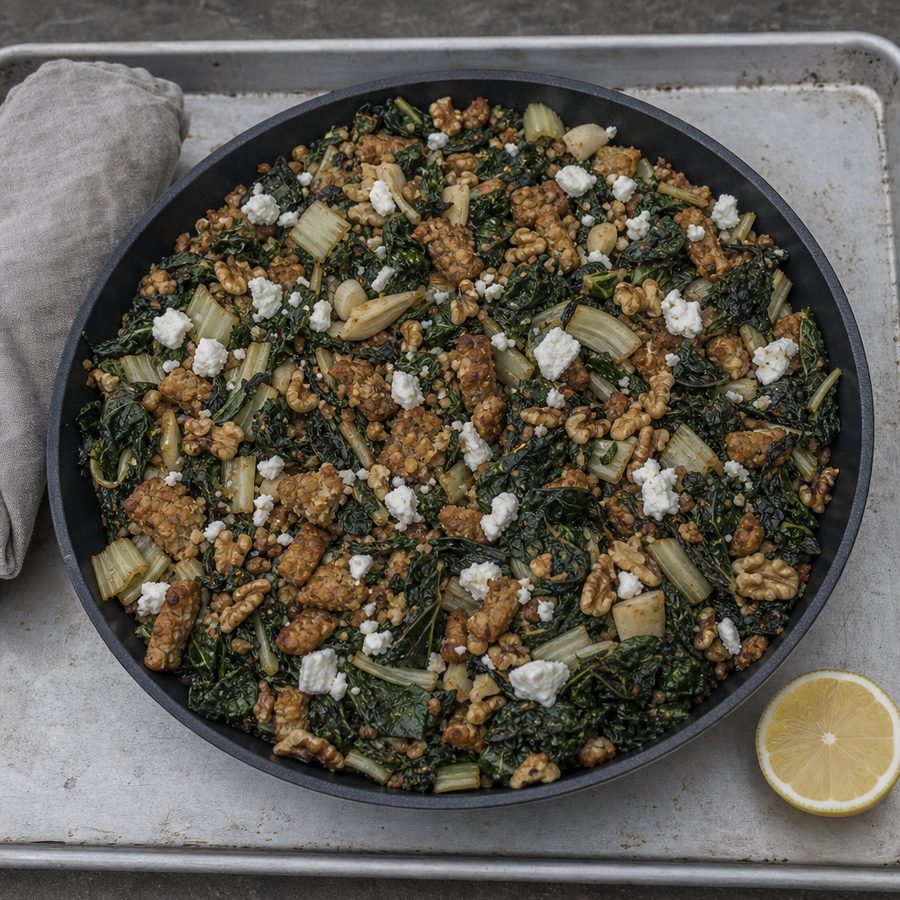
A big pan of mustard greens and chard wilted down over crumbled tempeh browned hard in garlic-infused oil, finished off the heat with lemon, toasted walnuts, and crumbled feta.
Why You'll Love This Recipe
This is the pan I make when there is nothing in the refrigerator but two bunches of greens and I still want breakfast to taste like a cook made it. It is fast, it is loud in the pan for about ten minutes, and it comes out savory and green in a way that a sweet breakfast never manages. If you have been eating oatmeal every morning and are quietly tired of it, start here. Everything happens in one skillet, the greens shrink to a quarter of the volume you started with, and the browned tempeh gives the bowl enough substance to eat like a real meal.
Tempeh needs two things to be good: hard heat and a little sweetness against it. Crumbled into rough pieces rather than cut into neat cubes, it lands in the oil with far more edges, and edges are where the crunch comes from. I leave it completely alone for a full three minutes before the first stir so a crust has time to set. Then the coconut aminos, maple syrup, and smoked paprika go in and hiss down to a glaze within seconds, which handles the faint bitterness tempeh carries and gives the pan its savory backbone. That glaze is also what the greens borrow their flavor from later.
The greens go in by weight rather than by handful, and they will look absurd in the pan for the first minute before they collapse. Mustard greens bring the pepper, chard brings the sweetness and the stems, and the stems go in ahead of the leaves so that everything finishes at the same moment. Half a cup of broth and a lid for two minutes takes the raw edge off without boiling them drab. What lands on top matters as much as what happened in the pan: lemon zest and juice, toasted walnuts, crumbled feta, and a last spoonful of garlic-infused olive oil poured over while the greens are still steaming.
Ingredients
- 1 package (14 oz) tempeh, crumbled into rough pieces
- 1 large bunch mustard greens (about 9 oz), stems sliced thin and leaves torn
- 1 large bunch swiss chard (about 9 oz), stems sliced thin and leaves torn
- 3 tbsp garlic-infused olive oil, divided
- 1/2 cup walnut pieces
- 1/2 cup crumbled feta
- 1 lemon, zest finely grated and then juiced (about 3 tbsp)
- 2 tbsp coconut aminos
- 2 tsp pure maple syrup
- 2 tsp smoked paprika
- 1/4 tsp cayenne
- 1/2 cup vegetable broth
- 1 tsp fine sea salt, divided
- 1 tsp freshly ground black pepper
Instructions
- Sort the greens into two piles: Strip the mustard green and chard leaves off their stems. Slice the stems into 1/4-inch pieces and keep them in one pile, then tear the leaves and keep them in another. The stems need about four minutes longer than the leaves do, which is the whole reason to separate them.
- Toast the walnuts: Set a large skillet over medium heat and toast the walnut pieces dry for 3 to 4 minutes, tossing often, until they smell nutty and darken a shade. Tip them onto a plate. They go back in at the very end so they stay crisp against the greens.
- Brown the tempeh hard: Add 2 tablespoons of the garlic-infused olive oil to the same pan over medium-high heat and crumble in the tempeh in rough pieces. Spread it out and leave it alone for 3 minutes, then stir and cook 4 to 5 minutes more, until most of the pieces are deep brown and crunchy at the edges.
- Glaze it: Stir the coconut aminos, maple syrup, smoked paprika, cayenne, 1/2 teaspoon of the salt, and half the black pepper into the tempeh. It will hiss and go sticky within 30 seconds and coat every piece. Push the tempeh over to one side of the pan.
- Wilt the greens: Add the stems and cook 3 minutes, until they lose their squeak. Pile in the leaves with the broth, cover, and cook 2 minutes, then uncover, stir everything together, and cook 1 to 2 minutes more, until the leaves are tender and the liquid has nearly gone. Season with the remaining salt and pepper.
- Finish off the heat: Off the heat, add the lemon zest and juice, the last tablespoon of garlic-infused olive oil, and the walnuts, and toss once. Divide between bowls and crumble the feta over the top so it softens against the hot greens.
Variations
- Melted feta: Push the greens aside and let the feta sit in the hot pan for a minute so it softens and browns in patches before you stir it through.
- More heat: Add thin rings of jalapeno with the stems, or double the cayenne if you want the warmth running all the way through.
- Seeds rather than nuts: Use pumpkin seeds or sunflower seeds in place of the walnuts for something crunchier and a little less rich.
- Over a grain: Spoon the greens over a cup of warm quinoa or brown rice per bowl to turn it into a heavier plate.
- Tahini finish: Thin 2 tablespoons of tahini with lemon juice and water and stripe it over the greens in place of the feta.
Storage & Leftovers
The skillet keeps in a sealed container in the refrigerator for 4 days and honestly tastes better on the second day, once the greens have taken on more of the glaze. Store the walnuts separately in a small jar if you want them crisp, since they go soft sitting in wet greens overnight.
Reheat a portion in a skillet over medium with a splash of broth, stirring for 3 to 4 minutes until it steams. The microwave works and takes about 90 seconds, though the tempeh softens more that way. A fresh squeeze of lemon and a little more feta brings the whole bowl back.
This one does not freeze well. Wilted greens turn watery and stringy after thawing and the tempeh loses the crunch that made it worth browning in the first place. For a head start, brown and glaze the tempeh up to 3 days ahead and cook the greens fresh, which is only five minutes of work.
Notes & Tips
- Crumble, do not cube: Torn uneven pieces of tempeh have far more surface to brown, and browning is the whole difference between good tempeh and the kind people complain about.
- Leave it alone for three minutes: A crust needs contact and time. Stirring early gives you pale steamed tempeh and no crunch at all, and no amount of extra cooking gets it back.
- Why garlic-infused olive oil works: The flavor of garlic is fat-soluble and the part that troubles a sensitive gut is not, so an infused oil carries the taste and leaves the trouble behind in the bottle. Keep a spoonful back for the end, where the smell is strongest.
- Stems first, leaves second: Chard and mustard stems are close to a vegetable in their own right. Put them in with the tempeh and add the leaves only two minutes before you plan to eat.
- Salt the greens late: Greens give up water as they cook, and salting them early pulls out even more of it. Wait until they have wilted, then taste and season.
- Zest before you juice: Zest a lemon you have already cut in half and you will regret it. Take the zest off the whole fruit first, then squeeze.
Nutrition & Mindful Eating
- Tempeh, greens, walnuts, and feta work together in this pan. The tempeh gives it body and chew, the greens bring the pepper and the color, and the walnuts and feta on top give every forkful something rich and salty to land on.
- Tempeh is whole soybeans fermented until they knit into a firm cake, which is why it holds its shape in a hot pan and comes out crunchy at the edges. It carries protein along with the manganese and the fiber that come with eating the whole bean.
- Mustard greens taste peppery and almost horseradish-sharp when they are raw, and heat turns them mellow and deeply savory. They bring vitamin K and folate into the pan, and their flavor stands up to a glaze that would flatten a softer leaf.
- Swiss chard earns its place for the stems as much as the leaves. Sliced thin and cooked first, they stay juicy and faintly sweet against the darker greens, and the leaves carry magnesium and vitamin A along with them.
- Lemon zest and juice go in off the heat, where their smell is loudest and nothing has had a chance to cook the brightness out of them, and the feta softens against the hot greens into salty pockets that pull the whole pan together.
- As you eat, notice how the pepper in the greens fades into something sweeter the longer you chew, and let the first few bites be slow ones while the pan is still steaming beside you.
Frequently Asked Questions
Can I use a different green?
Yes. Kale wants an extra 3 minutes and collard greens want closer to 8, so put those in earlier. Spinach goes the other way and needs about 45 seconds, so hold it back until the very end. Keep the total weight roughly the same and the pan behaves the same way.
My tempeh tastes bitter. What do I do?
Some bitterness is natural to tempeh and it fades with two things: real browning and a little sweetness. Give it the full three minutes undisturbed so a crust forms, and do not skip the maple syrup in the glaze. Steaming the crumbles in the broth for 5 minutes before they go in the oil softens it further.
Can I use a meat in place of the tempeh?
Ground chicken or ground turkey browns and glazes the same way and wants about 6 minutes to cook through to 165°F (74°C). Crumbled bacon is very good with mustard greens too, in which case cut the salt back to 1/2 teaspoon, since the bacon carries plenty of its own.
Does this fit a low-FODMAP breakfast?
It does. Tempeh is one of the few soy foods that sits comfortably at this serving size, because fermentation works through most of what makes other soy foods hard on a sensitive gut. Mustard greens and chard are both gentle, and the savory depth comes from garlic-infused olive oil, smoked paprika, and coconut aminos rather than garlic and onion.