
Neapolitan Turkey Polpette in Tomato with Cannellini and Chard
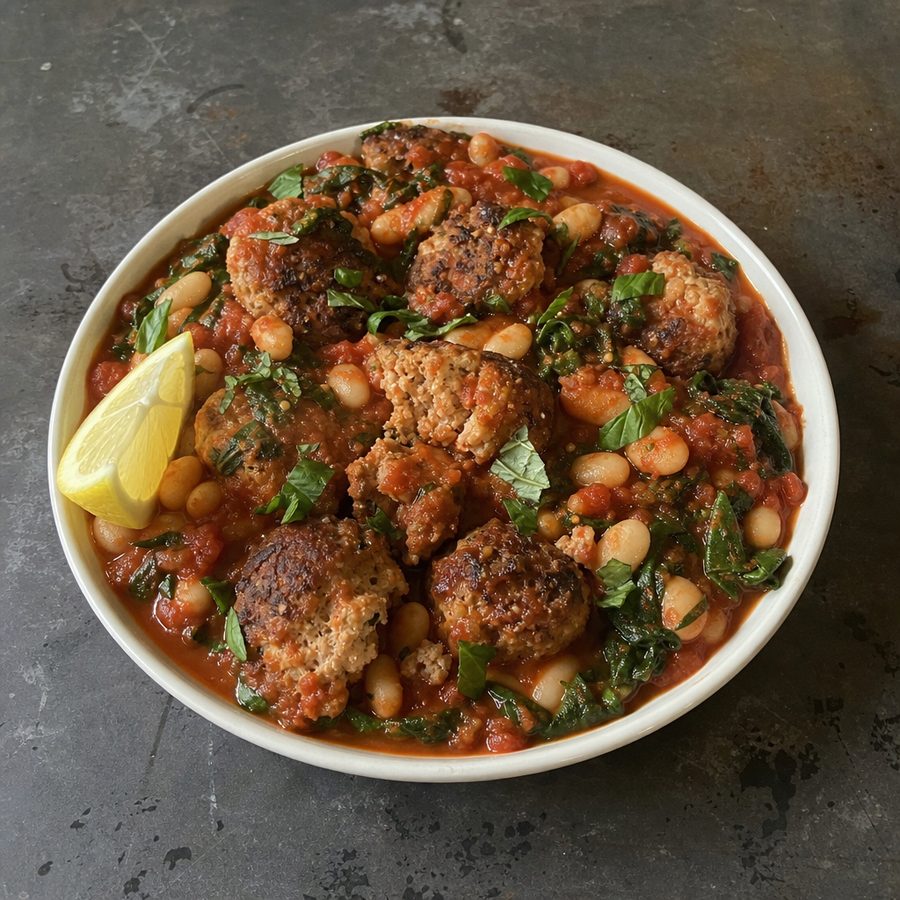
Soft turkey meatballs bound with almond flour and Parmesan, browned and then simmered through in a garlicky crushed tomato sauce with cannellini beans and wide ribbons of Swiss chard, finished with torn basil and lemon.
Why You'll Love This Recipe
I make these on the weeknights when I want something that feels like a Sunday. Neapolitan polpette are softer and smaller than the meatball most people picture, and the reason is grated onion, which melts into the meat and keeps it from tightening as it cooks. Turkey needs that help more than beef does. I brown them just long enough to build a crust, then let them finish in the sauce, which is how the tomato ends up tasting like more than tomato. Nothing about this is fussy. The whole thing happens in one wide skillet and lands on the table in under an hour.
The plate eats in three textures. The polpette are tender all the way through and give up juice into the sauce when you break one open. The cannellini go creamy where they sit against the heat and hold their shape everywhere else. The chard is the piece people do not expect: stems diced small go in early and stay a little firm, leaves go in at the end and collapse into dark ribbons that catch the sauce. A squeeze of lemon at the table sharpens the whole skillet, and the basil, torn rather than chopped, smells like the middle of summer.
This belongs on a Tuesday or a Wednesday, in the stretch of the week when everybody is tired of the same three dinners. It reheats better than almost anything else I cook, which makes it a good thing to put on the stove when you want tomorrow's lunch handled at the same time. I serve it in shallow bowls, straight from the pan, with the lemon wedges and a little more Parmesan for anybody who wants it. A few leaves of bitter salad on the side is all it needs beside it. In the winter I use twice the black pepper and let the sauce simmer five minutes longer, which pulls it darker and thicker.
Ingredients
- 1 lb ground turkey
- 1 1/2 cups canned crushed tomatoes
- 1 large bunch Swiss chard (about 14 oz), stems diced small and leaves sliced into wide ribbons
- 1 1/4 cups canned cannellini beans, drained and rinsed
- 1 small yellow onion, grated on the large holes of a box grater
- 5 garlic cloves, 2 minced fine and 3 sliced thin
- 1/3 cup almond flour
- 1 large egg
- 1/4 cup finely grated Parmesan
- 2 tbsp extra virgin olive oil
- 1/2 cup torn fresh basil leaves
- 1/4 cup chopped fresh flat-leaf parsley
- 1 tsp dried oregano
- 1 1/2 tbsp fresh lemon juice, plus wedges for the table
- 1/2 tsp coarsely ground black pepper
- scant 1/4 tsp fine sea salt
Instructions
- Mix the meatballs: Grate the onion on the large holes of a box grater straight into a bowl, juice and all, then add the ground turkey, egg, almond flour, Parmesan, the 2 minced garlic cloves, the parsley, the oregano, the black pepper, and the salt. Mix with your hands until it just comes together and no further. Overworked meat goes springy and tight. The mixture will feel wetter and looser than a beef meatball mix, which is correct.
- Roll and rest: Wet your hands with cold water and roll the mixture into 16 balls about the size of a golf ball, setting them on a plate as you go. Rewet your hands whenever the meat starts sticking. Let them sit while the pan heats so they firm up slightly, which makes them easier to turn.
- Brown them: Heat the olive oil in a 12-inch skillet over medium-high until it shimmers. Add the polpette in a single layer with space between them and leave them alone for three minutes, until the underside releases from the pan and is deep golden. Turn them once, brown two minutes more, then move them to a plate. They will still be pink inside and that is what you want.
- Build the sauce: Lower the heat to medium and add the sliced garlic and the diced chard stems to the pan, scraping up the browned bits with a wooden spoon. Cook for two minutes, until the garlic is fragrant and just turning gold at the edges. Pour in the crushed tomatoes, add the cannellini beans, and bring it to a slow bubble.
- Finish the polpette in the sauce: Return the meatballs and any juices to the pan, spoon sauce over them, and simmer uncovered for 12 to 14 minutes, turning them once halfway. The sauce should thicken enough to hold a line when you drag a spoon through it, and an instant-read thermometer in the center of a meatball should read 165°F.
- Wilt the chard and finish: Pile the chard leaves over the top, cover the pan for two minutes so they steam down, then fold them through the sauce. Take the pan off the burner, add the lemon juice and the torn basil, and stir once. Serve in shallow bowls with lemon wedges.
Variations
- Kale in place of chard: Swap in a bunch of kale, stripped from its stems and torn small. It needs four or five minutes under the lid rather than two, so add it a little earlier.
- Hotter: Add half a teaspoon of cayenne to the sauce with the garlic for the Calabrian version, which is how I make it when the weather turns.
- Chickpeas: Use canned chickpeas in place of the cannellini for a firmer bean that stays distinct in the sauce.
- Ground chicken: Ground chicken behaves almost identically here and makes a slightly milder meatball. Keep everything else the same.
- Fennel and lemon zest: Add a teaspoon of crushed coriander seed and a wide strip of lemon zest to the sauce for a brighter, more perfumed pan.
Storage & Leftovers
This keeps four days in a sealed container in the refrigerator and gets better on the second day, once the polpette have had a night to sit in the sauce. Store the meatballs submerged rather than piled on top, so they stay moist and take on more of the tomato.
Reheat gently in a covered pan over medium-low with a splash of water, seven or eight minutes, turning the meatballs once. High heat tightens turkey and squeezes the juice out of it. The microwave works if you cover the bowl and stop halfway to stir the sauce around.
It freezes for up to three months. Freeze the polpette and sauce together in flat containers and leave the chard out if you are planning ahead, since greens go slack after thawing. Thaw overnight in the refrigerator, reheat in a pan, and wilt fresh chard into it at the end.
Notes & Tips
- Grate the onion, do not chop it: Grated onion disappears into the meat and releases its juice as the polpette cook. Chopped onion stays as chunks that break the meatball apart when you turn it.
- Wet hands, light touch: Cold water on your palms stops the mixture from sticking, and a light hand keeps the texture soft. Pack them tight and they turn rubbery no matter how carefully you cook them.
- Leave space in the pan: Sixteen meatballs need a 12-inch skillet. Crowded, they steam instead of browning, and the crust is what holds them together in the sauce.
- Separate the chard stems from the leaves: The stems take about ten minutes and the leaves take two. Cook them together and one of them is wrong.
- Lemon goes in off the heat: Acid added to a simmering tomato sauce flattens out. Off the burner, it stays bright and lifts everything above it.
- Save a little sauce for reheating: The polpette drink up sauce overnight. A few extra spoonfuls in the container mean day two is as good as day one.
Nutrition & Mindful Eating
- The turkey, the beans, and the greens each carry part of this plate. The meatballs bring the protein and most of the substance, the cannellini add a soft starch that thickens the sauce as they sit in it, and the chard folds in enough fiber and volume to make a skillet of meatballs eat like a full dinner.
- Ground turkey is a fine-grained meat that takes on whatever you season it with, and it is dense in protein without much saturated fat behind it, which is part of why these polpette can be finished in a sauce rather than fried hard.
- Swiss chard has two useful parts. The stems are crisp and faintly sweet and hold their bite, and the dark leaves cook down to almost nothing while carrying vitamin K, magnesium, and a good amount of potassium into the sauce.
- Cannellini beans are the quiet workhorse here. They collapse just enough at the edges to give the sauce body, and their soluble fiber is the kind that makes a meal sit steady rather than sharp.
- Grated onion, sliced garlic, dried oregano, and basil torn in at the last second are what make this taste Neapolitan. The oregano goes into the meat where it has time to bloom, and the basil goes in off the heat so it stays green and perfumed.
- As you eat, break a meatball open with the side of your fork and notice how much sauce it has taken in, and let the second half of the bowl go slower than the first.
Frequently Asked Questions
My meatballs fell apart in the sauce. What happened?
Almost always they went in before the crust had formed. Give them the full three minutes on the first side and do not move them until they release from the pan on their own. The other cause is a mixture that never got its rest, so let the rolled balls sit for a few minutes while the skillet heats.
Can I bake them instead of browning them in the pan?
Yes. Roast them on a parchment-lined sheet at 425°F for 12 minutes, then slide them into the simmering sauce for the last eight. You lose a little of the crust you get from the skillet, but you gain a free pan and it is easier if you are doubling the batch.
What can I use in place of the almond flour?
Any binder that absorbs moisture will do the job. A quarter cup of rolled oats pulsed to a coarse meal works well, as does an equal amount of ground flaxseed. What you are after is something that holds the juice inside the meatball rather than letting it run into the pan.
Is there a way to make this without the Parmesan?
There is. Use two teaspoons of nutritional yeast and an extra pinch of salt in the meat mixture, and the polpette will still taste savory and hold together the same way. The sauce carries plenty of flavor on its own once the meatballs have finished in it.