
Ostrich Skewers with Charred Radicchio
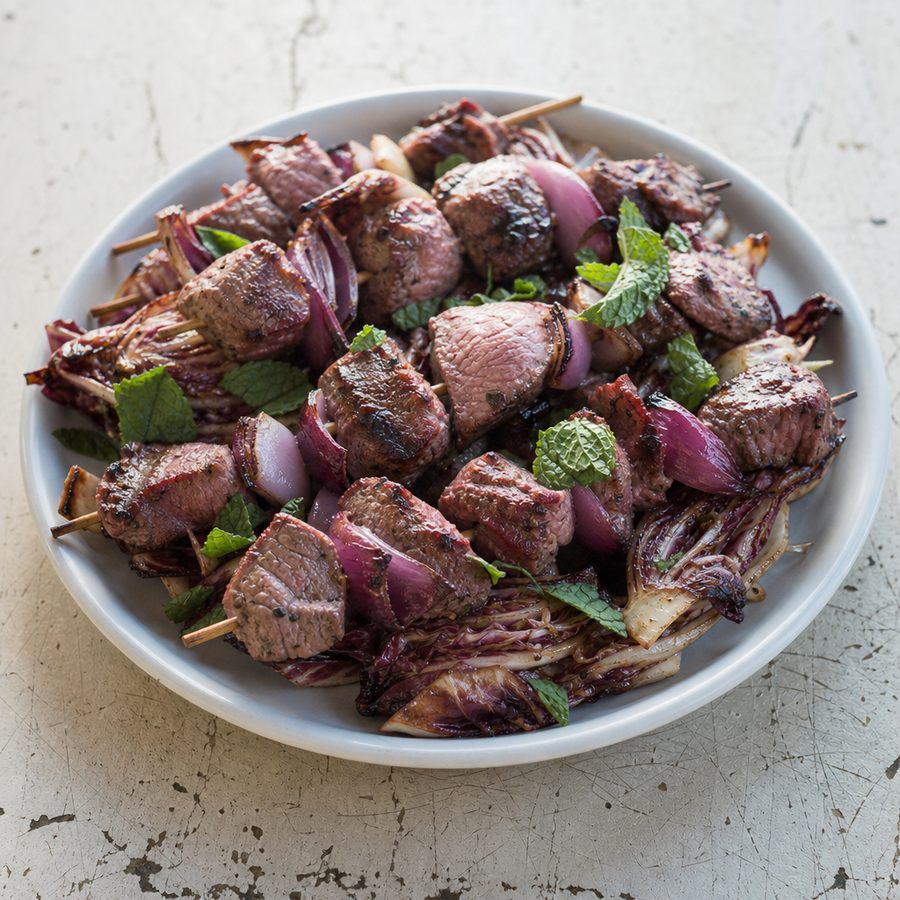
Cubes of ostrich marinated in garlic, rosemary, and balsamic, grilled fast so the middles stay pink, served over radicchio wedges charred until the bitterness turns sweet.
Why You'll Love This Recipe
The first time I cooked ostrich I treated it like chicken and ruined it, which is the mistake almost everyone makes. It looks like beef, it tastes closer to a very good sirloin than to any bird, and it has so little fat running through it that the margin between pink and gray is about ninety seconds wide. Cut into cubes and threaded onto skewers, that stops being a problem, because small pieces over a hot grill are done before they have a chance to dry. This is what I make in late summer when I want something off the grill that is not another steak, and it is on the table twenty minutes after the marinade comes off.
The marinade is garlic, rosemary, olive oil, and balsamic, and half an hour is genuinely enough. The vinegar is there for flavor rather than tenderizing, so a longer soak only turns the outside of the meat gray and slightly mealy. Meanwhile the radicchio does something people rarely expect. Raw, it is aggressively bitter. Brushed with oil and laid cut side down on a hot grate until the outer leaves blacken, it goes soft, smoky, and almost sweet, and the little bit of honey whisked into the remaining balsamic finishes that turn. Char the wedges before the skewers go on so the grill is at its hottest for them.
Together it eats like a proper dinner without sitting heavily on you afterward, which is why it works in the heat. The ostrich is dense and close-grained and gives you a real amount of protein per skewer, the radicchio brings a bitter edge that keeps you interested, and the mint torn over at the end pulls the whole plate somewhere fresher. Pull the meat off the grill at 130°F (54°C) and let it rest on the skewer for five minutes, and do not skip that rest. Anything with this little fat needs those minutes to redistribute its juices, and it is the difference between tender and chewy.
Ingredients
- 1 1/2 lb ostrich fillet, cut into 1 1/4-inch cubes
- 2 large heads radicchio (about 1 1/4 lb), each cut into 6 wedges
- 1 large red onion, cut into 1-inch squares
- 4 tbsp olive oil, divided
- 3 tbsp balsamic vinegar, divided
- 4 cloves garlic, minced
- 1 tbsp chopped fresh rosemary
- 2 tsp honey
- 1/4 cup torn fresh mint leaves
- 1 1/2 tsp fine sea salt, divided
Instructions
- Marinate the ostrich: Whisk 2 tablespoons of the olive oil with 2 tablespoons of the balsamic, the garlic, the rosemary, and 1 teaspoon of the salt in a bowl. Add the ostrich cubes, turn them until every face is coated, and leave them at room temperature for 30 minutes. Do not go past an hour.
- Prepare the radicchio and dressing: Cut each head of radicchio through the core into 6 wedges so the leaves stay attached. Brush the cut faces with 1 tablespoon of the oil and season with the remaining salt. Whisk the last tablespoon of oil with the remaining balsamic and the honey to make the dressing.
- Heat the grill and thread the skewers: Heat a grill or a stovetop grill pan to high, until you cannot hold a hand above it for more than two seconds. Thread the ostrich onto 8 skewers, alternating with the onion squares and leaving a little space between pieces so the heat can get all the way around.
- Char the radicchio: Lay the wedges cut side down on the hottest part of the grate and cook for 2 to 3 minutes a side, until the outer leaves are blackened and the cores have softened slightly. Move them to a platter and spoon half the balsamic dressing over while they are still hot.
- Grill the skewers: Grill the skewers for 5 to 7 minutes total, turning every 90 seconds, until the outsides are well browned and the center of a cube reads 130°F (54°C) for medium-rare. Ostrich past 140°F (60°C) goes dry and stays dry, so pull them early and check with a thermometer.
- Rest and serve: Rest the skewers on the platter of radicchio for 5 minutes. Spoon over the rest of the dressing, tear the mint across the top, and serve, letting the meat juices run into the charred leaves.
Variations
- Endive rather than radicchio: Halve four endive heads and grill them the same way for a milder, sweeter bitterness.
- Orange and mint: Add the juice of half an orange to the dressing for a sweeter finish against the char.
- Venison skewers: Swap in venison loin cut the same size, cooked to the same 130°F (54°C).
- Herb switch: Trade the rosemary for thyme and a handful of chopped basil stirred into the dressing at the end.
- Mushrooms on the skewer: Thread whole cremini mushrooms between the cubes so they catch the marinade and char alongside the meat.
Storage & Leftovers
Sliced off the skewers, the meat keeps in a sealed container in the refrigerator for up to 3 days. Store it with the radicchio and any dressing left on the platter, since the juices keep the meat from tightening as it chills.
I would eat the leftovers cold rather than reheating them. Ostrich this low in fat goes gray and firm the second time it meets heat, and cold pink slices over the charred radicchio make a good lunch with an extra spoonful of balsamic and olive oil.
Raw ostrich freezes well for up to 4 months, so buy it when you find it. Thaw it overnight in the refrigerator and marinate straight from cold. Cooked, it does not freeze happily, and grilled radicchio turns to water on thawing, so make only what you will eat within a few days.
Notes & Tips
- Cut the cubes evenly: Uneven pieces mean some are gray while others are raw. Aim for 1 1/4 inches on every side and trim the tapered ends off the fillet for another use.
- Soak wooden skewers: Twenty minutes in water keeps them from burning through over a hot grate. Metal skewers save the step entirely.
- Get the grill properly hot: A moderate grill cooks ostrich through before it browns, which costs you both the crust and the pink middle.
- Use a thermometer: This is not a cut to judge by eye or by feel. The window between 130°F (54°C) and 145°F (63°C) is where the whole dish is won or lost.
- Char the radicchio first: It wants the fiercest heat, and it holds warmth well on the platter while the skewers cook.
- Rest on the platter: Resting the skewers over the radicchio means the juices that run out end up in the leaves rather than on the board.
Nutrition & Mindful Eating
- The ostrich, the charred radicchio, and the balsamic are built to push against each other. The meat is dense and savory, the leaves bring bitterness and smoke, and the sweet acid in the dressing sits between the two so neither one takes over the plate.
- Ostrich is a genuinely red meat with a fine grain and a mild, faintly sweet flavor, and it carries iron in the form your body absorbs most readily, along with the B12 that comes with any red meat.
- Radicchio gets its deep color from the same pigments that make it bitter, and charring it over high heat softens both. There is real fiber in those thick leaves, which is part of why a plate of grilled vegetables like this eats so substantially.
- Olive oil does double duty as the marinade and the dressing, carrying the garlic and rosemary into the meat while bringing its own monounsaturated fat and the polyphenols behind its peppery finish.
- Mint torn over at the last moment is there for the cool green note it gives against the smoke, and it goes on off the heat because the oils that carry that freshness disappear the moment they hit a hot pan.
- As you eat, notice the way the smoke from the radicchio meets the sweetness of the balsamic, and take the meat off the skewer one piece at a time so the meal lasts longer than the six minutes it took to grill.
Frequently Asked Questions
Where do I buy ostrich, and what do I use if I cannot find it?
Specialty butchers, farmers markets, and a number of online game suppliers carry it frozen in fillets. If it is not available, beef sirloin or venison cut the same size behaves almost identically on a skewer, at the same temperature and roughly the same time.
Mine came out tough. What did I do wrong?
Almost certainly overcooking. There is very little fat inside ostrich to keep it forgiving, so at 150°F (65°C) it is already firm and dry. Take the skewers off at 130°F (54°C), rest them for five minutes, and cut across the grain when you slice any of it for leftovers.
Can I make this without a grill?
Yes. A cast iron grill pan over high heat does both jobs, in batches, with the window open. You can also broil the skewers 4 inches from the element for 4 to 6 minutes, turning once, and char the radicchio underneath the broiler first.
Does this work on an AIP elimination phase?
It does. Ostrich, radicchio, onion, garlic, rosemary, olive oil, and honey are all fine, and there are no nightshades, seeds, or peppercorns in the marinade. Check your balsamic vinegar for added sulfites or caramel color if you are being strict about labels.