
Oven-Baked Wild Rice with Chicken Thighs, Carrot, and Thyme
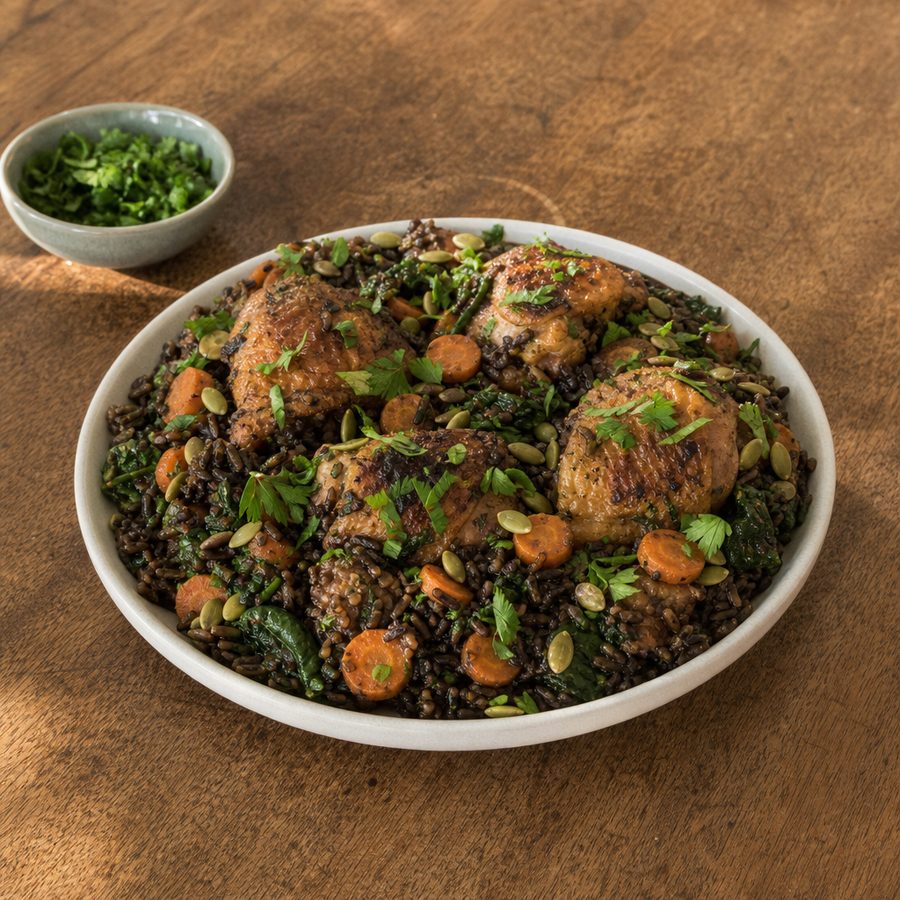
Cooked wild rice toasted dry until it smells roasted, then baked in broth with carrots under seared chicken thighs so the grain drinks the drippings while the skin crisps.
Why You'll Love This Recipe
Hot and savory, and mostly happening in the oven while I do other things, is the shape of this one. Wild rice is the reason it works. It stays chewy and separate no matter what you put it through, so a dish built on it never turns soft the way a rice bake can, and it will sit under chicken for half an hour and only improve. Cooked wild rice out of the refrigerator goes into a dry skillet first, where it toasts and starts to smell like popcorn, then into a baking dish with broth and carrot coins. The thighs go on top, and the rest is the oven's problem.
Two rounds of dry heat are what make this taste like more than its parts. Toasting the cooked grain drives off surface moisture and brings up a roasted, almost smoky note that broth by itself will never give you. Searing the thighs skin down in a hot skillet renders the fat and sets the crust before they ever see the oven, so they come out crisp on top rather than pale and slack. That rendered fat drips down into the grain while everything bakes, which is the real seasoning in the dish and the reason the thyme tastes like it is coming from everywhere at once.
By the time it comes out, the rice has drunk nearly all of the broth and the carrots have gone sweet and tender at the edges. Spinach gets stirred through while the dish is still hot, so it collapses in about a minute and brings green without bringing water. Toasted pumpkin seeds and a hard squeeze of lemon go on at the very end, and those two are what wake the whole thing up. I serve it straight from the dish with a thigh on each plate, and it reheats better than most oven dishes because the grain was never soft to begin with.
Ingredients
- 3 cups cooked wild rice
- 1 1/2 lb boneless, skin-on chicken thighs (4 thighs)
- 2 cups chicken broth
- 3 medium carrots, cut into thin coins
- 4 cups baby spinach
- 2 tbsp fresh thyme leaves, divided
- 2 tbsp butter, cut into small pieces
- 2 tbsp garlic-infused olive oil
- 1/3 cup raw pumpkin seeds
- 2 tbsp fresh lemon juice
- 1/4 cup chopped flat-leaf parsley
- 1 1/2 tsp fine sea salt, divided
- 1 tsp freshly ground black pepper
Instructions
- Heat the oven and season the chicken: Heat the oven to 400°F (200°C). Pat the chicken thighs completely dry on both sides, which is what lets the skin crisp, and season them with 3/4 teaspoon of the salt, the black pepper, and 1 tablespoon of the thyme. Leave them skin side up on the counter while you toast the rice.
- Toast the wild rice dry: Put the cooked wild rice in a large dry skillet over medium-high heat and cook for 4 to 5 minutes, stirring often, until the grains look dry and separate, a few of them crackle, and the pan smells roasted and nutty. Tip the rice into a 9x13-inch baking dish.
- Render the skin: Return the skillet to medium-high heat and lay the thighs in skin side down. Cook 7 to 8 minutes without moving them, until the skin is deep brown and releases on its own. Move them to a plate skin side up. They are nowhere near cooked through yet and are not supposed to be.
- Build the dish: Stir the carrot coins, broth, garlic-infused olive oil, the remaining thyme, and the remaining salt into the rice, then dot the butter over the surface and spread everything into an even layer. Lay the thighs on top, skin side up, so the skin sits above the liquid and stays out of it.
- Bake it: Bake uncovered for 30 to 35 minutes, until the thighs read 175°F (80°C) at the thickest part, the skin is crisp and burnished, and the grain has taken up almost all of the broth. Wild rice will not go mushy in this time, so judge it by the liquid and the chicken rather than by the grain.
- Wilt the spinach and finish: Move the thighs to a board. Stir the spinach into the hot grain in two handfuls and let it collapse for a minute, then rest the dish covered for 5 minutes. Toast the pumpkin seeds in a dry pan for 2 minutes until they pop, put the thighs back on top, and finish with lemon juice, parsley, and the seeds.
Variations
- Turkey thighs: Swap in 1 1/2 lb of boneless turkey thigh, sear it the same way, and add 10 minutes to the bake.
- Squash in the dish: Add 2 cups of diced delicata or acorn squash with the carrots for something sweeter and softer against the chewy grain.
- Mixed grain: Use half wild rice and half cooked brown rice for a softer, more absorbent base that soaks up more of the drippings.
- Walnuts and sage: Trade the pumpkin seeds for toasted walnuts and use chopped sage in place of half the thyme for a deeper, more autumnal dish.
- Brighter finish: Stir 1 cup of halved cherry tomatoes into the grain for the last 10 minutes of baking so they burst into the broth.
Storage & Leftovers
Cooled and sealed, this keeps in the refrigerator for 4 days, and it is one of the few grain dishes I would happily eat on day four. Store the chicken on top of the grain rather than buried in it, and expect the skin to soften overnight, which a hot oven fixes and a microwave does not.
Reheat a portion in a 375°F (190°C) oven for 12 to 15 minutes with a splash of broth over the grain and the thigh sitting skin up and uncovered, so the skin re-crisps while the rice steams underneath. In a skillet, warm the grain in a little butter over medium heat and lay the sliced chicken on top for the last minute.
Freeze it in single portions for up to 2 months, with the grain and chicken together and the fresh parsley and pumpkin seeds left off. Thaw overnight in the refrigerator before reheating. Wild rice comes through freezing better than any other grain I use, because there is very little soft starch in it to break down.
Notes & Tips
- Dry skin, hot pan: Wet skin steams and stays rubbery. Pat the thighs dry with paper towels and let them sit uncovered while the rice toasts, then lay them into a genuinely hot skillet and leave them alone.
- Toast the grain dry, not in fat: Oil in the pan at this stage fries the rice rather than toasting it. A dry pan drives off moisture and gives you that popcorn smell, and the fat goes in afterward in the baking dish.
- Keep the skin above the liquid: Set the thighs on top of the grain, never pressed down into it. Anything that touches the broth goes soft, and the crisp skin is half the reason to make this.
- Why garlic-infused olive oil works: The flavor of garlic dissolves into fat while the part that upsets a sensitive gut does not, so the oil carries the taste and leaves the trouble behind in the bottle. It goes into the grain, where it has broth and drippings to spread through.
- Spinach goes in off the heat: Four cups looks absurd and collapses to almost nothing. Stir it into the hot grain after the dish leaves the oven so it wilts from residual heat and keeps its color.
- Lemon at the very end: Acid added before baking cooks flat. Squeezed over at the table, the same two tablespoons cut through the rendered fat and make the whole dish taste lighter than it is.
Nutrition & Mindful Eating
- Wild rice, chicken thighs, and carrots share the work here. The grain gives the dish its chew and its backbone, the thighs give it richness and the fat that seasons everything below them, and the carrots turn sweet in the broth and keep it from being one long savory note.
- Wild rice is the seed of an aquatic grass, dark and narrow and chewy to the end, and it carries more protein than most grains along with fiber, manganese, and zinc. Toasting it dry brings out a roasted flavor that the broth then carries through the whole dish.
- Chicken thigh is the more forgiving cut, close-grained and darker than breast meat, which is why it stays juicy through a long bake. It brings protein, iron, and zinc, and the skin left on is what crisps above the grain.
- Carrots cut into thin coins go sweet and tender in the broth rather than staying crunchy, and that deep orange is beta-carotene, the form of vitamin A that plants carry. Spinach stirred in at the end adds folate and keeps its color because it never really cooks.
- Toasted pumpkin seeds and a squeeze of lemon land at the very end, where the crunch and the sharpness cut through the rendered fat, and between the thighs and the grain a plate this size holds you a long way into the day.
- As you eat, catch the roasted smell coming off the grain and the sound the skin makes under the knife, and let the first few bites be slow ones before the rest of the day gets loud.
Frequently Asked Questions
Can I use boneless skinless thighs or chicken breast?
You can, though you give up the crisp skin and the rendered fat that seasons the grain. Skinless thighs want the same timing with an extra tablespoon of oil in the dish. Chicken breast dries out at 35 minutes, so sear it, add it for only the last 15, and pull it at 165°F (74°C).
Do I have to toast the rice first?
No, but it is four minutes for the biggest flavor change in the recipe. Untoasted wild rice tastes green and grassy next to the same grain browned in a dry pan. If you skip it, add an extra tablespoon of butter and a little more thyme to make up the difference.
Can I make this ahead for the week?
Yes, and it is worth cooking the full dish on a weekend. Bake it through, cool it, and refrigerate for up to 4 days, holding back the lemon, parsley, and pumpkin seeds. Add those fresh after reheating, when the lemon still smells sharp and the seeds are still crunchy.
Does this fit a low-FODMAP breakfast?
It does. Wild rice, carrots, and spinach at these amounts sit well within the range most people tolerate, and chicken carries no FODMAPs at all. The savory depth here comes from browned skin, toasted grain, thyme, and garlic-infused olive oil rather than onion or garlic, so nothing gets stripped out of the recipe.