
Oven-Braised Beef Brisket with Sweet Peppers and Paprika
Brisket seared and braised for three covered hours in a paprika and tomato sauce, with red peppers and carrots added late so they keep their shape and sweetness.
Why You'll Love This Recipe
I make this when I want one pot to do the whole dinner and I want the house to smell of paprika by four in the afternoon. Brisket is a cut most people only think about in summer, over smoke, and it is just as good braised in a covered pot in the middle of winter. Three hours at 300°F (150°C) and a piece that would fight you off a hot grill turns into something you can cut with the side of a spoon. It is a cheap cut, it feeds four with sauce left over, and almost every minute of the cooking happens without you.
The paprika is the part to get right, and it is where this dish is usually lost. Paprika burns fast and turns bitter and dusty when it does, so it never goes into a hot pan on the heat. Pull the pot off the burner, stir both paprikas and the coriander into the fat left behind by the meat, and let the residual warmth bloom them for half a minute. The color that comes out of that half minute is the color of the finished sauce. Tomato paste goes in next and gets fried until it darkens, which is where the savory backbone comes from now that there is no onion in the pot doing that job.
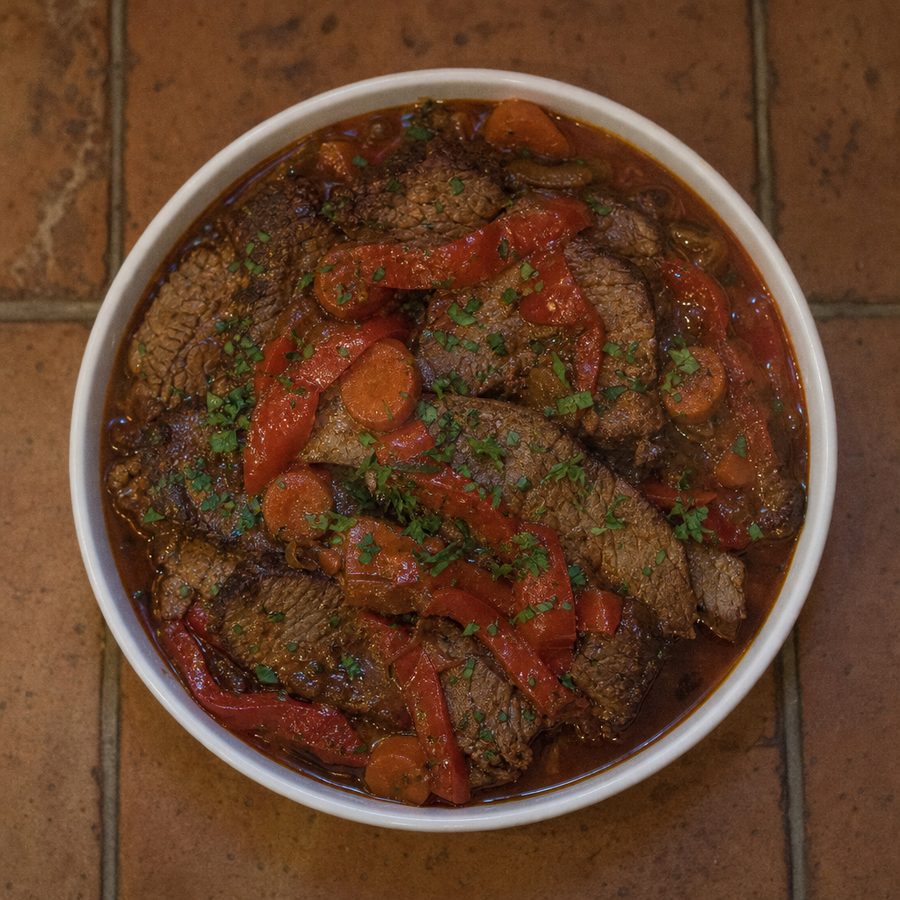
Nothing here depends on onion or garlic, and a paprika braise usually depends on both, so it is worth saying what replaced them. A hard sear on a dry piece of meat, browned tomato paste, and garlic-infused olive oil, which works because the flavor compounds in garlic dissolve into fat while the FODMAPs do not. The peppers and carrots go in for the last forty-five minutes only, so they stay in recognizable pieces and stay sweet. Slice the brisket across the grain, spoon the sauce and peppers over the slices, and you have a dinner that looks like it came from somewhere rather than from a plan.
Ingredients
- 2 1/2 lb beef brisket, flat cut, fat trimmed to about 1/4 inch
- 2 tbsp garlic-infused olive oil
- 2 tbsp sweet paprika
- 2 tsp smoked paprika
- 1 1/2 tsp ground coriander
- 2 tbsp tomato paste
- 1 1/2 cups crushed tomatoes
- 2 cups beef broth
- 3 large red bell peppers, cut into wide strips
- 3 medium carrots, cut into 1-inch pieces
- 2 tbsp apple cider vinegar, divided
- 2 bay leaves
- 2 tsp fine sea salt, divided
- 1 1/2 tsp freshly ground black pepper
- 1/4 cup chopped fresh parsley
Instructions
- Season and sear the brisket: Pat the brisket completely dry and season both sides with 1 1/2 teaspoons of the salt and all the black pepper, since a wet surface steams in the pot and will not take on any color at all. Heat the garlic-infused olive oil in a Dutch oven over medium-high until it shimmers, then sear the meat fat side down for 6 minutes and the other side for 4, until both faces are deep brown. Move it to a plate and heat the oven to 300°F (150°C).
- Bloom the paprika off the heat: Take the pot off the burner and let it cool for a minute. Stir the sweet paprika, the smoked paprika, and the coriander into the fat left behind and keep stirring for 30 seconds, until the fat turns brick red and the kitchen smells sweet. This step is off the heat on purpose, because paprika scorches in seconds and goes bitter when it does.
- Brown the tomato paste: Return the pot to medium heat, add the tomato paste, and cook it for 1 to 2 minutes, stirring constantly, until it darkens from bright red to brick and starts to stick. Pour in the crushed tomatoes, the broth, and 1 tablespoon of the cider vinegar, and scrape the bottom of the pot clean, because everything stuck down there came off the meat and it belongs in the sauce.
- Braise it covered: Add the bay leaves and settle the brisket back in fat side up, spooning sauce over the top. The liquid should come about two thirds of the way up the meat, since a brisket fully submerged boils rather than braises and the exposed top is what browns. Bring it to a bare simmer, cover, and put it in the oven for 3 hours, until a fork slides in and twists with no resistance.
- Add the peppers and carrots: At the 2 hour and 15 minute mark, lift the lid and tuck the pepper strips and carrot pieces into the sauce around the meat, because vegetables put in at the start would have collapsed into the sauce long before the brisket was ready. Cover and return it to the oven for the last 45 minutes, until the carrots are tender and the peppers are soft but still in strips.
- Rest, slice, and finish: Move the brisket to a board and let it sit for 20 minutes, since a hot brisket shreds under the knife where a rested one holds together in slices. If the sauce looks thin, simmer it uncovered on the stove for 5 to 10 minutes while the meat rests. Stir in the last tablespoon of vinegar and the remaining 1/2 teaspoon of salt to taste. Slice the brisket across the grain about 1/3 inch thick, spoon the sauce and vegetables over the slices, and scatter the parsley on top.
Variations
- With heat: Add 1/2 teaspoon of cayenne or a sliced jalapeno with the paprika for a sauce that warms rather than just glows red.
- Root vegetables: Add 1 lb of parsnip or rutabaga chunks along with the carrots for a pot that eats closer to a full stew.
- Greens stirred through: Wilt a few handfuls of swiss chard or spinach into the hot sauce while the meat rests, for color against all the red.
- Sweeter finish: Stir a tablespoon of maple syrup into the sauce at the end if your tomatoes are sharp and the pot needs rounding out.
- Slow cooker: Sear and bloom the spices in a skillet first, then cook on low for 8 hours, adding the peppers and carrots for the last hour.
Storage & Leftovers
Refrigerated in a sealed container with the sauce covering the slices, this keeps for 4 days and is better on the second day than the first. Slice it before you store it, since a whole piece dries at the cut face, and make sure every slice is under sauce rather than sitting proud of it.
Reheat covered in a 325°F (163°C) oven for about 20 minutes, or gently on the stove over medium-low with a splash of broth. Brisket that is reheated hard tightens and goes stringy, and a microwave on full power will do that in well under a minute, so keep the heat low and the lid on.
It freezes for up to 3 months and is one of the best braises to have in the freezer. Freeze the slices submerged in sauce in portion-sized containers, thaw overnight in the refrigerator, and reheat covered. The peppers soften further on thawing, which is no loss here.
Notes & Tips
- Dry the meat, then sear it hard: A wet surface steams and stays gray. Blot the brisket with paper towels and give each side its full time without moving it.
- Paprika goes in off the heat: This is the whole difference between a sweet red sauce and a bitter brown one. Take the pot off the burner, count to thirty while you stir, then get the liquid in.
- Why garlic-infused oil earns its place: Garlic flavor is fat-soluble and the FODMAPs in garlic are not, so the oil brings the aroma and leaves behind the part that causes trouble. In a dish that would normally start with onion and garlic, it is doing real work.
- Slice across the grain: Look at which way the fibers run on the rested meat and cut at a right angle to them. Cut the wrong way and even a perfectly braised brisket eats stringy.
- Peppers late, not early: Three hours turns bell pepper to threads. Forty-five minutes leaves you strips that are soft, sweet, and still recognizable on the plate.
- How it keeps and comes back: It holds 4 days with every slice under sauce, and reheats covered at 325°F (163°C) in about 20 minutes. Cooking it a day ahead makes it easier to slice and better to eat.
- For the rest of the household: Anyone at the table who is not managing their gut can have this over buttered noodles or with sour cream stirred into their own bowl. Keep both off the pot itself so the leftovers stay usable for everyone.
Nutrition & Mindful Eating
- The beef, the tomato, and the peppers make this whole between them. The meat gives the pot its body and its richness, the tomato gives it the acidity that keeps three hours of braising from tasting flat, and the peppers arrive late with sweetness and color.
- Brisket is a hard-working cut, dense and coarse-grained, and the connective tissue running through it melts into gelatin over three covered hours, which is where the glossy sauce comes from. The meat carries iron in the form your body takes up most readily.
- Red bell peppers go in for the last stretch only, so they turn silky at the edges and keep their shape. They are one of the better sources of vitamin C there is, sweeter than a green pepper because they were left on the plant longer.
- Sweet paprika, smoked paprika, and coriander bloom in warm fat before any liquid touches them, and that half minute is where the color and most of the aroma of the finished sauce are made.
- Cider vinegar goes in twice, once at the start and once off the heat at the end, and the second spoonful is the one you taste. Beef this rich holds you well into the evening, with the protein doing most of that work.
- As you eat, notice the paprika arriving before the smoke does and how the peppers have gone sweet against the meat, and give the plate the attention that three hours in the oven earned.
Frequently Asked Questions
Can I use a different cut?
Beef chuck cut into large chunks is the closest swap and needs about 30 minutes less. Short ribs are excellent and want the same time. Anything quick-cooking like sirloin will be tough at the end of three hours rather than tender, since there is no connective tissue in it to melt.
My sauce tastes bitter and a little dusty. What went wrong?
The paprika caught. It burns in a hot pan faster than almost any other spice, and once it does there is no rescuing the pot. Pull the pan off the burner, wait a minute so the fat is warm rather than hot, and stir the paprika in there, then get the liquid in quickly.
Can I make it a day ahead?
Yes, and it is better that way. Cook it through, cool it, and refrigerate the meat whole in its sauce overnight. The next day, lift off the firm fat from the top, slice the cold brisket cleanly across the grain, and reheat the slices in the sauce covered at 325°F (163°C) for 25 minutes.
Does this fit a low-FODMAP dinner?
It does. The depth here comes from a hard sear, browned tomato paste, two kinds of paprika, and vinegar rather than from onion or garlic, so nothing important vanishes when a plan strips those out. Red pepper, carrot, and canned tomato all sit comfortably at these portions, and garlic-infused olive oil carries the aroma.