
Pan-Seared Trout with Roasted Radishes, Asparagus, and Dill-Mustard Skyr
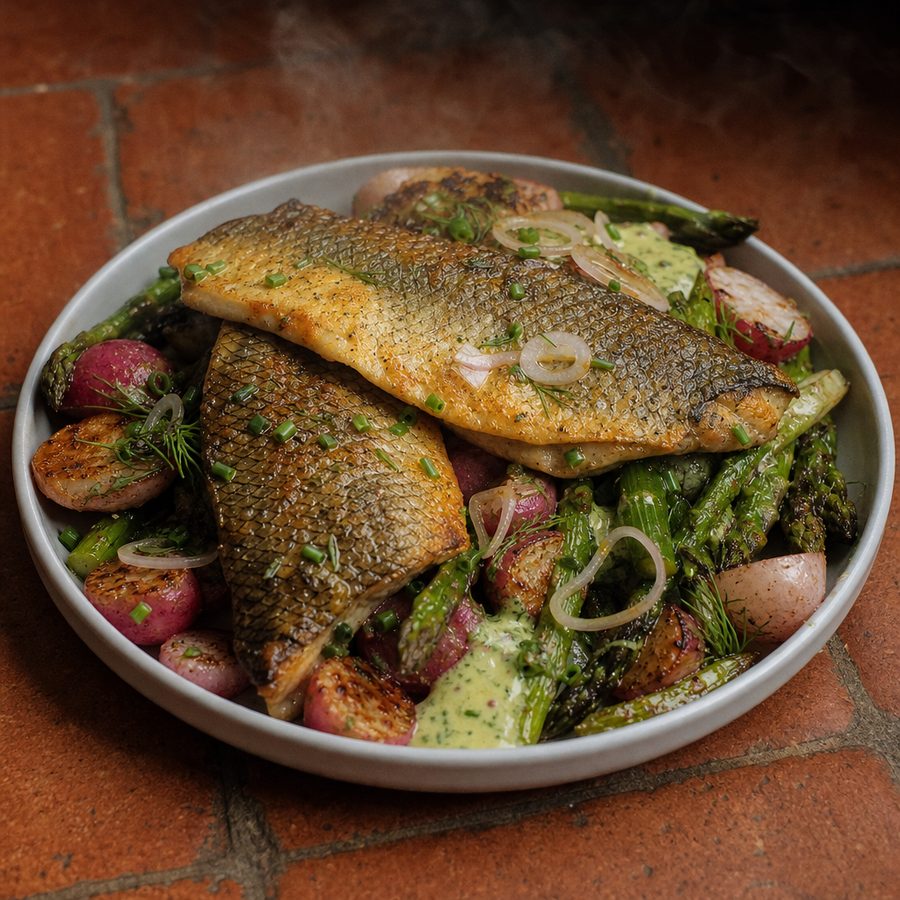
Crisp-skinned trout seared in a hot skillet, served over radishes and asparagus roasted until sweet, with a cool dill and mustard skyr sauce and lemony shallots.
Why You'll Love This Recipe
This is the dinner I make in late spring, when radishes come home from the market in bunches bigger than anyone could slice into a salad. Roasted, they become a different vegetable. The heat takes the peppery bite down to a gentle warmth, the cut sides go pink and golden, and the insides turn juicy, almost like a baby turnip. Paired with trout and dill, it is a plate that would look at home on a Scandinavian table, and it all comes together in under half an hour, which is why it shows up on a weeknight here more often than it should.
The method is two things happening at once. The radishes and asparagus roast hot in the oven, where they have room to brown, while the trout sears skin side down in a skillet on the stove. Trout fillets are thin, so the fish cooks almost entirely from the skin side, and that is the secret to the crackle. Lay it in a properly hot pan, press it flat for the first few seconds so it does not curl, and then leave it alone. If you fuss with it, the skin tears and stays soft, and the skin is the best part.
The sauce is what pulls the plate together. Thick skyr stirred with dijon, a whole handful of dill, and a little lemon is cool, tangy, and sharp, and it slumps into the warm fish the moment it lands. The shallots sit in lemon juice while everything cooks, so they turn pink and lose their harshness but keep their crunch. Every forkful has something crisp, something tender, and something cool in it, and a fillet of trout this rich with a pile of roasted vegetables beside it eats like a full, satisfying dinner.
Ingredients
- 1 1/4 lb skin-on trout fillets (4 fillets), pin bones removed
- 12 oz radishes (about 2 bunches), trimmed and halved, larger ones quartered
- 1 lb asparagus, woody ends snapped off, cut into 2-inch lengths
- 2 tbsp extra-virgin olive oil, divided
- 1 medium shallot, sliced into thin rings
- 3 tbsp lemon juice, from about 1 1/2 lemons, divided
- 1/2 cup plain whole-milk skyr
- 1 tbsp dijon mustard
- 1/2 cup fresh dill, finely chopped, thin stems included
- 2 tbsp snipped chives
- 3/4 tsp fine sea salt, divided
- 1/2 tsp freshly ground black pepper
Instructions
- Heat the oven and pickle the shallot: Set a rack in the upper third of the oven and heat it to 450°F. Put the shallot rings in a small bowl with 1 tbsp of the lemon juice and a pinch of the salt, and toss with your fingers. Ten minutes in the acid softens their bite and turns them a faint pink, which is how you know they are ready.
- Roast the radishes and asparagus: Toss the radishes and asparagus on a rimmed sheet pan with 1 1/2 tbsp of the olive oil and 1/4 tsp of the salt, then turn the radishes cut side down so they brown where they touch the metal. Roast for 14 to 16 minutes, giving the asparagus a shake halfway, until the radish cut sides are golden and the asparagus tips have crisped. A fork should slide into a radish with just a little resistance.
- Stir the sauce: While the vegetables roast, stir the skyr, dijon, chopped dill, 1 tbsp of the lemon juice, and half the black pepper together until smooth. Taste it; it should be bright and mustardy. If it is too thick to spoon, loosen it with a teaspoon of cold water. Keep it in the refrigerator so it stays cold against the hot fish.
- Dry and season the trout: Pat the fillets completely dry on both sides with paper towels, pressing hard on the skin. Any water left on the skin turns to steam in the pan and keeps it from crisping. Season the flesh side with the remaining salt and black pepper, and sprinkle a little salt right on the skin as well.
- Sear the trout skin side down: Heat the remaining 1/2 tbsp olive oil in a large skillet over medium-high heat until it shimmers. Lay the fillets in skin side down, working in two batches if they crowd, and press each one flat with a spatula for the first ten seconds so the skin cannot curl. Cook undisturbed for 3 to 4 minutes, until the flesh has turned opaque about three quarters of the way up and the skin releases easily from the pan. Flip and cook 30 to 60 seconds more, just until the thickest part reads 145°F or flakes at the press of a fork.
- Plate and finish: Divide the roasted radishes and asparagus among four plates, lay the trout over them skin side up so the crackle stays dry, and spoon the dill sauce alongside. Scatter the pickled shallot and chives over the top and drizzle the last tablespoon of lemon juice over the vegetables right before serving.
Variations
- Add a handful of peas: Toss a cup of fresh or thawed green peas onto the sheet pan for the last three minutes for little sweet pops against the radishes.
- Horseradish sauce: Stir a teaspoon of freshly grated horseradish into the skyr for a sharper, more Nordic finish that suits the trout.
- Swap the asparagus: In late summer, use green beans trimmed to the same length; they roast in the same time and blister nicely at the ends.
- Fennel and radish: Replace half the asparagus with a thinly sliced fennel bulb, which roasts sweet and soft and loves the dill.
- Smoked paprika skin: Dust the trout skin with a pinch of smoked paprika before searing for a deeper color and a gentle warmth.
Storage & Leftovers
The trout and roasted vegetables keep two days in a sealed container in the refrigerator, with the sauce in its own jar. The skin will go soft overnight and there is no bringing it back, so plan on eating leftovers cold. Flaked trout folded into the dill skyr makes a very good next-day lunch over the radishes.
This is not a dish to freeze. Trout is delicate, and after thawing the flesh turns watery and mushy, the roasted radishes go spongy, and the skyr sauce separates into a grainy puddle. Cook only as much fish as you plan to eat within a couple of days and keep any extra fillets raw and wrapped in the freezer.
If you want leftovers warm, reheat the vegetables in a hot dry skillet for two or three minutes to bring back some of their browning, then lay the trout over them just long enough to take the chill off. Hotter than that and the fish dries out. The sauce stays cold and goes on at the table.
Notes & Tips
- Dry the skin like you mean it: Press the fillets between paper towels and leave them skin side up on a dry towel for a few minutes; dry skin is crisp skin.
- Cut side down on the pan: Radishes only brown where they touch hot metal, so turning every half cut side down is what gives you those golden, sweet surfaces.
- Press for ten seconds: Trout skin tightens the instant it hits the pan and the fillet bows; a gentle press with a spatula keeps the whole skin in contact.
- Cook mostly on one side: Thin trout cooks almost through from the skin side, so the flip is only a short finish and the flesh stays moist.
- Serve skin side up: Laying the fish skin down onto vegetables or sauce traps steam underneath and softens all the crackle you just worked for.
- Use the dill stems: The thin upper stems are tender and full of flavor; chop them right into the sauce with the fronds.
Nutrition & Mindful Eating
- Trout, roasted vegetables, and a cool cultured sauce each bring something different to the plate. The fish carries the richness and most of the protein, the radishes and asparagus bring sweetness and crunch, and the skyr sauce ties it together with tang and creaminess.
- Trout is a mild, delicate fish with a buttery texture and skin that crisps beautifully in a hot pan. It brings omega-3 fats and vitamin D along with a generous amount of protein, which is why one fillet makes such a satisfying dinner.
- Radishes change completely in the oven. Their peppery snap mellows into sweetness, their cut sides go golden, and their centers turn juicy and tender, while the asparagus beside them brings folate and fiber in tips that crisp at the edges.
- Skyr is a thick, tangy cultured dairy that holds its shape like a dip, and stirred with dijon and a handful of dill it becomes a cool, sharp sauce. It adds protein and a creaminess that melts into the warm fish.
- Lemon, dill, and pickled shallot are what keep this plate bright. The acid cuts through the rich fish, the dill brings a fresh grassy note, and the shallots add little bursts of sharpness and crunch in every bite.
- As you eat, listen for the crackle of the trout skin and notice how the cool dill sauce softens into the warm fish, letting each bite slow you down until you feel comfortably satisfied.
Frequently Asked Questions
Can I use salmon or arctic char?
Yes. Arctic char is the closest swap and cooks in the same time. Salmon fillets are thicker, so give them 5 to 6 minutes skin side down and an extra minute or two after flipping, until they reach 145°F.
Why did my trout skin stick to the pan?
Usually the pan was not hot enough, the skin was still damp, or the fish was moved too early. Skin releases on its own once it has crisped, so if it resists the spatula, give it another 30 seconds and try again rather than forcing it.
Can I make any of this ahead?
The dill sauce keeps three days in the refrigerator and actually tastes better the next day once the dill has settled in. You can trim the radishes and asparagus in the morning and keep them in a damp towel. Sear the trout right before eating, since the crisp skin does not hold.
Does this fit a weight loss or anti-inflammatory way of eating?
It fits both well. It is built on fish, roasted vegetables, olive oil, and a cultured dairy sauce, with no grains or starchy sides, and the trout and skyr together make it a satisfying plate. Your own dietitian can tell you how it fits your specific needs.