
Papaya and Lime Breakfast Bowl with Coconut Cream and Tilapia
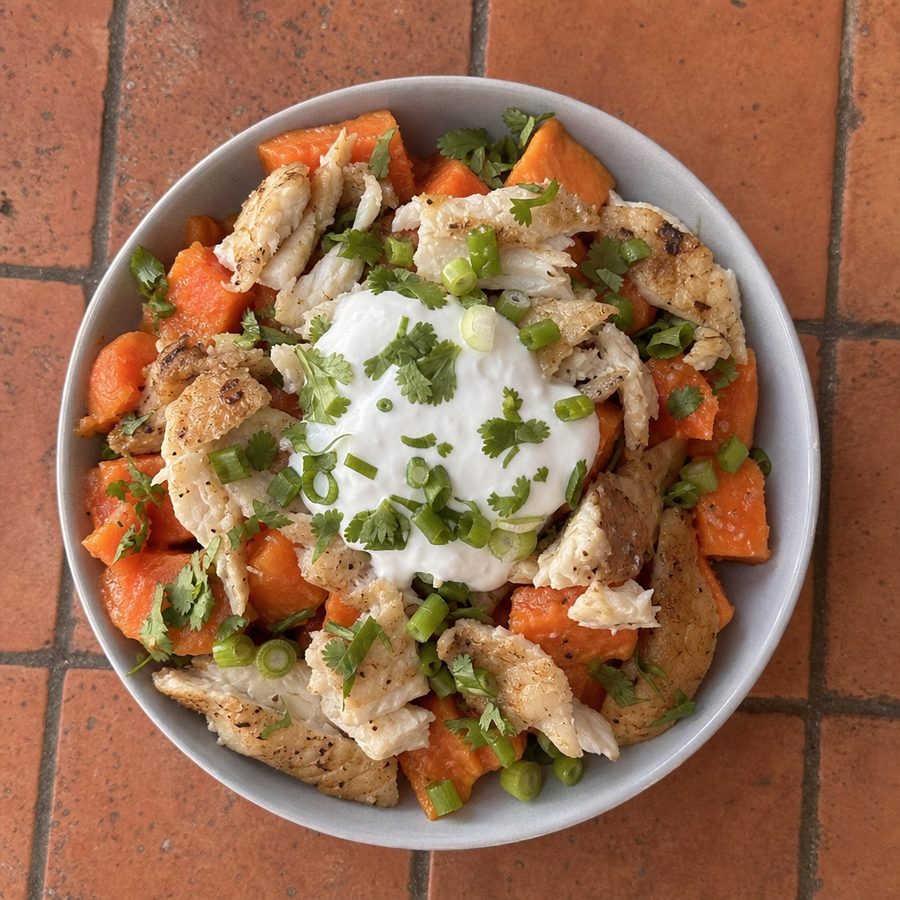
Cubes of ripe papaya tossed with lime and ginger under warm flakes of seared tilapia, finished with cold coconut cream, scallion, and cilantro.
Why You'll Love This Recipe
A fruit bowl is where most people land at breakfast during an elimination phase, and it is also where most people are hungry again by ten. This is the same idea with something substantial sitting in it. Tilapia cooks in four minutes from raw, papaya needs nothing but a knife, and the coconut cream requires only that you remember to put the can in the fridge the night before. I make it in summer, when a hot skillet at seven in the morning is unbearable and one pan for four minutes is about the limit of what I will agree to.
The pleasure here is in the three temperatures. Papaya goes into the bowl cool from the fridge, tossed with lime, zest, and grated ginger so it tastes savory rather than merely sweet. The fish arrives hot, seared hard in coconut oil for two to three minutes on the first side until the edges turn opaque and it lets go of the pan by itself. Then the coconut cream goes on cold and thick, straight off the top of the chilled can, and it melts slowly into the warm fish instead of running to the bottom of the bowl the way a thin dressing would.
Ripe papaya is milder and more floral than most tropical fruit, so it needs the lime, the ginger, and more salt than people expect before it has any real definition. Once those are in, the bowl tastes like something you would be handed at a beach kitchen at nine in the morning. What keeps it from being a snack is the fish, which brings a serious amount of protein for how delicately it eats, so this stays light on the stomach and still holds you well past midday. It is the rare cold-leaning breakfast that carries you all the way through to a proper lunch.
Ingredients
- 4 tilapia fillets (about 1 1/3 lb total)
- 1 small ripe papaya (about 1 lb), peeled, seeded, and cut into 3/4-inch cubes
- 1 can (13.5 oz) full-fat coconut milk, chilled overnight
- Juice of 2 limes (about 3 tbsp), plus the zest of 1
- 3 scallions, thinly sliced on the diagonal
- 1 tbsp finely grated fresh ginger
- 1/3 cup cilantro leaves
- 1 tbsp coconut oil
- 3/4 tsp fine sea salt, divided
Instructions
- Chill and open the coconut milk: Put the can of coconut milk in the fridge the night before, or in the freezer for 20 minutes if you forgot. Open it without shaking, and scoop the thick white cream off the top into a small bowl. Keep the thin liquid underneath for a smoothie or a curry another day.
- Dress the papaya: Peel the papaya, halve it, scrape out the black seeds with a spoon, and cut the flesh into three-quarter-inch cubes. Toss the cubes with the lime juice and zest, the grated ginger, and a quarter teaspoon of the salt, then put the bowl back in the fridge while you cook.
- Sear the tilapia: Pat the fillets thoroughly dry and season them with the remaining salt. Heat the coconut oil in a skillet over medium-high until it shimmers, lay the fish in presentation side down, and cook for two to three minutes without moving it, until the edges have turned opaque and the fillet releases from the pan on its own.
- Turn and finish the fish: Flip the fillets and cook for another minute or two, until the thickest part is opaque through and flakes under gentle pressure, around 145°F. Take the pan off the heat straight away, since tilapia is thin and goes from tender to chalky in well under a minute.
- Build the bowls: Divide the cold papaya and its juices between four bowls. Break the warm fish into large flakes over the top, spoon the coconut cream across it, and scatter the scallions and cilantro. Serve immediately, while the cream is still cold against the fish.
Variations
- Mango and basil: Swap the papaya for cubed mango and the cilantro for torn basil, which makes the bowl sweeter and more perfumed.
- Charred fruit: Sear the papaya cubes in the hot pan for 60 seconds after the fish comes out, so the edges caramelize and the bowl eats warm all the way through.
- No-cook morning: Use cooked crab meat or cold cooked shrimp rather than searing the fish, folded through the fruit straight from the fridge.
- Cucumber and mint: Add half a sliced cucumber and a handful of torn mint for a cooler, crunchier bowl that suits a hot morning.
- Warm coconut sauce: Melt the coconut cream in the fish pan for 30 seconds with a little lime, scraping up what the fish left behind, when you want the whole bowl hot.
Storage & Leftovers
Keep the parts separate rather than the finished bowl. Cut papaya lasts two days in a sealed container, the coconut cream keeps for four in a covered jar, and cooked tilapia is best within a day. Built that way, breakfast is a two minute assembly job on the second morning.
A dressed bowl does not hold. Salt and lime pull water out of the papaya within a few hours, so the fruit softens and the juices thin out the coconut cream. It still tastes good, but the texture contrast is the whole reason to make this, and it is the first thing to go.
Do not freeze it. Papaya collapses to liquid on thawing and tilapia comes back watery and stringy. If you want a head start, buy the fillets frozen, thaw them overnight in the fridge on a plate, and dry them well before they go in the pan.
Notes & Tips
- Buy the papaya days ahead: Supermarket papaya is almost always sold hard and green. Three or four days on the counter until it yields at the stem end is what makes this bowl worth eating.
- Put the can in the fridge tonight: Room temperature coconut milk will not separate, and there is no shortcut worth the name. Keep a can in the back of the fridge permanently and you will always be ready for this.
- Dry the fish properly: Wet fillets steam and stick, then tear when you try to turn them. A real turn with paper towel is the difference between a clean sear and a broken fillet.
- Leave the fish alone: Tilapia releases itself from the pan when the crust has formed. If it grips when you nudge it, give it another 30 seconds rather than forcing the spatula under.
- Salt the fruit: Papaya without salt tastes flat and one-note. A pinch tossed through with the lime changes it completely, which is worth knowing for any ripe fruit.
- Flake, do not chop: Break the fillets along their natural lines with two forks. Large flakes keep their moisture, where chopped fish dries out on the way to the table.
Nutrition & Mindful Eating
- Sweet fruit, hot fish, and cold coconut cream give every spoonful of this bowl three things at once. The tilapia carries the protein, the coconut brings the fat that slows the whole thing down, and the papaya brings sweetness with fiber and water attached.
- Tilapia is mild, quick-cooking, and breaks into big soft flakes, and it carries a good deal of protein along with selenium and vitamin B12. That protein is what turns a bowl of fruit into a breakfast that holds.
- Papaya brings beta-carotene and vitamin C along with its color, and it carries papain, an enzyme that breaks down protein and is the reason the fruit has been used for centuries to tenderize meat and, in some traditions, to settle a heavy stomach.
- The thick cream that rises to the top of a chilled can of coconut milk is mostly fat, and that fat does real work here: it carries the lime and ginger through the bowl and helps your body take up the fat-soluble vitamins the papaya has brought with it.
- Grated ginger, lime zest, scallion, and cilantro all land raw. That is a lot of aromatic flavor for a bowl with four minutes of cooking in it, and it is why the last bite tastes as sharp as the first.
- As you eat, notice the cold cream giving way against the warm fish, and let that small contrast keep you at the table long enough to feel the bowl land.
Frequently Asked Questions
How do I know when the papaya is ripe?
It should give under gentle thumb pressure at the stem end, much like a ripe avocado, and the skin should be mostly yellow or orange rather than green. Underripe papaya tastes of very little and stays hard in the bowl, so buy it several days ahead and leave it on the counter.
Can I use another fish?
Yes. Cod, haddock, and halibut all flake the same way, though the thicker fillets want an extra minute a side. Snapper and mahi mahi suit the tropical flavors even better if you can get them. Cook any of them to the point where the flakes just separate and no further.
My coconut milk did not separate. What went wrong?
Either it was not cold enough or the can carries emulsifiers that hold it together. Give it a full night in the coldest part of the fridge, and look for a brand whose ingredient list is coconut and water. If it still refuses, stir the whole can smooth and spoon it on as a thinner sauce.
Does this fit an AIP elimination phase?
It does. Fish, papaya, coconut, lime, ginger, scallion, and cilantro are all allowed in the elimination phase. The one thing to check is the coconut milk, since some cans carry gums, sulfites, or added sugar. Coconut and water on the label is what you want.