
Parmesan-Crusted Halibut with Brown Butter
Thick halibut fillets baked under a lid of grated parmesan bound with egg yolk, blistered brown in a hot oven, and finished with butter cooked to the color of hazelnuts.
Why You'll Love This Recipe
Halibut is a firm, close-grained fish with big flakes and a sweet, mild flavor, and the whole trick with it is knowing when to stop. The flakes are wide and they set fast, so the window between perfectly done and dry is a narrow one. A cheese crust is my favorite way to widen that window. The parmesan sets into a solid lid within a few minutes in the oven, and everything under it steams gently in its own moisture while the top browns. I make this on a weeknight when I want something that feels like a restaurant plate and takes twenty minutes.
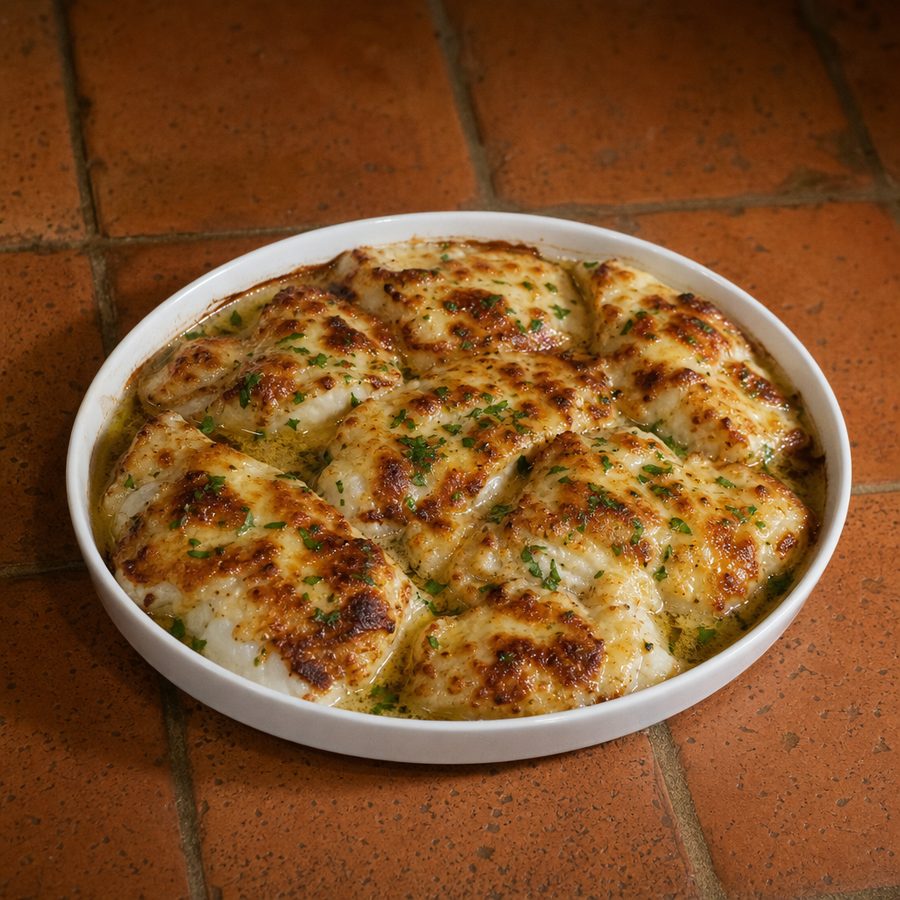
The crust is two ingredients. Finely grated parmesan, which has enough fat and protein in it to melt and then crisp, and one egg yolk to bind it into a paste you can spread. Pressed onto a dry fillet, it grips as it heats rather than sliding off, and by the time the fish is done the surface has gone from pale paste to a blistered, freckled brown that cracks when your fork goes in. It tastes deeply savory, almost nutty, and it seasons the fish from above so very little salt is needed anywhere else.
Brown butter is the finish that makes it. You cook butter past melting until the milk solids fall to the bottom and toast to a light coffee color, and the smell changes completely, from dairy to something closer to toasted nuts. Poured foaming over the crusted fillets it soaks into the cracks in the crust and pools around the fish. This is a plate that tastes rich and mild at the same time, and it is quick enough that I have made it after coming home late more times than I can count.
Ingredients
- 4 skinless halibut fillets, about 6 oz each and 1 1/4 inches thick
- 1/2 cup finely grated parmesan (about 1 3/4 oz)
- 1 large egg yolk
- 4 tbsp butter
- 1/4 tsp fine sea salt
Instructions
- Dry the fish and heat the oven: Heat the oven to 425°F with a rack in the upper third. Pat the halibut fillets thoroughly dry on every surface, including the sides, and let them sit out for ten minutes to take the refrigerator chill off. Season them all over with the salt. A wet fillet will steam under the crust and push it loose, so this minute with paper towel is not optional.
- Mix the parmesan paste: Stir the grated parmesan and the egg yolk together in a small bowl until they come together into a thick, sandy paste that holds its shape on the spoon. If your parmesan was grated coarsely it will look crumbly, which is fine. Press it together with the back of the spoon and it will cohere.
- Crust the fillets: Set the fillets in a shallow baking dish with an inch of space between them. Divide the paste over the tops and press it down firmly with your fingers into an even layer that reaches the edges. Firm pressure now is what keeps the crust in one piece later. Leave the sides bare so heat can get into the fish.
- Bake until the crust blisters: Bake for twelve to fifteen minutes, depending on thickness. The crust should be deep golden with darker freckles and slightly puffed, and the fish should read 130°F to 135°F (54 to 57°C) at the thickest point, which is medium. The FDA figure for seafood is 145°F (63°C) if you would rather cook it through. If the crust is still pale when the fish is done, run it under the broiler for sixty seconds, watching the whole time.
- Brown the butter: While the fish bakes, melt the butter in a small light-colored skillet over medium heat. It will foam, quiet down, and then the specks on the bottom will turn from white to tan to a light coffee color, about four minutes in all. Swirl the pan constantly through the last minute and pull it off the heat the moment it smells nutty, since it goes from brown to burnt quickly.
- Rest briefly and serve: Let the fillets sit in the dish for three minutes so the flakes settle and stop giving up moisture. Lift each one with a wide spatula, supporting the crust, and spoon the brown butter over and around them, making sure the toasted specks from the bottom of the pan land on every plate.
Variations
- Cod loin: Use thick center-cut cod loin, dried well, and check it at ten minutes since it cooks faster than halibut.
- A stretchier crust: Replace a third of the parmesan with finely grated mozzarella for a crust that pulls slightly when you cut it.
- Trout fillets: Crust skin-on trout fillets and bake them for eight minutes, letting the skin crisp against the hot dish underneath.
- Crab on top: Fold a few ounces of picked crab meat into the parmesan paste for a richer, sweeter lid over the fish.
- Darker butter: Take the butter a shade further, to the color of dark honey, for a bitter-edged finish that stands up to the cheese.
Storage & Leftovers
Cooked halibut keeps two days in a sealed container in the refrigerator, and the crust softens overnight into something closer to a savory cheese topping. That is a different pleasure rather than a worse one, but do not expect the crackle to survive a night in the cold.
Reheat it gently or not at all. A 300°F oven for eight minutes brings it back without squeezing the fish, and a quick pass under the broiler at the end will re-crisp the cheese. The microwave overcooks halibut faster than almost any other fish, and the texture goes cottony.
Brown butter keeps for two weeks in a jar in the refrigerator and sets solid. Warm a spoonful in a small pan whenever you need it. I would not freeze the cooked fish, since halibut flakes have a lot of water in them and thawing leaves them loose and dry.
Notes & Tips
- Grate the parmesan yourself: Pre-grated cheese is coated to keep it loose, and that coating stops it melting into a sheet. A microplane and a wedge take two minutes and give you a crust that fuses.
- Buy thick fillets: Ask for center-cut pieces at least an inch and a quarter thick. Tail-end fillets taper, so one end overcooks while the crust on the thick end is still pale.
- Use a light-colored pan for the butter: You are judging by color, and in a black skillet you cannot see the milk solids turn until they have already gone past brown.
- Pull the fish at 130°F: It climbs several degrees while it rests. Fish taken out at the point where it looks perfect in the dish is already overcooked by the time it reaches the table.
- Go light with the salt: Aged parmesan is salty on its own and the crust sits directly on the fish. A quarter teaspoon across four fillets is plenty.
- Lift with a wide spatula: A narrow turner cracks the crust down the middle. Slide something broad all the way under each fillet and move it in one motion.
Nutrition & Mindful Eating
- The halibut, the cheese, and the butter each carry a different part of this plate. The fish gives you big sweet flakes and most of the protein, the parmesan gives the savory edge and the crackle, and the browned butter ties the two together with something warm and toasted.
- Halibut is a firm, close-grained fish that holds together in wide flakes, and it brings a good deal of protein along with selenium and vitamin B12 in a piece that eats far more delicately than its size suggests.
- Parmesan is aged long enough that the flavor concentrates into something sharp and almost savory-sweet, and because it is a hard cheese made from a lot of milk it also carries calcium and protein of its own into the crust.
- Browning butter changes it completely. The water cooks off and the milk solids toast, and what was mild and creamy turns nutty and faintly caramel, which is why four tablespoons flavor a whole dish of fish.
- Egg yolk is the only thing holding the crust together, and it earns its place twice over, binding the cheese into a paste you can spread and adding the fat that helps the surface brown rather than dry out.
- As you eat, break through the crust and notice how the flakes underneath fall apart in sheets, let the toasted butter smell reach you before the first bite, and eat this one slowly enough to taste both parts separately.
Frequently Asked Questions
Can I use a different fish?
Any thick white fillet takes this well. Cod loin, haddock, and thick pollock all work, though they hold more water than halibut so give them an extra minute of drying. Thin fillets are the one thing to avoid, since the fish will be done long before the crust has browned.
My crust slid off the fish. What went wrong?
Almost always surface moisture, and occasionally too gentle a hand. Dry the fillets until they feel tacky rather than slippery, then press the paste on firmly enough that it molds to the shape of the fish. Frozen fillets that were thawed in their bag are the usual culprits, so thaw them uncovered on a rack.
How do I know when halibut is done without a thermometer?
Slide the tip of a knife into the thickest part and hold it there for three seconds, then touch it to your lip. Warm means ready, hot means you have gone past it. The flakes should also just begin to separate when you press the top, while still looking glossy rather than chalky.
Can I get this ready ahead of time?
Yes, up to a point. Crust the fillets and keep them uncovered in the refrigerator for up to four hours, which actually dries the surface further and helps the crust set. Take them out twenty minutes before baking, and brown the butter fresh, since it is a three-minute job and it tastes best warm.