
Parmesan-Crusted Pork Medallions in Butter
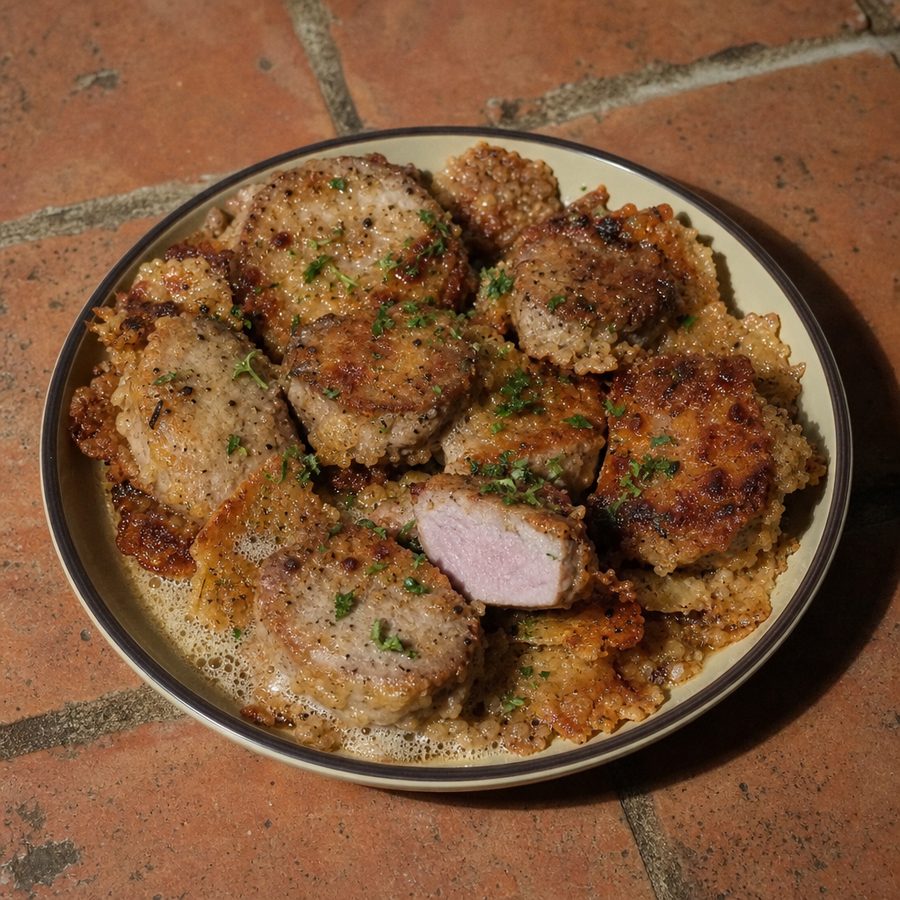
Thick medallions cut from pork tenderloin, pressed on both faces into finely grated parmesan and fried in foaming butter until the cheese sets into a thin golden shell around meat that is still pale pink at the center.
Why You'll Love This Recipe
Tenderloin is the cut I reach for when I want pork on the table quickly, because it is close grained and fine textured and cooks through in minutes. Sliced crosswise into thick medallions it gives you two broad cut faces per piece, and those faces are exactly what a cheese crust needs. Finely grated parmesan pressed into them does something a coating has no right to do in a skillet this hot. It melts first, spreads a little, then dries and sets into a lace-edged shell that is welded to the meat rather than sitting on top of it. Ten minutes of work and the pork looks like it took an hour.
The eating is all contrast. There is a sharp crack when the knife goes through the shell, then almost no resistance at all in the pork underneath, which should still be pale pink and running clear at 145°F (63°C). The parmesan browns hard against the pan and turns nutty and faintly bitter at the frilled edges, the sort of savory depth you usually have to work much longer for, and the butter it fried in picks all of that up and carries it back over the meat when you spoon it on. Salt goes on the pork itself so it seasons the meat rather than the crust.
I cook this on evenings when I want something that eats like an occasion but does not ask for one. It suits a plate on its own, hot from the pan, and it is quick enough for a weeknight but tidy enough to put in front of people you like. The one thing it will not tolerate is waiting. A cheese shell holds its crackle for about ten minutes and then softens against the steam coming off the meat, so I get everyone to the table first and cook second, which is backward from how I usually do things and worth it here.
Ingredients
- 1 1/2 lb pork tenderloin (2 small tenderloins), trimmed and cut crosswise into 1-inch medallions
- 3/4 cup finely grated parmesan
- 3 tbsp butter
- 1/2 tsp fine sea salt
Instructions
- Cut and dry the medallions: Trim the silverskin off the tenderloins and cut them crosswise into medallions a good inch thick, which should give you about twelve. Stand each one on a cut face and press down gently with your palm to flatten it slightly and widen the face. Blot both faces hard with paper towel, then salt them all over. A dry surface is what lets the cheese grip.
- Press on the parmesan: Spread the grated parmesan in an even layer on a plate. Lay each medallion on it, press down firmly, lift, and repeat on the second face so both are packed with an even coat. The sides stay bare. Set them on a board as you go and do not stack them.
- Melt the butter and wait for the foam: Put the butter in a heavy twelve-inch skillet over medium heat. It will melt, then foam up loudly as the water boils out of it, and then the noise will drop and the foam will subside. That quieting is your cue, about two minutes in. Butter added to a pan any hotter than this will scorch before the cheese has a chance to set.
- Fry the first side: Lay in half the medallions, cheese face down, leaving an inch between them. You will hear a fine, high sizzle rather than a roar. Leave them alone for three to four minutes. The cheese goes from white to blond to a deep even gold, the edges frill out and lift off the pan, and the whole shell releases itself when it is ready. If it resists the spatula, give it another thirty seconds.
- Turn and finish: Flip each medallion and cook the second face three to four minutes more, until it matches and an instant-read thermometer pushed in from the side reads 145°F (63°C). Move them to a warm plate, cook the second batch in the same butter, then spoon the browned butter from the pan over all of them and serve inside ten minutes while the shells are still brittle.
Variations
- No dairy at all: Leave out both the parmesan and the butter. Salt the medallions, sear them in rendered bacon fat or beef tallow over medium-high heat for two to three minutes a side, and spoon the hot fat over them at the end. The plate becomes meat and salt alone.
- Chicken thigh: Use boneless chicken thighs, pressed into the parmesan the same way and cooked to 175°F (80°C). The thigh gives up more fat into the pan and the crust comes out darker.
- Egg-set crust: Dip each medallion in beaten egg before pressing it into the cheese. The crust comes out thicker and puffier and clings even more firmly. This adds egg.
- Ghee rather than butter: Fry in ghee, which has no milk solids to scorch and lets you run the pan a little hotter for a darker shell. Ghee is still a form of dairy.
Storage & Leftovers
Refrigerate leftovers in a sealed container within two hours and use them inside three days. The parmesan shell will soften overnight, which is unavoidable, so store the medallions in a single layer and expect the crust to come back only partway.
Reheat them in a dry skillet over medium for a minute or two a side rather than in the microwave. The dry pan drives the moisture back out of the cheese and re-crisps the shell, while a microwave steams it into something soft and rubbery around meat that is already cooked through.
Cold, sliced thin off the medallion, this is genuinely good straight from the refrigerator, and that is how most of my leftovers get eaten. The pork stays tender because it came off the heat at 145°F (63°C), and the parmesan tastes sharper cold than it did hot.
Notes & Tips
- Grate it yourself if you can: Parmesan grated fresh on the small holes of a box grater melts into a continuous sheet. The shelf-stable powdered kind is treated to resist clumping, which is the opposite of what you want here.
- Do not crowd the skillet: Six medallions at most in a twelve-inch pan. The cheese edges spread as they melt, and if two medallions touch, they fuse and tear each other apart when you turn them.
- Listen to the butter: Loud foaming means water is still boiling off and the pan is not ready. Quiet foam means the water is gone and the temperature is climbing. That quiet moment is when the pork goes in.
- Serve it fast: The shell is brittle for about ten minutes and then it starts to soften from the steam underneath. Have the plates out and everyone seated before the second batch goes into the pan.
Nutrition & Mindful Eating
- Pork, parmesan, and butter each bring something the other two cannot. The tenderloin is the substance of the plate, the parmesan turns into a savory shell as it browns, and the butter carries the flavor of both back over the meat when you spoon it on at the end.
- Pork tenderloin is close grained and quick cooking, mild enough to take a strongly flavored crust, and it carries dense protein along with thiamin, which pork supplies more generously than nearly any other food on the table.
- Parmesan is aged long enough that most of its moisture is gone, which is why it browns into a sheet rather than melting into a puddle, and that concentration is also where its calcium and its deep savory flavor come from.
- Butter foamed and browned is doing more than greasing the pan. The milk solids in it toast as the water cooks off, which is where the nutty smell comes from, and butter brings vitamin A along with that richness.
- The sound tells you where you are. A fine high sizzle means the cheese is setting and drying, and when it drops to a soft hiss the pan has cooled too far and the shell will stay blond and bendable rather than turning gold and brittle.
- As you eat, notice the crack of the shell against the softness of the pork underneath, and the nutty smell coming off the butter, and let the plate be a proper stop in the evening rather than something eaten over the sink.
Frequently Asked Questions
Why did my cheese crust fall off in the pan?
Two usual causes. The medallion was damp, so the parmesan sat on a film of moisture rather than gripping the meat, or the crust was turned before it had set. Blot the pork thoroughly, press the cheese on with real pressure, and leave the first side alone for a full three minutes before you touch it.
Can I use pre-grated parmesan from a tub?
The finely grated kind works well because small shreds melt into one another and knit into a single sheet. Coarse shreds from a bag stay separate and give you a patchy crust with gaps, so if that is what you have, run it through a food processor for a few seconds first.
What if I do not eat dairy?
Skip the cheese and the butter, sear the salted medallions in a spoonful of rendered bacon fat over higher heat for two to three minutes a side, and baste them with the fat at the end. You lose the shell and gain a dark, clean pork crust, and the meat is just as good.
How pink should pork tenderloin be in the middle?
A blush of pink at 145°F (63°C) is exactly right and has been the recommended temperature for years. Cook it past that and a cut this close grained goes dry and chalky in a hurry, so pull the medallions the moment the thermometer reads 145 and let them sit for three or four minutes.