
Pasta alla Nerano with Browned Zucchini and Basil
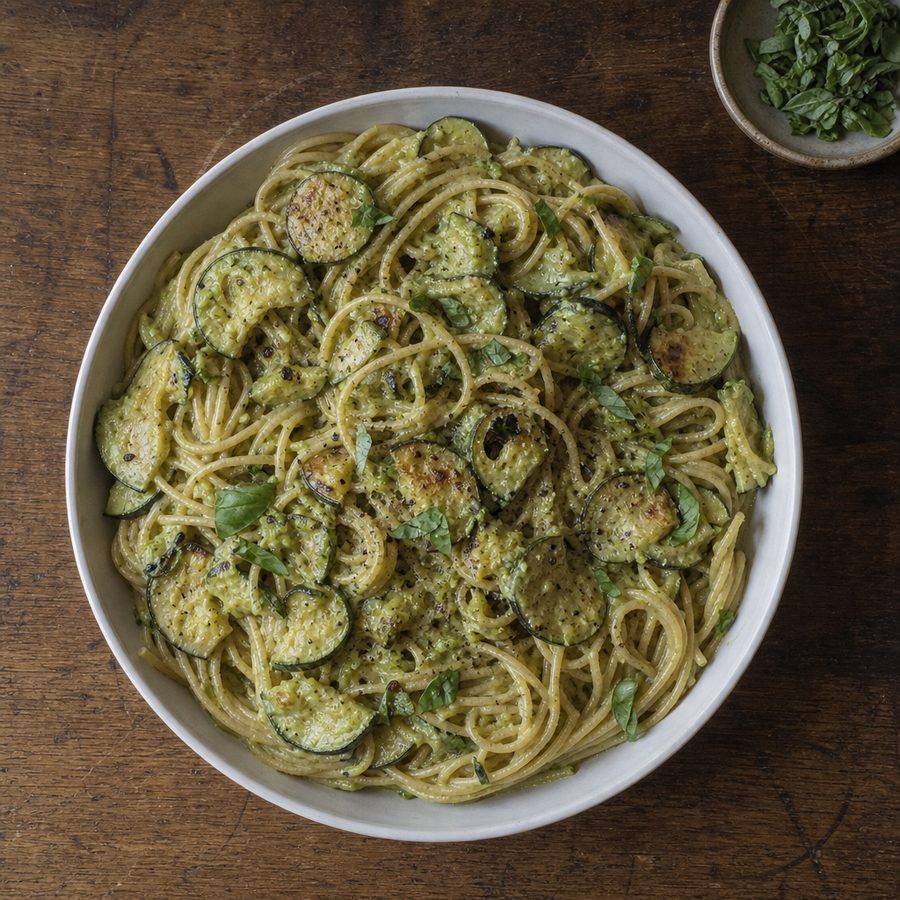
Zucchini rounds browned in olive oil until sweet and collapsing, then tossed with whole wheat pasta, grated parmesan, and starchy water until the sauce turns glossy, with torn basil and black pepper.
Why You'll Love This Recipe
This comes from a stretch of coast south of Naples where the zucchini is famous and the recipe is guarded, and the version people fall in love with is built on one idea: cook the zucchini much further than you think you should. Pale, barely golden rounds taste like nothing. Rounds cooked to a deep amber, until half of them are falling apart, taste sweet and almost nutty and are what makes the sauce. I use nearly two pounds for four people, which sounds absurd until you see how far they cook down. The vegetable is the dish here, and the pasta is what carries it.
The sauce is made in the pan and takes about ninety seconds. Hot pasta, a ladle of its starchy water, grated cheese off the heat, and hard tossing, and it goes from a watery pan to a glossy pale green coating that clings to every strand. It should look creamy without a drop of cream in it, which is entirely down to starch and agitation. Then it is soft zucchini against chewy whole wheat pasta, a lot of black pepper, and basil torn in at the very last second so it stays green and perfumed rather than going black.
I make this in August when zucchini is cheap and endless, and again in February when I want to remember August. It is a twenty five minute lunch that feels like a restaurant plate, and it is the dish I cook for people who tell me they do not like zucchini, because they never recognize it. It does not keep especially well, which is my only warning: this is a cook-and-eat plate rather than a make-ahead one. If you want leftovers, cook the zucchini ahead and boil the pasta fresh.
Ingredients
- 5 medium zucchini (about 1 3/4 lb), sliced into 1/4-inch rounds
- 8 oz dry whole wheat spaghetti, cooked in unsalted water to just under al dente (about 3 cups cooked), 1 cup cooking water reserved
- 3 tbsp extra-virgin olive oil, divided
- 1/2 cup finely grated parmesan
- 3 garlic cloves, lightly crushed and left whole
- 3/4 cup fresh basil leaves, torn at the last minute
- 1 tbsp lemon juice
- 1 tsp coarsely ground black pepper
Instructions
- Slice the zucchini evenly: Cut the zucchini into rounds about a quarter inch thick, using a mandoline if you have one. Evenness is what lets them all brown at the same rate. Pat them dry with a towel if they look wet, since surface water is what turns frying into steaming.
- Brown them properly, in batches: Heat 2 tbsp of the oil in a wide skillet over medium-high with the crushed garlic cloves. Add half the zucchini in a single layer and cook for 4 to 5 minutes a side, turning once, until they are deep amber and blistered in places. Move them to a plate and repeat with the rest. Take the garlic out once it is golden so it does not burn.
- Let the zucchini sit: Pile the browned rounds in a bowl with the black pepper and leave them for at least 10 minutes while the pasta cooks. They soften and give up a small amount of sweet liquid as they rest, and that liquid goes into the sauce later. Crush about a third of them roughly with a fork.
- Cook the pasta just short: Boil the spaghetti in plenty of unsalted water and pull it a full minute before the package says it is ready, since it will finish in the pan. Reserve a full cup of the cooking water before draining. That cloudy water is the only thickener in the recipe, so do not lose it down the sink.
- Bring it together in the pan: Return the skillet to medium heat with the last tablespoon of oil. Add the zucchini, the drained pasta, and half a cup of the pasta water and toss hard for a minute, until the liquid starts to look cloudy and cling to the strands rather than pooling.
- Emulsify off the heat: Take the pan off the burner, wait about 20 seconds, then add the parmesan in three handfuls, tossing hard between each and adding splashes of pasta water as you go. It will look broken and then suddenly turn glossy and pale green. Finish with the lemon juice, tear the basil over, toss once, and serve immediately.
Variations
- With mint: Use half basil and half mint, which is common further down the coast and gives the bowl a cooler, sharper finish.
- Fried basil: Fry a few basil leaves in the oil before the zucchini goes in, then crumble them over the finished plate for a crisp, dark green garnish.
- With white beans: Fold half a cup of rinsed cannellini beans in with the zucchini for a softer, more substantial bowl.
- Lemon zest and chile: Add a grated strip of lemon zest and a pinch of crushed red chile flakes with the pepper for a version that tastes brighter and hotter.
Storage & Leftovers
Eat this the day it is made. An emulsified pasta sauce is held together by hot starch and agitation, and once it cools the cheese seizes and the sauce goes grainy, which is not something reheating fixes. If you know you will have more than you can eat, cook less pasta and keep the extra zucchini on its own.
The browned zucchini, however, keeps four days in a sealed container in the refrigerator and is worth making a double batch of. It is excellent cold on bread with a little cheese, folded into eggs, or piled onto a grain bowl. Bring it to room temperature before it goes into a pan of fresh pasta and it will behave exactly as it did on day one.
If you do have leftover finished pasta, treat it as a different dish. Press it into a hot oiled skillet, flatten it, and let it crisp for four or five minutes a side into a kind of pasta cake. That is the honest fix, and it is genuinely good. Do not freeze either the finished pasta or the zucchini, since both come back watery.
Notes & Tips
- Two batches, always: Two pounds of zucchini in one pan steams and comes out gray and limp. Half at a time, in a single layer, with room between the rounds, and you get the browning that the whole dish rests on.
- Pull the garlic out: Whole crushed cloves perfume the oil and then burn. Fish them out as soon as they are golden, which is usually before the first batch of zucchini is done.
- Rest the zucchini before it meets the pasta: Ten minutes in a bowl lets the rounds soften and release a little sweet liquid. That liquid is flavor and it goes straight into the sauce, so do not drain it off.
- Reserve more water than you think: A full cup, every time. The sauce goes from perfect to tight in under a minute as it cools, and a splash of hot starchy water is the only thing that brings it back.
- Cheese goes in off the heat: This is the step people skip and the reason sauces break. Twenty seconds off the burner, then the cheese in three handfuls with hard tossing between each one.
Nutrition & Mindful Eating
- Zucchini and pasta are in an unusual proportion here, close to two parts vegetable to one part cooked pasta by weight, and that is what gives the bowl its character. The zucchini brings the sweetness and the bulk, the whole wheat strands bring the chew and the fiber, and the cheese ties the two together.
- Zucchini is mostly water, which is exactly why browning it matters so much. Driving that water off concentrates its sugars into something almost nutty, and what stays behind is potassium, vitamin C, and a soft fiber that suits people who find coarser vegetables hard going.
- Whole wheat spaghetti keeps the bran and the germ that give it its darker color and firmer bite, and with them the fiber and the magnesium that a paler strand leaves behind at the mill.
- Parmesan is aged long enough that its proteins break down into the savory compounds you taste as depth, and a half cup grated brings a real amount of calcium to a bowl built on vegetables.
- Basil torn in with the burner off is the whole finish. Its aromatic oils are volatile and disappear within seconds of hitting a hot pan, which is why it goes in last and why the smell arrives before the first bite does.
- As you eat, notice how little this tastes like the vegetable you sliced twenty minutes ago, and let the first few forkfuls go slowly enough that the basil is still doing its work.
Frequently Asked Questions
How brown is brown enough?
Darker than instinct tells you. You are looking for deep amber with mahogany blisters, not pale gold, and about a third of the rounds should be soft enough to crush with a fork. Underbrowned zucchini has a mild, watery taste and no amount of cheese later covers it.
My sauce went grainy. What happened?
The pan was too hot when the cheese went in. Parmesan splits above a certain temperature and there is no coming back from it. Pull the skillet off the heat, count to twenty, then add the cheese in stages while tossing constantly, with a splash of pasta water each time.
Can I use a different pasta shape?
Spaghetti is traditional and the long strands are what the sauce clings to best. Linguine and bucatini both work. Short shapes are fine but you lose some of the coating effect, so choose something with ridges or a hollow center to hold the sauce.
Why unsalted pasta water?
Because the parmesan is doing that job. Cheese this aged brings plenty of savor of its own, and the starch in the water is what you actually need from it. Taste at the end and finish with more cheese or more pepper rather than reaching for the salt.