
Pasta e Ceci with Rosemary and Swiss Chard
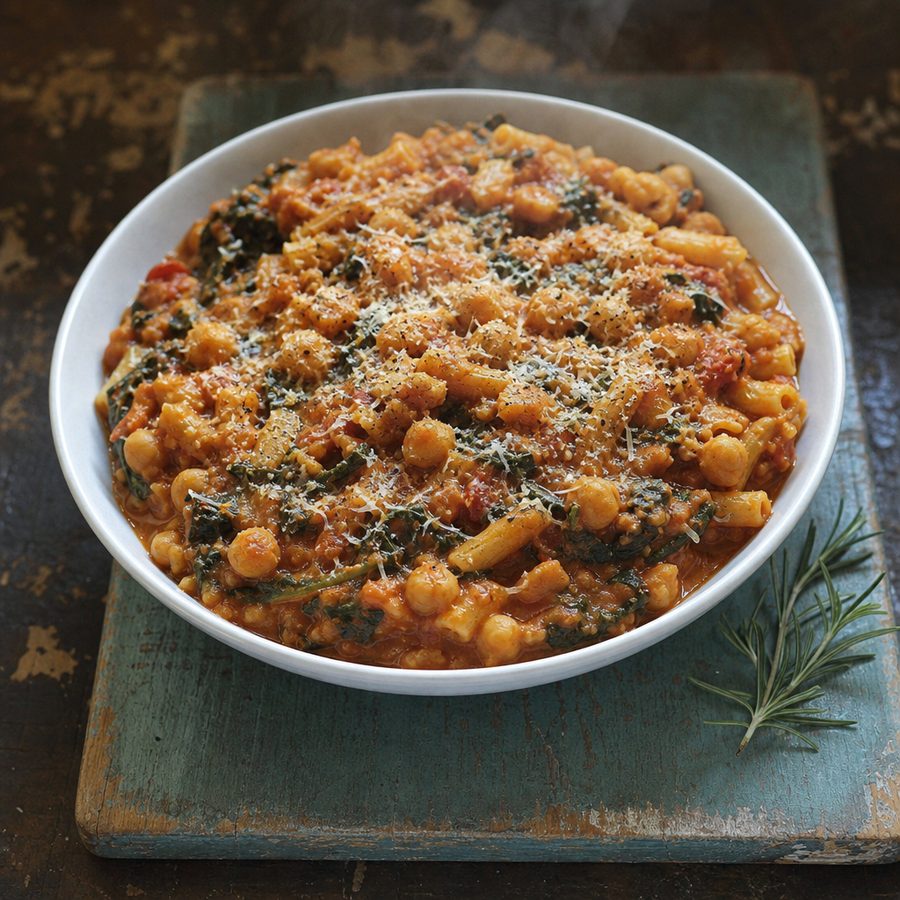
Chickpeas simmered with rosemary, garlic, and tomato until the broth turns creamy, with short whole wheat pasta cooked right in the pot and chard folded through at the end.
Why You'll Love This Recipe
The refrigerator is thin on a Tuesday and dinner still needs to be on the table in half an hour, without eating a sandwich over the sink. Everything in it comes off a shelf except the chard and the rosemary, and it costs almost nothing to put together. I learned it from a neighbor who grew up outside Naples and made it every week of her life, always with a heel of parmesan rind dropped in if she had one. Two cans of chickpeas, a handful of small pasta, and a pot is the whole shape of it.
The texture is the point, and it comes from one small move. Before the pasta goes in, you crush a good scoop of the chickpeas against the side of the pot with a wooden spoon, and their starch thickens the broth into something between a soup and a stew. Then the pasta cooks directly in that liquid rather than in a separate pot of water, so the starch it sheds stays where you want it. By the time the pasta is done the whole thing has pulled together and coats a spoon, and the chard goes in at the last minute so the leaves stay dark and glossy.
A bowl of beans and small pasta is not what most people expect a proper dinner to look like. There is a lot of chickpea in every serving, the pasta gives it weight, and the olive oil and the parmesan make it taste far richer than the ingredient list suggests. I serve it in wide bowls with more oil poured over the top and plenty of black pepper, and if there is bread on the counter it goes in the middle of the table. It is a dinner that costs a few dollars and does not read that way at all, which is most of the reason it has stayed in my rotation for years.
Ingredients
- 2 (15 oz) cans chickpeas, drained and rinsed well
- 5 oz whole wheat ditalini or other small short pasta (about 3 cups cooked)
- 1 small bunch swiss chard (about 8 oz), stems sliced thin and leaves cut into wide ribbons
- 1 small yellow onion, finely chopped
- 2 celery stalks, finely chopped
- 5 garlic cloves, thinly sliced
- 2 tbsp tomato paste
- 1 tbsp chopped fresh rosemary, from 2 sprigs
- 3 tbsp olive oil, plus a little more for the bowls
- 3 cups vegetable broth, plus 1 cup water
- 1/4 tsp cayenne, or to taste
- 1/2 tsp coarsely ground black pepper
- 1/4 cup finely grated parmesan
- 1/2 cup chopped flat-leaf parsley
- Scant 1/4 tsp fine sea salt
Instructions
- Get the pot going: Warm 3 tbsp olive oil in a large pot or Dutch oven over medium heat. Add the onion, celery, and a pinch of the salt and cook for 4 to 5 minutes, stirring, until they soften and go translucent but take no color, since this pot is after sweetness rather than browning and color at this stage pushes it toward a stew. Stir in the sliced garlic, the chard stems, the rosemary, and the cayenne and cook for 1 minute more, until the garlic smells sweet and the rosemary hits you from the pot.
- Toast the tomato paste: Push the vegetables to one side, add the tomato paste to the bare metal, and let it fry for 45 seconds to a minute, stirring it around until it darkens from red to brick and stops smelling sharp. Raw tomato paste tastes tinny and frying it turns it sweet, which is the difference between a pot that tastes of tomato and a pot that tastes of tomato and time.
- Crush the chickpeas: Add the chickpeas, the broth, and 1 cup water, and bring to a strong simmer. Take a wooden spoon and crush about a third of the chickpeas against the side of the pot, pressing until they smear, because the starch they let go of is the only thing thickening this and there is no cream or flour in it. Simmer for 5 minutes, and you will see the liquid go from clear to cloudy and slightly thick as their starch comes out.
- Cook the pasta in the broth: Stir in the pasta and cook at an active simmer, uncovered, for 9 to 11 minutes, stirring every couple of minutes so that nothing sticks to the bottom, since the pasta is cooking in a small amount of liquid rather than a full pot of water. Keep an eye on the liquid and add a splash of water if it tightens faster than the pasta cooks. It is ready when the pasta is tender with a little bite left and the broth coats the back of a spoon.
- Finish with chard and cheese: Fold in the chard leaves and cook for 2 to 3 minutes, just until they collapse and turn deep green. Take the pot off the heat, stir in the parsley, the black pepper, and the rest of the salt, and taste, since parsley added to a boiling pot goes dark and loses the point of being there. Ladle into wide bowls, grate the parmesan over the top, and finish each bowl with a thread of olive oil.
Variations
- Rind in the pot: Drop a parmesan rind in with the broth and fish it out at the end for a savory depth you cannot get from grated cheese alone.
- Escarole or kale: Swap the chard for escarole, kale, or spinach, adding sturdier greens with the broth and tender ones at the very end.
- Anchovy backbone: Melt two anchovy fillets into the oil with the garlic for a deeper, saltier pot that tastes like it simmered far longer.
- All chickpea: Leave the pasta out and add a third can of chickpeas for a thicker stew to spoon over toasted bread rubbed with garlic.
- Lemon and chile finish: Grate lemon zest over the bowls with the parmesan and add another pinch of cayenne for a brighter, hotter version.
Storage & Leftovers
It keeps four days in a sealed container in the refrigerator and the flavor deepens overnight, the rosemary and garlic settling into the chickpeas. The pasta keeps drinking liquid as it sits, so what was a loose stew on Tuesday will be nearly a spoonable mash by Thursday. That is normal and, to my taste, no worse.
Reheat it in a saucepan over medium with a good splash of water or broth, stirring until it loosens and steams through, about 5 minutes. Add the water before it is hot rather than after, so the pasta rehydrates evenly. A fresh grating of parmesan and a little olive oil at the table bring it back to where it started.
It freezes for up to three months, though the pasta softens on thawing. If you know you are freezing half, cook the pasta a minute shy of tender and stop there. Thaw overnight in the refrigerator, reheat gently with extra liquid, and stir in fresh parsley at the end to wake the whole pot up.
Notes & Tips
- Rinse the chickpeas properly: Give them a full minute under running water in a colander until the foam is gone. The canning liquid tastes tinny and will follow the whole pot to the table.
- Fry the tomato paste: Forty five seconds on hot metal turns it from sharp to sweet and deep. Stirred straight into liquid it stays flat and raspy no matter how long it simmers.
- Crush more than you think: A third of the chickpeas smeared against the pot is what makes the broth cling. If it still looks thin, crush more, since you cannot add that texture back later.
- Stir the bottom: Pasta cooking in a thick liquid will catch and scorch. A pass with the spoon across the bottom of the pot every couple of minutes is all it takes.
- Chop the chard stems: The stems need longer than the leaves, so slice them thin and start them with the onion. Handled that way they go sweet and tender rather than squeaky.
- Salt at the end: The chickpeas, the broth, and the parmesan all bring their own. Taste after the cheese is in and adjust from there rather than at the start.
Nutrition & Mindful Eating
- Chickpeas, whole wheat pasta, and chard are the three things carrying this bowl. The chickpeas bring the protein and most of the fiber, the pasta gives it weight and staying power, and the chard keeps it green and faintly bitter so a pot of beans never tastes flat.
- Chickpeas crushed against the side of the pot are what make the broth creamy, and the starch doing that thickening is largely soluble fiber, the kind that dissolves into the liquid and is a good part of why a bowl of this holds you.
- Swiss chard goes in as two ingredients, stems early and leaves late, so you get crunch and silk out of one bunch. The leaves carry vitamin K and a mineral, almost salty flavor that stands up to the tomato and the rosemary.
- Rosemary and sliced garlic warmed in olive oil is the smell the whole dish is built on, and the oil carries their flavor through every spoonful rather than leaving it sitting on the surface.
- Parmesan grated over the hot bowl melts on contact and brings a savory, salty depth along with the calcium that hard aged cheeses are known for, which is a lot of return from a quarter cup across four servings.
- As you eat, notice how the broth thickens in the bowl as it cools and how the rosemary comes forward once the steam dies down, and let the spoon set a slower pace than a fork would.
Frequently Asked Questions
Can I use a different pasta shape?
Any small shape works: ditalini, tubetti, broken spaghetti, small shells, or elbows. Keep it small enough to sit on a spoon with a few chickpeas. Larger shapes soak up too much of the broth and you lose the loose, creamy quality that makes this what it is. Check the package time and start tasting two minutes early, since pasta cooking in a thick broth runs a little slower than pasta in water.
Mine came out more like a soup than a stew. What went wrong?
Probably not enough crushing. That third of the chickpeas smeared against the side of the pot is where the body comes from, so go back in with the spoon and mash more, then simmer another few minutes. The other fix is time off the heat: let the pot sit for 5 minutes before serving and it will thicken considerably as the pasta finishes absorbing.
Can I make it ahead for the week?
Yes, with one adjustment. Cook the base through the chickpea step, cool it, and refrigerate it without the pasta for up to four days, then bring it back to a simmer and cook the pasta fresh when you want to eat. That gives you a ten minute dinner on a weeknight and pasta that has not gone soft in the container.
Does this work without the cheese?
It does. Leave the parmesan off and add an extra tablespoon of olive oil and a squeeze of lemon at the end, which gives you the richness and the lift the cheese was providing. A spoonful of toasted breadcrumbs fried in olive oil over the top is the old southern Italian answer and adds the crunch people miss.