
Salmon with Asparagus & Avocado Salsa
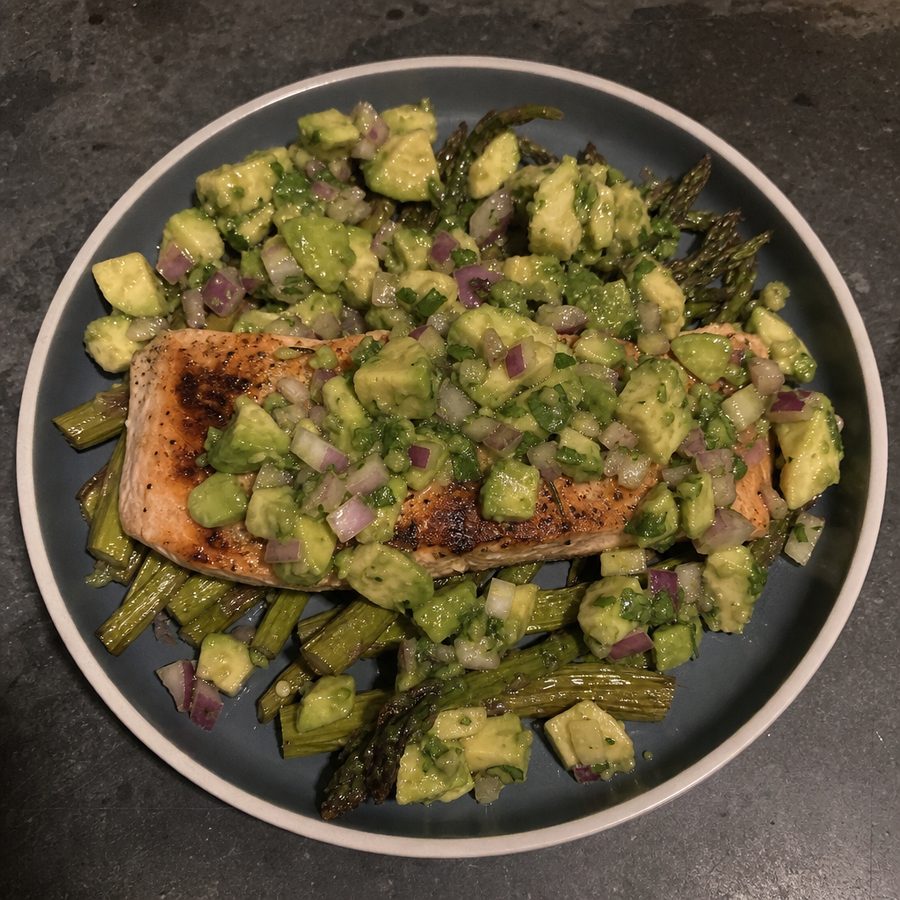
Roasted salmon and asparagus topped with a fresh lime-avocado salsa.
Why You'll Love This Recipe
Twelve minutes of prep and fifteen in the oven, most of it hands off, which makes this a Tuesday dinner rather than a project. One sheet pan and one bowl is the whole equipment list, and the salsa comes together while the fish roasts, so nothing is waiting on anything else. It also happens to look like you tried, which is useful when somebody is coming over.
The heat contrast is the entire point. Salmon and asparagus come out of a hot oven rich and browned at the edges, and the avocado salsa goes on cold and raw at the last second, so it half melts where it lands and stays cool everywhere else. Lime is what holds the two halves together, cutting the fat in the fish, keeping the avocado green, and lifting the plate so it never sits heavy.
Dicing the avocado rather than mashing it matters more than it sounds like it should, because what you want is cool buttery cubes against warm fish and not a sauce. Between the fat in the salmon and the fat in the avocado, this is a dinner that holds you well into the evening, and a pound of asparagus underneath means the green part of the plate is not a garnish.
Ingredients
- 1 1/3 lb salmon, 4 fillets
- 1 lb asparagus, trimmed
- 1 large avocado, diced
- 3 tbsp extra-virgin olive oil
- 3 tbsp lime juice
- 1/2 cup chopped cilantro
- 3 scallions, sliced
- 3/4 tsp salt
Instructions
- Heat the oven and snap one spear: Heat the oven to 425°F (220°C) and line a large rimmed sheet pan. Snap one asparagus spear where it wants to break and trim the rest of the bunch to that length, since that break is where the woody part ends and cutting by eye either wastes good asparagus or leaves a stringy inch behind. Pat the salmon fillets dry.
- Roast 12 to 14 minutes: Arrange the fillets down the middle of the pan with the asparagus on either side, drizzle a tablespoon of the olive oil over everything, and season with half the salt. Roast 12 to 14 minutes, until the salmon flakes at the thickest part and the asparagus tips have browned. Keeping the fish in the middle matters, because the edges of a sheet pan run hotter and asparagus can take that heat where salmon cannot.
- Acid on the avocado first: While the pan is in the oven, dice the avocado into half-inch cubes and put it in a bowl with the lime juice before anything else goes in and turn it until every cut face is coated, then add the scallions, cilantro, the remaining oil, and the rest of the salt. The lime hits the cut surfaces immediately, which is what keeps the salsa green rather than brown by the time the fish comes out.
- Fold, do not stir: Turn the salsa over gently with a spatula two or three times, until the cubes are just coated and no further. Stirring it hard breaks the cubes down into a paste, and the whole point is that they stay whole enough to sit on top of the fish.
- Cold salsa onto hot fillets: Spoon the cold salsa over the hot fillets when they come off the pan and not a minute before, letting some of it run down into the pan juices. Do it at the last moment, since the avocado warms and softens within a couple of minutes on hot fish and the contrast between the two is the entire idea.
Variations
- Trout or arctic char: Both roast in about the same time and take the salsa just as well. Char is a little richer, trout a little milder.
- Mango in the salsa: Half a cup of diced mango folded in with the avocado makes it sweeter and is very good against the lime.
- Green beans or broccolini: Either one works in place of the asparagus. Broccolini wants an extra two or three minutes on the pan.
- A little heat: A minced jalapeno or a pinch of chili flakes in the salsa, if your plan allows nightshades.
- Grilled instead of roasted: Grill the fillets skin side down and lay the asparagus crosswise over the grates, three to four minutes a side, and spoon the salsa over the same way.
Storage & Leftovers
The fish and the asparagus keep three days in the refrigerator, but the salsa is a one-day thing at most, so store them separately. Even with the lime in it the avocado dulls overnight, and pressing a piece of plastic wrap down onto the surface of the salsa buys you the most time.
Cold salmon is good salmon. Flake the leftovers over greens with a squeeze of lime and you have lunch without turning anything on. If you would rather eat it warm, give it eight to ten minutes in a 300°F oven rather than the microwave, which drives the fat out and tightens the fillet.
Neither part freezes well. Cooked salmon comes back dry and avocado comes back watery, so cook what you plan to eat within a few days. What you can do ahead is the chopping, since the scallions and the cilantro will sit happily in the refrigerator overnight.
Notes & Tips
- Dry the fillets: Salmon that goes into the oven wet steams before it browns. A quick blot with a paper towel is what gets you edges that crisp instead of edges that go pale.
- Give the pan room: Fish and asparagus crowded together trap steam between them. Use the biggest sheet pan you own, and use two if the spears are piling up on each other.
- Dice the avocado, do not mash it: Half-inch cubes hold their shape against the hot fish. Mashed avocado turns the plate into guacamole, which is a different dinner.
- Lime on the avocado first: Toss the cubes with the juice before anything else goes into the bowl. The acid is what keeps them green while the fish finishes roasting.
- Salt the salsa last: Salt draws water out of the avocado and the scallions, so adding it at the end is what keeps the salsa from going loose in the bowl.
- Pull the fish a minute early: Salmon carries on cooking on a hot pan. If it looks barely done in the middle when it comes out, it will be right by the time the salsa is on it.
Nutrition & Mindful Eating
- Hot from the oven and cold from the bowl is what makes this dinner work. The salmon and asparagus come out rich and lightly browned, the avocado salsa goes on raw and bright, and the lime running through it keeps every forkful lifted.
- Avocado diced rather than mashed holds its shape in the salsa, so you get cool, buttery cubes against warm fish. Its monounsaturated fat is what makes it taste that way, and it brings potassium and fiber to a plate that is otherwise fish and green stalks.
- Salmon roasted hot firms at the surface and stays coral through the middle, giving up some of its fat onto the pan as it goes. That fat is where the omega-3s and the vitamin D sit, and it is why the fillet still tastes rich under a raw salsa.
- Asparagus laid beside the fish roasts in the same drippings and comes out tender down the stalk with frizzled tips. It brings folate and vitamin K, and the olive oil on the pan is what helps that vitamin K get where it is going.
- Lime juice, cilantro, and scallion do the work at the end. The acid keeps the avocado green and stops the plate from sitting heavy, the cilantro comes through grassy and cold, and the salt pulls the sweetness up out of the fish.
- As you eat, let the cool salsa and the warm salmon land in the same forkful, notice the lime arriving last, and set the fork down between bites so the meal takes the time it deserves.
Frequently Asked Questions
Can I grill this instead of roasting it?
Yes, and it is very good that way. Oil the grates well, put the salmon skin side down over medium-high heat, and give it three to four minutes a side depending on thickness. Lay the asparagus crosswise so it does not fall through. The salsa does not change at all, and a little smoke off the grill goes well with the lime.
My avocado salsa went brown. What can I do?
Get the lime on it first. Toss the diced avocado with the juice before you add anything else so every cut surface is coated, and hold the salt until the end, since salt draws out water. If you are making it more than an hour ahead, press plastic wrap right down onto the surface so no air reaches it.
Can I make any of this ahead?
The chopping, yes. Slice the scallions, chop the cilantro, trim the asparagus, and juice the limes a day early. Cut the avocado the same hour you serve it, because that is the one thing that will not wait. The fish takes fifteen minutes, so there is not much left to get ahead of.
Does this work for paleo, Whole30, or a pegan plan?
It does, as written. Fish, avocado, olive oil, lime, and herbs, with no grain, dairy, legume, or added sugar anywhere in it. The only thing to look at is what you put beside it on the plate. The pan on its own fits all three.