
Peppered Mussels with Navy Beans and Wilted Endive
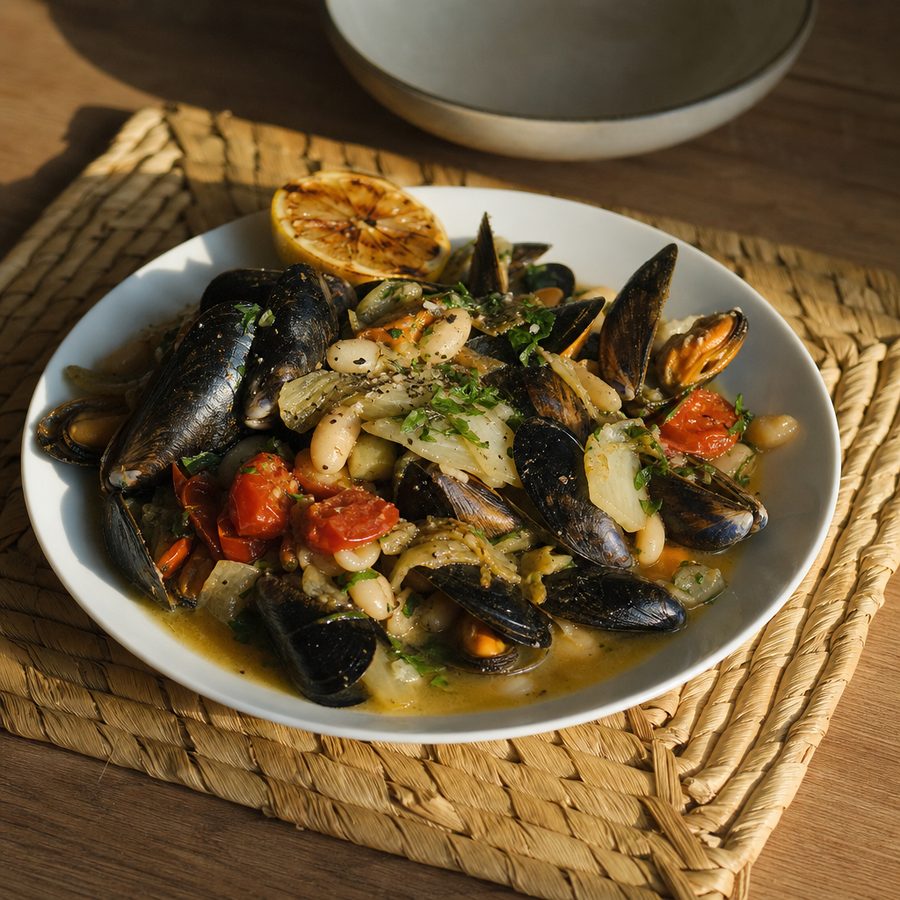
Mussels steamed open over fennel and garlic with a startling amount of cracked black pepper, tipped over white beans and endive that wilt in the pan juices, with lemon and parsley over the top.
Why You'll Love This Recipe
Impepata di cozze is a Neapolitan dish with three ingredients and a lot of nerve: mussels, an amount of black pepper that looks like a mistake, and lemon. I have eaten it standing up at a counter near the water with a piece of bread and nothing else, and it is one of the best things I know. For lunch at home I want it to hold me a while longer, so a cup of white beans goes into the pot and ribbons of endive wilt in the juices at the end. It takes forty minutes, and most of that is scrubbing shellfish at the sink.
Everything here is built around the liquid the mussels give up, so nothing should dilute it. That is why there is only a cup of broth in the pan, just enough to make steam, and why the pepper is cracked rather than ground: coarse pieces bloom in the oil and release their oils slowly instead of turning dusty and hot. The mussels go in over high heat with the lid clamped on and start opening within three minutes. Pull the pot off as soon as most of them are open, because the last two minutes of cooking is what shrinks mussels into little rubber commas.
It arrives at the table as a great pile of blue-black shells over a shallow pool of cloudy broth, and eating it is a proper hands-on business of prying shells apart and using the empty ones as tongs. The endive is what makes it lunch rather than a snack, faintly bitter and completely collapsed, and the beans at the bottom of the bowl are the best bite in it. I would put a spoon at every place setting. Nobody will leave the broth behind.
Ingredients
- 3 tbsp extra-virgin olive oil
- 1 small fennel bulb (about 6 oz), halved, cored, and sliced thin
- 5 garlic cloves, thinly sliced
- 1/4 tsp cayenne, or a crumbled dried red chile
- 1 1/2 tsp black peppercorns, cracked coarsely under a heavy pan
- 1 heaping cup cherry tomatoes (about 6 oz), halved
- 1 cup vegetable broth
- 4 lb mussels in the shell, scrubbed under cold water and debearded
- 1 scant cup canned navy beans, drained and rinsed
- 4 heads Belgian endive (about 11 oz), halved lengthwise and sliced into thick ribbons
- 1 tsp dried oregano, crumbled between your palms
- 1 1/4 cups chopped flat-leaf parsley leaves and thin stems
- 3 tbsp lemon juice, from 1 1/2 lemons, plus halves to char and put on the table
Instructions
- Clean the mussels: Tip the mussels into a colander and scrub the shells under cold running water, pulling away any wiry beards with a firm tug toward the hinge. Discard any that are cracked, and any wide-open one that does not close when you tap it firmly on the counter, because a live mussel shuts when it is disturbed and one that does not is no longer alive. Keep them cold until the pan is ready.
- Bloom the pepper and soften the fennel: Warm the olive oil in a large, wide pot over medium heat, add the cracked peppercorns and the cayenne, and swirl for about forty five seconds, until the kitchen smells sharply of pepper, since whole peppercorns give up almost nothing until hot oil has drawn the oils out of them. Add the sliced fennel and cook for six to seven minutes, stirring, until it has gone soft and lost all of its crunch, then add the garlic for one more minute.
- Build the base: Add the cherry tomatoes, the oregano, and the navy beans and cook for two minutes, pressing on a few of the tomatoes with the back of the spoon so they split and release their juice. Pour in the broth and bring it to a hard boil rather than a simmer, because it is the violence of the steam that forces the shells open, and a gentle pot leaves half of them shut.
- Steam the mussels open: Tip in the mussels, clamp on the lid, and leave them over high heat for four to six minutes, giving the pot one good shake halfway through. Lift the lid when you hear the shells start to knock and clatter. They are done the moment most of them have opened wide, and any that stay shut after a further minute should be thrown out.
- Wilt the endive in the juices: Lift the mussels out into a bowl with a slotted spoon and set them aside, since another three minutes in the pot would take them from plump to rubber. Add the endive ribbons to the pot of broth and beans, stir them under, and cook for two to three minutes, until they have gone translucent and limp but still have a little spine to them. Stir in the lemon juice and half the parsley.
- Bring it together: Return the mussels and any juice that has collected under them to the pot and toss everything once. Divide between four wide shallow bowls, beans and endive first and the shells piled on top, so that everybody can find what is under the shells without hunting for it, and pour the remaining broth over. Finish with the rest of the parsley, more cracked pepper, and a charred lemon half at each bowl.
Variations
- Tomato-heavy: Double the cherry tomatoes and crush them all against the side of the pot for a redder, sweeter broth.
- Escarole or chard: Escarole ribbons or chopped Swiss chard stand in for the endive, though give either an extra two minutes in the broth.
- Fennel seed: Add half a teaspoon of crushed fennel seed with the peppercorns for a deeper anise note under the pepper.
- Chickpeas: Chickpeas in place of navy beans give you a firmer, nuttier bean that holds its shape in the broth.
- Herb finish: Torn basil added with the parsley pushes the bowl in a summery southern direction.
Storage & Leftovers
Cooked mussels are at their best within an hour of opening, so this is a dish to make and eat rather than one to plan leftovers around. If you do have some left, pick the meats out of the shells while they are still warm and store them submerged in the strained broth for up to two days in the refrigerator, which keeps them from drying out.
Those picked mussels and their broth reheat well over low heat, three or four minutes in a covered pan, and they are excellent stirred through the leftover beans and endive. Do not boil them a second time. Shellfish that has already been cooked once tightens fast, and gentle heat is the only way to keep the texture you paid for.
The bean and endive base on its own keeps four days and freezes for two months, so it is worth making a double batch of that part and freezing half. Freezing the mussels themselves, in or out of the shell, gives you something dry and grainy on the other side, and it is not worth the freezer space.
Notes & Tips
- Crack the peppercorns yourself: Whole corns crushed under the base of a heavy skillet give you coarse fragrant shards. Pre-ground pepper turns hot and dusty in oil and loses its perfume within seconds.
- Use the widest pot you own: Four pounds of mussels need room to open. Stacked deep in a narrow pot, the ones on the bottom overcook while the ones on top are still shut.
- Boil the broth before the mussels go in: Mussels dropped into merely simmering liquid sit there and stew. A hard boil turns to steam the moment the lid goes on, and steam is what opens them fast.
- Listen for the shells: You will hear the knock of shells falling open against the pot before you see anything. That sound is your timer, and it is more reliable than the clock.
- Keep the last of the broth: The liquid at the bottom of the pot is the point of the dish. Pour it over the bowls rather than leaving it behind, and strain it through a fine sieve if your mussels were sandy.
- Char the lemons cut side down: Thirty seconds in a dry hot pan turns the juice rounder and slightly smoky, and it is a much better squeeze than a plain wedge here.
Nutrition & Mindful Eating
- The mussels, the beans, and the endive make this a full plate rather than a bowl of shellfish. The mussels bring the protein and the broth, the navy beans give it weight and most of its fiber, and the endive adds volume and a bitter edge that keeps everything else in focus.
- Mussels are among the most generous shellfish going, sweet and firm with a mineral tang, and they carry an unusual amount of iron and vitamin B12 for something that cooks in five minutes. The broth they release into the pot is part of what you are eating, so it is worth keeping.
- Navy beans are small, mild, and quick to soften, and they act like little sponges here, taking on the pepper and the mussel liquor. Their soluble fiber is the sort that makes a modest cupful sit satisfyingly through the afternoon.
- Endive turns from crisp and pale to silky in two minutes in hot broth, and its faint bitterness comes with folate and potassium. Cooked this briefly it keeps a bit of spine, which is what stops the bowl from turning soft all the way through.
- Cracked black pepper bloomed in olive oil is the whole character of the dish, warm and fragrant rather than sharp, and the piperine in it is easier to taste when the corns are coarse. Lemon squeezed over at the end is what makes the pepper read as perfume.
- As you eat, use the empty shells to pick out the next mussel the way they do on the coast, and let the slowness of that keep you at the table long enough to taste the broth properly.
Frequently Asked Questions
How do I know which mussels to throw away?
Before cooking, discard cracked shells and any gaping one that stays open after a firm tap on the counter, since a live mussel will pull itself closed. After cooking, discard any that never opened. Both checks take under a minute across four pounds and they are the whole of mussel safety.
How much meat does four pounds of mussels give?
Roughly fourteen ounces once the shells are off, which sounds thin until you remember you are also getting the broth they release. If your fishmonger sells cleaned, cultivated mussels they yield a little more, since there is less grit and fewer duds in the bag.
Can I make this with a different shellfish?
Littleneck clams work with almost no changes, though give them a minute or two longer to open. Shrimp are a different dish, since they bring no liquor of their own, so you would need to double the broth and add a little clam juice to get anywhere near the same depth of flavor.
Is all that pepper really necessary?
It is the name of the dish, and yes. A teaspoon and a half sounds alarming and lands as warmth and fragrance rather than heat once it has been bloomed in oil and diluted through a pot of broth. If you are nervous, start with a teaspoon and crack more over the bowls at the table.