
Poached Mackerel Rillettes with Fennel and Radishes
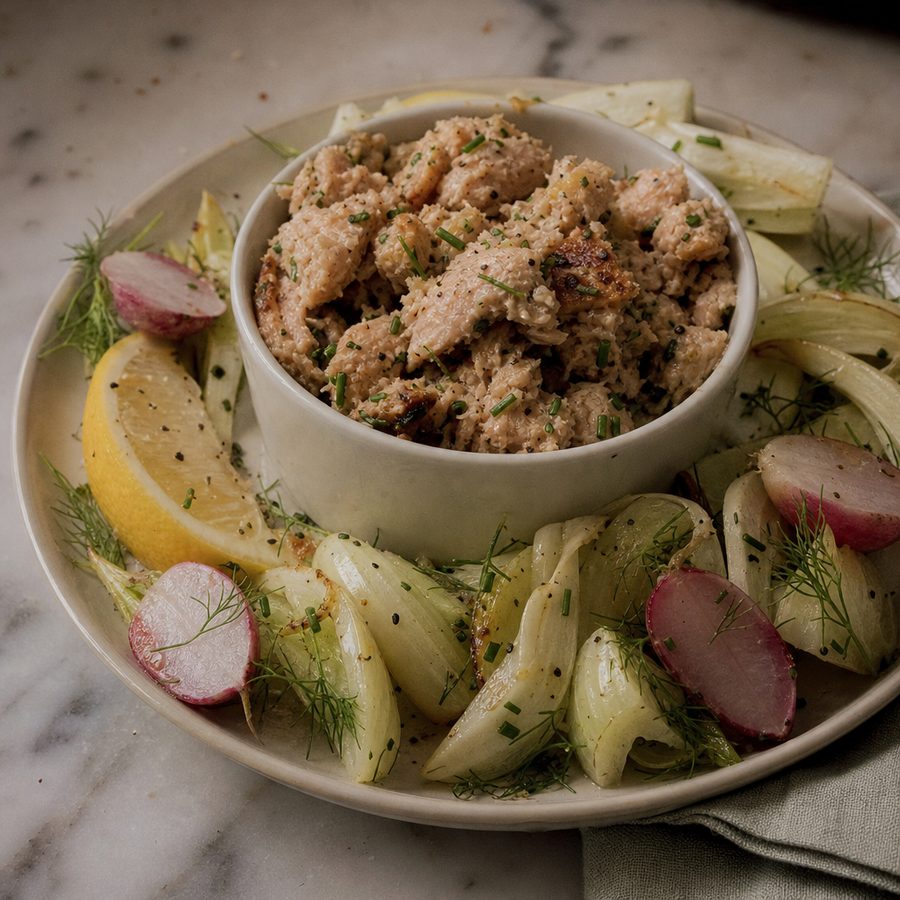
Fresh mackerel poached with bay leaf, flaked into lemony yogurt with dijon, shallot, and chives, and spooned onto crisp fennel wedges and halved radishes for a cool Breton-style snack.
Why You'll Love This Recipe
Rillettes are usually pork cooked slowly in its own fat, but along the Breton coast they make them with mackerel, and that is the version I fell for. The fish is poached for a few minutes, flaked while it is still warm, and bound with something creamy and something sharp. I use thick Greek yogurt, dijon, and plenty of lemon, which gives a spread that is rich and savory with a clean, tangy finish. I make a crock of it on Sunday afternoons when the week ahead looks busy, because it turns an ordinary afternoon into something that feels like a small trip to the French coast.
The whole method rests on one thing: keeping the water from boiling. Mackerel is a tender, oily fish, and a rolling boil tightens the flesh and drives out the fat, which is where the flavor lives. Bring the water to a bare shiver with bay leaf, slide the fillets in, and let them sit for six or seven minutes. The flesh goes from glossy and translucent to opaque and soft enough to part under a fork. Flake it while it is warm, because warm fish takes in the lemon and mustard instead of just sitting next to them.
The vegetables are not an afterthought. Fennel brings a cool, faintly sweet anise crunch that cuts right through the richness of the mackerel, and radishes add a peppery snap and a bit of color on the board. Together they give you something to scoop with and something bright between bites. A small bowl of this with a pile of fennel eats like a proper little meal. It is the kind of snack that gets you through to dinner in good spirits, and it never feels like you are making do.
Ingredients
- 14 oz fresh mackerel fillets, skin on
- 2 bay leaves
- 1/2 tsp coarsely cracked black pepper, divided
- 1/2 tsp salt, divided
- 1/2 cup whole-milk Greek yogurt
- 2 tsp dijon mustard
- 2 tbsp fresh lemon juice (from about 1 lemon), plus wedges to serve
- 1 small shallot, minced very fine
- 2 tbsp finely snipped chives
- 2 tbsp chopped flat-leaf parsley
- 1 tbsp extra-virgin olive oil
- 1 medium fennel bulb, trimmed and cut into thin wedges, fronds reserved
- 10 radishes, trimmed and halved
Instructions
- Bring the poaching water to a shiver: Put the bay leaves and 1/4 tsp of the salt in a wide skillet or shallow saucepan and add enough water to cover the fillets by about an inch. Bring it to a boil, then lower the heat until only a few small bubbles rise at the edges. That bare shiver is your target, because a full boil tightens mackerel and pushes out the fat that carries its flavor.
- Poach the mackerel gently: Lower the fillets into the water skin side down and keep the heat low. Poach for 6 to 7 minutes, until the flesh has turned from glossy and translucent to fully opaque and flakes easily when you press it with a fork at the thickest point. Lift the fillets out with a slotted spatula onto a plate and let them rest for 3 or 4 minutes, until you can handle them.
- Skin, bone, and flake while warm: Peel off the skin, which slips away easily once the fish has been poached. Run your fingertips along the center of each fillet to find any pin bones and pull them out. Break the fish into a bowl in coarse flakes with two forks. Do this while the fish is still warm, because warm flakes soak up the dressing and the finished rillettes taste seasoned all the way through instead of only on the surface.
- Build the dressing: In a small bowl, stir together the yogurt, dijon, lemon juice, minced shallot, olive oil, the remaining 1/4 tsp salt, and half the black pepper until smooth. Mincing the shallot very fine matters here, because large pieces bite too hard against the soft fish.
- Fold it together: Spoon the dressing over the warm mackerel and fold with a fork, mashing about a third of the flakes against the side of the bowl and leaving the rest in visible pieces. The mashed part makes it spreadable and the whole flakes give it texture. Fold in the chives and parsley, taste, and adjust with more lemon if it needs brightness. Pack it into a small crock or bowl and finish with the rest of the cracked pepper.
- Chill briefly and serve: Refrigerate the rillettes for 10 minutes while you cut the fennel into thin wedges and halve the radishes. A short chill lets the spread firm up enough to hold on a fennel wedge. Serve with the vegetables, the lemon wedges, and a scatter of chopped fennel fronds over the top.
Variations
- Mustard and tarragon: Swap the parsley for chopped fresh tarragon and use a grainy dijon for a more classic French bistro flavor.
- Spicy: Stir a pinch of cayenne into the dressing for gentle heat that plays nicely against the cool fennel.
- Cucumber and celery: Serve the rillettes with thick cucumber rounds and celery sticks if fennel is not in season.
- Herb-heavy: Double the chives and parsley and add a little torn fresh dill for a greener, more summery spread.
- Lettuce cups: Spoon the rillettes into small butter lettuce or romaine leaves with a few radish slices for something closer to a light lunch.
Storage & Leftovers
The rillettes keep well in the refrigerator for up to 3 days in a covered container with a piece of plastic pressed against the surface. The yogurt may loosen a little as it sits and the lemon softens, so give it a stir and a fresh squeeze of lemon before you serve it again. The flavor actually deepens by the second day as the shallot mellows into the fish.
Do not freeze this one. Thawed yogurt weeps and turns grainy, and poached mackerel that has been frozen comes back dry and stringy, so the texture you worked for is gone. If you have extra fish, poach only what you will eat within three days and keep the rest raw in the freezer for another batch.
There is nothing to reheat, because this is meant to be eaten cool. Store the fennel and radishes separately, wrapped in a damp paper towel in a container, so they stay crisp for two or three days. Cut them fresh if you can, since a cut fennel wedge starts to brown at the edges after a day.
Notes & Tips
- Buy it fresh: Ask for mackerel caught within the last day or two; the eyes should be clear and the skin should shine like metal.
- Never boil: Keep the water at a bare shiver the whole time, because a hard boil makes mackerel tough and dry.
- Flake it warm: Dress the fish while it is still warm so the lemon and mustard soak in rather than sitting on the surface.
- Check for bones: Run your fingers along the center line of each fillet after poaching, since pin bones are easy to miss once the fish is flaked.
- Mince the shallot fine: Cut it as small as you can, or rinse it briefly under cold water, so it seasons without biting.
- Keep it coarse: Mash only part of the fish so you get a spread with real flakes in it, not a smooth paste.
Nutrition & Mindful Eating
- Mackerel, yogurt, and crisp raw vegetables work together here. The fish gives the spread its rich, savory body, the yogurt and lemon keep it tangy and light on the tongue, and the fennel and radishes bring the cool crunch that makes every bite feel fresh.
- Mackerel is a small, oily fish with a deep, briny flavor that softens into something almost sweet when it is poached gently. That same richness carries omega-3 fats and vitamin D, which is a lot of good things tucked into a few spoonfuls of spread.
- Thick Greek yogurt gives the rillettes their creamy, spoonable texture and a gentle tang that keeps the fish tasting bright. It also brings protein and live cultures of its own, so the spread is satisfying from the first bite.
- Fennel is cool, crisp, and faintly sweet, with a soft anise note that pairs naturally with fish. Radishes add a peppery snap and a bit of color, and both bring fiber and water that make a small bowl of this feel generous.
- Dijon, shallot, chives, and parsley give the spread its sharp, green, savory edge, and cracked black pepper on top keeps it lively. A bowl of fish and crunchy vegetables like this holds you longer than its size suggests, which is just what you want from a snack.
- As you eat, notice how the cool anise crunch of the fennel plays against the soft, savory fish, and take a slow pause between bites to feel when you have had enough.
Frequently Asked Questions
Can I use salmon or trout in place of mackerel?
Yes. Salmon and trout fillets both poach beautifully the same way, and they give you a milder, sweeter spread. Thicker salmon may need a minute or two longer in the water, so go by the look of the flesh rather than the clock: it should be opaque all the way through and flake easily.
My rillettes tasted fishy. What went wrong?
Usually the fish was not quite fresh or the water boiled. Fresh mackerel should smell clean and briny, with shiny skin and firm flesh. Poach it gently, and do not skimp on the lemon and mustard, since the acid is what keeps the rich flavor bright rather than heavy.
Can I make this ahead for the week?
You can make it up to 3 days ahead and keep it covered in the refrigerator. It is good on the second day, once the shallot has mellowed. Keep the cut vegetables separate so they stay crisp, and stir in a little fresh lemon before serving.
Does this fit a weight-loss or anti-inflammatory way of eating?
It does. It is built on fresh oily fish, yogurt, olive oil, and raw vegetables, with no bread, grains, or added sugar, and it has enough protein to count as a real snack. Fresh, gently poached fish like this is a good fit for an anti-inflammatory pattern.