
Pollo en Pepitoria with Almonds, Green Beans, and Peas
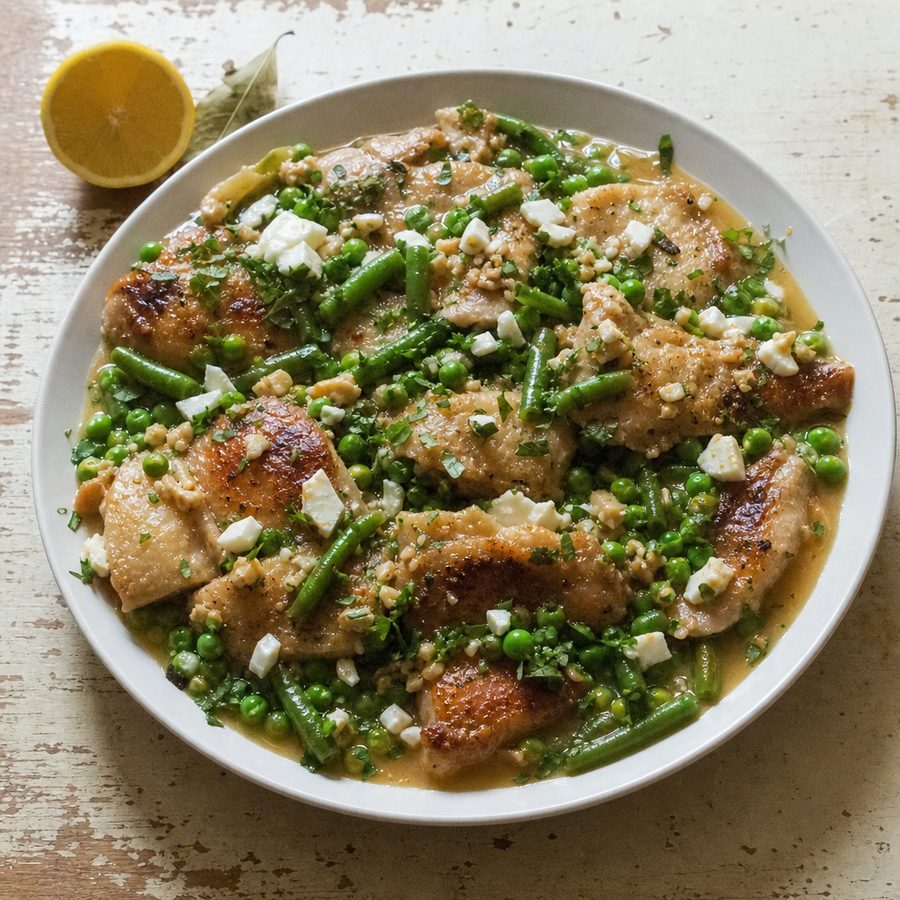
Chicken thighs braised in a pale golden sauce thickened with toasted almonds, garlic, parsley, and a mashed egg yolk, with green beans and peas cooked into the pan at the end.
Why You'll Love This Recipe
This is one of the oldest dishes in the Spanish repertoire and one of the few sauces I know that is thickened entirely with nuts. There is no flour in it and no cream. What makes the sauce is a picada, a paste of toasted almonds, garlic, parsley, and the yolk of a hard-cooked egg, pounded together and stirred into the pan near the end. It goes in thin and pale, and within about five minutes it has pulled the whole braise together into something silky and faintly sweet. I make it when I want a dish that feels old-fashioned and generous without asking much of me at the stove.
It eats gently. The chicken thighs come out of a slow simmer soft enough to pull apart with the side of a fork, and the sauce around them is nutty and savory with bay and a lot of black pepper running underneath. Green beans and peas cook in the pan for the last several minutes, which is just long enough to make them tender while they hold their color, and they give the plate something to bite against all that softness. The lemon at the end is not optional. A pepitoria without acid tastes flat, and one squeeze wakes the almonds right back up.
I put this on the table on a weeknight when I want a real dinner but not a project. Everything happens in one wide pan, the simmer is unattended, and the picada can be made while the chicken browns. It also happens to be one of the better things to cook when you are feeding people with different appetites, because the sauce stretches and the vegetables are already in it. Leftovers keep beautifully and the almonds thicken the sauce further overnight, so what you reheat on Tuesday is a little richer than what you served on Monday.
Ingredients
- 14 oz boneless, skinless chicken thighs, halved crosswise and patted dry
- 1 lb green beans, stem ends snapped off, cut into 2-inch lengths
- 1 3/4 cups frozen green peas, no need to thaw
- 1/2 cup blanched almonds
- 1 medium yellow onion, chopped fine
- 5 garlic cloves, 3 sliced and 2 left whole
- 1 large egg, hard-cooked and peeled
- 1 1/4 cups chicken broth
- 1 1/2 tbsp extra virgin olive oil
- 1 3/4 tbsp fresh lemon juice, plus wedges for the table
- 1/3 cup chopped fresh flat-leaf parsley
- 2 dried bay leaves
- 1 tsp coarsely ground black pepper
- 1/4 tsp fine sea salt
Instructions
- Toast the almonds and make the picada: Put the almonds in a dry skillet over medium heat and toast them for four to five minutes, shaking the pan often, until they smell nutty and have gone the color of straw with a few darker freckles. Tip them into a mortar or a small food processor with the two whole garlic cloves, half the parsley, and the yolk of the hard-cooked egg. Pound or pulse to a coarse, damp paste. Chop the egg white and set it aside for the top, since the yolk is what thickens the sauce and the white would only turn to threads in it.
- Brown the chicken: Season the chicken with the salt and the black pepper. Heat the olive oil in a wide skillet over medium-high until it shimmers, then lay the pieces in without crowding them and leave them alone for four minutes. They should release from the pan on their own when the underside is golden. Turn and give them three minutes more, then move them to a plate. They will not be cooked through yet, and that is what you want.
- Soften the onion and garlic: Lower the heat to medium and add the onion and the sliced garlic to the pan with a pinch of salt. Cook for six to eight minutes, scraping up the browned bits with a wooden spoon as the onion releases its water, until the onion is soft and translucent and just beginning to take on color at the edges. Stop there, because anything darker turns the sauce bitter and there is nothing sweet enough in this pan to cover for it.
- Braise: Pour in the broth, add the bay leaves, and return the chicken with any juices from the plate. Bring it to a bare simmer rather than a boil, since a hard bubble tightens chicken and this braise is meant to leave it soft, then cover and cook for eighteen to twenty minutes, turning the pieces once halfway through. The chicken is ready when a knife slips into the thickest part with no resistance and the juices run clear.
- Add the vegetables and finish with the picada: Stir in the green beans, cover, and cook for six minutes, then add the peas and cook four minutes more. Spoon a ladle of the hot broth into the picada and stir it smooth before it goes anywhere near the pan, because a cold paste dropped straight into hot liquid sits in lumps instead of dissolving. Simmer uncovered for three to four minutes, swirling the pan, until the sauce turns opaque and thickens enough to coat a spoon. Take it off the heat, add the lemon juice, and scatter the chopped egg white and the rest of the parsley over the top.
Variations
- Saffron and cinnamon: Crumble a pinch of saffron and add a small pinch of cinnamon to the picada for the older, more perfumed version of this sauce.
- With artichokes: Add a cup of drained artichoke hearts along with the green beans, which is how it is often served in spring.
- Turkey cutlets: Use turkey cutlets cut into wide strips and shorten the braise to ten minutes, adding them back once the onion is soft.
- More greens: Wilt two big handfuls of spinach into the pan in the last minute so the sauce carries something dark green through it.
Storage & Leftovers
This keeps four days in a sealed container in the refrigerator and is one of the few braises that genuinely improves. The almond paste keeps working overnight, so the sauce sets thicker and tastes rounder on the second day. Store the chicken and its vegetables together in the sauce so nothing dries out at the edges.
Reheat it gently in a covered pan over low heat with a splash of broth or water, stirring now and then, for six to eight minutes. A nut-thickened sauce can break if you push it hard over high heat, and the beans go drab. Add a fresh squeeze of lemon once it is hot, since the acid fades in the refrigerator.
It freezes for up to two months, though the peas and beans soften considerably. If you know you are freezing half, hold the vegetables back and add them fresh when you reheat. Thaw overnight in the refrigerator and warm it slowly, whisking the sauce back together as it loosens.
Notes & Tips
- Toast the almonds in a dry pan: Oil makes them color unevenly and go soggy in the middle. A dry pan and constant movement gives you an even toast, which is where the sauce gets its flavor.
- Do not brown the onion: Soft and translucent is the target. A dark onion turns the pepitoria muddy and bitter, and the pale color of the finished sauce is part of what makes the dish look like itself.
- Hold the picada until the end: Nuts stirred in early sink and scorch on the bottom of the pan. Added in the last four minutes they thicken cleanly and keep their toasted flavor.
- Loosen the paste before it goes in: Stirring a ladle of hot broth into the picada first stops it from seizing into lumps when it hits the pan. It should pour, not plop.
- Salt at the end, not the start: The broth reduces and the almonds concentrate what is already there. Taste after the sauce has thickened and adjust then, when you can judge it properly.
Nutrition & Mindful Eating
- The chicken, the almonds, and the two green vegetables are each doing a different job in the same pan. The thighs carry the protein, the ground almonds give the sauce its body along with vitamin E and magnesium, and the green beans and peas put real fiber on a plate that would otherwise be meat and sauce.
- Almonds pounded into a paste are what makes a pepitoria what it is. Toasting them first deepens their flavor, and grinding breaks open the oil that thickens the broth, which is also where the vitamin E rides in.
- Chicken thighs stay tender through a covered simmer because of the fat and connective tissue running through the meat, and along with a lot of protein they carry zinc and iron in a form the body takes up readily.
- Green peas go in at the very end so they stay sweet and pop under the tooth, and they bring fiber and a little plant protein of their own to a sauce built on nuts.
- Bay, a great deal of black pepper, and the yolk of one hard-cooked egg mashed into the almonds are the old Castilian signature here, and the lemon squeezed over at the table is what keeps a sauce this nutty tasting bright to the last bite.
- As you eat, notice the faint grain of the almonds against chicken that has gone completely soft, and let the lemon and the pepper slow you down enough to feel when you have had enough.
Frequently Asked Questions
What is a picada and can I skip it?
A picada is a Spanish paste of nuts, garlic, and herbs pounded together and stirred into a dish at the end, both to season it and to thicken it. It is the whole point of this recipe. Without it you have chicken in broth, which is pleasant enough, but the sauce will not come together or taste of anything much.
Can I use chicken breast?
You can, with a change to the timing. Cut breast into large chunks, brown it the same way, and add it back for only the last eight minutes of the braise so it does not go stringy. Thighs are the traditional choice here and they hold up far better to a covered simmer.
My sauce stayed thin. What went wrong?
Almost always the picada was too coarse. It needs to be a damp paste rather than chopped nuts, so keep pounding or pulsing until it clumps together. The other cause is not simmering long enough after it goes in, since the sauce needs three or four minutes of open, moving heat to thicken.
Is there a way to make this without nuts?
Toasted sunflower seeds ground the same way will thicken it and taste close, if a little earthier. Pumpkin seeds work too and take the sauce a shade green. Neither is traditional, but both do the mechanical job the almonds are doing, which is to give the broth body.