
Pork and Bacon Breakfast Links
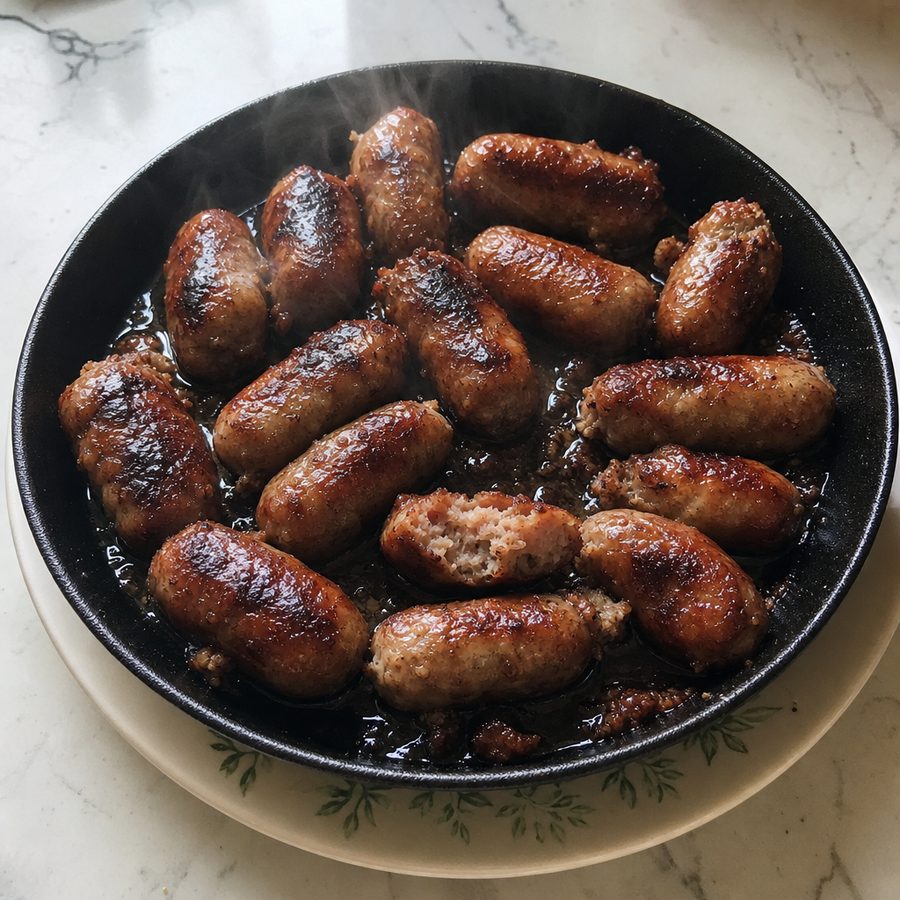
Ground pork worked with finely minced bacon and an egg, rolled into short fingers, and browned in a skillet until the outsides are dark and crackled and the fat has run out around them.
Why You'll Love This Recipe
Breakfast meat made at home takes about twelve minutes of work and it is one of the few things I make where the homemade version is not simply as good but plainly better. Minced bacon is the reason. Chopped fine and worked into cold ground pork, it distributes smoke and salt through the whole mixture rather than sitting in one place, and its fat melts out during cooking and fries the link from the inside as well as the outside. I shape them as short fingers because that gives you more browned surface for the amount of meat than a patty does, and browned surface is the flavor.
They come out of the pan with a crackled, uneven skin, the dark patches where the meat sat still against the metal and paler bands in between, and they are noticeably springy when you press one. Split a link and it is juicy and pale inside with darker flecks of bacon running through it. The taste is smoky and straightforwardly of pork, which is what a breakfast link ought to be, and because the fat renders out into the pan there is always a spoonful of it left over that I use for the eggs afterward.
This is a Sunday habit that turned into a weekday one, because sixteen links take one skillet and reheat in ninety seconds. I shape a full batch, cook them all, and keep most of them in the refrigerator for the week. In our house they get eaten with a fried egg on top, or on their own out of a container standing by the counter, and they hold up to both. If you are cooking for a crowd, shape them the night before and keep them covered and cold, and all that is left in the morning is the pan.
Ingredients
- 3 slices bacon, minced as finely as you can
- 1 1/4 lb ground pork, cold
- 1 large egg
- 1/2 tsp fine sea salt
Instructions
- Mince the bacon: Chill the bacon slices in the freezer for five minutes so they firm up, then stack them, slice into thin ribbons, and chop across the ribbons until you have something close to a coarse paste. The finer you get it, the more evenly the smoke runs through the finished links. Cold bacon cuts cleanly, while warm bacon smears and sticks to the knife.
- Mix and work the meat: Combine the cold ground pork, the minced bacon, the egg, and the salt in a bowl and work it with one hand for about a minute, squeezing and folding rather than stirring. It should turn slightly tacky and hold together in a single mass. Stop there. Work it much past that and the links come out dense and bouncy rather than tender.
- Roll the links: Divide the mixture into sixteen portions of about an ounce and a half each. Roll each one between damp palms into a finger about three inches long and three quarters of an inch thick, tapering slightly at the ends. Set them on a plate as you go. Do not press them tight; a lightly rolled link stays tender through the middle.
- Brown them in a crowded pan: Set a twelve-inch cast iron or heavy skillet over medium heat and lay the links in close together, no fat needed. For the first two minutes almost nothing happens, and then you will hear them start to sizzle as their own fat begins to run. Leave them completely still for four minutes so the underside sets and browns before you move anything.
- Roll and finish: Turn the links a quarter roll with tongs and give them three minutes, then roll again and give them another three, so all four faces get color. Nine to eleven minutes in total. They are done when the surfaces are crackled and dark in patches, they feel firm and springy, and an instant-read thermometer in the middle of the fattest link reads 160°F (71°C). Rest them two minutes and keep the fat in the pan.
Variations
- Ground turkey or chicken: Use ground turkey or ground chicken with the same minced bacon and egg. Both hold less fat, so cook them a minute or two less and expect a paler, softer surface.
- Half beef: Replace half the pork with ground beef for a darker, firmer, more strongly flavored link that browns faster in the pan.
- Egg on top: Fry an egg in the fat the links left behind, sunny side up until the white sets and the edges frill brown, and set it over a plate of links.
- Cheese in the middle: Roll each link around a thin batten of hard cheese so it melts into a seam through the center. This adds dairy.
Storage & Leftovers
Cooked links keep four days in a sealed container in the refrigerator and get smokier by the second day as the bacon settles through them. Store them with a spoonful of the pan fat over the top, which keeps the surfaces from drying out and makes reheating easier.
Reheat in a dry skillet over medium heat for about ninety seconds, rolling them once or twice, so the crackled skin tightens back up. A microwave will warm them in thirty seconds if you are in a hurry, though it softens the outside into something closer to steamed than fried.
They freeze for three months either cooked or shaped and uncooked. Freeze shaped links on a tray until solid, then bag them, and cook straight from frozen over medium-low heat with a lid on for the first five minutes. Cooked links thaw overnight and reheat in the skillet.
Notes & Tips
- Freeze the bacon briefly: Five minutes in the freezer firms the slices enough to mince cleanly. Bacon at room temperature smears under the knife and ends up in clumps rather than spread through the pork.
- Keep everything cold: Cold pork rolls into a neat finger and holds its shape. Meat that has warmed on the counter goes soft and sticky and the links slump into ovals in the pan.
- Crowd the pan on purpose: Links sitting close together hold heat between them and stay juicier. This is one of the few times a full skillet works in your favor, since there is no browning liquid to steam off.
- Roll rather than flip: Quarter turns with tongs give you color on all four sides. Flipping once, the way you would a patty, leaves two pale bands running the length of every link.
Nutrition & Mindful Eating
- Ground pork, minced bacon, and an egg each carry a different part of the link. The pork is the body, the bacon runs smoke and salt all the way through it, and the egg sets as the meat cooks so each finger stays whole when you roll it in the pan.
- Ground pork is mild and takes on whatever is worked into it, and it brings dense protein along with thiamin, which pork supplies more generously than almost anything else you would eat in the morning.
- Bacon is only three slices here and it flavors sixteen links, because mincing it spreads it everywhere at once. Its fat renders during cooking and fries the pork from the inside, which is where the crackled surface comes from.
- The egg is structural. It coagulates as the links heat through and binds the loose ground meat into something that holds its shape under tongs, and it carries choline and B12 into a short list of ingredients.
- Breakfast built on meat this dense holds you well into the afternoon. Protein is doing most of that work, and the rendered pork fat is what makes four small links eat like a full plate.
- As you eat, split a link and look at the flecks of bacon running through the pale pork, notice the smoke coming up with the steam, and give the first few bites your full attention before the day starts pulling at you.
Frequently Asked Questions
Do I need to add fat to the pan?
No. Ground pork and minced bacon give up plenty on their own, which is why the first two minutes are so quiet. Adding fat at the start means the links poach in it before their own has rendered, and you lose the crackled surface that makes them worth shaping by hand.
My links came out dense and rubbery. What happened?
Overworking the meat, almost always. A minute of squeezing is enough to make the mixture cohere, and every extra minute past that tightens the texture further. Roll them lightly too, since a hard, compact link firms up even more in the pan.
Can I shape these as patties instead?
You can, and they cook a little faster, about three minutes a side. You give up some browned surface, because a patty only ever puts two faces against the metal while a rolled link gets four. If you want the fastest version, the patty is it.
What temperature should ground pork reach?
160°F (71°C) at the center. Unlike a whole pork chop, which is right at 145, ground meat needs the higher number because the surfaces get mixed all the way through. The links firm up noticeably at that point, so a thermometer and your fingertips will agree.