
Pork & Cabbage Skillet
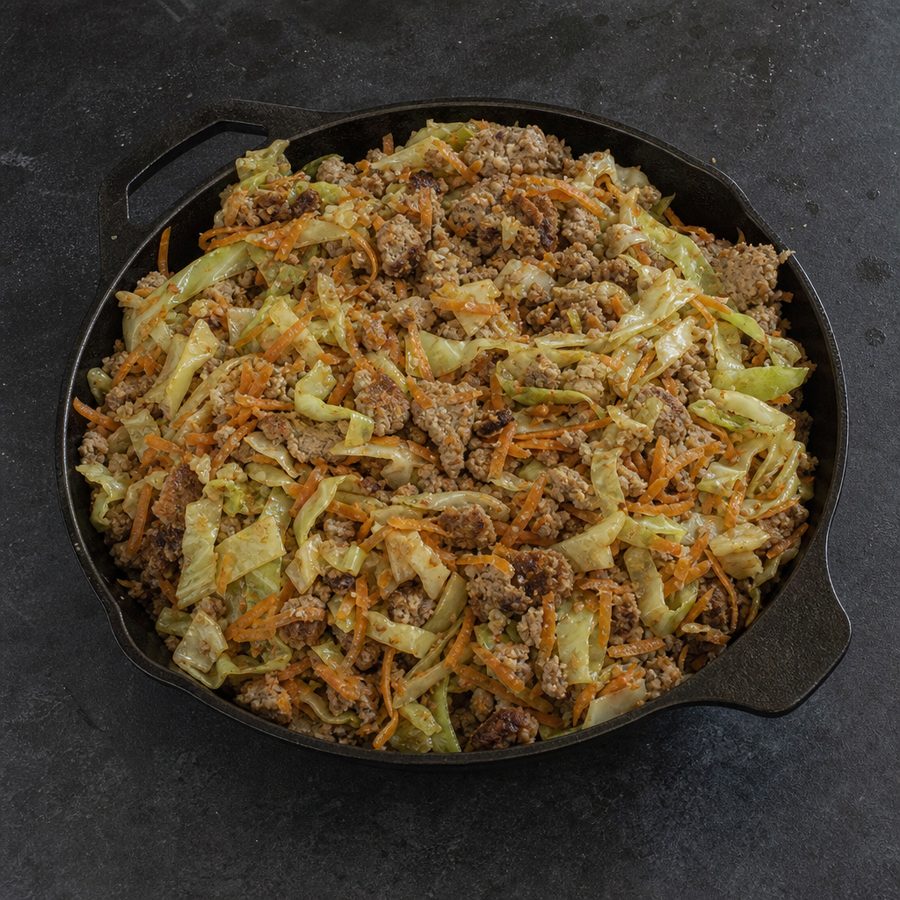
A cozy one-pan pork and cabbage skillet with carrots, ginger, and coconut aminos that comes together in under 30 minutes.
Why You'll Love This Recipe
Ground pork with shredded cabbage and carrot, seasoned with ginger, garlic, and coconut aminos. It is the filling of a dumpling without the wrapper, which is a fair description of how it tastes and also of how fast it happens: fifteen minutes, one skillet, and no folding. The cabbage collapses to almost nothing as it cooks, so the half head that looks like far too much on the board turns out to be exactly right in the pan.
Do not cover the pan once the cabbage goes in. Cabbage holds a lot of water and a lid traps every bit of it, so you end up with boiled cabbage instead of the browned edges that make this worth eating. The same logic decides the pan: use the widest one you own. A crowded skillet is a covered one in effect, since the cabbage on top is steaming in what the cabbage underneath is giving off, and the difference between the two versions of this dish is entirely about how much water gets to leave.
Pork brings the protein and the cabbage and carrot bring the volume, so a bowl of this fills a plate for very little. Ground pork is also worth choosing over ground beef here for a reason beyond price: it carries its own fat and stays tender in a fast, hot pan, which is what lets the whole dish be finished in under twenty minutes without anything drying out. When you want something lighter out of the oven, try our Baked Chicken With Butternut Squash.
Ingredients
- 1 lb ground pork
- 1/2 head cabbage, shredded
- 2 carrots, shredded
- 1/2 onion, diced
- 3 cloves garlic, minced
- 3 tbsp coconut aminos
- 1 tsp grated ginger
Instructions
- Shred everything before the pan goes on: Shred the cabbage and the carrots, dice the onion, and mince the garlic and ginger before you turn on the heat, because once the pork is browning the rest of this takes about ten minutes and there is no gap in it for knife work. Shred the cabbage finer than feels necessary, so that it finishes in the same window as the carrot.
- Brown the pork, and leave it alone at first: Spread the ground pork across a large skillet over medium-high heat and leave it completely alone for the first two minutes. Ground meat stirred from the moment it lands gives up its water and then simmers in it, which is where this dish goes wrong and why pale pork is the usual result. Once the underside has taken color, break it up and carry on to about 6 minutes total, until no pink remains and it reads 160°F (71°C).
- Give the aromatics exactly one minute: Add the onion, garlic, and ginger and cook for about 1 minute, until the pan smells sweet and toasted rather than sharp. One minute is the whole window, because minced garlic and ginger scorch quickly in a hot pan with rendered fat in it, and burned garlic is a flavor nothing else in this skillet can cover up.
- Add the cabbage and leave the lid off: Stir in the cabbage and the carrot, and do not cover the pan at any point. Cabbage holds a great deal of water and a lid traps every bit of it, so what you get is boiled cabbage rather than the browned edges that make this worth eating. It will look like far too much for the pan and it collapses to almost nothing within a few minutes.
- Finish with the aminos, about 8 minutes: Pour in the coconut aminos, which season the whole pan on their own, and cook for about 8 minutes, until the cabbage is tender-crisp and the liquid has cooked away. Stop while there is still some bite left in it, since cabbage goes from tender-crisp to limp in roughly two minutes and there is no getting it back.
Variations
- Add more vegetables: shredded Brussels sprouts, sliced bell pepper, or bean sprouts all work. The sprouts and pepper go in with the cabbage, the bean sprouts at the end. Skip the pepper if you are following the autoimmune protocol.
- Give it more bite: double the ginger and add a spoonful of grated horseradish at the end, which brings heat without the nightshades the autoimmune protocol leaves out.
- Change the meat: ground turkey, ground chicken or ground beef all brown the same way, though ground poultry needs a spoonful of fat in the pan to keep it from sticking.
- Brighten it at the end: a squeeze of lime and a handful of chopped cilantro or sliced green onion stirred in off the heat wakes the whole skillet up.
- Make it a soup: pour in a few cups of broth after the cabbage has wilted and let it simmer for ten minutes, which turns the same ingredients into a light dinner bowl.
Storage & Leftovers
Three to four days, and this is one of the rare dishes that is better on the second day than the first. The ginger and the coconut aminos keep working into the pork overnight, and the cabbage is already soft so it has nothing left to lose. Cold from the box with a fried egg on top is a perfectly good breakfast.
Reheat it in a skillet over medium with nothing added, and let it sit still for a minute before you stir. The bottom layer catches again and you get some of the browning back, which is what reheating usually costs you. A microwave works and it will be hot, just softer the whole way through.
It portions well and it does not weep, which not every cabbage dish can claim. Let it cool with the lid off before you close the containers, so the steam does not collect and pool underneath the pork. Do that and it still looks like dinner on Thursday rather than something at the bottom of a box.
Notes & Tips
- About coconut aminos: they are a soy-sauce-free, lower-sodium seasoning with a gently sweet, savory flavor. If you tolerate soy, an equal amount of tamari also works; it is saltier, so taste before you add any more salt.
- Let the pork brown: leave it undisturbed for the first few minutes so it takes on color. Stirring it right away only steams it.
- Shred the cabbage thin: thin ribbons wilt evenly in the time given, while thick wedges stay raw in the middle long after the outside has gone soft.
- Use a wide pan: half a head of cabbage looks like far too much until it cooks down, and a crowded skillet steams it instead of searing it.
- Make it ahead: this recipe is friendly to batch-cooking; double it and portion into containers for the days ahead.
- Flexible swap: no onion? You can leave it out, or swap in a little chopped celery or chives.
Nutrition & Mindful Eating
- Pork, cabbage and carrot land in the same pan and finish together. The pork browns and renders, the cabbage wilts down into the fat it leaves behind, and the carrot keeps a little sweetness and bite through all of it.
- Ground pork is what makes this savory. It browns in patches and those dark bits flavor everything that follows, and pork is among the better sources of thiamin, the B vitamin the body uses to turn food into usable energy.
- Shredded cabbage collapses to a fraction of its volume and turns silky and faintly sweet where it meets the pan. It sits in the same family as broccoli, and it brings fiber along with vitamin C and vitamin K.
- Shredded carrot melts into the cabbage and gives the skillet its color and much of its sweetness. The beta-carotene behind that color needs fat to be absorbed, and the fat rendering out of the pork is right there doing that job.
- Coconut aminos go in near the end and reduce to a glossy, faintly sweet glaze, while grated ginger and garlic cut back through it with heat and perfume. That last minute in the pan is what pulls the skillet together.
- As you eat, notice the ginger arriving just after the sweetness and the way the cabbage has gone soft while the carrot still gives, and pause partway through the bowl to see how you are doing.
Frequently Asked Questions
Is coconut aminos AIP-compliant?
It is soy-free and made from coconut sap, so it is a safe swap for soy sauce on AIP.
Can I use pre-shredded coleslaw mix?
Yes, just check the bag is plain cabbage and carrot with no added dressing or additives.
How long does it keep?
Three to four days, and it is better on day two than day one, because the ginger and the aminos go on working into the pork overnight. A skillet reheats it best; a microwave is fine, just softer.
Can I make it ahead?
It is one of the better ones for it. Cook the whole pan, let it cool uncovered so the steam gets out, then box it. The one thing it will not do is stay crisp, so if the browned edges are the part you love, keep a portion back for the night you cook it.