
Pork Medallions with Cider Carrots and Crisped Sage
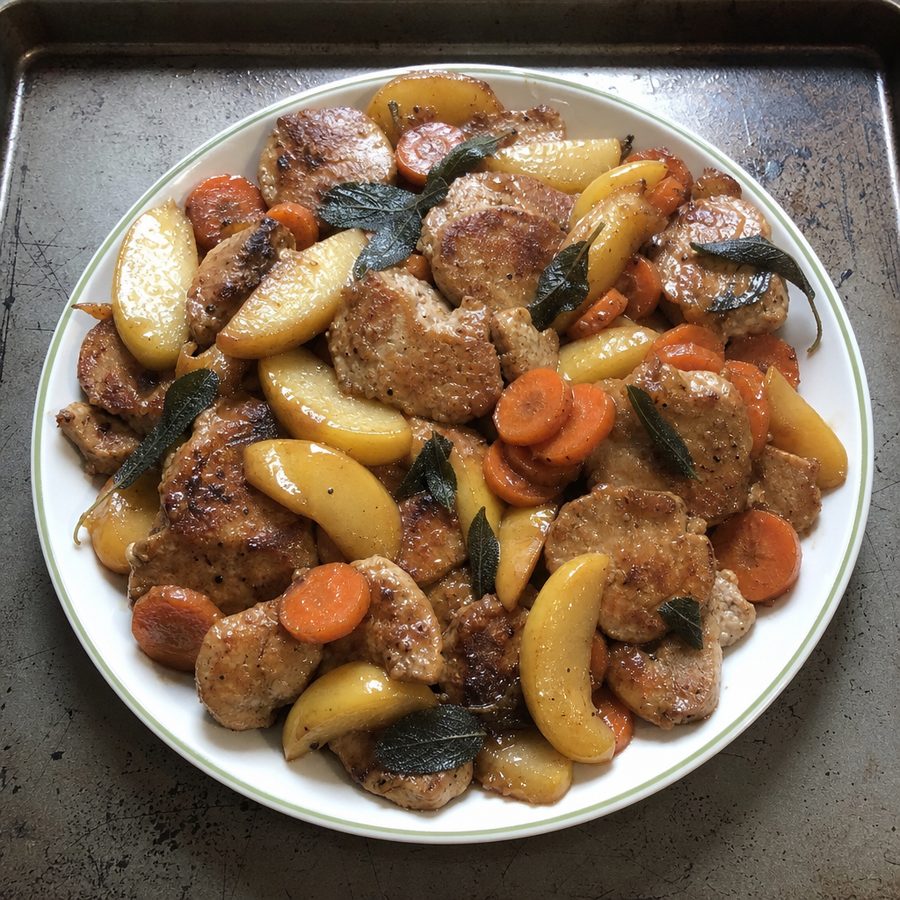
Pork tenderloin medallions seared and finished in a glossy cider vinegar pan sauce with sliced carrots, leeks, apple wedges, and sage crisped in olive oil.
Why You'll Love This Recipe
Tenderloin cut into medallions is the fastest way I know to get pork on the table without it drying out. Whole, it wants twenty minutes and a thermometer you actually watch. Cut into inch-thick rounds it takes six, and every piece comes out with two browned faces and a juicy middle. This is a weeknight dinner in the truest sense, one pan, thirty minutes, and nothing in it that needs a special trip. I make it through the fall on repeat, whenever there are apples on the counter that are past being good to eat out of hand.
Pork and apple and cider is the oldest pairing in the English kitchen and the reason is the fat. Pork is rich in a mild, sweet way, and it needs acid or it flattens out on the palate by the third bite. Cider vinegar does that here, poured into the pan with the broth so it reduces down and loses its harshness, leaving a sauce that is savory and tart at once. The carrots soak it up and go sweeter for it, the leek melts into the background, and the apple keeps just enough shape to be a distinct thing on the fork.
The crisped sage on top is worth the extra minute it costs. Fried whole in olive oil the leaves lose their fuzziness completely, turn brittle, and taste less like an herb and more like a savory chip you crumble over the plate. Underneath, this eats generously: a good pile of medallions per person, carrots that are more of a vegetable course than a garnish, and enough pan sauce to run into everything. It is a plate that feels like an occasion on an evening that is not one.
Ingredients
- 1 1/2 lbs pork tenderloin, trimmed and cut crosswise into 1-inch medallions
- 1 lb carrots, sliced on the bias into 1/4-inch coins
- 1 large leek, white and pale green parts only, halved lengthwise and sliced
- 1 firm tart apple, cored and cut into 8 wedges
- 1/2 cup chicken bone broth
- 2 tbsp apple cider vinegar
- 12 fresh sage leaves, left whole
- 2 cloves garlic, thinly sliced
- 2 tbsp olive oil, divided
- 1/2 tsp fine sea salt, plus more to taste
Instructions
- Crisp the sage: Heat 1 tablespoon of the olive oil in a wide skillet over medium. Add the sage leaves in a single layer and fry 20 to 30 seconds a side, until they stop sizzling and go stiff. Lift them onto a plate with a slotted spoon, since they go on cooking in the hot oil and they crisp further as they cool anyway.
- Brown the pork: Pat the medallions dry and season them with half the salt. Turn the heat to medium-high, add the medallions to the sage oil in a single layer, and leave them 3 minutes, until the underside is golden and they release from the pan. Turn and give them 2 minutes more, then move them to a plate. They will not be cooked through yet, because they go back into the pan at the end and anything finished now would be dry by the time it reached the table.
- Soften the carrots: Add the remaining oil, the carrots, the leek, the garlic, and the rest of the salt. Cook 3 minutes, stirring, until the leek goes limp. Pour in the broth and the cider vinegar, scraping the browned bits up off the bottom, since everything the pork and the sage left down there is the whole flavor of the sauce, then cover and simmer 6 to 7 minutes, until the carrots are tender at the edge of a knife.
- Add the apple and finish the pork: Uncover, stir in the apple wedges, and return the medallions with any juices from the plate. Simmer 3 to 4 minutes, spooning the sauce over the pork, so that the tops cook as evenly as the sides sitting in the liquid, until the apple is just soft and an instant-read thermometer in the thickest medallion reads 145°F.
- Reduce and serve: Lift the pork out, because another minute at a hard bubble would take it past done, and let the sauce reduce for that minute until it coats the carrots in a glossy film. Taste it and add salt if it needs it. Spoon the carrots and apples onto four plates, set the pork on top, pour the sauce over, and crumble the crisped sage across each plate.
Variations
- Parsnip and carrot: Use half parsnip in place of half the carrot for a sweeter, softer bed under the pork.
- Thyme and rosemary: Skip the frying step and stir a teaspoon each of chopped thyme and rosemary into the sauce with the broth.
- Chicken thighs: Boneless thighs work the same way, browned skin side down first and simmered in the sauce to 175°F.
- Add cabbage: Stir two big handfuls of shredded green cabbage in with the carrots and add a splash more broth to cook it down.
- Sweeter pan sauce: Add a teaspoon of honey with the vinegar for a glaze that leans closer to a proper cider reduction.
Storage & Leftovers
This keeps 3 days in a sealed container in the refrigerator and the sauce improves overnight, since the vinegar mellows and the carrots keep taking it up. Store the crisped sage separately at room temperature in a covered dish so it stays brittle.
Reheat gently in a covered skillet over medium-low with a splash of broth, 4 or 5 minutes, just until the pork is warm through. Tenderloin has little fat to protect it, so hard reheating is what turns it dry. The microwave works if you go in short bursts at half power.
It freezes for up to 2 months, though the apple softens completely and the carrots lose some bite. Thaw overnight in the refrigerator and reheat in a covered pan. Fry fresh sage while it warms and the plate comes back close to where it started.
Notes & Tips
- Cut medallions the same thickness: An inch across the board means they all finish together. The tapered tail end of the tenderloin is thinner, so fold it under itself and treat it as one piece.
- Dry the pork before it hits the pan: Meat straight from the package is wet, and wet meat steams gray. Paper towel, then salt, then straight into the hot oil.
- Fry the sage first: The leaves flavor the oil, which then flavors the pork. Doing it in that order means one pan does the work of two.
- Watch the sage closely: It goes from bright green to brittle to burnt in about ten seconds. Pull the leaves the moment the bubbling around them quiets down.
- Scrape the pan: The brown film left after the pork is the base of the sauce. Pour the broth in while the pan is hot and work it loose with a wooden spoon.
- Use a thermometer: Pork at 145°F is faintly pink in the middle and juicy, which is exactly right. Cooking by eye until no pink remains is what gives tenderloin its dry reputation.
Nutrition & Mindful Eating
- Pork, carrots, and apple share the work on this plate. The tenderloin carries the protein and the savory weight, the carrots give it sweetness and bulk, and the apple sits between the two, tart enough to keep the sauce lively.
- Pork tenderloin is a close-grained, quick-cooking cut that stays juicy when it comes off the heat at the right moment, and pork brings thiamin more generously than almost any other food, along with selenium and B6.
- Carrots sliced thin turn sweeter the longer they simmer in the cider and broth, and their deep orange color is beta-carotene, which the body converts into vitamin A.
- Apple wedges soften at the edges and hold their shape in the middle, giving up pectin, a soft fiber that thickens the sauce slightly as it cooks and gives it body.
- Sage fried crisp, leek cooked down to silk, and cider vinegar reduced in the pan are what make this taste like a long-cooked dish. The vinegar loses its sharpness as it simmers and leaves behind a savory tang that lands against the richness of the pork.
- As you eat, catch the crumbled sage against the soft apple and the tender pork, and let the last few forkfuls go slowly enough to notice how satisfied you already are.
Frequently Asked Questions
Can I use pork chops instead?
Yes. Boneless chops about an inch thick work well and cook on nearly the same schedule, though they want a minute or two longer in the sauce. Bone-in chops need closer to 6 minutes there. Take any cut of pork off the heat at 145°F.
My pork came out dry. What happened?
It was almost certainly in the pan too long. Medallions cook fast, and the browning step is not meant to cook them through, only to build color. They finish in the sauce, and 145°F on a thermometer is the number to trust rather than the look of the meat.
Which apple should I buy?
A firm tart one. Granny Smith, Braeburn, and Honeycrisp all hold their wedges through a few minutes of simmering. A soft apple collapses into the sauce, which tastes fine but leaves you nothing to bite into.
Does this fit an AIP elimination phase?
It does as written. Pork, carrot, leek, apple, garlic, sage, cider vinegar, and olive oil are all compliant, and the seasoning is salt alone. Read the label on the bone broth, since many carry pepper, tomato, or celery seed.