
Pork Medallions with Seared Pears, Shallots, and Sage
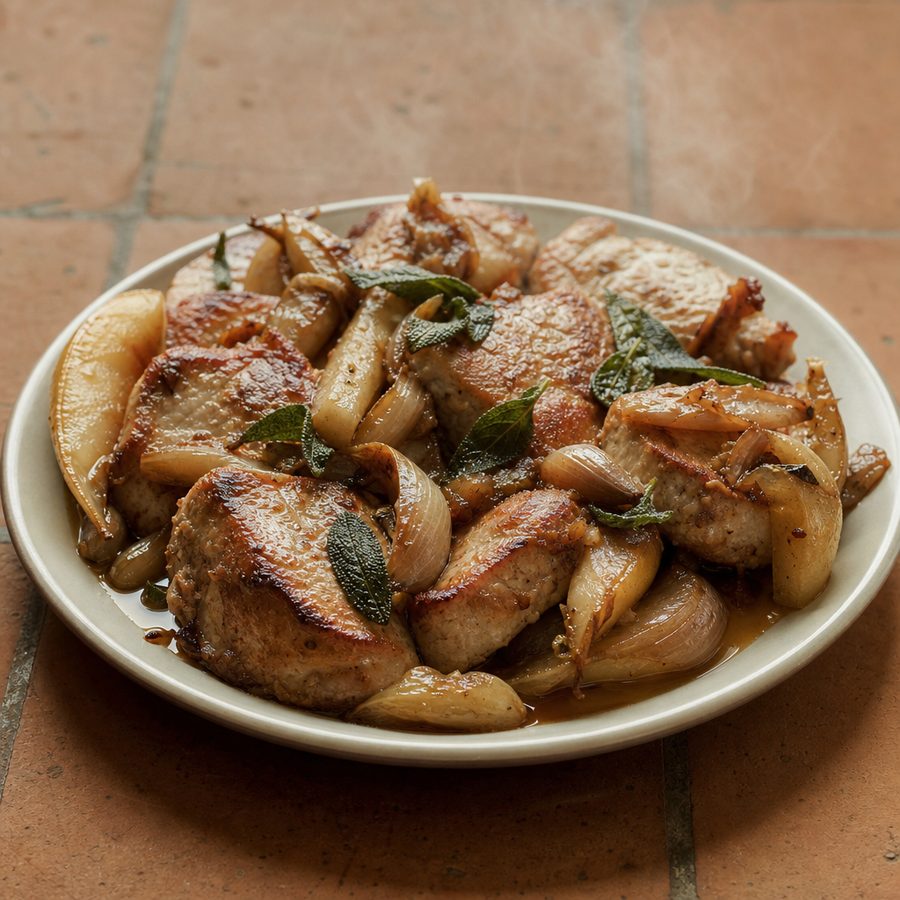
Pork tenderloin cut into thick medallions and seared hard, with pear wedges caramelized in the same pan, shallots, whole sage leaves, and a quick cider vinegar pan sauce.
Why You'll Love This Recipe
Tenderloin gets a bad reputation for being dull, and every time I have eaten a dull one it was cooked whole and cooked too long. Cut into thick medallions it becomes a different animal. You get eight or ten pieces with two flat faces each, which is a great deal more surface to brown, and every one of them cooks through in about six minutes. That ratio of crust to interior is the whole argument. It takes ten minutes of knife work and eighteen minutes at the stove, and it looks like something you would be served rather than something you threw together.
The eating is sweet, savory, and sharp in roughly equal measure. Pork and pear is an old pairing and it holds up because pear does not go to mush the way apple can, so you get wedges with soft amber edges and a firm center. Sage fried crisp is the note people cannot place, resinous and slightly bitter, and it sits underneath the sweetness where it belongs. Shallots melt into the pan sauce and give it body without anything thickening it, and the vinegar going in at the very end keeps a rich plate from turning cloying by the fourth bite.
I put this on the table when I want to feed people properly on a weeknight, or when someone is coming over and I do not want to be in the kitchen while they are here. Everything happens in one skillet in a fixed order, and the only moment that requires attention is pulling the pork at the right temperature. Arugula goes underneath so the warm sauce wilts it slightly, which means there is a green on the plate without a second pan. In autumn, when the pears at the market are firm and heavy and the sage in the garden has gone tough and flavorful, this is the first thing I make.
Ingredients
- 1 1/2 lbs pork tenderloin, trimmed and cut into 1 1/4-inch medallions
- 2 firm Bosc pears, cored and cut into 8 wedges each
- 3 shallots, halved and sliced into thin half-moons
- 16 fresh sage leaves, left whole
- 2 tbsp apple cider vinegar
- 3/4 cup chicken broth
- 2 tbsp avocado oil
- 1/3 cup pecan halves, roughly broken
- 3 packed cups arugula
- 3/4 tsp coarsely ground black pepper
- 1/2 tsp fine sea salt
Instructions
- Cut and dry the pork: Trim any silverskin from the tenderloin and cut it crosswise into medallions a little over an inch thick. Pat every cut face dry with paper towel, since a wet surface spends its first minute in the pan boiling instead of browning, then press each medallion gently with your palm to flatten it slightly. Season all over with the salt and black pepper and leave the pieces on the board while the pan heats.
- Crisp the sage: Heat 1 tablespoon of the avocado oil in a twelve-inch skillet over medium heat until it shimmers. Drop the sage leaves in flat, in one layer, and fry for fifteen to twenty seconds a side. They will stop sizzling and go stiff and translucent. Lift them onto a plate with tongs, where they will crisp further as they cool.
- Sear the medallions: Turn the heat to medium-high, add the remaining tablespoon of oil, and lay the medallions in with space between them. Leave them undisturbed for three minutes until a deep crust forms, because meat releases from the metal by itself once it has browned and tears if you pull at it early, then turn and cook two to three minutes more, until an instant-read thermometer reads 145°F. Move them to a warm plate to rest, so that the juices settle back into the meat rather than running out across the platter. Work in two loads if the pan is crowded.
- Caramelize the pears and shallots: Add the pear wedges cut side down along with the shallots and toast the pecans in beside them. Leave everything still for two minutes so that the pear faces take on color, since a pear that is stirred gives up its water and stews instead of caramelizing, then toss and cook two minutes more, until the shallots are limp and the pears are amber at the edges but still hold their shape when you nudge one.
- Build the pan sauce: Pour in the broth and the cider vinegar and scrape the browned bits off the bottom with a wooden spoon. Let it bubble hard for two to three minutes until it has reduced by about half and just coats the pears. Spread the arugula on a warm platter, lay the medallions over it with their resting juices, spoon the pears, shallots, pecans, and sauce over the top, and crumble the crisp sage across everything.
Variations
- Apple and thyme: Firm apple wedges and fresh thyme sprigs in place of the pear and sage give a brighter, more orchard-like version.
- Chicken thighs: Boneless thighs seared skin side down for six minutes take the same treatment, though they want to reach 175°F before they come out.
- Add mustard: Whisk two teaspoons of dijon mustard into the broth before it goes in for a sharper, glossier sauce.
- Walnut in place of pecan: Walnut pieces toast in the same two minutes and bring a little more bitterness against the sweet pear.
- Bitter greens underneath: Watercress or torn radicchio in place of the arugula stands up better to the hot sauce and pushes the plate further toward savory.
Storage & Leftovers
This keeps three days in a sealed container in the refrigerator. Store the crisp sage separately in a small jar at room temperature, since it goes limp within minutes of touching the sauce, and add it fresh when you reheat. The arugula does not keep once it has been under warm sauce.
Reheat gently in a covered skillet over medium-low with a splash of broth, three or four minutes, just until warmed through. Tenderloin was pulled at 145°F the first time and any aggressive second cooking will take it past where you want it. The pears reheat perfectly.
Sliced cold the next day, the medallions are genuinely good over greens with a little of the sauce spooned over as a dressing, which is how I most often eat the leftovers. Freezing is possible for up to two months but the pears turn watery, so freeze the pork and sauce alone.
Notes & Tips
- Cut them thick: Medallions thinner than an inch overcook before they brown. An inch and a quarter gives you three full minutes of contact with the pan before the center is done.
- Dry faces or no crust: Every cut surface is wet from the package. Paper towel on both faces of every medallion is the single step that decides whether you get browning or gray steaming.
- Pull the sage early: The leaves keep cooking on the plate. If they look done in the pan they will be bitter by the time you eat them.
- Pears go in cut side down: Flat contact with hot metal is what caramelizes the sugars. Tossed around loose, they warm through and never color.
- Rest the pork while the sauce reduces: Those three minutes are not idle time. The juices redistribute, the temperature carries up to where you want it, and whatever runs onto the plate goes back into the sauce.
- Reduce until it coats the spoon: There is no thickener here, so the sauce depends entirely on how far you take the reduction. Half the volume, and it should leave a clear trail when you drag a spoon through it.
Nutrition & Mindful Eating
- Pork, pear, and the pan sauce built from what they left behind are doing three separate jobs. The medallions carry almost all of the protein, the pear supplies the sweetness and enough juice to loosen the sauce, and the cider vinegar going in at the end is what keeps a rich plate tasting bright to the last bite.
- Pork tenderloin is a close-grained, fine-textured cut that cooks in minutes and stays tender if you pull it at the right moment. It is one of the better sources of thiamin among everyday foods, and it carries selenium and B6 along with a real amount of protein.
- Bosc pears hold their shape under high heat, which is why they end up with amber edges and a firm center rather than dissolving. The soft, gentle fiber in a pear is mostly pectin, the kind that sits easily even with people whose digestion is easily irritated.
- Pecans toasted in the pan for two minutes go from waxy to fragrant, and that toasting is what brings out their sweetness. They bring monounsaturated fat and a little manganese, and their crunch is the only firm thing on an otherwise soft plate.
- Fried sage, softened shallots, and arugula wilting under the warm sauce are the three flavors that keep this from reading as simply sweet. Sage is resinous and faintly bitter, the shallots go mellow and jammy, and the arugula brings a sharp green bite up from underneath.
- As you eat, notice how the sharpness of the vinegar arrives a moment after the sweetness of the pear, and let that back-and-forth keep you at the table rather than finishing the plate on the way to the sink.
Frequently Asked Questions
Which pear should I buy?
Bosc, and buy it underripe. It stays firm through the pan and gives you wedges with distinct edges. Anjou is the next best choice. A ripe Bartlett will collapse into sauce within ninety seconds, which tastes fine but leaves you with no texture at all.
Why is my pork dry even though I followed the times?
Almost always the thermometer. Tenderloin carries over five to seven degrees while it rests, so pulling at 145°F puts it just past 150°F on the plate, which is exactly right. Pulling when it looks uniformly white all the way through means it went past 160°F in the pan.
My sage leaves burned. What happened?
The oil was too hot. Sage is thin and it goes from crisp to black in about five seconds past the right moment. Medium heat, and pull the leaves the instant the bubbling around them slows down. They finish crisping on the plate, so they should still look slightly soft when they come out.
Can I make this with pork chops?
Boneless chops cut about the same thickness work well and want a minute or two longer per side. Bone-in chops are also good but need a lower heat and more time, which throws off the order here, so cook them first and hold them while you do everything else.